.webp&w=384&q=75)

Loading, please wait...
Loading, please wait...

Union Health Minister J. P. Nadda recently announced that the Centre released ₹572.66 crore for Punjab during the 2025-26 fiscal year. This NHM Punjab healthcare funding aims to strengthen the state’s medical infrastructure significantly. However, the Minister emphasized that public health remains a state subject. Consequently, state governments hold the primary responsibility for delivering basic services to all citizens.
The National Health Mission (NHM) focuses on providing equitable and affordable healthcare across India. Specifically, these funds support the upgrade of sub-health centers and primary health centers in rural and urban areas. These facilities deliver twelve essential packages of basic services. For instance, the package covers reproductive health and communicable diseases. Moreover, it includes screening for non-communicable diseases like diabetes and hypertension.
The government also prioritizes maternal and child health through several key initiatives. Programs like Janani Suraksha Yojana and Anemia Mukt Bharat play a vital role here. Furthermore, the Mission Indradhanush ensures universal immunization across the region. Additionally, the expanded package now includes mental health, ENT, and palliative care. Therefore, patients in rural areas gain better access to specialized treatments that were previously unavailable.
To ensure efficiency, the Ministry uses the Public Financial Management System for constant monitoring. Additionally, the SNA-SPARSH mechanism helps in transparent reporting across thirty-one states. Each state submits an annual Programme Implementation Plan for approval based on available resources. Subsequently, the Centre reviews progress through field visits and monthly financial reports. This structured approach ensures that funds reach the intended beneficiaries without administrative delays.
Q1: What are the primary uses of the NHM funds released for Punjab?
The funds are utilized to upgrade existing sub-health centers and primary health centers in both rural and urban areas to provide 12 packages of basic healthcare services, including screening for NCDs.
Q2: Which maternal health schemes are covered under this initiative?
Key initiatives include Janani Suraksha Yojana, Pradhan Mantri Surakshit Matritva Abhiyan, and Anemia Mukt Bharat, along with the STOP Diarrhoea campaign and Mission Indradhanush.
Q3: How does the government monitor the implementation of these health funds?
Monitoring is conducted through the Public Financial Management System, monthly financial monitoring reports (FMRs), and the SNA-SPARSH mechanism for transparent reporting.
Disclaimer: This content is for informational and educational purposes only. It does not constitute medical advice or replace professional judgment. Refer to the latest local and national guidelines for clinical practice.
References

Read summarized clinical updates, watch expert medical content, and earn CME certifications right from your smartphone.
Open your smartphone camera to scan and install.





Union Minister J.P. Nadda announced ₹572.66 crore for Punjab under NHM for FY 2025-26, focusing on primary healthcare and maternal-child health services....
7 months ago
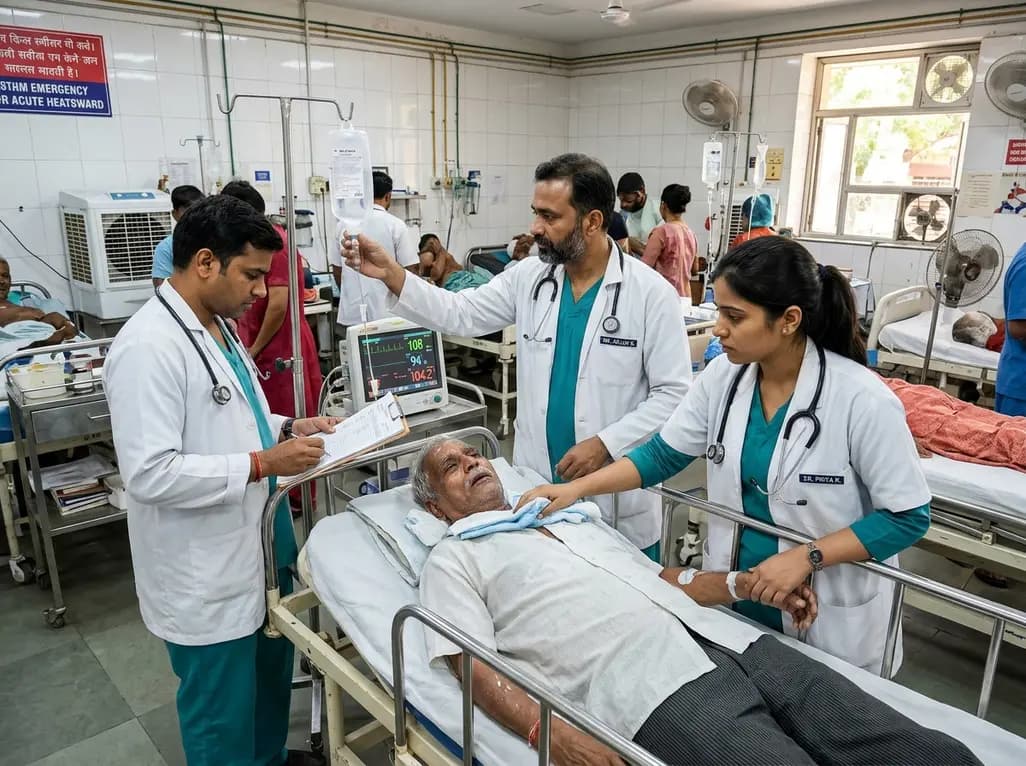
Recent epidemiological data reveals a dramatic surge in summer heat mortality driven by human-induced climate warming. This analysis explores the pathophysiological impacts on cardiac and renal systems, diagnostic dilemmas in death certification, and essential emergency cooling protocols for acute clinical care.
Today

Odisha has established India's first state-level clinical protocol specifically tailored for pregnant women with sickle cell disease. Developed with NHM and UNICEF, the framework provides structured antenatal screening, crisis mitigation, standardized referral pathways, and specialized interdisciplinary care.
Today

India is advancing preventive healthcare by integrating genomics, artificial intelligence, and quantum technologies. With the SANGAM programme sequencing one million Indian genomes, clinicians can unlock personalized therapies, detect cardiometabolic risks early, and curb the burden of diabetes and heart disease.
Today

A randomized controlled trial demonstrates that an eight-week dual-task training intervention significantly improves static and dynamic postural control over standard balance exercises in individuals with chronic ankle instability, addressing critical neurocognitive deficits during athletic and daily activities.
Today

A retrospective cohort study of 7,716 ICU patients from the MIMIC-IV database demonstrates that Gradient Boosting Decision Trees significantly outperform traditional SOFA scores in predicting in-hospital mortality among patients with sepsis and diabetes, with SHAP analysis providing clinical interpretability.
Today
