.webp&w=384&q=75)

Loading, please wait...
Loading, please wait...
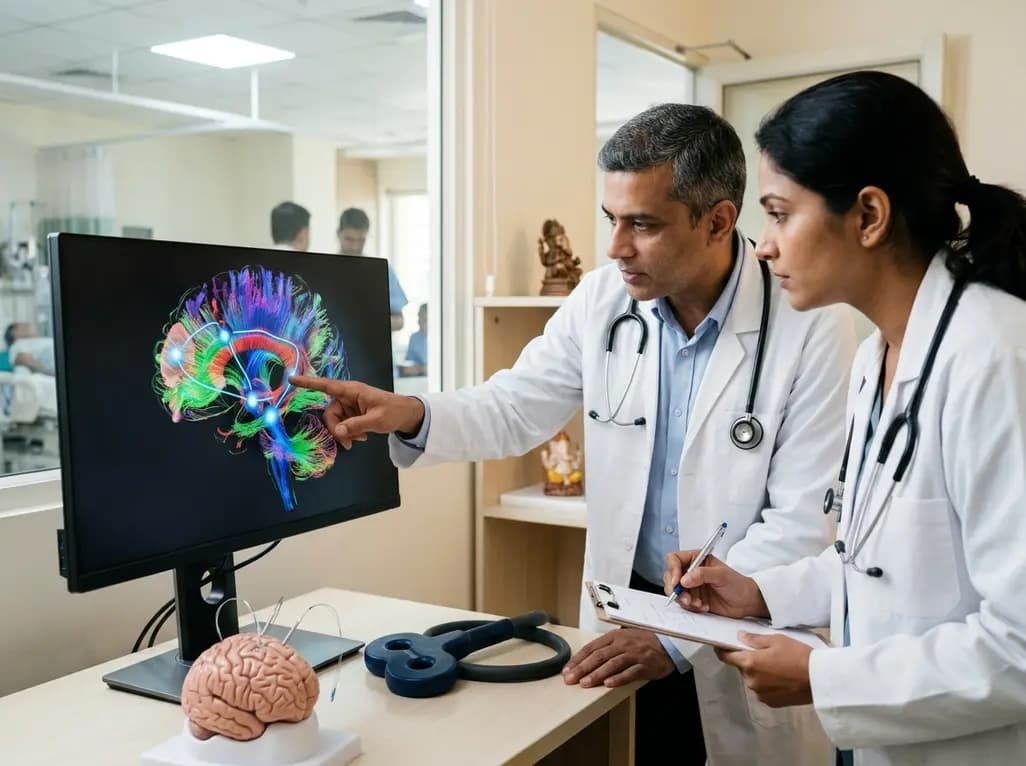
Neuromodulation for anxiety is undergoing a profound paradigm shift. For decades, clinicians relied primarily on pharmacotherapy and psychotherapy to manage debilitating anxiety disorders. While these treatments remain foundational, a significant proportion of patients suffer from treatment-resistant symptoms. Consequently, the medical community has sought more targeted interventions. Recent advancements in deep brain stimulation (DBS) and transcranial magnetic stimulation (TMS) have provided new hope. These technologies allow for the direct manipulation of neural activity within specific circuits. Unlike medications that act systemically, neuromodulation targets the pathological networks responsible for anxiety. Specifically, it recalibrates the communication between brain regions like the amygdala and the prefrontal cortex. This targeted approach minimizes systemic side effects while maximizing therapeutic efficacy. Furthermore, recent research has clarified the causal circuitry involved in psychiatric diseases. By understanding these networks, doctors can now apply stimulation with unprecedented precision. As the field moves toward 2026, the focus has shifted entirely toward circuit-based and personalized care. This evolution represents a significant leap from the broad-spectrum treatments of the past. Moreover, it empowers clinicians to treat the most severe cases with confidence. Therefore, understanding these next-generation tools is essential for modern psychiatric practice.
Deep brain stimulation remains one of the most powerful tools in the neuromodulation arsenal. It involves the surgical implantation of electrodes into specific subcortical structures. Traditionally used for movement disorders, its application in psychiatry is expanding rapidly. Researchers have identified that modulating the ventral striatum and anterior limb of the internal capsule can alleviate severe anxiety. Furthermore, the refinement of DBS techniques has significantly improved safety profiles for patients. Modern devices now offer better battery life and more precise programming capabilities. Consequently, clinicians can fine-tune the electrical parameters to suit individual patient needs. This flexibility is vital because anxiety is a heterogeneous condition. Moreover, DBS provides continuous stimulation, which is crucial for maintaining long-term stability. Recent studies indicate that DBS not only reduces symptoms but also improves overall functional quality of life. However, because it is an invasive procedure, it is typically reserved for those who have failed multiple conventional therapies. Nevertheless, the ability to directly access deep-seated brain circuits makes DBS a unique and indispensable option. As we map more complex emotional networks, the potential targets for DBS will likely continue to grow. This progress ensures that even the most treatment-refractory patients have a pathway toward recovery.
Transcranial magnetic stimulation (TMS) has emerged as a leading non-invasive option for anxiety management. Unlike DBS, TMS uses magnetic fields to induce electrical currents in the brain from outside the scalp. This makes it highly accessible and well-tolerated by most patients. Specifically, the development of deep TMS (dTMS) has allowed for broader and deeper stimulation of cortical areas. Furthermore, newer protocols like theta-burst stimulation have significantly reduced treatment times. Previously, sessions lasted nearly 40 minutes, but now they can be completed in just a few minutes. Additionally, the FDA has cleared specific TMS protocols for obsessive-compulsive disorder and anxious depression. This regulatory support has accelerated the adoption of TMS in clinical settings worldwide. Doctors find it effective because it targets the dorsolateral prefrontal cortex, a key node in mood regulation. Moreover, TMS therapy does not require anesthesia or recovery time. Patients can return to their daily activities immediately following a session. Consequently, it fits easily into a standard clinical routine. Recent findings also suggest that combining TMS with psychotherapy may enhance the neuroplastic effects of treatment. By stimulating the brain while the patient is engaged in therapeutic tasks, clinicians can potentially "lock in" healthy neural patterns. This synergy represents the future of integrated psychiatric care.
A one-size-fits-all approach is no longer sufficient in the realm of psychiatric neuromodulation. Instead, personalized circuit mapping has become the gold standard for treatment planning. Every individual possesses a unique neural architecture, meaning that the exact "choke points" of anxiety vary. To address this, clinicians now utilize advanced neuroimaging techniques like functional MRI (fMRI) and diffusion tensor imaging. These tools allow doctors to visualize the specific connectivity patterns of a patient's brain. Subsequently, they can identify the precise coordinates for electrode placement or magnetic coil positioning. Furthermore, this personalization extends to the stimulation parameters themselves. Frequency, intensity, and pulse width are all tailored based on real-time neural feedback. This level of precision significantly boosts response rates. Moreover, it reduces the likelihood of stimulating off-target areas that could cause adverse effects. For instance, a patient with high levels of rumination might require different targeting than one with predominantly physical panic symptoms. Therefore, circuit mapping transforms neuromodulation from a generalized tool into a bespoke therapy. This shift toward precision medicine is particularly relevant for complex cases in India, where diverse patient presentations are common. Ultimately, personalized mapping ensures that every pulse delivered is optimized for the best possible clinical outcome.
The safety of neuromodulation has improved remarkably over the last decade. Early concerns regarding seizures or cognitive impairment have been largely addressed through technological refinement. Modern TMS devices, for example, feature sophisticated cooling systems and precise dosage controls. Similarly, DBS hardware has become smaller and more biocompatible. Furthermore, clinical trials consistently demonstrate high efficacy rates for these interventions. Many patients who achieve little relief from SSRIs or benzodiazepines show significant improvement with targeted stimulation. Additionally, the side effect profile of neuromodulation is often superior to systemic medications. Common issues like weight gain, sexual dysfunction, and sedation are absent in these therapies. Consequently, patient compliance remains high throughout the treatment course. Moreover, long-term follow-up studies suggest that the benefits of neuromodulation are durable. Many patients maintain their gains for months or even years after the initial treatment phase. However, it is essential for clinicians to conduct thorough pre-treatment screenings. Identifying the right candidates is just as important as the technology itself. Therefore, a multidisciplinary approach involving psychiatrists, neurologists, and neurosurgeons is recommended. This collaborative model ensures that patient safety remains the top priority while achieving maximum symptom relief. As these tools become more common, their role in standard care will continue to solidify.
The future of neuromodulation for anxiety lies in the integration of artificial intelligence and closed-loop systems. These "smart" devices will be capable of monitoring brain activity in real-time. When they detect a signature of impending anxiety, they can automatically deliver a corrective pulse. This approach mimics the way modern pacemakers manage heart rhythms. Furthermore, ongoing research is exploring new targets beyond the traditional prefrontal-limbic circuits. Areas like the insula and the cerebellum are being investigated for their roles in emotional processing. Additionally, the development of portable, home-based neuromodulation devices may increase access to care. While still in the experimental stages, these tools could provide maintenance therapy outside of the clinic. Moreover, international collaborations are helping to standardize protocols across different populations. This is particularly important for expanding the reach of these therapies in India. As data continues to accumulate, our understanding of the "anxious brain" will become even more nuanced. Consequently, the transition from symptom management to circuit-level normalization will be complete. Therefore, we are entering an era where psychiatric disorders can be treated with the same precision as neurological conditions. This progress offers a brighter outlook for millions of people worldwide suffering from chronic anxiety. The journey toward precision neuropsychiatry is well underway, and neuromodulation is leading the charge.
Traditional medications act systemically, affecting the entire body and often causing widespread side effects. In contrast, neuromodulation for anxiety uses electrical or magnetic pulses to target specific brain circuits directly. This focal approach minimizes systemic impact while precisely recalibrating the neural pathways responsible for pathological anxiety symptoms and emotional dysregulation.
Yes, modern neuromodulation techniques like TMS and DBS have excellent safety profiles. Clinical data show that these therapies are well-tolerated with minimal long-term risks. Advanced protocols and personalized mapping further reduce the chance of adverse effects, making them a viable option for patients requiring durable, long-term symptom management when medications fail.
Ideal candidates are typically patients with moderate-to-severe anxiety who have not achieved sufficient relief from at least two standard therapies, such as SSRIs or psychotherapy. A thorough psychiatric evaluation and neuroimaging are often required to ensure the patient's symptoms are linked to circuits that can be effectively targeted by stimulation.
Disclaimer: This content is for informational and educational purposes only. It does not constitute professional medical advice, diagnosis, or treatment. Always seek the advice of your physician or other qualified healthcare provider with any questions you may have regarding a medical condition. Refer to the latest local and national guidelines for clinical practice.
References
O'Rourke CM et al. Next-Generation Neuromodulation for Anxiety: Circuit-Based and Personalized Approaches. Curr Psychiatry Rep. 2026 Jul 16. doi: 10.1007/s11920-026-01702-3. PMID: 42461454.
Siddiqi SH et al. Distinct Symptom-Specific Treatment Targets for Circuit-Based Neuromodulation. Am J Psychiatry. 2020;177(5):435-446.
Cash RFH et al. Personalized and Circuit-Based Transcranial Magnetic Stimulation: Evidence, Controversies, and Opportunities. Biol Psychiatry. 2024;95(6):510-522.

Read summarized clinical updates, watch expert medical content, and earn CME certifications right from your smartphone.
Open your smartphone camera to scan and install.





Neuromodulation for anxiety is evolving through circuit-based and personalized approaches. This update explores how advanced DBS and TMS techniques target specific neural pathways to improve outcomes for treatment-resistant patients, offering a new paradigm in precision psychiatry.
3 months ago

Novel diimide and hydrazone scaffolds, particularly compound #C4, synergistically reactivate latent HIV-1 when combined with JQ1 or PKC activators. Demonstrating donor-matched proviral transcription ex vivo and non-canonical signaling, these findings advance shock and kill strategies toward reservoir eradication.
Today

A cross-sectional study reveals that maternal RSV vaccination coverage reached only 43.7% in Argentina, with maternal vaccine knowledge being the sole independent predictor of uptake. Clinicians play a crucial role in eliminating informational and structural barriers to optimize infant health.
Today

Review how tailored exercise programs benefit frail older patients with heart failure. Explore pathophysiological mechanisms, individualized training prescriptions, and strategies to overcome adherence barriers in clinical practice.
Yesterday

This comparative study evaluates posterior labral tears with and without glenohumeral instability, highlighting distinct demographic patterns, MRI underestimation in stable shoulders, and successful arthroscopic repair outcomes.
Yesterday

A clinical study demonstrates that early intervention with tocilizumab, either as monotherapy or bridged with corticosteroids, achieves significant proptosis reduction and resolves active inflammation in treatment-naive thyroid eye disease.
Yesterday
