.webp&w=384&q=75)

Loading, please wait...
Loading, please wait...
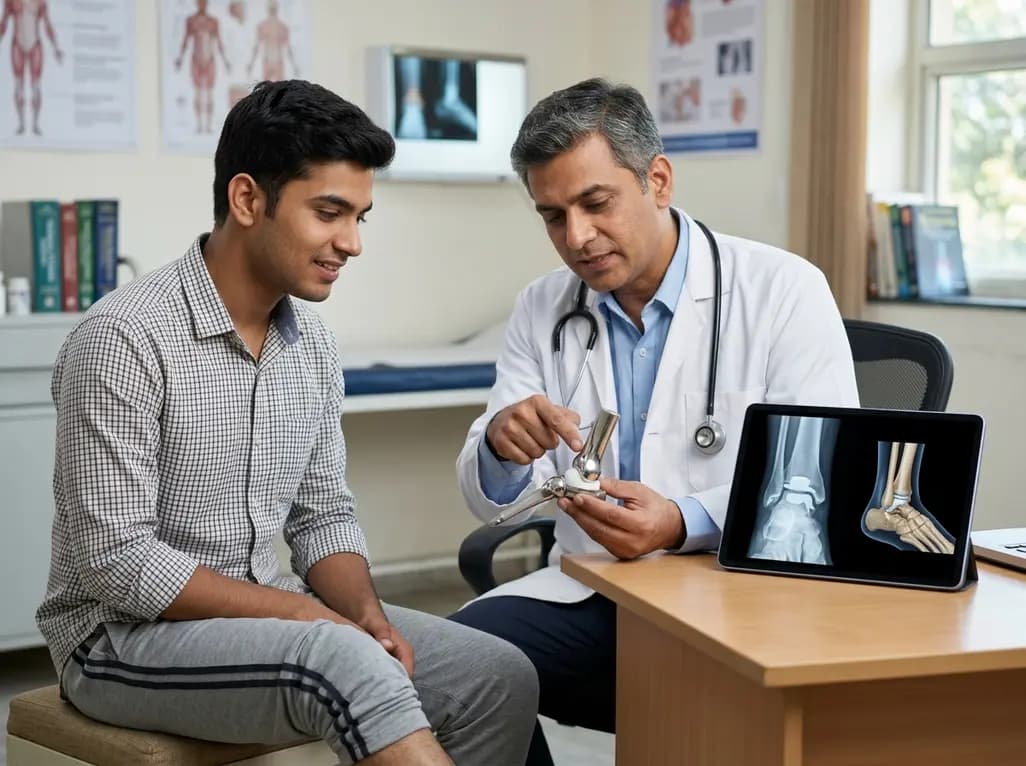
Ankle osteoarthritis represents a debilitating clinical condition that frequently impacts active individuals in the prime of their lives. Emerging bioengineering initiatives are developing next-generation ankle implants to transform long-term joint survivorship and functional restoration. By redefining joint biomechanics, these modern prostheses aim to preserve physiological motion while offering lifelong durability for younger populations.
Unlike degenerative conditions affecting the hip or knee, ankle osteoarthritis arises predominantly from trauma. Severe fractures, recurrent ligamentous disruptions, and sports-related trauma initiate progressive cartilage degradation. Consequently, clinicians routinely diagnose ankle osteoarthritis in patients aged twenty to fifty years. This epidemiological trend contrasts sharply with the older demographic typical of elective joint arthroplasty.
Furthermore, living with advanced ankle joint destruction exacts an immense physical and psychological toll. Health-related quality of life surveys demonstrate that severe ankle disease impairs daily functionality to a degree comparable with congestive heart failure or end-stage renal disease. Patients experience chronic pain, progressive stiffness, and severe gait alterations. Because the ankle joint handles multi-axial loads up to five times body weight during normal ambulation, early articular deterioration rapidly destabilizes lower extremity biomechanics. Therefore, providing durable reconstructive interventions for young individuals remains a crucial healthcare priority.
Historically, orthopedic surgeons have managed end-stage ankle arthritis with two primary surgical options: arthrodesis or conventional total ankle arthroplasty. Arthrodesis fuses the talocrural joint, which successfully alleviates pain and provides a stable platform. However, fusion permanently sacrifices natural sagittal plane motion. As a result, adjacent midfoot and subtalar joints experience accelerated mechanical strain, leading to secondary osteoarthritis in up to fifty percent of cases over long follow-up periods.
Conversely, traditional ankle replacements preserve motion but present notable structural limitations. First- and second-generation prostheses demonstrate elevated failure rates in high-demand populations. In fact, approximately one in ten standard implants fails within a decade due to polyethylene wear, aseptic loosening, or component subsidence. Because of these suboptimal outcomes, surgeons frequently delay surgical replacement in young adults, leaving them with protracted disability.
To overcome historical failure mechanisms, an international consortium is pioneering next-generation ankle implants designed specifically for active, younger demographics. Led by biomechanics experts, the initiative focuses on replicating the complex multi-axis kinematics of the native human talocrural and subtalar complex. Advanced biotribology and computational modeling guide the synthesis of modern articulating surfaces that minimize wear debris generation.
Additionally, modern prostheses incorporate advanced porous coatings and highly biocompatible titanium alloys to accelerate osseointegration. These structural enhancements ensure rapid biological fixation at the bone-implant interface, significantly reducing early micromotion and loosening. Highly cross-linked polymers and advanced ceramic composites further enhance load dispersion across the ankle mortise. Consequently, these engineered devices aim to last a lifetime, preventing early revision surgeries in young, highly active cohorts.
A major milestone in musculoskeletal research is the Engineering Advanced Solutions for End-stage Ankle Osteoarthritis project. Supported by a twelve-million-pound grant from the Engineering and Physical Sciences Research Council, this five-year program brings together multidisciplinary teams across leading academic and medical institutions. Collaborating bioengineers, orthopedic surgeons, and materials scientists are establishing standardized testing platforms to evaluate implant kinematics under realistic physiological loads.
Moreover, the consortium utilizes dynamic imaging techniques, including magnetic resonance image registration and computational finite element analysis. These state-of-the-art tools allow researchers to map individual joint forces accurately during dynamic gait cycles. By analyzing micro-scale contact mechanics, the researchers can optimize implant geometry to match individual anatomical variations. Ultimately, this translational research model accelerates the bench-to-bedside transition of high-performance orthopedic technology.
In developing nations such as India, post-traumatic ankle arthritis is exceptionally prevalent due to road traffic accidents, occupational injuries, and sports trauma. Orthopedic clinicians frequently encounter young manual laborers and professionals who cannot afford the functional limitations of ankle fusion. However, introducing advanced prosthetics requires careful patient selection, meticulous surgical technique, and robust pre-operative alignment planning.
Furthermore, managing soft-tissue envelopes, correcting coronal plane malalignment, and balancing collateral ligaments remain critical determinants of arthroplasty success. Clinicians must thoroughly counsel young patients regarding activity modification, rehabilitation protocols, and realistic long-term expectations. As next-generation implant systems transition into clinical trials and regulatory approvals, Indian orthopedic centers must adopt rigorous surgical training curricula. This preparation ensures reproducible surgical accuracy and maximizes implant survivorship across diverse patient populations.
Q1: Why is ankle osteoarthritis more common in younger patients than hip or knee arthritis?
Unlike primary osteoarthritis in hips or knees that develops from gradual age-related cartilage degeneration, ankle osteoarthritis is overwhelmingly post-traumatic. Severe rotational fractures, pilon fractures, or recurrent ankle sprains damage the articular cartilage and alter joint congruence. Because physical activities and high-energy trauma frequently occur in early adulthood, patients typically present with advanced symptoms decades earlier than individuals with degenerative hip or knee arthritis.
Q2: What makes total ankle replacement challenging in young, active individuals?
Younger patients place substantially higher mechanical and functional demands on artificial joints. The ankle joint possesses a compact surface area that must absorb multiaxial forces up to five times body weight during daily activities. In young individuals, standard implants often suffer from accelerated polyethylene wear, edge loading, and early aseptic loosening. These mechanical limitations previously led surgeons to view joint replacement as a high-risk option.
Q3: How do next-generation ankle implants differ from conventional prostheses?
Next-generation implants incorporate advanced biomaterials, optimized articular geometries, and highly porous coatings for enhanced osseointegration. By accurately replicating the multi-axial kinematics and physiological rolling-sliding motion of the native talocrural joint, these modern designs reduce periprosthetic stress concentrations. Furthermore, wear-resistant material interfaces minimize osteolytic debris, significantly extending implant survival and enabling young patients to maintain active lifestyles.
Disclaimer: This content is for informational and educational purposes only. It does not constitute medical advice or replace professional judgment. Refer to the latest local and national guidelines for clinical practice.
References

Read summarized clinical updates, watch expert medical content, and earn CME certifications right from your smartphone.
Open your smartphone camera to scan and install.





Groundbreaking research led by the University of Sheffield is engineering next-generation ankle implants to treat post-traumatic osteoarthritis in young, active patients, offering long-lasting joint mobility and pain relief without the restrictive compromises of traditional arthrodesis.
last month

According to WHO data, average lifespan reached 73.3 years in 2023, recovering from pandemic lows. However, healthy life expectancy lags at 62.8 years due to surging noncommunicable conditions like cardiovascular disease and dementia, demanding proactive primary screening and sustained chronic care.
Today

A scoping review reveals how pregnancy affects phonation through laryngeal edema and reduced phonation time rather than major acoustic pitch alterations. Learn how to identify, evaluate, and manage vocal symptoms in expectant mothers.
Today

Medical robotics is transitioning beyond operative suites into diagnostics, cardiology, and endocrinology. Explore how innovations in tele-robotics, AI integration, and nanomedicine are overcoming geographical barriers and transforming precision healthcare delivery across India's evolving disease landscape.
Today
Researchers have engineered an artificial sensory-pain integrated receptor using a multi-threshold organic synaptic transistor. The system distinguishes benign touch from noxious stimuli, enabling safer, more responsive prosthetic limbs with built-in memory and simplified hardware architecture.
Today

A qualitative meta-synthesis highlights the complex interplay between gender dysphoria, minority stress, and eating disorders in transgender and gender-diverse individuals. Clinicians must recognize these distinct drivers to offer supportive, gender-affirming, and interdisciplinary eating disorder care.
Today
