.webp&w=384&q=75)

Loading, please wait...
Loading, please wait...

The neuroscience of planning has traditionally relied on analogies from artificial intelligence, specifically search algorithms that simulate future actions to determine immediate choices. However, recent scientific advances suggest that this view is too narrow. Instead of simple forward search, planning represents a sophisticated class of computations where mental simulation supports learning long before a specific decision arises. This perspective recasts the brain's planning machinery as a family of learning processes that leverage simulations to build complex internal representations.
One of the primary mechanisms in the neuroscience of planning is hippocampal replay. While researchers once viewed replay as a direct guide for immediate choice, evidence now shows it often occurs prospectively or during offline states. Consequently, this suggests that replay serves to train downstream neural circuits. By simulating potential trajectories during rest, the hippocampus helps the brain consolidate strategies and refine its internal world model, rather than just calculating the next move in real-time.
Additionally, the brain utilizes temporally abstract representations, such as grid cells, to simplify complex tasks. These cells allow for planning without the need for exhaustive, iterative search. Specifically, grid cells provide a coordinate system that enables the brain to jump to distal goals across a cognitive map. Therefore, the brain can determine optimal paths through both physical and conceptual spaces with high efficiency, bypassing the computational heavy lifting required by traditional AI-style search algorithms.
Furthermore, metalearning shapes how the prefrontal cortex implements task-specific planning strategies. Just as AI systems learn to adapt across various contexts, the prefrontal dynamics in the human brain evolve based on prior experience. This process allows the brain to learn how to plan effectively for different types of problems. For instance, the prefrontal cortex can switch between detailed deliberation and rapid habitual responses depending on the environmental demands. Ultimately, this view suggests that forward search is merely a special case within a much larger system of experience-based learning.
Traditional AI search focuses on calculating the immediate next step. In contrast, the neuroscience of planning suggests the brain uses simulations to train its systems for future flexibility, often well before a decision is actually required.
The hippocampus uses "replay" events to simulate past and future paths. These events help train other parts of the brain, allowing it to internalize map-like representations of the environment for faster decision-making later on.
Disclaimer: This content is for informational and educational purposes only. It does not constitute medical advice or a professional diagnosis. Refer to the latest local and national guidelines for clinical practice.
References
Mattar MG et al. Planning in the Brain: It's Not What You Think It Is. Annu Rev Neurosci. 2026 Apr 16. doi: 10.1146/annurev-neuro-102124-015847. PMID: 41990393.
Jensen KT et al. A recurrent network model of planning explains hippocampal replay and human behavior. Nat Neurosci. 2024;27(7):1340-1348.
Behrens TEJ et al. What is a cognitive map? Organizing knowledge for flexible behavior. Neuron. 2018;100(2):490-509.

Read summarized clinical updates, watch expert medical content, and earn CME certifications right from your smartphone.
Open your smartphone camera to scan and install.





New research redefines the neuroscience of planning as a family of learning processes involving hippocampal replay, grid cells, and prefrontal metalearning....
6 months ago
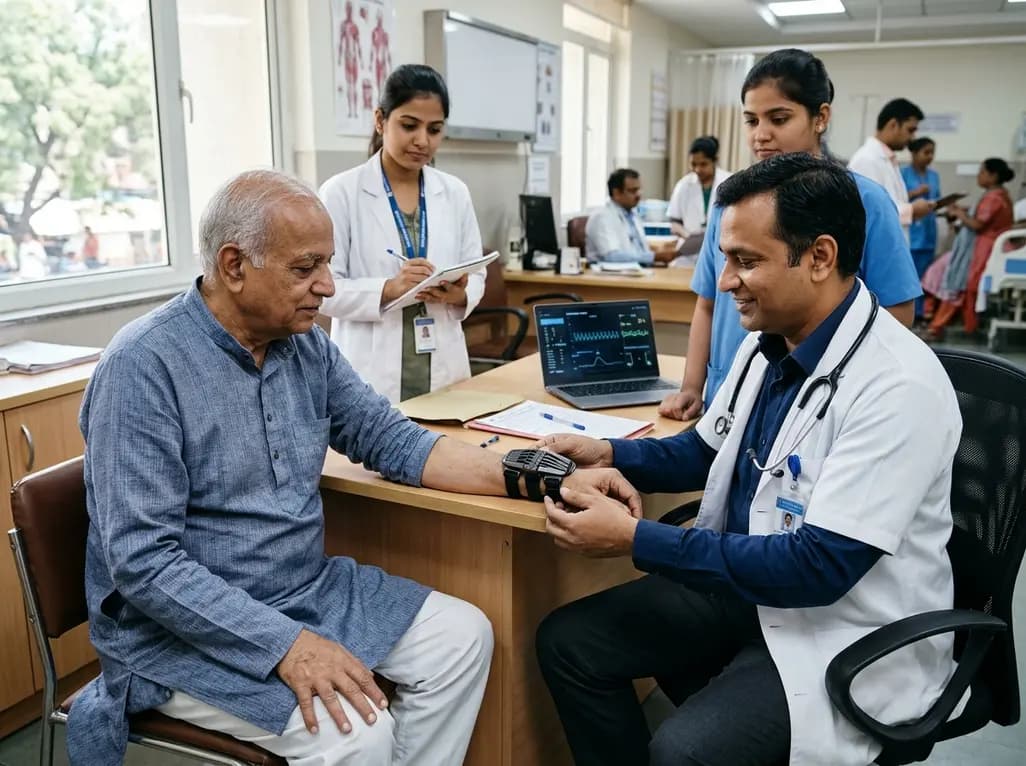
The TREM-AB open-label pilot study evaluated a wearable passive nonlinear vibration absorber for essential tremor. The Nonlinear Energy Sink bracelet reduced clinical Fahn-Tolosa-Marin tremor scores by 32.1% and electrophysiological tremor power by 49.2% with no adverse effects reported.
Today

A population-based study of 20,928 children reveals that small vulnerable newborns face sex-divergent mental capital outcomes at ages 6-7: term SGA girls show higher behavioral difficulties and lower resilience, while preterm non-SGA boys experience increased behavioral problems.
Today
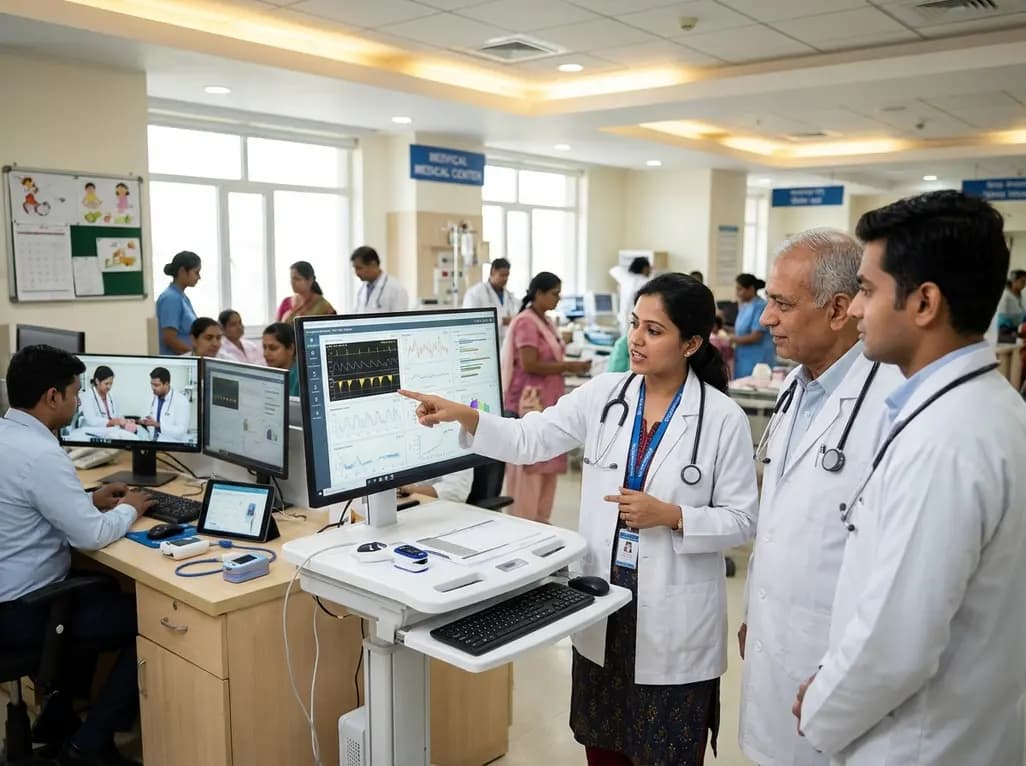
A landmark study details how an enterprise pediatric remote patient management model expanded from a single cardiology pilot to 16 diverse specialty programs by combining centralized digital operations with specialty clinical leadership.
Today
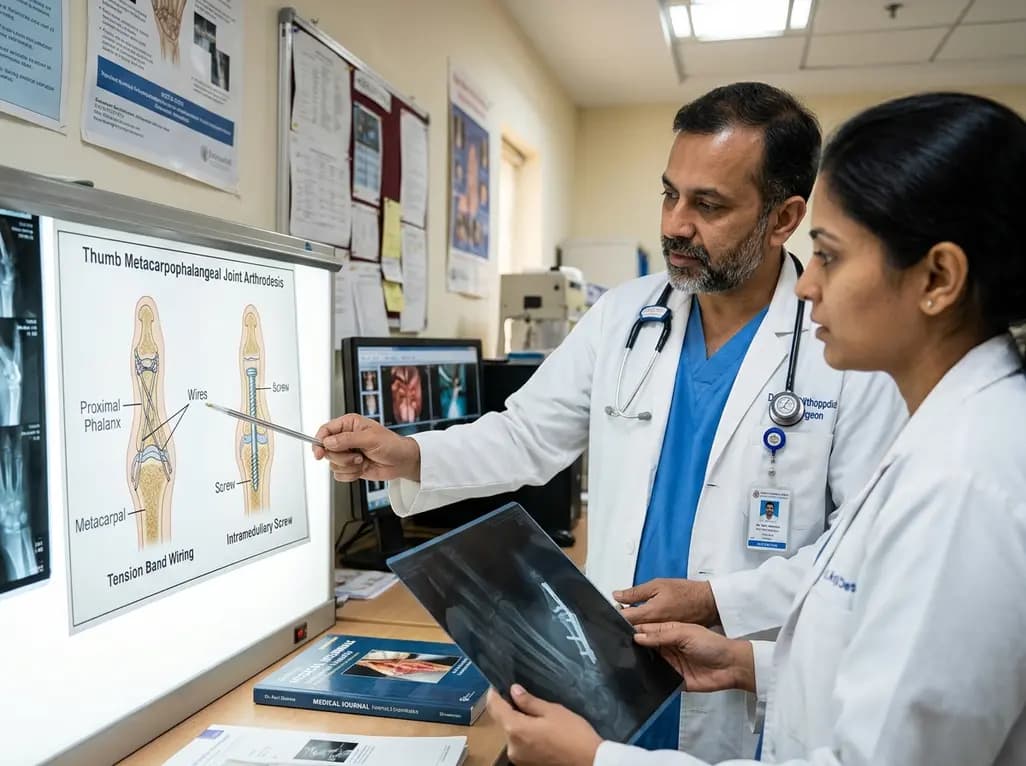
A comparative review of tension band wiring and intramedullary screw fixation in thumb metacarpophalangeal arthrodesis, evaluating union rates, hardware complications, and clinical outcomes.
Today
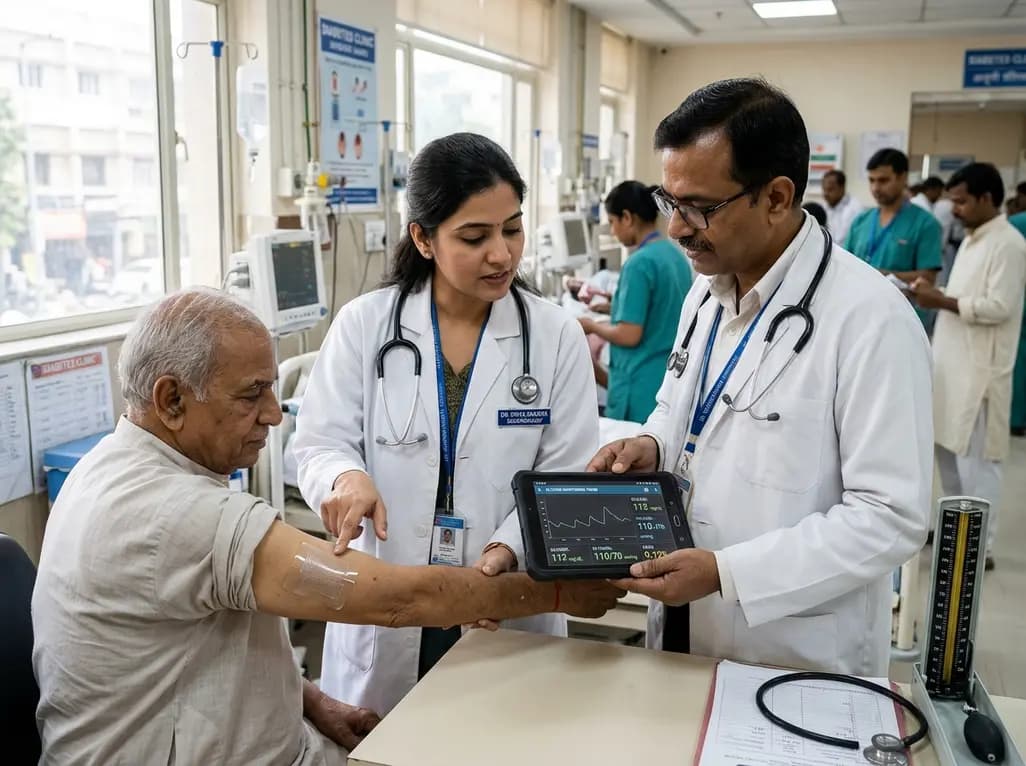
A breakthrough ultrathin multimodal sensor decouples physical hemodynamic monitoring from disposable electrochemical calibration, achieving long-term wearable glucose prediction with 81.36% accuracy and a 9.12% MARD. This offers a robust, drift-free solution for outpatient metabolic surveillance.
Today
