.webp&w=384&q=75)

Loading, please wait...
Loading, please wait...

Recent breakthroughs in neuroimaging and AI are making neural reconstruction in DoCs a critical reality for clinical practice. Researchers have successfully translated neural signals into text and speech, offering hope for patients with motor paralysis. Now, scientists are extending these reconstruction methods to patients with disorders of consciousness (DoCs). Patients in vegetative or minimally conscious states often exhibit wakefulness without external signs of awareness. However, neuroimaging studies demonstrate that some individuals retain hidden cognitive functions. Consequently, this technology provides a vital lens into their otherwise inaccessible mental experiences.
Reconstruction methods represent a transformative step in neurocritical care. By decoding brain activity, clinicians can better differentiate between vegetative and minimally conscious states. Moreover, this approach allows for the potential restoration of functional communication. Initially, practitioners use advanced imaging to identify covert awareness. Subsequently, they validate these models to ensure accuracy. However, applying these techniques requires extreme caution. Incorrect interpretations could mischaracterize a patient's inner life. Therefore, establishing rigorous evaluation standards is essential to protect patient autonomy.
In addition to diagnostic benefits, neural reconstruction supports personalized treatment strategies. Furthermore, it helps researchers understand how consciousness reorganizes after severe brain injury. While challenges remain, the integration of deep learning with functional MRI shows immense promise. Clinicians must balance technical innovation with ethical safeguards. Protecting the privacy and identity of non-responsive patients is a paramount concern. Ultimately, the responsible advancement of these tools will redefine the prognosis and care of individuals with DoCs.
It is a process using AI and neuroimaging to decode brain signals into understandable formats like text or images for patients with disorders of consciousness.
The technology can identify hidden signs of awareness and cognitive function that traditional bedside behavioral tests might miss.
Potential risks include the misinterpretation of brain signals, which could lead to incorrect medical decisions and compromise the patient's autonomy.
Disclaimer: This content is for informational and educational purposes only. It does not constitute professional medical advice, diagnosis, or treatment. Always seek the advice of your physician or other qualified health provider with any questions you may have regarding a medical condition. Refer to the latest local and national guidelines for clinical practice.
References
Kolisnyk M et al. Neural Reconstruction in Disorders of Consciousness: Prospects and Emerging Challenges. Neuroscientist. 2026 Apr 15. doi: 10.1177/10738584261434939. PMID: 41983343.
Owen AM. Cognitive invisible: Detecting consciousness in the vegetative state. Nature Reviews Neuroscience. 2013;14(10):731-738.
Willett FR et al. A high-performance speech neuroprosthesis. Nature. 2023;620(7976):1031-1036.

Read summarized clinical updates, watch expert medical content, and earn CME certifications right from your smartphone.
Open your smartphone camera to scan and install.





Discover how AI-driven neural reconstruction is decoding brain activity to restore communication and insight for patients in vegetative and conscious states...
6 months ago
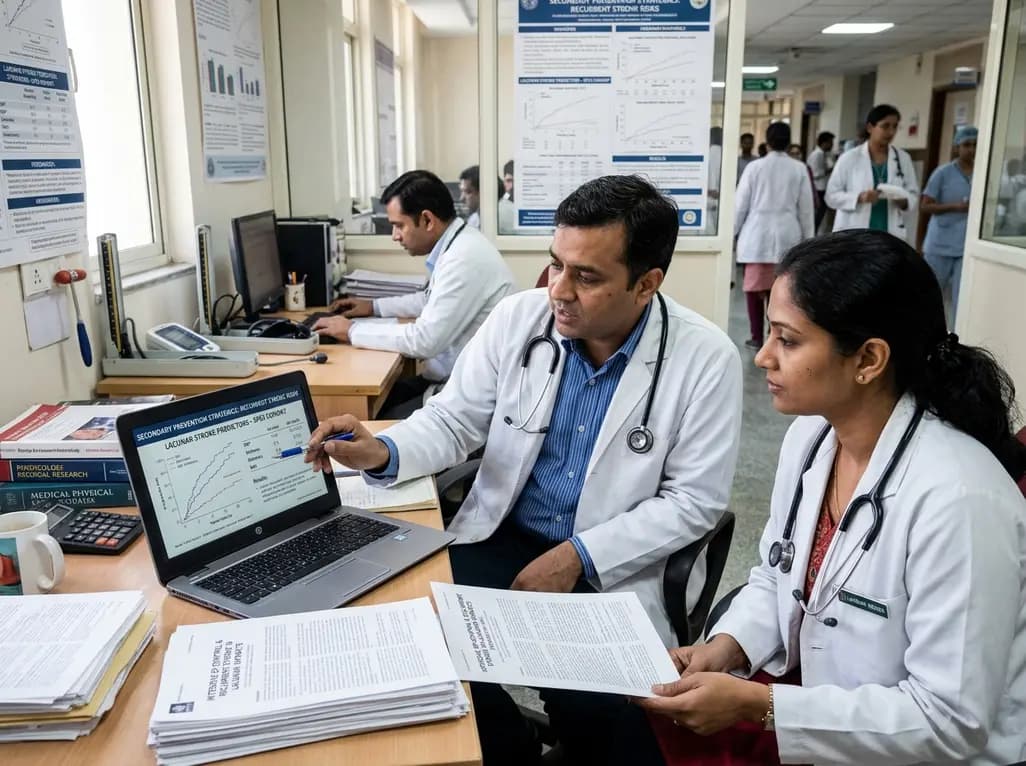
Explore vital recurrent stroke predictors in lacunar stroke patients managed with intensive blood pressure lowering. This analysis examines trial findings from SPS3 to uncover residual vascular risks, metabolic factors, and targeted secondary prevention strategies for high-risk neurological patients.
Today

A comprehensive scoping review synthesises evidence linking prenatal maternal mental health to long-term offspring neurodevelopment, evaluating neuroendocrine, inflammatory, and epigenetic pathways while highlighting clinical screening and future research priorities.
Today

The Directorate General of Health Services directs Indian states to halt the hazardous reuse and reprocessing of single-use medical devices. Discover regulatory implications under the Drugs and Cosmetics Act, critical infection risks, legal liabilities, and operational changes required across clinical specialties.
Today
Mitochondria-targeted nanoparticles self-assembled from EGCG and L-glutamic acid effectively restore mitochondrial homeostasis, suppress synovial inflammation, and attenuate chondrocyte senescence in osteoarthritis, offering a promising disease-modifying nanotherapy.
Today

India is advancing preventive healthcare by integrating genomics, artificial intelligence, and quantum technologies. With the SANGAM programme sequencing one million Indian genomes, clinicians can unlock personalized therapies, detect cardiometabolic risks early, and curb the burden of diabetes and heart disease.
Today
