.webp&w=384&q=75)

Loading, please wait...
Loading, please wait...

When humans relearn a motor task, such as a specific golf swing or a rehabilitation exercise, they often master it significantly faster the second time. This phenomenon, known as "savings," has long puzzled neuroscientists. A groundbreaking study recently published in eLife explores the motor learning savings mechanism by using Recurrent Neural Networks (RNNs) to simulate the human upper limb's biomechanical control. Researchers found that this accelerated learning occurs even without explicit environmental cues, suggesting a deeply embedded neural process.
The research team utilized a framework called "MotorNet" to train neural networks to reach toward targets while facing mechanical perturbations. Interestingly, the study revealed that savings was most robust in networks with a higher number of neural units. This suggests that the high dimensionality of our brain's neural circuits is not just a byproduct of complexity but a fundamental requirement for retaining motor traces. Furthermore, these traces allow for faster re-adaptation even after the initial learning appears to have been "washed out" by subsequent movements.
A critical finding of this study is the identification of a specific shift in neural preparatory activity. Specifically, the RNNs exhibited a persistent change in their internal state before a movement even began. This "preparatory shift" acted as a silent memory of the previous perturbation. Consequently, when the network was re-exposed to the same force field, it did not start from zero. Instead, it leveraged this existing activity to adapt more efficiently. Moreover, by artificially displacing this activity, researchers could either enhance or eliminate the savings effect, proving a causal link between preparatory neural states and motor memory.
For neurologists and physical therapists in India, these findings offer a fresh perspective on neurorehabilitation. Traditionally, motor learning was often attributed to cognitive strategies or conscious adjustments. However, this research highlights that much of our motor memory is implicit and context-free. Therefore, rehabilitation protocols that focus on high-repetition, high-dimensional motor tasks may better engage these underlying neural circuits. This could be particularly relevant in treating stroke survivors or patients with coordination disorders, where leveraging the brain's natural savings mechanism is vital for recovery.
Savings refers to the observation that an individual can relearn a motor skill or adapt to a physical perturbation faster during a second encounter than they did during the first exposure.
The research suggests that the brain uses its high dimensionality to create 'preparatory shifts' in neural activity. These shifts persist as a subtle memory trace, allowing the motor system to 'prime' itself for previously experienced challenges.
Yes. By understanding that motor savings is an implicit, context-free process, clinicians can design exercises that focus on subconscious adaptation and neural priming, potentially accelerating the recovery of motor functions in patients.
Disclaimer: This content is for informational and educational purposes only. It is not intended to be a substitute for professional medical advice, diagnosis, or treatment. Refer to the latest local and national guidelines for clinical practice.
References
Shahbazi M et al. A context-free model of savings in motor learning. Elife. 2026 May 13. doi: undefined. PMID: 42126916.
Codol O et al. MotorNet: a Python toolbox for controlling biomechanical agents with artificial neural networks. Elife. 2024. doi: 10.7554/eLife.88591.
Sun X et al. Neural signatures of motor memories in primary motor cortex. Neuron. 2022. doi: 10.1016/j.neuron.2022.01.012.
"
Read summarized clinical updates, watch expert medical content, and earn CME certifications right from your smartphone.
Open your smartphone camera to scan and install.





A study using RNNs identifies a 'shift in preparatory activity' as the neural basis for motor savings, independent of conscious strategy or context....
5 months ago
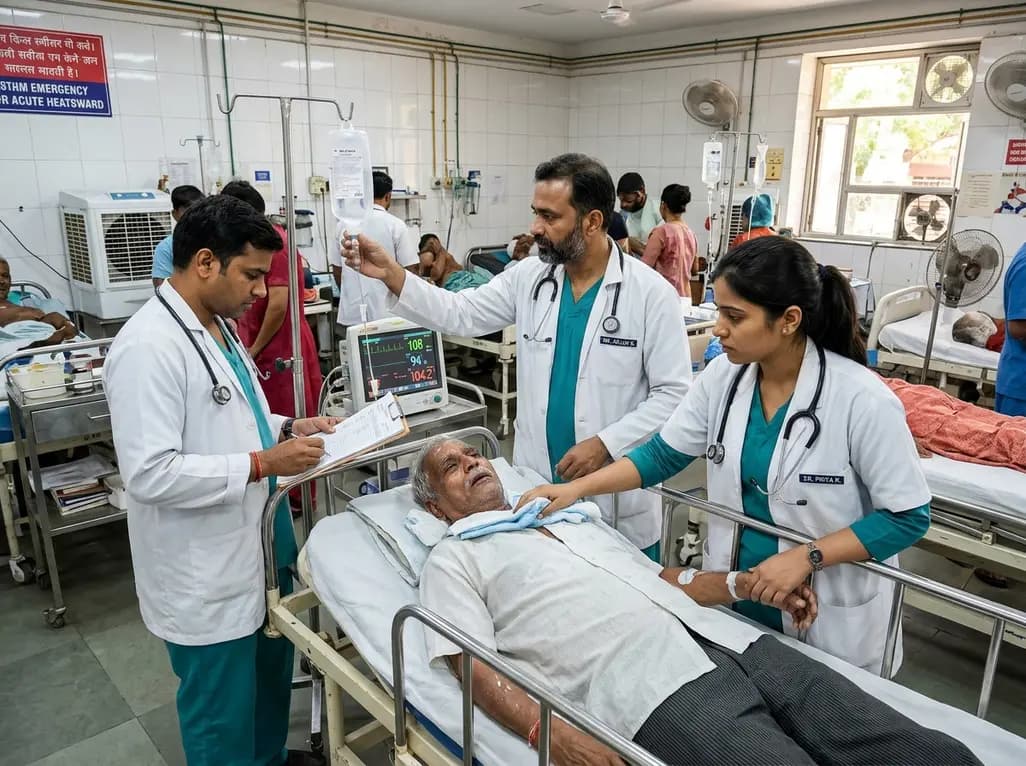
Recent epidemiological data reveals a dramatic surge in summer heat mortality driven by human-induced climate warming. This analysis explores the pathophysiological impacts on cardiac and renal systems, diagnostic dilemmas in death certification, and essential emergency cooling protocols for acute clinical care.
Today

Odisha has established India's first state-level clinical protocol specifically tailored for pregnant women with sickle cell disease. Developed with NHM and UNICEF, the framework provides structured antenatal screening, crisis mitigation, standardized referral pathways, and specialized interdisciplinary care.
Today

India is advancing preventive healthcare by integrating genomics, artificial intelligence, and quantum technologies. With the SANGAM programme sequencing one million Indian genomes, clinicians can unlock personalized therapies, detect cardiometabolic risks early, and curb the burden of diabetes and heart disease.
Today

A randomized controlled trial demonstrates that an eight-week dual-task training intervention significantly improves static and dynamic postural control over standard balance exercises in individuals with chronic ankle instability, addressing critical neurocognitive deficits during athletic and daily activities.
Today

A retrospective cohort study of 7,716 ICU patients from the MIMIC-IV database demonstrates that Gradient Boosting Decision Trees significantly outperform traditional SOFA scores in predicting in-hospital mortality among patients with sepsis and diabetes, with SHAP analysis providing clinical interpretability.
Today
