.webp&w=384&q=75)

Loading, please wait...
Loading, please wait...

The first minutes of a newborn's life define their long-term health trajectory. Consequently, healthcare providers must ensure precise intervention and documentation. The implementation of a digital delivery room log, such as NeoTracker, offers a transformative solution to traditional charting challenges. Historically, clinicians documented delivery room events hours after the fact. This delay often resulted in incomplete or biased data. By contrast, NeoTracker enables real-time, objective data collection to support better clinical decisions in high-pressure environments.
Researchers developed the NeoTracker application based on a comprehensive needs assessment. Specifically, the team focused on the medical specification of data content required during acute neonatal care. They designed the prototype to follow the airway, breathing, and circulation (ABC) algorithm. Additionally, the application aligns with the Newborn Life Support (NLS) guidelines. This structure ensures that every critical step is recorded accurately as it happens. Ultimately, the system generates a final summary that simplifies the documentation process for busy medical staff.
Accurate evaluation of care quality requires objective data. Because NeoTracker captures events as they occur, it eliminates the bias associated with retrospective memory. Furthermore, this structured approach allows for better analysis of the links between early interventions and long-term neonatal outcomes. In India, where neonatal mortality remains a national priority, such tools can standardize care across various healthcare settings. Notably, about 10% of newborns require some form of intervention at birth. Therefore, digital tools play a significant role in improving extrauterine adaptation. In addition, real-time logs provide a reliable audit trail for quality improvement initiatives.
NeoTracker follows the logic of the Newborn Life Support (NLS) guidelines. It uses the ABC algorithm to ensure all critical interventions, such as airway management and circulation support, are timestamped and recorded accurately during the event.
Retrospective charting often suffers from recall bias and timing errors because it happens hours after the intervention. In contrast, a digital delivery room log captures exact timestamps, which is crucial for clinical accuracy, quality audits, and legal documentation.
Yes. By providing structured data and decision support, these tools help medical teams adhere to evidence-based guidelines. This consistency reduces errors during the critical first minutes of life, leading to better long-term neonatal health.
Disclaimer: This content is for informational and educational purposes only. It is not intended as a substitute for professional medical advice, diagnosis, or treatment. Always seek the advice of your physician or other qualified health provider with any questions you may have regarding a medical condition. Refer to the latest local and national guidelines for clinical practice.
References
Bogner LL et al. [NeoTracker - a self-developed digital event log in delivery room stabilization of newborn infants]. Orv Hetil. 2026 Apr 12. doi: 10.1556/650.2026.33521. PMID: 41966757.
Hill M, et al. Learning with digital recording and video review of delivery room resuscitation. Seminars in Perinatology. 2022 Oct;46(6):151610. doi: 10.1016/j.siny.2022.101396.
Wyckoff MH, et al. Part 13: Neonatal Resuscitation: 2020 American Heart Association Guidelines for Cardiopulmonary Resuscitation and Emergency Cardiovascular Care. Pediatrics. 2021;146(Supplement 2):S402-S422.

Read summarized clinical updates, watch expert medical content, and earn CME certifications right from your smartphone.
Open your smartphone camera to scan and install.





NeoTracker is a digital event log designed to improve real-time documentation accuracy during newborn stabilization in the delivery room....
6 months ago
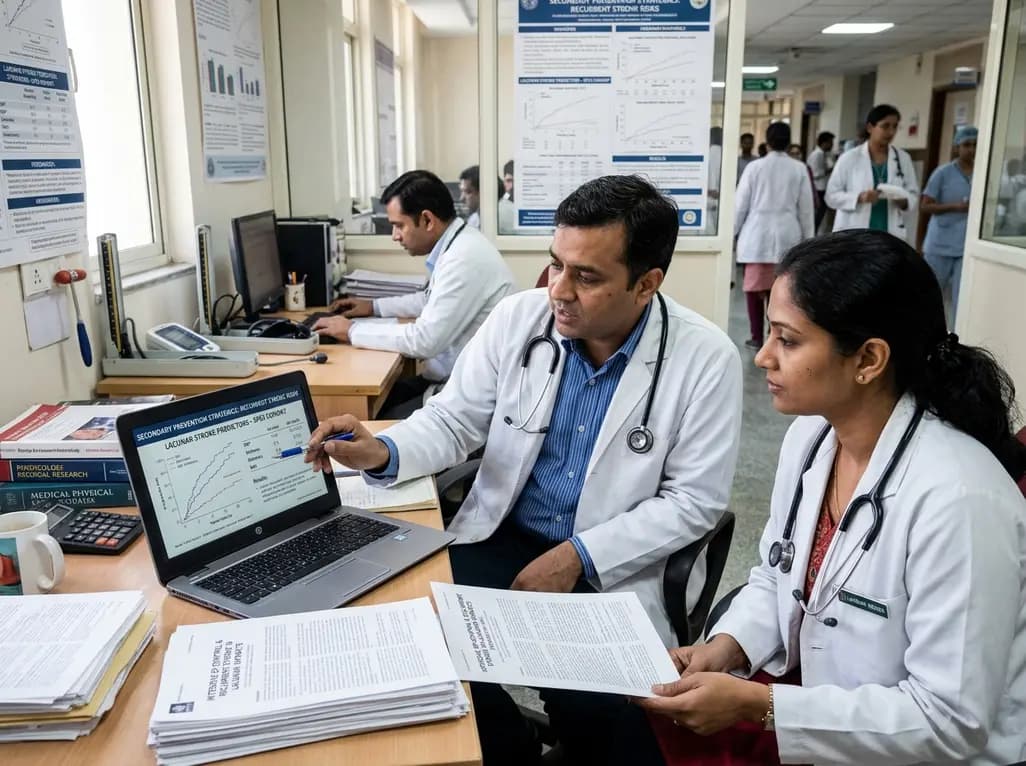
Explore vital recurrent stroke predictors in lacunar stroke patients managed with intensive blood pressure lowering. This analysis examines trial findings from SPS3 to uncover residual vascular risks, metabolic factors, and targeted secondary prevention strategies for high-risk neurological patients.
Today

A comprehensive scoping review synthesises evidence linking prenatal maternal mental health to long-term offspring neurodevelopment, evaluating neuroendocrine, inflammatory, and epigenetic pathways while highlighting clinical screening and future research priorities.
Today
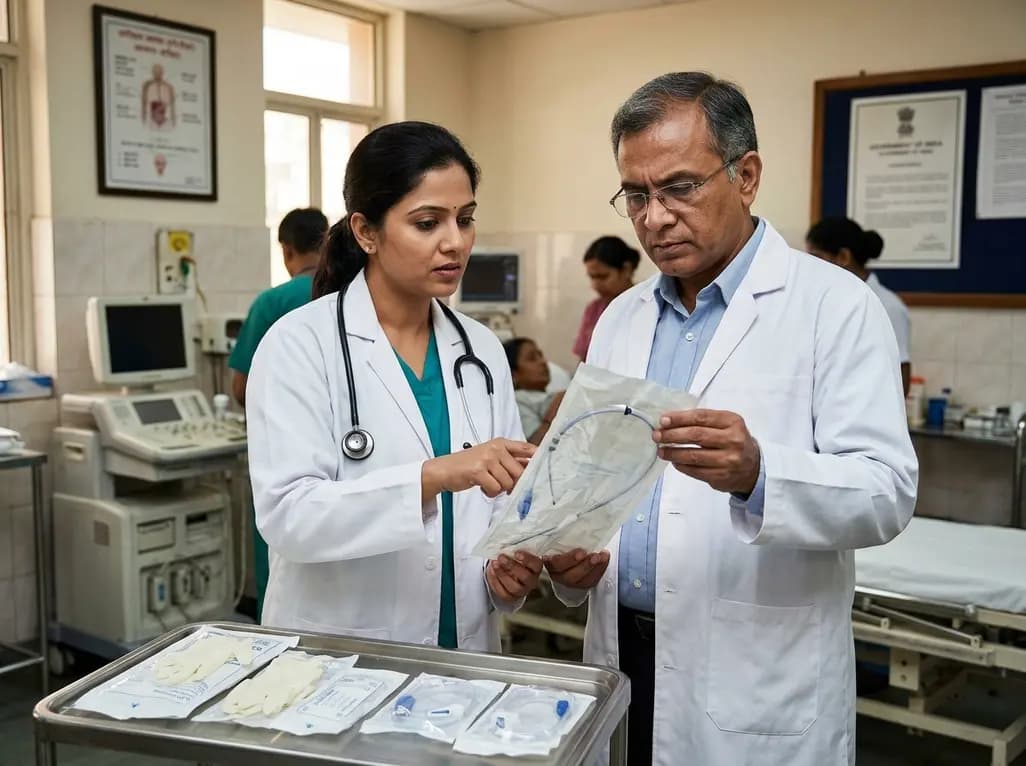
The Directorate General of Health Services directs Indian states to halt the hazardous reuse and reprocessing of single-use medical devices. Discover regulatory implications under the Drugs and Cosmetics Act, critical infection risks, legal liabilities, and operational changes required across clinical specialties.
Today
Mitochondria-targeted nanoparticles self-assembled from EGCG and L-glutamic acid effectively restore mitochondrial homeostasis, suppress synovial inflammation, and attenuate chondrocyte senescence in osteoarthritis, offering a promising disease-modifying nanotherapy.
Today

India is advancing preventive healthcare by integrating genomics, artificial intelligence, and quantum technologies. With the SANGAM programme sequencing one million Indian genomes, clinicians can unlock personalized therapies, detect cardiometabolic risks early, and curb the burden of diabetes and heart disease.
Today
