.webp&w=384&q=75)

Loading, please wait...
Loading, please wait...

Accurate neonatal pain assessment represents one of the most critical responsibilities in modern neonatal intensive care units. Critically ill newborns cannot verbalize discomfort or physiological distress. Consequently, healthcare providers must rely entirely on subtle behavioral cues and autonomic markers to identify pain. However, clinicians often work demanding rotating schedules and prolonged night shifts. Shift work predictably disrupts circadian rhythms, causes acute sleep deprivation, and alters emotional processing. Therefore, clinical leaders have long expressed concern that night-shift fatigue might impair diagnostic precision during bedside evaluations. When neonates undergo invasive interventions, unmanaged pain can trigger adverse neurodevelopmental sequelae and acute physiological instability. Furthermore, exhausted professionals may experience cognitive overload, which compromises their visual attentiveness. Experienced clinicians often develop strong heuristics to preserve overall performance despite severe exhaustion. Nevertheless, subtle vigilance deficits may still degrade real-time observational quality during vulnerable early-morning hours. Researchers therefore designed sophisticated eye-tracking protocols to investigate these visual-attentional processes objectively. By analyzing how rested and sleep-deprived neonatologists inspect infant distress, investigators can better evaluate whether night shifts undermine vital clinical determinations.
To assess these clinical dynamics, investigators conducted a prospective within-subject trial involving twenty experienced neonatal intensive care professionals. The research cohort evaluated forty-two standardized, high-definition video recordings of term newborns facing diverse stimulus conditions. Specifically, these stimuli included nonnoxious tactile experiences, brief noxious interventions such as heel lances, and prolonged noxious procedural exposures. Each clinician completed testing under two distinct physiological conditions. First, clinicians completed evaluations after enjoying at least one full day off duty to ensure a well-rested baseline state. Second, clinicians repeated assessments within two hours after finishing one or more consecutive routine night shifts. This within-subject structure effectively eliminated baseline inter-individual variability across clinical judgment, baseline empathy, and background expertise. During each session, investigators recorded subjective pain severity scores alongside high-precision infrared eye-tracking parameters and pupillometry metrics. Pupillary diameter served as an objective surrogate marker for autonomic nervous system arousal and cognitive workload. Concurrently, eye-tracking hardware mapped fixation frequencies, dwell duration, and visual transition paths across anatomically predefined areas of interest. Consequently, this rigorous methodology allowed researchers to distinguish between overt diagnostic output and underlying neurocognitive processing efficiency.
The primary trial outcomes revealed reassuring stability in overall diagnostic conclusions between rested and post-night-shift states. Specifically, mean pain ratings among rested professionals measured 3.56 ± 0.69, whereas post-night-shift evaluations yielded 3.61 ± 0.72. This minor numerical divergence demonstrated no statistically significant difference, yielding an effect size of Cohen's d = 0.11. Similarly, task-evoked pupillary diameter showed comparable dilation patterns during noxious evaluations across both operational states. These stable pupillometry results indicate that acute shift fatigue did not drastically suppress fundamental autonomic reactivity or sympathetic arousal. In contrast, exploratory secondary analyses revealed notable alterations in visual-attentional mechanics. Clinicians exhibited significantly reduced visual exploration across the infant's body after completing exhausting night shifts. In particular, fatigued clinicians made fewer visual visits across predefined anatomical areas of interest. Furthermore, they spent significantly shorter fixation durations inspecting the infant's body and peripheral motor responses. Because researchers did not adjust these secondary metrics for multiple statistical testing, they remain hypothesis-generating. Nonetheless, these subtle changes clearly demonstrate that cognitive fatigue influences how clinicians visually sample diagnostic information during clinical examinations.
These preliminary findings carry important operational lessons for pediatricians, neonatologists, and intensive care nurses worldwide. On the surface, preserved pain scores suggest that experienced practitioners maintain clinical competence despite substantial sleep loss. Highly trained neonatal teams often rely on rapid pattern recognition and familiar heuristics to rate obvious procedural pain. However, healthcare leaders must interpret these reassuring top-line results with extreme caution. The experimental setup utilized pre-recorded video clips within a quiet, distraction-free environment rather than a chaotic hospital unit. Real-world intensive care wards present compounding stressors, including alarm fatigue, complex resuscitations, and frequent multitasking. Under such high-pressure conditions, reduced visual exploration could easily cause clinicians to miss subtle indicators of chronic or escalating discomfort. Moreover, neonates often display nuanced physiological decompensation rather than obvious facial grimaces alone. When clinicians shorten their gaze duration on peripheral limbs and torso movements, they risk underestimating prolonged pain states. Therefore, equivalent scoring in a controlled experimental task does not guarantee identical diagnostic vigilance during busy night shifts. Clinicians must acknowledge that fatigue inevitably degrades perceptual thoroughness, even when conscious scoring criteria remain intact.
To mitigate the risks associated with shift-work fatigue, neonatal units must implement structured institutional safeguards. First, intensive care departments should adopt validated, multidimensional pain assessment scales. Standard tools include the Neonatal Infant Pain Scale and the Premature Infant Pain Profile. These standardized protocols mandate systematic evaluation of facial expression, cry characteristics, breathing patterns, and limb tone. Consequently, formalized scoring tools prevent tired staff from relying exclusively on brief visual glances. Second, department leaders must establish sensible duty-hour limitations and protected rest periods during extended shifts. Strategic napping policies during overnight shifts significantly restore cognitive flexibility, visual vigilance, and emotional empathy among healthcare workers. Third, bedside nursing handovers should incorporate double-check mechanisms for pain evaluations during high-risk shift transitions. In addition, hospitals should leverage automated video monitoring and artificial intelligence tools to support continuous pain tracking. These technologies can serve as objective safety nets, alerting bedside staff when infants exhibit prolonged physiological agitation. Ultimately, combining robust institutional scheduling policies with objective diagnostic instruments ensures consistent, compassionate neonatal care regardless of the time of day.
In this prospective study, routine night shifts did not significantly alter overall pain scores assigned by experienced neonatal clinicians. Specifically, the mean pain rating was 3.56 after rest compared to 3.61 following night shifts. This small difference was statistically non-significant with a minimal effect size. Experienced providers appear to rely on ingrained clinical knowledge and heuristics to preserve basic diagnostic decisions, although subtle attentional differences may still exist beneath the surface.
Exploratory eye-tracking metrics demonstrated that post-night-shift clinicians exhibited significantly less visual exploration across infant subjects. Fatigued providers made fewer gaze visits across predefined areas of interest and spent shorter durations fixating on the infant's body. Although pupillary responses showed no significant differences, these altered gaze metrics suggest that acute fatigue narrows visual attentiveness. Consequently, exhausted clinicians might overlook subtle, peripheral signs of physical distress during complex real-world neonatal intensive care interactions.
Neonatal departments must implement structured organizational measures to counter fatigue-related diagnostic risks. Hospitals should enforce sensible duty-hour caps, provide designated rest zones, and encourage strategic napping during night rotations. Furthermore, units should mandate validated multidimensional scoring tools to ensure comprehensive pain documentation rather than subjective estimations. Implementing standardized handover protocols and dual-provider evaluations during vulnerable shift transitions also provides essential diagnostic redundancy, directly protecting fragile neonates from undetected pain or treatment delays.
Disclaimer: This content is for informational and educational purposes only... Refer to the latest local and national guidelines for clinical practice.
References

Read summarized clinical updates, watch expert medical content, and earn CME certifications right from your smartphone.
Open your smartphone camera to scan and install.





A prospective within-subject eye-tracking study in NICU professionals revealed that routine night shifts did not alter overall neonatal pain scores or pupillometry, but exploratory metrics showed reduced visual exploration across infant bodies, highlighting subtle fatigue-related visual-attentional changes.
Today

In severe acute pancreatitis, initial normal calcium levels can mask primary hyperparathyroidism due to saponification. This case report highlights how serial calcium monitoring unmasked severe hypercalcemia, guiding life-saving emergency medical therapy and curative parathyroidectomy.
Today
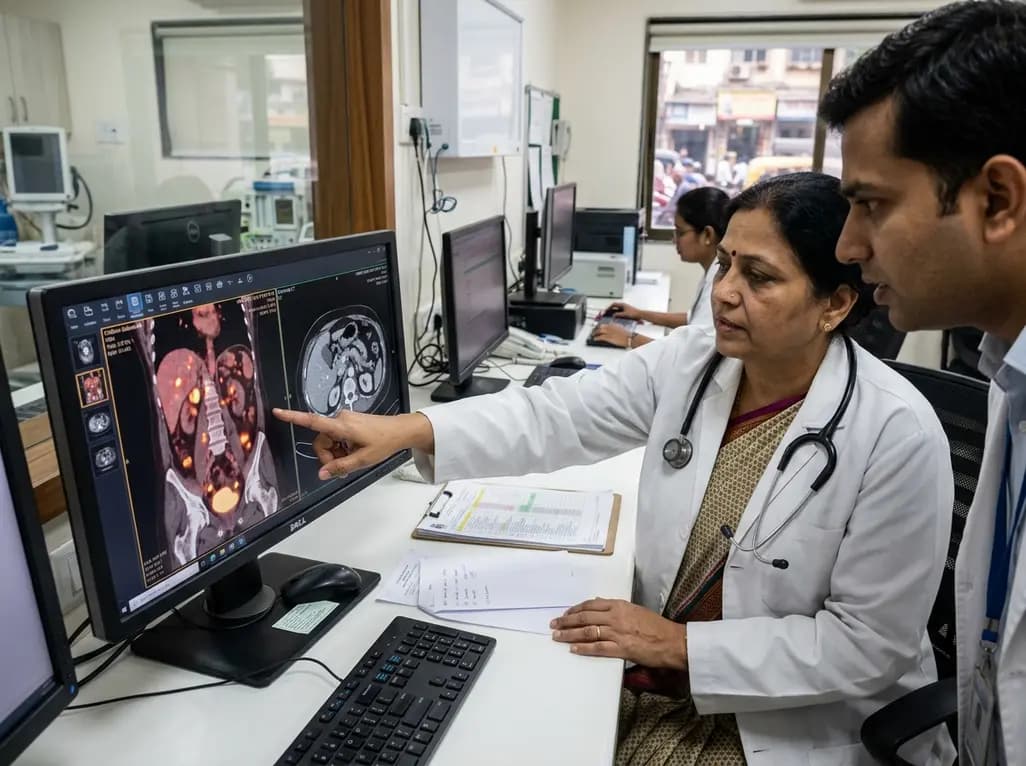
A landmark prospective study reveals gallium-68 FAPI PET/CT achieves 81.8% sensitivity in mapping peritoneal carcinomatosis in epithelial ovarian cancer, surpassing contrast CT. By resolving small bowel and mesenteric deposits, this molecular imaging alters treatment decisions in up to 21% of surgical candidates.
Today

Atherosclerotic cardiovascular disease guidelines often rely on European-derived lipoprotein(a) cutoffs. However, baseline Lp(a) levels vary widely across ancestries, including South Asians and Africans. Clinicians must interpret Lp(a) values within overall absolute cardiovascular risk.
Today

A longitudinal study of 1,055 chronic low back pain patients reveals that higher patient activation fosters constructive pain medication attitudes, reduces disability, and decreases short- and long-term opioid use through collaborative, multimodal care.
Yesterday

A review highlights how N-acetyl-L-cysteine influences pancreatic beta cells differently across metabolic states. While it protects islets during glucolipotoxicity and diabetes, excessive antioxidant exposure during physiological or aging states can induce reductive stress and impair insulin release.
Today
