

Loading, please wait...
Loading, please wait...

Clinicians and psychiatric researchers increasingly recognize how social determinants alter affective processing. In particular, recent epidemiological investigations indicate that environmental stressors significantly elevate the risk of developing first-episode psychosis. In marginalized populations, repeated exposure to discrimination and social disadvantage may reshape perceptual responses to interpersonal cues. Consequently, individuals facing systemic exclusion often develop altered social cognition. A critical question is whether cognitive patterns like negativity bias mediate the link between minority status and illness onset. To address this, the EU-GEI study evaluated this relationship across a large multinational cohort. By examining social cognition, the researchers explored whether distorted facial interpretations explain heightened clinical vulnerability.
Psychiatric epidemiology demonstrates marked disparities in the incidence of severe mental illnesses across different societal groups. Ethnic minority groups consistently exhibit higher odds of developing psychotic disorders compared to majority populations. Historically, researchers regarded genetic vulnerabilities as the primary explanation for these observed disparities. However, modern psychiatric paradigms emphasize sociodevelopmental mechanisms. Chronic psychosocial adversity, pervasive social defeat, and systemic barriers create continuous neurobiological stress. Therefore, minority status often serves as an epidemiological proxy for cumulative adversity. Prolonged stress alters dopamine pathways within the mesolimbic system. As a result, vulnerable individuals develop heightened sensitivity to perceived social threats. Furthermore, social exclusion undermines an individual's sense of environmental safety and belonging. When persons repeatedly experience microaggressions, their perceptual frameworks naturally adapt toward self-preservation. Consequently, ambiguous social signals appear hostile or threatening. Thus, social disadvantage establishes an enduring cognitive vulnerability that interacts with biological susceptibility. Understanding these affective shifts provides clinicians with vital context when evaluating early psychiatric presentations.
Social cognition encompasses the cognitive faculties that allow individuals to perceive, interpret, and respond to social information. Facial affect recognition constitutes a core component of this system. In healthy psychological functioning, people accurately identify emotions such as happiness, sadness, fear, and neutral calm. However, severe environmental stress can systematically disrupt this decoding process. Negativity bias describes a cognitive tendency to misinterpret ambiguous or emotionally neutral facial expressions as hostile, angry, or contemptuous. Psychiatrists observe pronounced emotion recognition difficulties across schizophrenia-spectrum disorders. For example, patients often struggle to decode subtle interpersonal signals from peers. In individuals subjected to ongoing discrimination, negativity bias may initially arise as a defensive psychological adaptation. Nevertheless, persistent perceptual misattributions create interpersonal friction and isolation. Furthermore, misreading neutral faces can foster paranoid ideation and persecutory beliefs. In turn, heightened paranoia damages supportive social ties. Thus, researchers hypothesized that negativity bias acts as an intermediary bridge connecting chronic social adversity with psychiatric decompensation.
To test this hypothesis rigorously, investigators analyzed comprehensive data from the international EU-GEI case-control study. The research protocol enrolled 1035 individuals diagnosed with first-episode psychosis and 1382 population-based control subjects. The study spanned clinical centers across five European countries and Brazil. Investigators evaluated participants from diverse backgrounds, including Black, Mixed, Asian, North African, and Other groups. They compared these cohorts directly against the White majority reference group. The analytical models controlled for age, sex, study site, parental class, and facial recognition ability. Following initial adjustment, researchers detected significant indirect effects for negativity bias in the Black group. This analysis yielded an odds ratio of 1.07 with a confidence interval of 1.00 to 1.13. However, this indirect effect attenuated among individuals identifying as Mixed race (OR: 1.03; 95% CI: 0.98 to 1.07). Similarly, indirect effects for facial affect recognition emerged in both the Black and Mixed groups. Specifically, odds ratios reached 1.06 in the Black group and 1.05 in the Mixed cohort. Therefore, these statistical associations initially supported a potential cognitive-affective mediating pathway.
Although initial adjustments revealed measurable indirect effects, subsequent sensitivity analyses uncovered critical methodological nuances. The EU-GEI researchers conducted additional analyses incorporating general neurocognitive processing speed as a covariate. Once the statistical models adjusted for processing speed, the indirect effects of negativity bias and affect recognition attenuated across all ethnic groups. This attenuation provides profound insight into psychiatric pathophysiology. Processing speed represents an overarching neurocognitive domain that governs rapid mental manipulation and perceptual response. Diffuse cognitive slowing frequently presents in the earliest phases of psychotic disorders. Therefore, the observed emotion recognition deficits may not represent an isolated social-affective distortion. Instead, they likely reflect broader neurocognitive dysfunction that impacts multiple operational domains simultaneously. In addition, timed psychometric tests place heavy demands on attention and motor reaction speed. Consequently, task performance drops during demanding clinical assessments. Clinicians must recognize that slowed processing can artificially magnify apparent social cognitive deficits. Thus, overarching neurocognitive efficiency plays a central role in measurable performance.
These empirical findings offer several practical insights for practicing psychiatrists, general physicians, and allied mental healthcare teams. First, clinicians must interpret cognitive-affective test results within broader environmental and demographic contexts. Because indirect effect sizes in this study were modest, practitioners should avoid overemphasizing isolated affect recognition tests. Instead, comprehensive evaluations must integrate detailed social histories, trauma exposure, and baseline cognitive testing. Furthermore, early intervention services must address interpersonal processing difficulties directly. Targeted cognitive remediation programs, such as social cognition training, can help patients recalibrate threat appraisal mechanisms. In these therapeutic sessions, clinicians guide individuals to differentiate genuine hostility from benign neutrality. Moreover, addressing underlying neurocognitive processing deficits through computerized exercises may bolster functional recovery. In addition, validating the lived experiences of patients facing chronic social adversity builds therapeutic trust. Consequently, patients feel safer discussing distressing paranoid thoughts. By combining compassionate psychoeducation with evidence-based cognitive strategies, clinicians can support resilient social functioning.
Negativity bias refers to the cognitive tendency to perceive neutral or ambiguous facial expressions as threatening, hostile, or angry. In psychotic disorders, this perceptual distortion can intensify persecutory delusions, heighten interpersonal anxiety, and exacerbate social withdrawal, particularly among individuals who have endured chronic psychosocial adversity or discrimination.
When investigators included processing speed in sensitivity models, the indirect effects of negativity bias and facial affect recognition attenuated across all ethnic groups. This indicates that broader neurocognitive slowing, rather than an isolated social-emotional deficit, substantially accounts for observed differences during timed facial emotion recognition tasks.
Clinicians should not rely on facial affect recognition tasks as standalone diagnostic screening tools for psychosis. Because observed indirect effect sizes are modest and heavily influenced by overall cognitive processing speed, practitioners should embed these tests within comprehensive psychiatric evaluations alongside thorough social and developmental assessments.
Disclaimer: This content is for informational and educational purposes only... Refer to the latest local and national guidelines for clinical practice.
References

Read summarized clinical updates, watch expert medical content, and earn CME certifications right from your smartphone.
Open your smartphone camera to scan and install.





The EU-GEI case-control study explored whether negativity bias and facial affect recognition mediate the elevated odds of first-episode psychosis among ethnic minority groups, highlighting the critical confounding role of processing speed.
Today

Investigating the patterns, barriers, and facilitators of sedentary behaviour, physical activity, and nutrition among hybrid employees working from home, with practical recommendations for clinicians managing cardiometabolic and musculoskeletal health.
Today
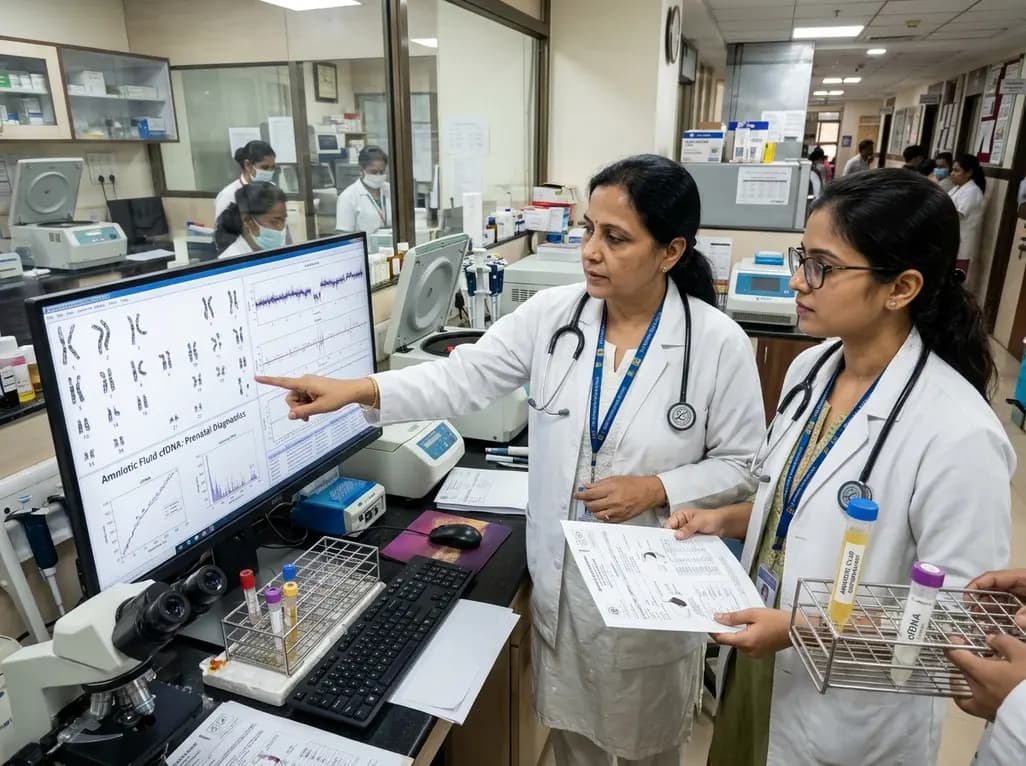
Amniotic fluid cell-free DNA offers a rapid alternative to cultured amniocytes in prenatal testing. With high yield, lack of maternal contamination, and full concordance across microarrays and exome sequencing, it dramatically cuts diagnostic turnaround time.
Today

A prospective phase IIa trial investigated TSG-01, an agent rich in secondary ginsenosides, for chronic heart failure in coronary artery disease. While NYHA functional class did not differ, TSG-01 significantly improved ejection fraction in digoxin-free patients with a favorable safety profile across all groups.
Today

A systematic review of 15 studies and 574 competitive weightlifters establishes normative benchmarks for snatch drop-under kinematics, highlighting turnover speed, horizontal displacement, and trunk alignment to optimize performance and prevent overhead injuries.
Today

Knocking out the adipocyte ETB receptor attenuates high-fat diet-induced dyslipidemia, lowering LDL, cholesterol, and free fatty acids while preserving lipid oxidation gene expression in visceral adipose tissue.
Today
