.webp&w=384&q=75)

Loading, please wait...
Loading, please wait...
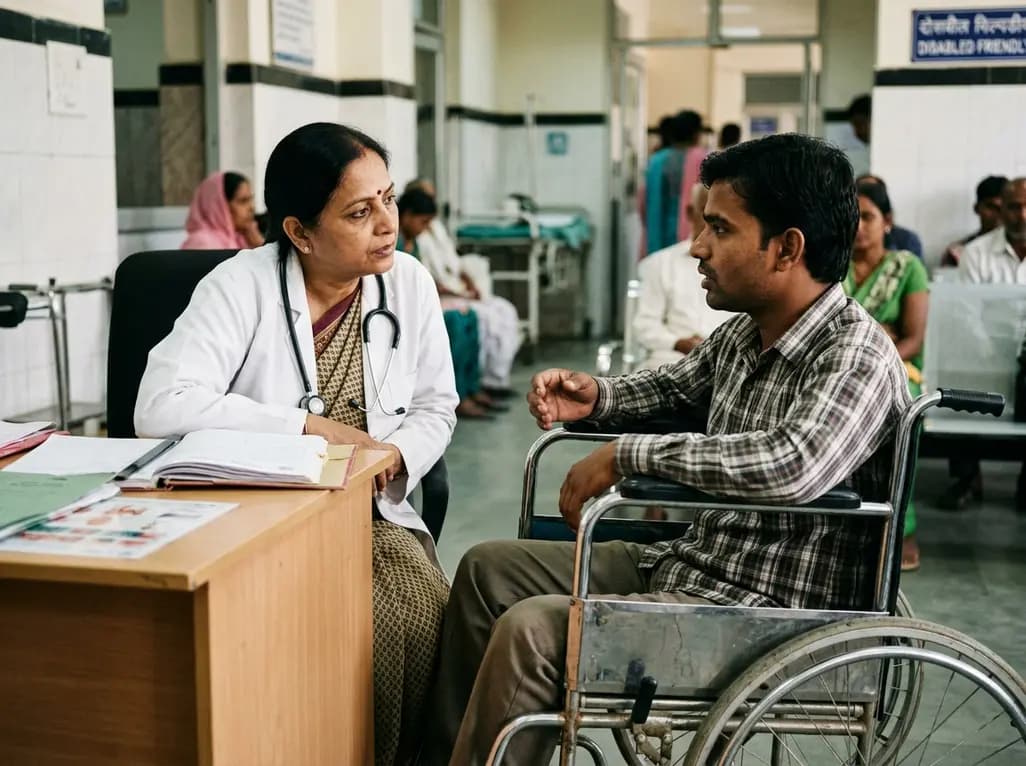
Nearly a decade has passed since the enactment of India's landmark Rights of Persons with Disabilities (RPWD) Act, 2016. However, the formulation of a revised national disability policy remains stalled in procedural limbo. The country continues to rely on an outdated national policy adopted twenty years ago in 2006. Consequently, disability advocates and medical professionals have raised serious concerns regarding this prolonged policy paralysis. The organisation Doctors with Disabilities: Agents of Change recently addressed a formal representation to the Union Government. They stressed that a contemporary roadmap is critical to translate statutory mandates into real-world administrative action. Without an updated policy, institutional initiatives remain fragmented across ministries and state departments. Therefore, civil society leaders demand urgent intervention to align nationwide execution with modern human rights benchmarks.
India officially ratified the United Nations Convention on the Rights of Persons with Disabilities in 2007. Later, Parliament replaced the 1995 legislation with the comprehensive RPWD Act in 2016. Furthermore, the country adopted the National Education Policy in 2020 to expand educational equity. The Department of Empowerment of Persons with Disabilities initiated efforts to draft a modern framework in 2021. An expert task force submitted a formal draft policy in October 2021. Subsequently, authorities invited public suggestions and extended the feedback window until September 2022. Nevertheless, four years after these stakeholder consultations, an updated policy has not arrived. As a result, governance structures continue operating under directives formulated two decades ago.
This prolonged delay creates substantial friction between progressive statutory rights and executive delivery. Statutory provisions establish clear obligations for accessibility, reasonable accommodation, and social protection. However, systemic operationalisation demands a coordinated, measurable, and adequately funded central guideline. Health professionals emphasize that fragmented implementation compromises the statutory protection intended by Parliament. Meanwhile, administrative agencies struggle to establish uniform operational benchmarks across diverse sectors. Therefore, finalizing an overarching directive is indispensable to hold public institutions accountable across all states.
A core challenge highlighted by health advocates involves the outdated medicalisation of disability. Historically, administrative systems treated biological impairment as an absolute proxy for personal incapacity. Consequently, certified impairment percentages often dictated whether an individual qualified for basic educational or professional opportunities. Nevertheless, recent judicial rulings from high courts and the Supreme Court strongly contradict this rigid assumption. These judgments affirm that legal inclusion depends on functional capacity and reasonable accommodation rather than arbitrary percentage thresholds. Therefore, expert medical practitioners urge the government to adopt a biopsychosocial assessment model.
In clinical practice, traditional disability certification often emphasizes anatomical deficit over environmental barriers. In contrast, the UN Convention mandates an evaluation of lived functioning within physical and social environments. When medical boards focus strictly on physical pathology, they frequently overlook accessible technologies that enable independent functioning. Furthermore, this narrow outlook limits disabled healthcare workers from pursuing clinical careers. Health professionals with disabilities emphasize that reasonable accommodation can successfully bridge physical barriers in clinical spaces. Consequently, the revised framework must guide medical boards to replace archaic gatekeeping with progressive, functional assessments.
Equitable access to healthcare institutions remains an urgent clinical priority across India. In 2023, the Ministry of Health and Family Welfare notified specific Accessibility Standards for Healthcare. These standards mandate barrier-free access across all public hospitals, diagnostic clinics, and primary health centres. However, the draft disability roadmap failed to incorporate these healthcare-specific accessibility benchmarks effectively. As a result, convergence between disability welfare policies and public health infrastructure projects remains exceptionally weak. Clinicians observe that patients with mobility or sensory limitations continue facing severe physical hurdles at hospitals.
Moreover, accessible healthcare entails far more than constructing concrete entrance ramps. Clinical equipment such as adjustable examination tables, accessible mammography machines, and specialized radiological scanners remain scarce. In addition, communication access for deaf and visually impaired patients requires regular sign language interpreters and accessible electronic records. When health facilities lack these features, patient autonomy and quality of care suffer substantially. Therefore, the revised framework must enforce mandatory compliance audits for all healthcare facilities. Clinicians must actively champion accessible medical infrastructure to guarantee equal treatment for disabled citizens.
Another major shortcoming identified in current policy deliberations is the weakness of public procurement frameworks. Governments routinely procure goods, digital hardware, medical devices, and public services without strict accessibility conditions. Consequently, public investment often inadvertently finances inaccessible digital platforms and unusable physical equipment. Disability rights organizations argue that public procurement must mandate universal design standards from the earliest tender stages. If vendors fail to deliver accessible tools, government agencies must reject those bids outright. Therefore, embedding mandatory accessibility standards into procurement manuals is essential for systemic inclusion.
Furthermore, effective inclusion requires robust convergence among disparate government ministries. In many states, social justice departments function in complete isolation from health, education, and transport authorities. Because inter-ministerial coordination remains sparse, welfare programs frequently run into administrative gridlock. For example, rural public transit networks rarely integrate with regional health centre access points. Consequently, impoverished disabled patients miss vital therapies due to basic transportation hurdles. An updated national strategy must establish shared accountability frameworks across all central ministries and state directorates.
The protracted delay in policy notification impacts practicing physicians directly. Medical doctors across district hospitals serve on certification boards and evaluate functional limitations daily. However, unclear guidelines and conflicting judicial rulings place physicians in difficult regulatory positions. Without updated operational protocols, certification practices vary widely across different states and medical boards. In addition, training on disability rights remains limited in undergraduate and postgraduate medical curricula. Consequently, clinicians often receive minimal training regarding assistive technology and reasonable accommodation principles.
Fortunately, regulatory bodies have begun integrating foundational disability competencies into medical education guidelines. Nevertheless, clinical institutions require an authoritative national framework to standardize institutional adjustments across hospitals. When healthcare systems accommodate disabled employees and patients, clinical outcomes improve across communities. Clinicians with disabilities offer unique insights into patient care and healthcare delivery challenges. Therefore, the medical community must actively support policy revisions that dismantle professional discrimination. A rights-based national strategy will empower doctors to deliver equitable, respectful, and compassionate care.
Q1: Why is a revised national disability policy urgently needed in India?
India requires an updated policy because the existing framework dates back to 2006. Since that time, India ratified the UN Convention on the Rights of Persons with Disabilities and passed the comprehensive RPWD Act, 2016. An updated national strategy is crucial to coordinate cross-ministerial implementation, allocate adequate public funds, and enforce uniform accessibility standards across all administrative departments and healthcare institutions.
Q2: How does the current policy approach affect disability certification?
Current certification approaches frequently rely on an outdated medical model that equates anatomical impairment directly with total incapacity. This narrow assessment method often ignores modern assistive technology and reasonable accommodation. Health professionals urge authorities to transition toward functional assessment guidelines. This paradigm shift ensures that certified evaluation accurately reflects a person's practical abilities within accessible social and clinical working environments.
Q3: What specific healthcare accessibility issues require policy intervention?
Healthcare facilities across India frequently lack barrier-free physical architecture, adjustable clinical examination tables, accessible diagnostic imaging devices, and qualified sign language interpreters. A comprehensive national policy must formally integrate the Health Ministry's accessibility guidelines into mandatory procurement and hospital accreditation frameworks. Enforcing these benchmarks ensures equitable clinical outcomes, dignified treatment, and seamless access for patients and healthcare workers with disabilities.
Disclaimer: This content is for informational and educational purposes only. It does not constitute medical advice or replace professional judgment. Refer to the latest local and national guidelines for clinical practice.
References

Read summarized clinical updates, watch expert medical content, and earn CME certifications right from your smartphone.
Open your smartphone camera to scan and install.





Ten years post the RPWD Act 2016 and two decades after the 2006 framework, India's revised national disability policy remains pending. Health professionals urge a decisive shift from rigid medical impairment models toward a rights-based, functional accommodation approach that prioritizes barrier-free healthcare.
Today

A study of over 340,000 Medicare beneficiaries shows that hospital artificial intelligence tools, particularly risk prediction algorithms, significantly lower readmissions and acute care utilization in older adults with Alzheimer's disease and dementia without driving up total healthcare spending.
Today
A comprehensive meta-analysis of over 278,000 women demonstrates that maternal atopic dermatitis significantly increases risks of premature rupture of membranes and low birth weight. Discover essential clinical insights on disease mechanisms, serial antenatal growth monitoring, and safe therapeutic interventions.
Today

Over 60 international public health researchers have advised FSSAI to mandate front-of-pack warning labels for any packaged product high in even one critical nutrient: sugar, saturated fat, or sodium. This reform counters phased rollouts to accelerate consumer protection and address India's chronic disease burden.
Today
India's premier scientific bodies have joined the Armed Forces Medical Services to solve unique physiological and operational challenges faced by soldiers. The national collaboration covers combat casualty care, artificial intelligence diagnostics, bionic prosthetics, and extreme-environment physiological resilience.
Today
A cross-sectional study reveals that elevated METS-IR is independently associated with higher myopia odds in adolescents, showing biological synergy with obesity and highlighting the need for metabolic screening in pediatric eye care.
Yesterday
