.webp&w=384&q=75)

Loading, please wait...
Loading, please wait...

Caring for older adults with Alzheimer's disease and related dementias presents complex diagnostic and logistical challenges. These vulnerable patients frequently experience fragmented care, high rates of preventable acute admissions, and severe functional decompensation during hospital stays. To address these systemic inefficiencies, healthcare facilities are rapidly adopting hospital artificial intelligence tools to refine risk assessment, streamline clinical workflows, and optimize discharge planning. A groundbreaking nationwide investigation published in the Journal of the American Geriatrics Society evaluated over 340,000 Medicare beneficiaries to assess how algorithmic systems influence healthcare utilization and costs in this clinically fragile demographic. The findings offer compelling evidence for clinical leadership seeking to balance clinical efficacy with cost containment.
Hospitalized older adults with dementia often present with atypical clinical features, extensive multimorbidity, and significant polypharmacy. Consequently, traditional risk stratification scores frequently fail to capture dynamic physiological decline or subtle transitions toward acute delirium. Modern hospital artificial intelligence tools utilize machine learning algorithms to evaluate comprehensive electronic health record data, laboratory trends, vital signs, and nursing notes in real time. Rather than relying solely on static clinical metrics, these computational systems detect latent patterns indicative of clinical deterioration. By providing automated decision support, these platforms assist multidisciplinary teams in recognizing early physiological decompensation before irreversible adverse events occur. Furthermore, the systematic integration of machine learning provides standardized risk scores across complex inpatient cohorts, enabling clinicians to tailor surveillance intensities appropriately.
The landmark cross-sectional analysis examined 340,509 Medicare fee-for-service beneficiaries aged 65 years and older diagnosed with dementia. Researchers investigated four distinct clinical machine learning modalities: inpatient risk prediction, high-risk outpatient identification, automated patient monitoring, and treatment recommendations. Ultimately, the data revealed that institutions adopting patient-related algorithmic systems achieved significantly lower odds of frequent hospitalizations, 30-day readmissions, and preventable acute admissions. In particular, institutions deploying inpatient risk prediction algorithms achieved the most robust reductions in secondary complications. These predictive algorithms alerted clinical teams to emerging complications such as hospital-acquired infections, aspiration events, and fall risks. Therefore, proactive nursing interventions, timely medication adjustments, and focused transitional discharge protocols successfully mitigated avoidable rehospitalizations among these vulnerable older adults.
Evaluating digital health technologies requires a balanced analysis of institutional expenditures alongside patient financial burdens. In this nationwide study, distinct machine learning modalities yielded divergent economic outcomes. Inpatient risk prediction tools were consistently associated with reductions in total Medicare spending. This cost reduction resulted directly from the prevention of prolonged intensive care admissions and avoidable readmissions. Conversely, algorithmic platforms designed to identify high-risk outpatients correlated with higher overall Medicare spending. This expenditure increase likely reflected proactive outpatient referrals, frequent diagnostic assessments, and timely specialty consultations that effectively prevented emergency crises. However, the study also identified a concerning trend: treatment recommendation algorithms correlated with elevated out-of-pocket spending for beneficiaries. Thus, while advanced algorithms generate systemic efficiencies, hospital systems must ensure automated treatment recommendations do not impose unintended financial toxicity on patients and their caregivers.
To maximize the clinical utility of computational tools, hospital administrators must integrate predictive algorithms seamlessly into existing electronic health record workflows. When predictive alerts function unobtrusively within clinical dashboards, attending physicians, geriatricians, and bedside nurses can immediately interpret risk scores without alert fatigue. For instance, risk prediction models can automatically trigger specialized geriatric assessment bundles, pharmacists' medication reviews, and physical therapy consultations upon admission. In addition, automated monitoring systems identify subtle trajectory shifts, such as altered sleep-wake cycles or declining oral intake, which frequently precede overt delirium. By identifying these subclinical markers early, care teams can implement non-pharmacological delirium protocols promptly. Consequently, structured digital workflows protect vulnerable individuals from functional decline and iatrogenic harm during hospitalization.
Despite promising results, healthcare organizations face considerable barriers when deploying artificial intelligence in geriatric medicine. Many healthcare facilities operate disparate electronic platforms that lack robust interoperability. Therefore, harmonizing data streams across clinical departments remains essential for accurate model training and validation. Furthermore, algorithms trained on non-representative populations may perpetuate algorithmic bias, producing inaccurate risk estimates for historically underserved demographics. In resource-conscious environments, such as expanding healthcare networks across India and developing nations, selecting cost-effective software architecture is crucial. Health systems must prioritize validated risk-prediction tools that deliver actionable clinical insights rather than unproven diagnostic novelties. Most importantly, computational systems must assist clinical intuition rather than displace empathetic, bedside bedside human assessment in compassionate dementia care.
The transition from inpatient care to domestic or community settings represents the most vulnerable phase in dementia management. Proactive identification of post-discharge instability allows transitional care teams to schedule timely follow-up visits, coordinate home nursing support, and educate primary caregivers regarding early warning signs of disease exacerbation. When predictive data flows seamlessly from acute care facilities to primary care practitioners, outpatient clinicians can monitor vulnerable patients with heightened vigilance. Moreover, healthcare systems that leverage predictive analytics can allocate social workers and community health navigators to address non-medical social drivers of health. As artificial intelligence models continue to mature, longitudinal data integration will bridge historical silos between acute hospitalization and long-term community maintenance.
These specialized computational platforms continuously analyze dynamic electronic health record data, including laboratory parameters, vital signs, and nursing notes. By identifying subtle patterns of clinical deterioration, the software alerts multidisciplinary teams to emerging complications like sepsis, aspiration, or delirium. Consequently, clinicians can initiate timely preventive interventions, adjust medications, and mobilize geriatric resources to avoid secondary complications.
Evidence demonstrates that economic outcomes depend heavily on the specific functional role of the algorithm. Inpatient risk prediction tools reduce overall healthcare expenditures by preventing costly readmissions, prolonged intensive care stays, and preventable acute complications. However, outpatient identification platforms often increase short-term diagnostic spending, while treatment recommendation tools may inadvertently elevate patient out-of-pocket costs.
Artificial intelligence serves strictly as an assistive clinical decision support tool and cannot replace comprehensive clinical examination. While algorithms excel at processing complex datasets and recognizing subtle risk patterns, they lack contextual nuance, moral empathy, and ethical reasoning. Clinicians must always synthesize algorithmic predictions with patient-centered goals of care and holistic bedside evaluations.
Disclaimer: This content is for informational and educational purposes only and should not be considered medical advice. Always consult a qualified healthcare provider regarding any medical condition. Refer to the latest local and national guidelines for clinical practice.
References
Jang S et al. Hospital Artificial Intelligence Tools and Inpatient Utilization and Costs in Older Adults with Alzheimer's Disease and Related Dementias. J Am Geriatr Soc. 2026 Sep 14. doi: 10.1111/jgs.70704. PMID: 42734057.
Mahmoudi E. Lived Experiences Versus Artificial Intelligence to Reduce Hospital Readmission: A Qualitative Study. Innov Aging. 2025 Dec;9(8):igae112. doi: 10.1093/geroni/igae112.
Abedi V et al. Artificial intelligence applications for dementia: A systematic review for clinical research and healthcare delivery. Front Digit Health. 2025 Aug;7:1425890. doi: 10.3389/fdgth.2025.1425890.

Read summarized clinical updates, watch expert medical content, and earn CME certifications right from your smartphone.
Open your smartphone camera to scan and install.





A study of over 340,000 Medicare beneficiaries shows that hospital artificial intelligence tools, particularly risk prediction algorithms, significantly lower readmissions and acute care utilization in older adults with Alzheimer's disease and dementia without driving up total healthcare spending.
Today

A comprehensive meta-analysis of over 278,000 women demonstrates that maternal atopic dermatitis significantly increases risks of premature rupture of membranes and low birth weight. Discover essential clinical insights on disease mechanisms, serial antenatal growth monitoring, and safe therapeutic interventions.
Today

Over 60 international public health researchers have advised FSSAI to mandate front-of-pack warning labels for any packaged product high in even one critical nutrient: sugar, saturated fat, or sodium. This reform counters phased rollouts to accelerate consumer protection and address India's chronic disease burden.
Today
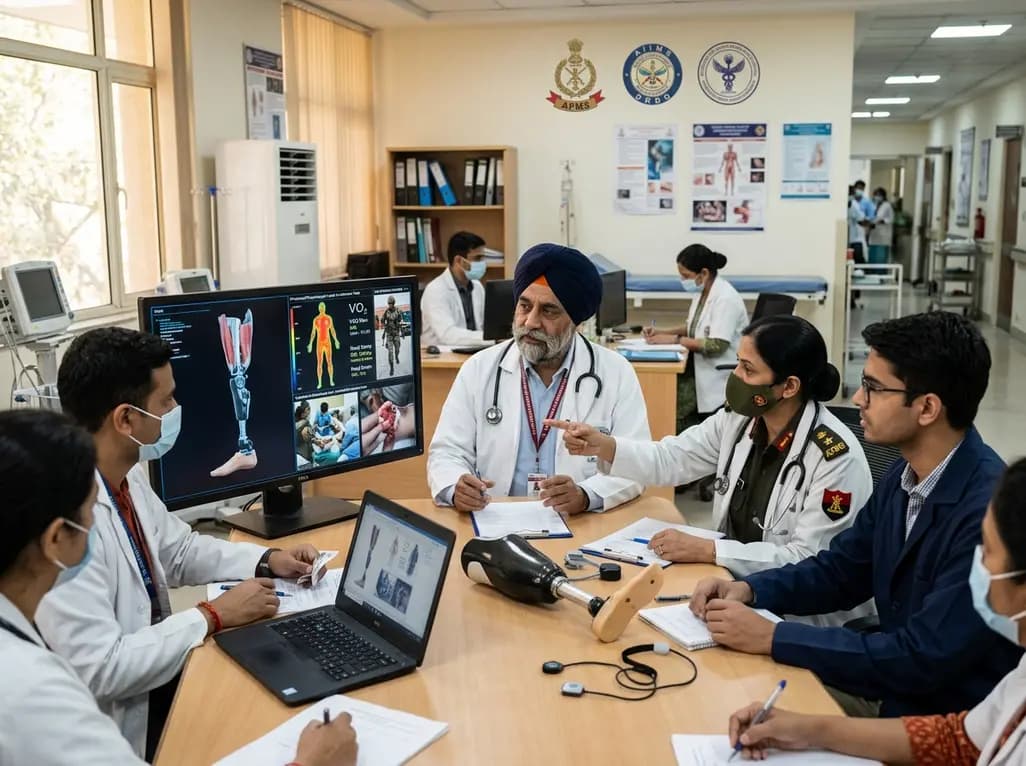
India's premier scientific bodies have joined the Armed Forces Medical Services to solve unique physiological and operational challenges faced by soldiers. The national collaboration covers combat casualty care, artificial intelligence diagnostics, bionic prosthetics, and extreme-environment physiological resilience.
Today
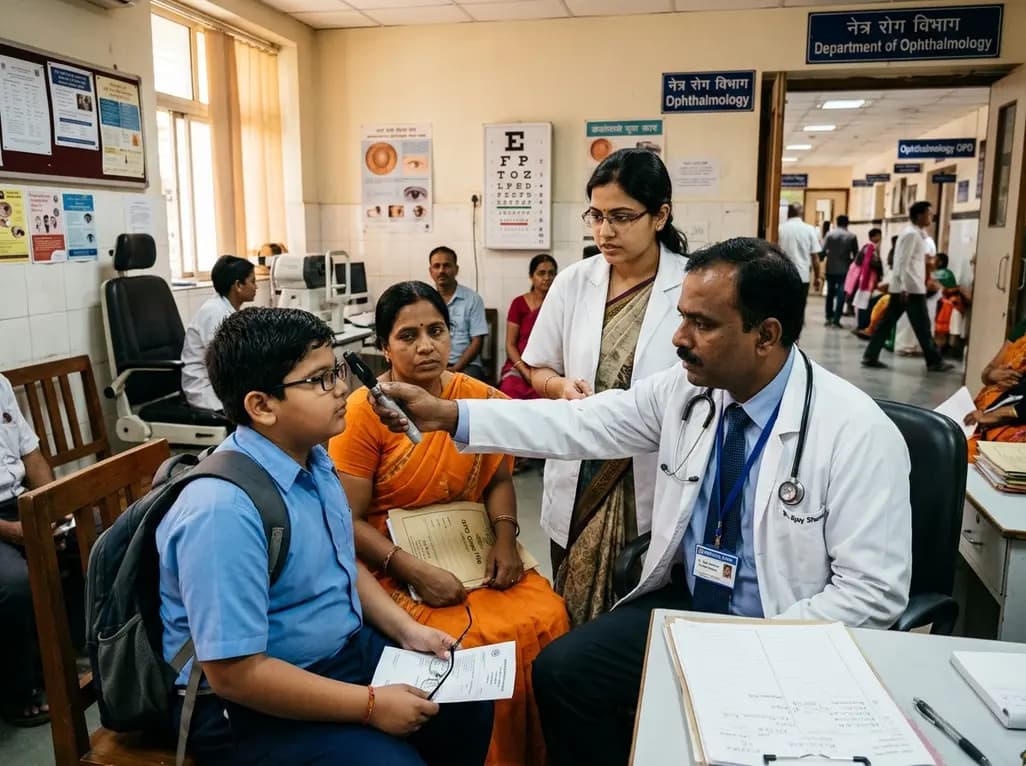
A cross-sectional study reveals that elevated METS-IR is independently associated with higher myopia odds in adolescents, showing biological synergy with obesity and highlighting the need for metabolic screening in pediatric eye care.
Yesterday
