.webp&w=384&q=75)

Loading, please wait...
Loading, please wait...
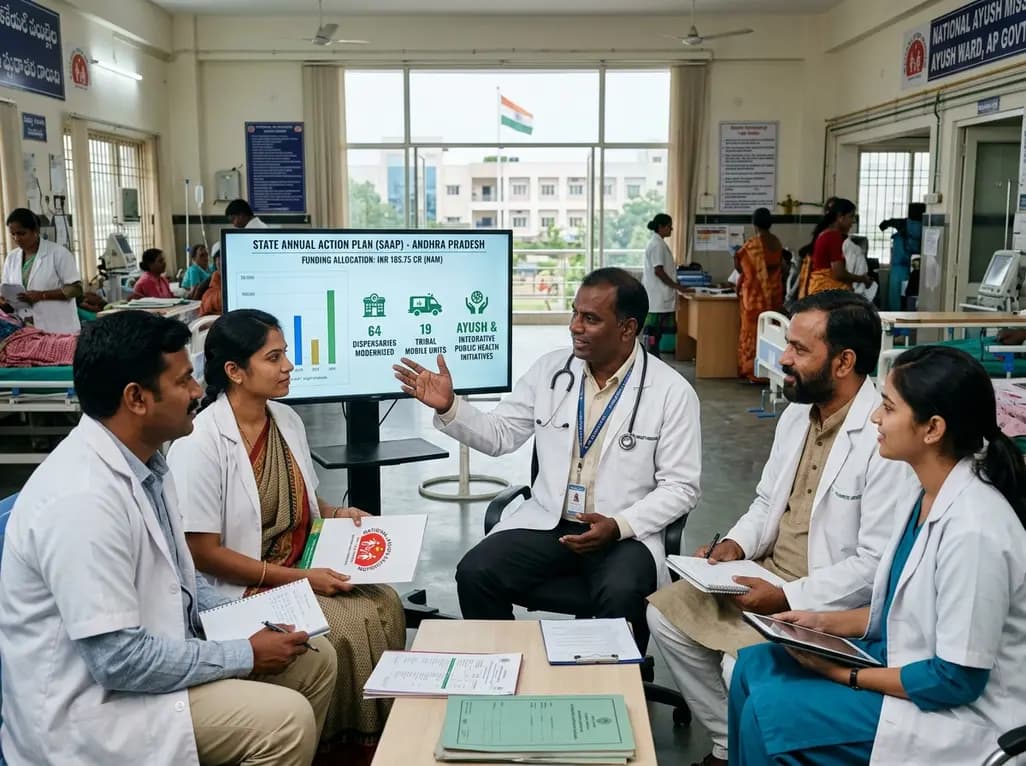
The Union Ministry of AYUSH has formally cleared a record Rs 185.75 crore State Annual Action Plan for Andhra Pradesh under the National AYUSH Mission for the 2026-27 fiscal year. This milestone marks the highest single-year financial allocation granted to the state since the inception of the flagship scheme in 2014. Consequently, this decisive financial expansion will accelerate the integration of traditional systems of medicine across primary, secondary, and tertiary public healthcare tiers throughout the state.
Historically, central fiscal assistance for traditional medicine in Andhra Pradesh remained subdued. Between 2014-15 and 2023-24, the state received a cumulative total of Rs 120.17 crore under the mission. In fact, central authorities released no budget allocations for the state during 2021-22, 2022-23, and 2023-24. However, recent policy alignments have created an unprecedented surge in central disbursements over the last three financial cycles.
Specifically, the approved allocations under the current administration reached Rs 83.23 crore in 2024-25, which doubled to Rs 165.66 crore in 2025-26. The funding reached a pinnacle of Rs 185.75 crore for 2026-27, yielding an aggregate three-year sanction of Rs 434.64 crore. State health minister Satya Kumar Yadav attributed this expansion to proactive bilateral coordination. Furthermore, the substantial capital inflow empowers the state health machinery to upgrade essential medical supply chains, recruit qualified medical officers, and modernise public health delivery pathways.
A primary pillar of the newly sanctioned framework focuses on delivering equitable healthcare to historically underserved tribal regions. Under the National AYUSH Mission, the department will deploy 19 dedicated Mobile Medical Units across nine Integrated Tribal Development Agency zones. These zones include remote geographical regions such as Rampachodavaram, Chintur, Parvathipuram, and Paderu, where conventional healthcare access remains logistically challenging.
The government earmarked Rs 1.26 crore specifically to operate these mobile healthcare platforms. Consequently, each clinical team will comprise AYUSH medical officers, pharmacists, and multipurpose health workers who will deliver free diagnostic examinations, clinical consultations, and essential polyherbal formulations directly to remote habitations. Furthermore, these units will conduct sustained nutrition awareness campaigns, screen vulnerable populations for lifestyle illnesses, and provide timely interventions for endemic disorders in remote tribal pockets.
In addition to mobile outreach, the state action plan channels substantial funding into strengthening permanent medical facilities. The government approved Rs 12.80 crore to comprehensively modernise 64 AYUSH dispensaries, allotting Rs 20 lakh to each individual facility for civil repairs, diagnostic instruments, and clinical equipment. Additionally, authorities sanctioned Rs 22.16 crore to guarantee the uninterrupted supply of free essential medicines across 712 dispensaries statewide.
This extensive drug supply network encompasses 334 Ayurvedic, 192 Homeopathic, 75 Unani, and 111 National Rural Health Mission co-located dispensaries. Moreover, medical education receives substantial investment, with Rs 38.84 crore allocated to reinforce AYUSH academic institutions. Notably, this includes funding for the proposed Government College of Naturopathy and Yoga, which features a dedicated 100-bed teaching hospital at the Visakhapatnam Institute of Medical Sciences. These long-term infrastructure upgrades ensure higher clinical standards and enhance residency training for aspiring practitioners.
The approved plan actively diversifies clinical specialities by establishing 58 specialised wellness centres with a budget of Rs 5.28 crore. This network includes 55 Ayurvedic Panchakarma units and three dedicated Unani therapy centres. Concurrently, the state secured continuation funding for six 50-bed integrated AYUSH hospitals located across Srikakulam, Alluri Sitharama Raju, NTR, Guntur, Prakasam, and Tirupati districts.
Furthermore, the plan introduces several targeted clinical programmes across tertiary institutions. These include an AYUSH Sports Medicine Centre of Excellence in Kadapa to treat athletic injuries, alongside dedicated alcohol de-addiction wings at four government AYUSH teaching hospitals. The state will also establish yoga wellness centres within the state secretariat and four major prisons to manage chronic stress and lifestyle-related morbidity. Additionally, a dedicated outpatient clinic on the High Court premises will deliver primary Ayurvedic care to legal staff and judicial officers.
Modernising administrative workflows represents another core priority within the approved annual plan. The government earmarked Rs 50 lakh to digitise operational workflows across 601 dispensaries, while investing Rs 62.80 lakh to supply laptops and connectivity kits to 157 AYUSH Medical Officers. Similarly, authorities allocated Rs 5.75 crore across 126 Ayushman Arogya Mandirs to fund yoga instructors, community health officers, and baseline laboratory investigations.
Simultaneously, specialized therapeutic extensions are underway at apex hospitals. For example, the Dr AL Government Ayurvedic Hospital in Vijayawada will introduce an Akshi Tarpana ocular therapy unit and a Herbal Kwath preparation unit. Furthermore, community-wide public health programs will expand rapidly, including the Ayurvidya school health initiative, the Vayomitra geriatric care project, the Suprajatha maternal health scheme, and structured community protocols for managing musculoskeletal disorders.
This major funding allocation marks a decisive transition toward structured integrative healthcare in Andhra Pradesh. By modernising basic dispensaries and establishing 50-bed integrated hospitals, the state creates an organized referral chain connecting grassroots wellness centres directly to tertiary teaching hospitals. Consequently, clinicians can cross-refer patients requiring evidence-based Panchakarma therapies, therapeutic yoga, or specialised dietary interventions alongside standard medical care.
Moreover, expanding standardized pharmacotherapy and implementing electronic records across 601 dispensaries substantially improves clinical tracking and drug safety monitoring. The targeted deployment of specialized services, such as sports medicine in Kadapa and de-addiction centres in teaching hospitals, offers structured alternatives for chronic morbidity. Ultimately, integrating traditional systems within the wider public health architecture strengthens primary prevention, reduces out-of-pocket patient expenditures, and improves holistic health outcomes across diverse demographics.
Q1: What is the total allocation approved for Andhra Pradesh under the National AYUSH Mission for 2026-27?
The central government approved a record State Annual Action Plan of Rs 185.75 crore for Andhra Pradesh under the National AYUSH Mission for the 2026-27 fiscal year. This marks the highest annual sanction received by the state since the mission launched in 2014, taking the three-year cumulative funding under the coalition government to Rs 434.64 crore.
Q2: How does the approved action plan address healthcare delivery in tribal and remote areas?
The plan allocates Rs 1.26 crore to deploy 19 Mobile Medical Units across nine Integrated Tribal Development Agency areas, including Rampachodavaram, Chintur, Parvathipuram, and Paderu. These units feature multidisciplinary clinical teams that provide free diagnostic assessments, polyherbal medicines, and preventive health education directly to underserved rural communities.
Q3: Which specialised clinical centres and public health schemes are included in the new plan?
The plan establishes 58 wellness centres, an AYUSH Sports Medicine Centre of Excellence in Kadapa, four hospital-based de-addiction centres, and yoga units in major prisons. Additionally, it funds public health schemes such as Ayurvidya for schoolchildren, Vayomitra for geriatric care, and the Suprajatha maternal healthcare initiative.
Disclaimer: This content is for informational and educational purposes only. It does not constitute medical advice or replace professional judgment. Refer to the latest local and national guidelines for clinical practice.
References

Read summarized clinical updates, watch expert medical content, and earn CME certifications right from your smartphone.
Open your smartphone camera to scan and install.





The Union government has approved a record Rs 185.75 crore State Annual Action Plan for Andhra Pradesh under the National AYUSH Mission. The funding supports 19 tribal mobile units, modernization of 64 dispensaries, specialized wellness facilities, digital infrastructure, and integrative public health initiatives.
last month

Elevated serum HIF-1α levels correlate significantly with MELD scores and independent risk of hepatic decompensation, highlighting the biomarker's emerging diagnostic and prognostic utility in chronic liver disease.
Today
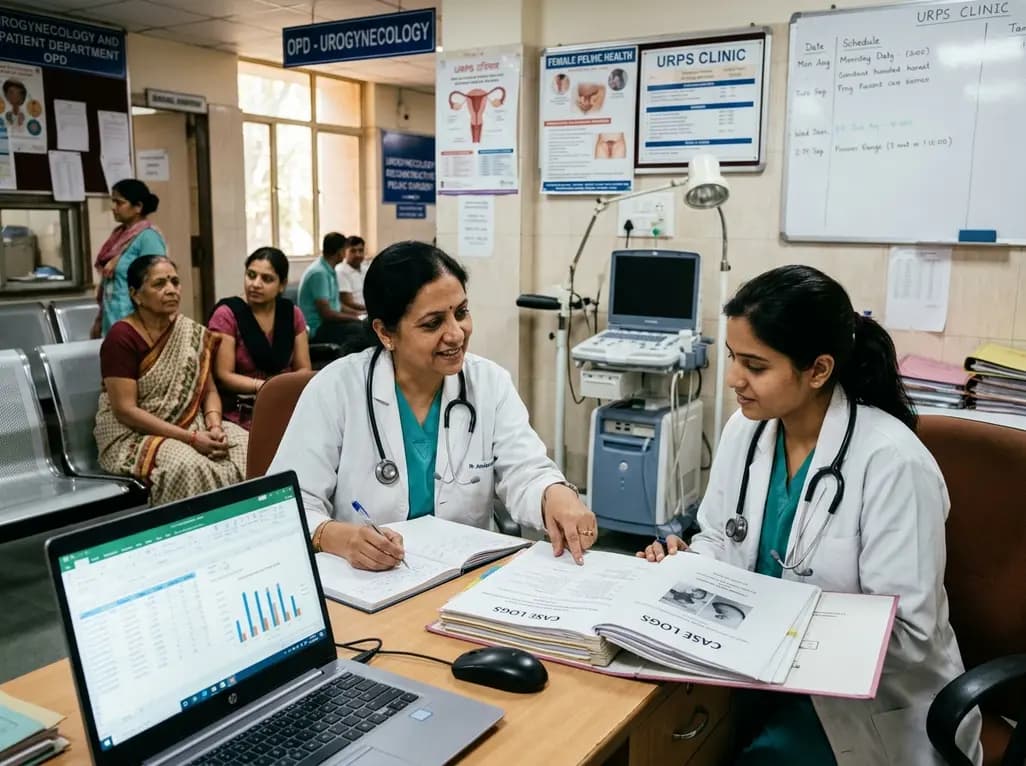
A ten-year cohort study of ABU case logs reveals that URPS fellowship training significantly drives higher annual case volumes, advanced surgical complexity, and increased female representation in pelvic floor reconstruction, underscoring the vital need for structured subspecialty training.
Today
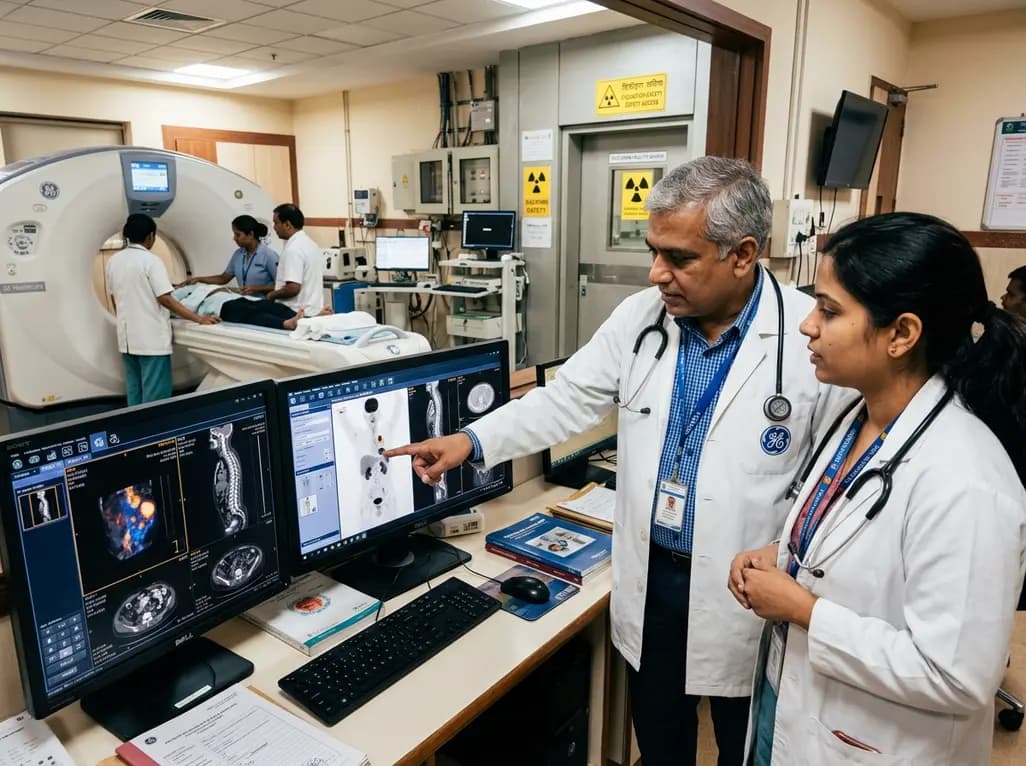
GE HealthCare has agreed to acquire Sofie Biosciences in a 945 million dollar all-cash transaction. The deal secures global rights to the investigational pan-cancer tracer FAPI-74 and expands cyclotron manufacturing infrastructure to accelerate precision theranostics and clinical molecular imaging workflows.
Today
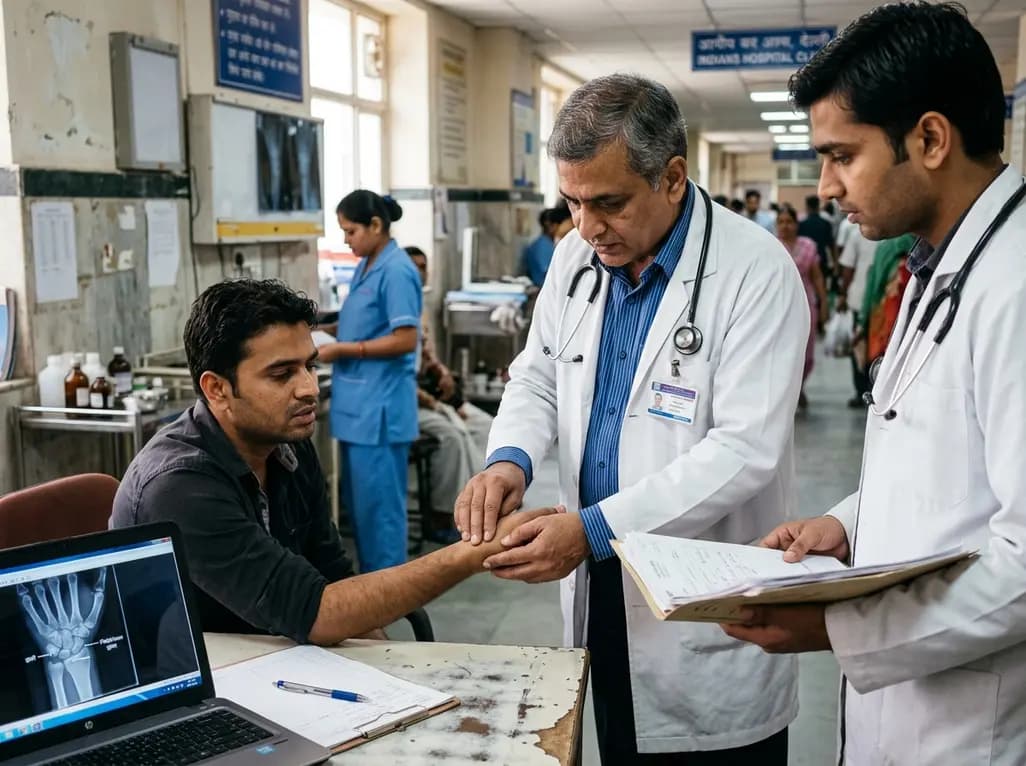
Posttraumatic pisotriquetral instability is a rare wrist injury causing severe hypothenar pain and weakness. Explore clinical examination, imaging, and pisiformectomy.
Today
India's food safety authority has cracked down on high-caffeine beverages sold under stimulant branding, prompting legal challenges from major beverage corporations. This review examines FSSAI regulations, cardiac and metabolic complications, pediatric risks, and actionable counseling strategies for physicians.
Today
