.webp&w=384&q=75)

Loading, please wait...
Loading, please wait...
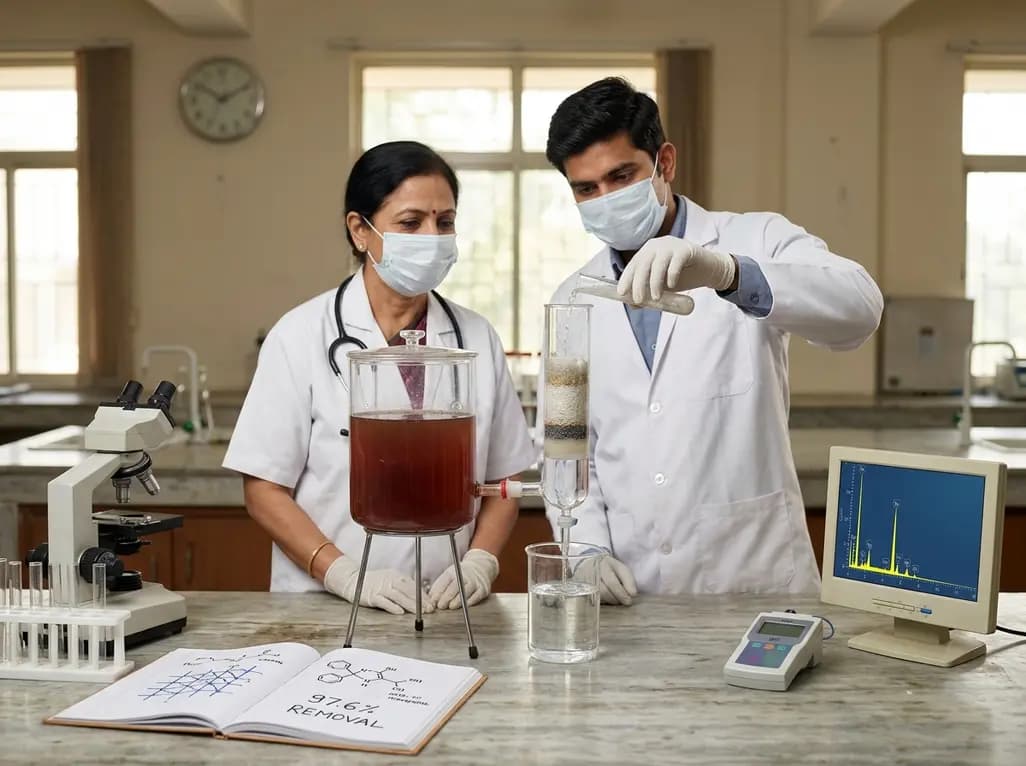
The global challenge of water scarcity necessitates advanced solutions to remove industrial pollutants and heavy metals. Consequently, researchers have pioneered nanotechnology in water purification to create high-capacity adsorbent materials. A new study introduces a ZIF-cellulose nanocrystal (ZIF-CNC) nanohybrid platform integrated within a flexible polymer matrix. This innovation allows for the uniform dispersion of metal-organic framework (MOF) domains while maintaining high porosity. Notably, this structural stability ensures that active sites remain accessible for capturing contaminants from wastewater.
By adjusting processing routes, scientists reconfigured the same chemical composition into different physical states. In the hydrogel state, the material exhibits high ionic conductivity, which is essential for sensing applications. Conversely, the freeze-cast cryogel state creates an interconnected, highly porous architecture. This specific structure significantly reduces mass transport limitations. Specifically, the cryogel reaches a 91% porosity level, allowing for rapid and efficient flow during the treatment process.
The application of nanotechnology in water purification demonstrates remarkable effectiveness in laboratory settings. The freeze-cast cryogel achieved a 97.6% removal rate for methylene blue, a common industrial dye. Furthermore, the material showed a maximum copper (Cu) adsorption capacity of 154.5 mg·g with nearly 90% removal efficiency. Coordination and interfacial interactions at the ZIF-CNC domains dominate the adsorption process. This process follows pseudo-second-order kinetics, indicating high chemical affinity between the adsorbent and the pollutants. Practical tests using seed germination assays confirmed that the treated water successfully restores plant growth, highlighting its real-world utility.
These findings provide a versatile strategy for coupling MOF nanohybrids with directed processing techniques. Because the strategy is scalable, it holds promise for large-scale water treatment facilities. Resultantly, this technology could help mitigate the health risks associated with heavy metal toxicity and waterborne diseases in developing regions. Researchers emphasize that the ability to decouple composition from structure allows for tailored solutions for specific environmental contaminants.
Nanomaterials like MOF-CNC hybrids provide a vast surface area with specific chemical sites that bind to heavy metal ions through coordination. This process effectively traps contaminants like copper and lead, removing them from the water supply.
Cryogels feature a highly interconnected and porous structure. This architecture minimizes resistance to water flow, allowing for faster processing speeds and better utilization of active sites compared to traditional dense filtration media.
Yes, the study demonstrated that water treated with these nanohybrids restored seed germination and plant growth to near-reference conditions, indicating the effective removal of phytotoxic elements.
Disclaimer: This content is for informational and educational purposes only and does not constitute medical or professional advice. The application of nanotechnology in public health should be conducted by qualified environmental and engineering professionals. Refer to the latest local and national guidelines for clinical practice and environmental safety.
References
1. Ipakchi H et al. Programmable MOF-CNC Nanohybrid Networks Enabling Ion Transport Sensing and Efficient Water Purification. ACS Appl Mater Interfaces. 2026 Jun 08. doi: 10.1021/acsami.6c06849. PMID: 42260316.
2. Saeed F et al. Nanotechnology in water purification and treatment: Current outlook and future perspectives. IIP Series. 2007 (Updated 2024). DOI: 10.1007/s11356-024-33261-2.
3. Nassar AA et al. Sustainable water treatment solutions using MOFs: enhancing efficiency and reducing environmental impact. Nanoscale. 2026. DOI: 10.1039/D6NR01234A.
"
Read summarized clinical updates, watch expert medical content, and earn CME certifications right from your smartphone.
Open your smartphone camera to scan and install.





New MOF-CNC nanohybrids revolutionize water treatment by removing 97.6% of dyes and heavy metals, offering a scalable solution for global clean water access...
4 months ago

Explore vital recurrent stroke predictors in lacunar stroke patients managed with intensive blood pressure lowering. This analysis examines trial findings from SPS3 to uncover residual vascular risks, metabolic factors, and targeted secondary prevention strategies for high-risk neurological patients.
Today

Odisha has established India's first state-level clinical protocol specifically tailored for pregnant women with sickle cell disease. Developed with NHM and UNICEF, the framework provides structured antenatal screening, crisis mitigation, standardized referral pathways, and specialized interdisciplinary care.
Today

India is advancing preventive healthcare by integrating genomics, artificial intelligence, and quantum technologies. With the SANGAM programme sequencing one million Indian genomes, clinicians can unlock personalized therapies, detect cardiometabolic risks early, and curb the burden of diabetes and heart disease.
Today

A randomized controlled trial demonstrates that an eight-week dual-task training intervention significantly improves static and dynamic postural control over standard balance exercises in individuals with chronic ankle instability, addressing critical neurocognitive deficits during athletic and daily activities.
Today

A retrospective cohort study of 7,716 ICU patients from the MIMIC-IV database demonstrates that Gradient Boosting Decision Trees significantly outperform traditional SOFA scores in predicting in-hospital mortality among patients with sepsis and diabetes, with SHAP analysis providing clinical interpretability.
Today
