.webp&w=384&q=75)

Loading, please wait...
Loading, please wait...

Pharmaceutical researchers are increasingly focusing on Pickering emulsion stability to develop safer and more effective drug delivery systems. Unlike traditional emulsions that rely on chemical surfactants, Pickering emulsions utilize solid nanoparticles to stabilize the interface between oil and water. This study demonstrates a novel microemulsion-templated approach to synthesize nanosilica with precisely tailored sizes and surface charges. Specifically, researchers used tetraethyl orthosilicate as the oil phase within a cetyltrimethylammonium bromide system to create particles ranging from 50 to 1000 nm. Because these nanoparticles eliminate the need for synthetic surfactants, they significantly reduce the risk of skin irritation and hemolytic reactions in clinical applications.
The research highlights that the synergy between particle size and surface charge, rather than simple amphiphilicity, determines the success of these formulations. For instance, the team observed that small nanosilica particles with low surface charges create an elastic, solid-like film at the oil-water interface. This film exhibits a high modulus of approximately 32 mN/m, which effectively prevents droplet coalescence. Furthermore, the microemulsion phase behavior directly correlates with the final particle size, offering a controllable pathway for pharmaceutical manufacturing. Consequently, these findings allow scientists to construct robust emulsions that remain stable under various physiological conditions. Moreover, this approach provides a versatile platform for delivering both hydrophilic and hydrophobic drugs through topical or oral routes.
Ultimately, this work shifts the focus from traditional surfactant-based strategies toward more biocompatible particulate stabilizers. However, clinicians must note that the physical properties of the nanosilica must be precisely matched to the intended therapeutic use. Thus, the ability to control both size and charge simultaneously represents a major advancement in nanomedicine. Additionally, the improved adhesion of these emulsions to biological surfaces suggests a potential for enhanced transdermal drug penetration. Such innovations could soon lead to more efficient treatments with fewer side effects for patients.
Pickering emulsions are surfactant-free, which minimizes common adverse effects like skin irritation, redness, and hemolytic toxicity. They also offer superior physical stability and can provide a controlled-release mechanism for therapeutic agents.
Nanosilica acts as a mechanical barrier at the oil-water interface. By tailoring its size and surface charge, researchers can create a highly elastic film that prevents oil droplets from merging, ensuring the formulation remains uniform over time.
The surface charge of a nanoparticle influences how it interacts with the drug molecules and biological membranes. Precise control over this charge allows for better targeting and improved absorption of the medication into the body.
Disclaimer: This content is for informational and educational purposes only. It does not constitute medical advice or a professional recommendation. Refer to the latest local and national guidelines for clinical practice.
References
Wu Z et al. Tailoring Size and Surface Charge in Nanosilica via Microemulsion and Its Synergetic Impact on Pickering Emulsion Stability. Langmuir. 2026 Feb 15. doi: 10.1021/acs.langmuir.5c06085. PMID: 41691699.
Wang X et al. Emerging Applications of Pickering Emulsions in Pharmaceutical Formulations: A Comprehensive Review. Int J Nanomedicine. 2025 May 7;20:5923-5947. doi: 10.2147/IJN.S514928.
Rajotia M et al. Engineering silica nanoparticles for precision nanomedicine: synthesis & functionalization – a review. RSC Sustainability. 2026;1(1). doi: 10.1039/D5SU00000X.
"
Read summarized clinical updates, watch expert medical content, and earn CME certifications right from your smartphone.
Open your smartphone camera to scan and install.





Researchers developed a method to tailor nanosilica size and charge, enhancing Pickering emulsion stability for safer, surfactant-free drug delivery systems...
8 months ago
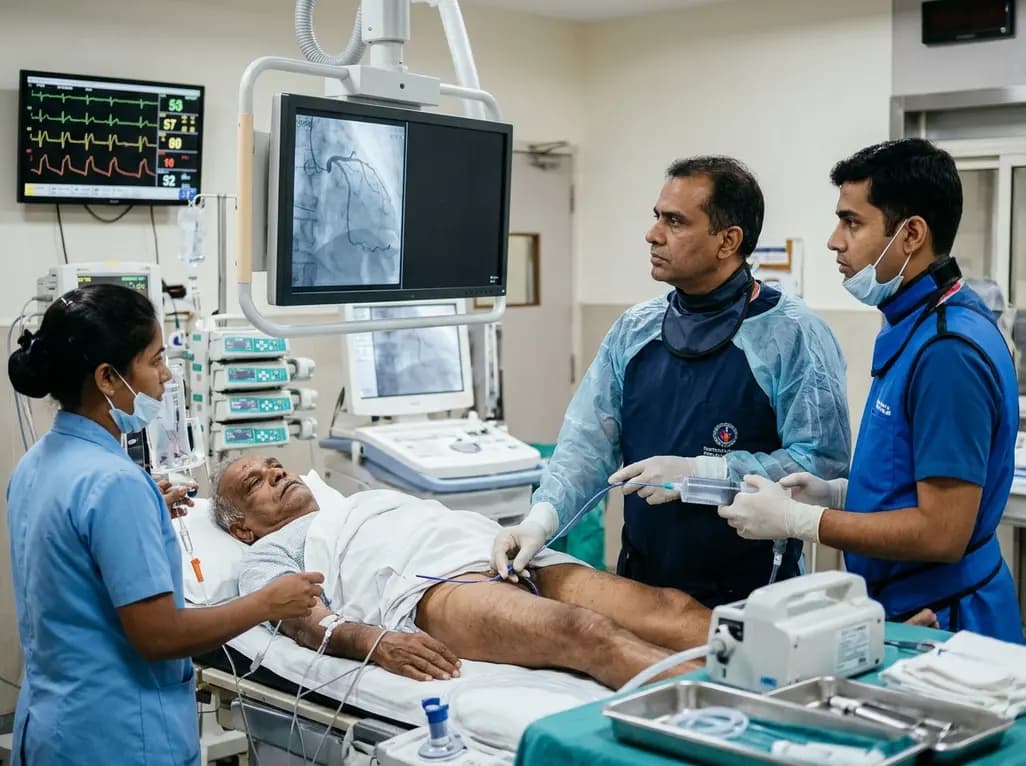
An elderly man with partially repaired Tetralogy of Fallot presented with STEMI caused by coronary embolism rather than atherosclerosis. Successful treatment with sustained mechanical aspiration thrombectomy underscores the vital need for high clinical vigilance in adult congenital heart disease.
Today

Demanding exhaustive hormonal profiling can inadvertently discourage clinical studies involving females. Methodological standards must align with the specific scientific question to expand, not restrict, equitable evidence for women.
Today

A recent study demonstrates that spinal oxygen sensors do not require mitochondrial electron transport to trigger sympathetic excitation during acute hypoxia, revealing new insights into how mitochondrial oxidative stress modulates autonomic tone in cardiovascular and neurological diseases.
Today

A comparative review of tension band wiring and intramedullary screw fixation in thumb metacarpophalangeal arthrodesis, evaluating union rates, hardware complications, and clinical outcomes.
Today

Following regulatory scrutiny from FSSAI regarding promotional representations and lean muscle preservation claims, Dr. Reddy's Laboratories and Nestlé Health Science are currently reviewing the branding and marketing strategy for their joint nutritional supplement Celevida GLP+.
Today
