

Loading, please wait...
Loading, please wait...
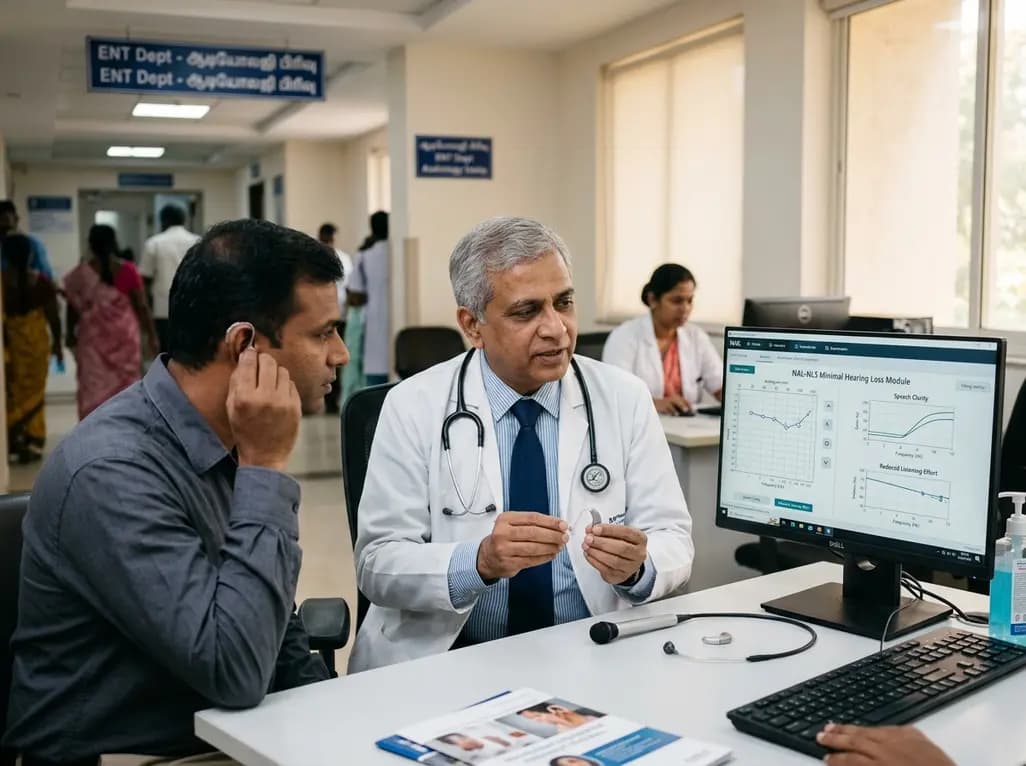
Pure-tone audiometry has long served as the gold standard for diagnosing hearing impairment across clinical audiology. However, conventional audiometric thresholds often fail to capture subtle neural disruptions, cochlear synaptopathy, and central auditory processing deficits. Consequently, many adult patients present with debilitating speech perception challenges despite exhibiting standard thresholds within normal limits. Clinicians frequently categorize these presentations as minimal hearing loss or hidden hearing loss. Because standard clinical formulas target pure-tone threshold loss, traditional algorithms prescribe zero or negligible insertion gain for these individuals. Therefore, patients who struggle in noisy environments often leave clinics without viable therapeutic options or technological support. Furthermore, listening fatigue and social withdrawal frequently emerge when background chatter obscures critical conversational speech signals. Recent epidemiological surveys suggest that nearly ten percent of adults reporting significant hearing difficulty possess clinically normal audiograms. Clinicians therefore need novel prescriptive methods that move beyond traditional threshold models. By addressing functional auditory demands, modern audiological strategies can effectively support this underserved patient population in everyday communication.
To resolve these historical diagnostic gaps, the National Acoustic Laboratories designed the innovative NAL-NL3 fitting system. Specifically, investigators introduced the dedicated NAL-NL3 Minimal Hearing Loss Module to assist individuals with normal pure-tone sensitivity. Earlier prescriptive systems, such as NAL-NL2, derived gain curves primarily from audiometric thresholds. Consequently, those older equations provided insufficient amplification across mild deficits. In contrast, the new module prioritizes functional speech clarity and reduces listening effort in noisy environments. The development team executed iterative prospective studies to formulate optimal gain targets. Furthermore, engineers integrated non-linear optimization with deep neural network modeling to establish precise target curves. The algorithm applies low-level amplification to overcome the acoustic impedance and direct path of sound into the ear canal. Meanwhile, it maintains strict output limits to prevent uncomfortable loudness or acoustic overexposure. Consequently, the system provides safe, gentle amplification that enhances high-frequency consonants without introducing acoustic distortion. Moreover, dynamic compression parameters ensure natural sound quality during rapid environmental acoustic transitions.
Rigorous clinical evaluation remains critical before implementing any prescriptive algorithm in daily practice. Therefore, researchers evaluated seventy-one adults with self-reported auditory struggles across comprehensive field trials. Participants completed standardized speech perception testing in laboratory conditions alongside Ecological Momentary Assessment in daily life. Notably, the study examined speech understanding across various hearing aid platforms and fitting protocols. The objective data demonstrated significant improvements in speech clarity when listening against competing background noise. In addition, participants reported substantial reductions in cognitive listening effort during complex acoustic scenarios. Conventional fitting protocols applied near-zero insertion gain, which offered no measurable benefit to users. In contrast, the iterative adjustments of the new module produced consistently higher satisfaction ratings. Patients preferred the personalized amplification targets during social gatherings, workplace discussions, and noisy restaurant outings. Thus, real-world data validate the functional benefits of prescriptive amplification for patients with minimal deficits. Furthermore, ecological momentary surveys confirmed sustained comfort throughout everyday listening activities.
Integrating this specialized module into clinical workflows requires thoughtful diagnostic refinement. ENT surgeons and audiologists should first identify individuals presenting with disproportionate speech-in-noise complaints. Although pure-tone thresholds fall between zero and twenty decibels, structured self-report questionnaires often reveal severe functional disability. Consequently, clinicians should consider speech-in-noise assessments, such as the QuickSIN or digit-triplet tests, during routine evaluations. When subjective difficulty aligns with objective speech perception deficits, clinicians can prescribe mild amplification safely. Furthermore, modern real-ear measurement systems facilitate accurate verification of these modest insertion gain targets. Hearing healthcare professionals must verify that the prescribed output remains strictly within safe acoustic boundaries. In addition, practitioners must counsel patients regarding realistic expectations and neuroauditory adaptation timelines. Because brain networks require time to adapt to restored high-frequency cues, gradual habituation remains vital. Therefore, structured follow-up visits enhance long-term compliance and ensure sustained satisfaction across diverse clinical cohorts. Moreover, multidisciplinary collaboration between otolaryngologists and audiologists ensures early identification and appropriate rehabilitative intervention.
The introduction of this dedicated module signals a paradigm shift toward modular audiological care. Traditionally, fitting software applied rigid formulas that ignored individual lifestyle variations and neural auditory processing challenges. In contrast, the NAL-NL3 architecture establishes an extensible framework capable of supporting diverse patient phenotypes. Clinicians can activate specialized modules according to unique patient profiles rather than relying solely on pure-tone thresholds. Moreover, ongoing integration by global hearing device manufacturers will accelerate clinical adoption across global practices. Future research will explore long-term cognitive outcomes and neural plasticity among adults receiving early acoustic interventions. In addition, investigators plan to assess whether early intervention mitigates occupational stress and social isolation. As digital audiological platforms evolve, machine learning algorithms will continuously refine these fitting targets using ecological data. Consequently, modular prescriptions will redefine audiological standards, delivering truly individualized auditory healthcare worldwide. Ultimately, personalized amplification empowers clinicians to treat functional auditory deficits with unprecedented precision and therapeutic confidence.
Traditional fitting formulas like NAL-NL2 rely primarily on pure-tone audiograms, often prescribing near-zero insertion gain for patients with normal audiometric thresholds. In contrast, the NAL-NL3 Minimal Hearing Loss Module addresses functional auditory difficulties, such as understanding speech in noisy environments. It prescribes gentle, targeted amplification to overcome direct sound path acoustic limitations. Consequently, this modular approach enhances high-frequency speech clarity, reduces listening effort, and maintains acoustic comfort without causing overamplification.
Clinicians should consider this module for adult patients who present with persistent, self-reported speech-in-noise comprehension challenges despite having pure-tone thresholds under twenty decibels. Structured validated questionnaires, such as the Speech, Spatial and Qualities of Hearing Scale, typically reveal significant functional deficits. Furthermore, speech-in-noise assessments like the QuickSIN objective test demonstrate diminished signal-to-noise ratio performance. When subjective listening exhaustion and measurable auditory processing deficits coexist, this module provides an evidence-based pathway for therapeutic intervention.
The module incorporates stringent output-limiting thresholds and fast-acting compression parameters specifically engineered to preserve delicate cochlear structures. Rather than delivering high volume, the algorithm applies low-level gain focused strictly on clarifying subtle high-frequency speech cues. Furthermore, compression limiters restrict maximum power output to safe physiological levels, preventing discomfort from unexpected loud transient sounds. Audiologists verify these safe acoustic boundaries using real-ear probe-microphone measurements, ensuring patient safety and optimal sound tolerance during daily hearing aid use.
Disclaimer: This content is for informational and educational purposes only. It is not intended to substitute for professional medical advice, diagnosis, or treatment. Always seek the advice of your physician or other qualified health provider with any questions you may have regarding a medical condition or before undertaking any diet, supplement, fitness, or other health program. Refer to the latest local and national guidelines for clinical practice.
References

Read summarized clinical updates, watch expert medical content, and earn CME certifications right from your smartphone.
Open your smartphone camera to scan and install.





The NAL-NL3 Minimal Hearing Loss Module provides an evidence-based approach to fitting hearing aids in adults with normal or near-normal audiometric thresholds. It improves speech clarity, reduces listening effort, and maintains acoustic safety in complex noisy listening environments.
Today

A qualitative study investigates whether traditional bedside clinical examinations still mirror contemporary physician practice. Findings support retaining long cases while reforming short cases toward hypothesis-driven assessments.
Today
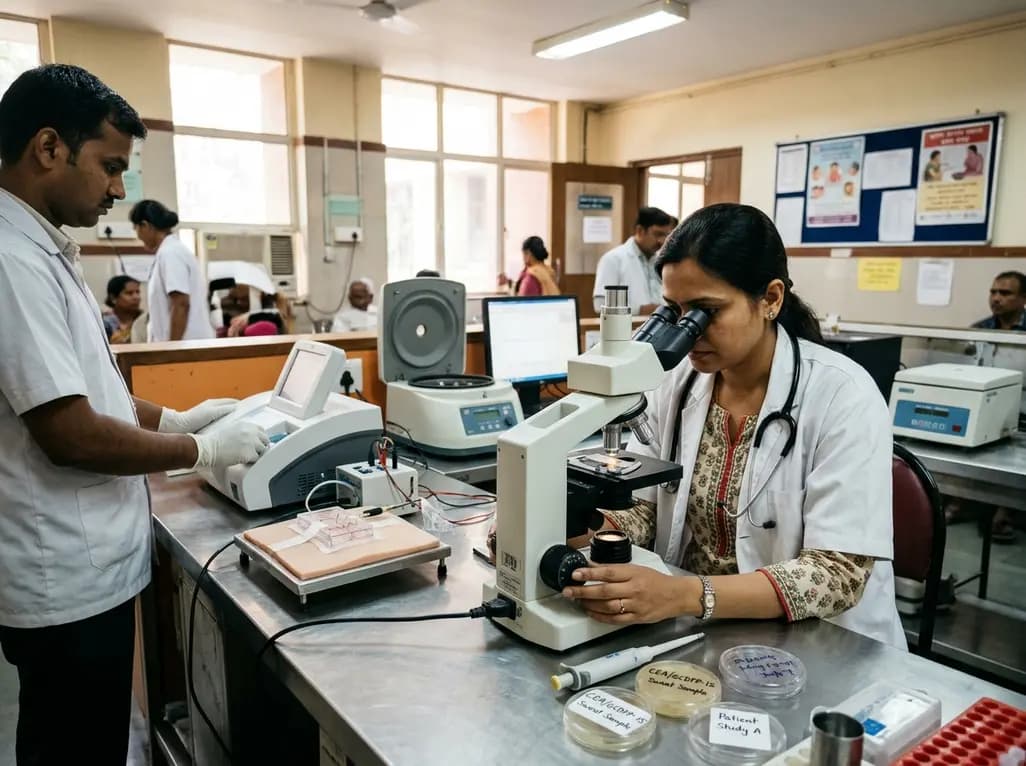
A pilot study evaluated WearDOXXN, a capillary microfluidic sweat patch, for noninvasive breast cancer monitoring by comparing sweat and serum CEA and PIP/GCDFP-15 levels.
Today

India faces a massive diabetes burden with over 89 million adults affected. Managing blood sugar in isolation fails to prevent severe cardiorenal complications. Clinicians must adopt an integrated metabolic ecosystem that prioritizes early detection, multifactorial risk assessment, and personalized therapies.
Today

The Gross Motor Function Classification System (GMFCS) stops its validated age bands at 18. Recent evidence emphasizes that evaluating adult cerebral palsy requires purpose-sensitive documentation combining adolescent ratings with dynamic profiles of mobility, fatigue, pain, and community participation.
Today
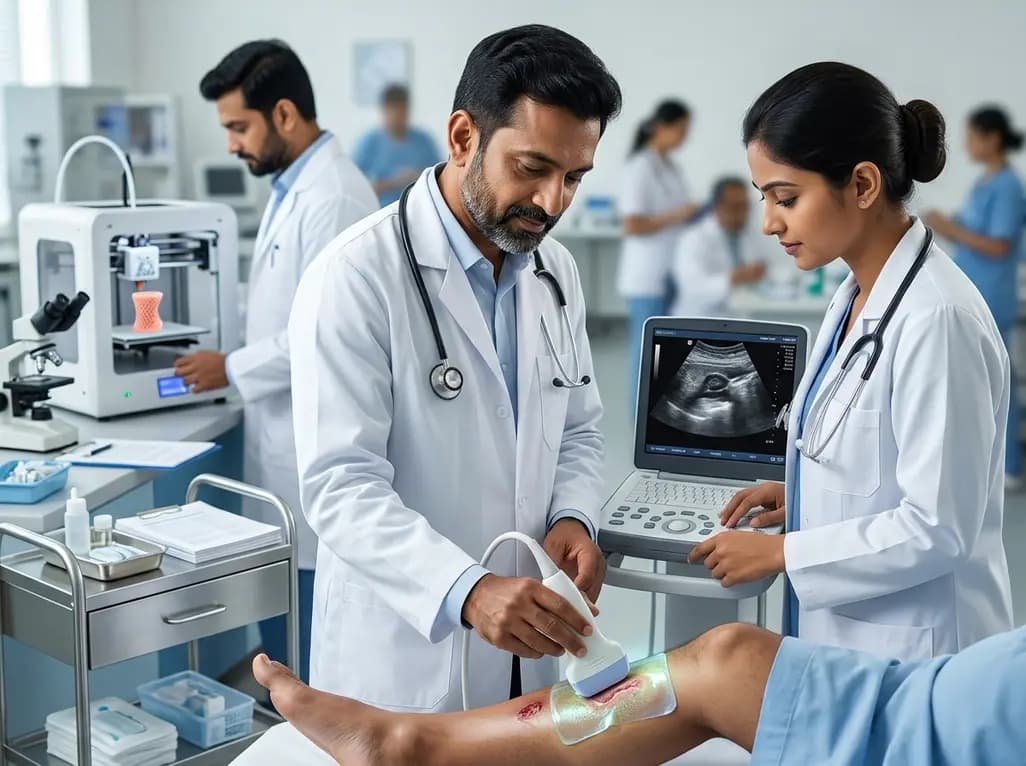
A breakthrough 3D-printed piezoelectric collagen hydrogel activated by ultrasound accelerates diabetic wound repair, demonstrating 98.5% wound closure, robust antibacterial action, and enhanced vascularization without toxic chemical crosslinkers.
Today
