.webp&w=384&q=75)

Loading, please wait...
Loading, please wait...

Researchers recently investigated the co-occurrence of aflatoxins (AFs) and Ochratoxin A (OTA) in Morocco’s staple foods. Their analysis revealed that 8.2% of samples contained these toxins, with some exceeding regulatory limits. Consequently, addressing mycotoxin health risks has become a top priority for public health experts globally. This study highlights how fungal contamination threatens the integrity of food supply chains under specific environmental conditions.
Fungi like Aspergillus and Penicillium produce these toxic secondary metabolites during crop growth or storage. In the Moroccan study, one rice sample contained Aflatoxin B1 (AFB1) at 8.5 µg/kg. Furthermore, a maize sample showed Ochratoxin A levels as high as 24 µg/kg. These concentrations often exceed international safety thresholds. Therefore, continuous surveillance of staple commodities helps prevent chronic exposure among the general population.
Chronic ingestion of contaminated food poses severe long-term dangers to human health. Specifically, Aflatoxin B1 acts as a potent Group 1 carcinogen that primarily targets the liver. This toxin significantly increases the risk of hepatocellular carcinoma, especially in regions with high Hepatitis B prevalence. In addition, Ochratoxin A exhibits nephrotoxic and immunosuppressive properties. Healthcare providers must remain vigilant because these toxins can cause progressive liver cirrhosis and kidney damage. Consequently, monitoring dietary exposure remains a critical component of preventative medicine.
The Food Safety and Standards Authority of India (FSSAI) establishes strict limits to mitigate toxin exposure. For instance, FSSAI sets the total aflatoxin limit for cereals and pulses at 15 µg/kg. Similarly, the regulator fixes the Ochratoxin A limit in wheat and barley at 20 µg/kg. Additionally, India’s tropical climate favors mold growth, making compliance mandatory for all food businesses. Doctors should encourage patients to consume well-dried, sorted grains to reduce individual risk effectively.
Aflatoxins are highly toxic substances that can cause acute poisoning or chronic illness. Chronic exposure is strongly linked to liver cancer and may also impair the immune system and child development.
Staple crops such as maize, rice, wheat, and groundnuts are frequently affected. Spices, dried fruits, and even milk (via contaminated cattle feed) can also carry these toxins.
Acute exposure to high levels can lead to jaundice, abdominal pain, vomiting, and in severe cases, liver failure. However, chronic low-level exposure is more common and equally dangerous over time.
Disclaimer: This content is for informational and educational purposes only. It does not constitute professional medical advice, diagnosis, or treatment. Always seek the advice of your physician or other qualified healthcare provider with any questions you may have regarding a medical condition. Refer to the latest local and national guidelines for clinical practice.
References

Read summarized clinical updates, watch expert medical content, and earn CME certifications right from your smartphone.
Open your smartphone camera to scan and install.





A study on mycotoxins in Moroccan staple foods highlights significant health risks, emphasizing the need for global vigilance and strict regulatory complian...
7 months ago
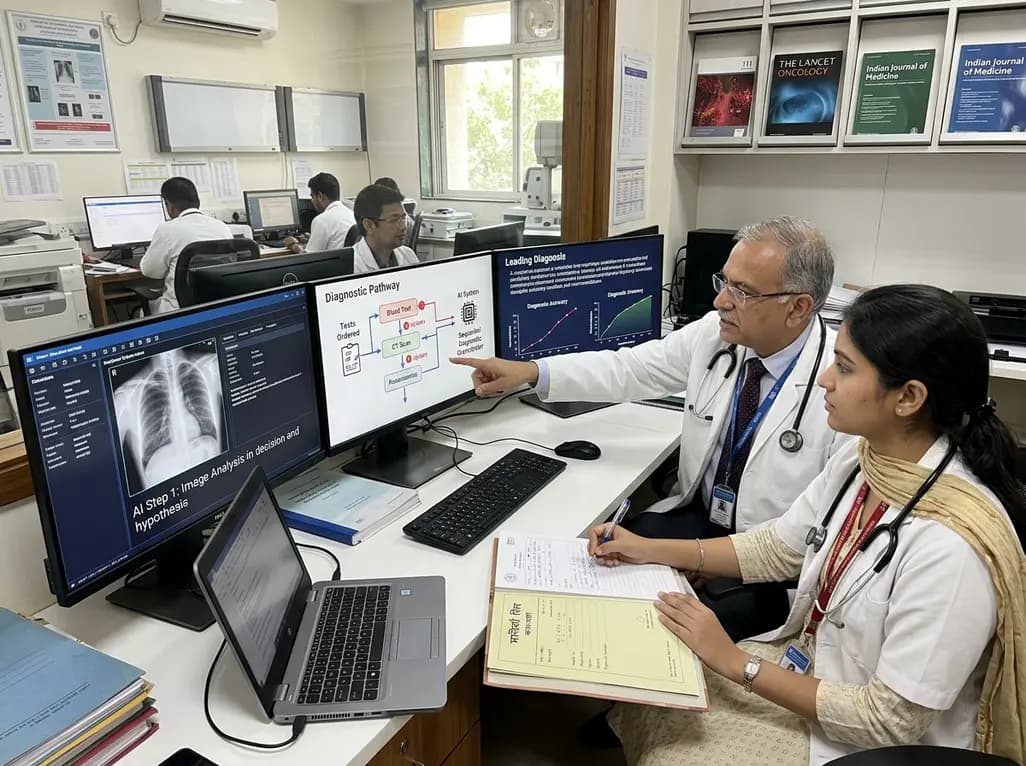
A breakthrough peer-reviewed study demonstrates that a sequential AI diagnosis system can mirror real-world clinical reasoning. By ordering stepwise tests and updating hypotheses dynamically, this multi-agent orchestrator achieved superior diagnostic accuracy while reducing investigative costs.
Today

A prenatal case highlights severe glutaric acidemia type II presenting as bilateral hyperechoic cystic kidneys at 18 weeks. Whole-exome sequencing revealed a novel homozygous ETFDH frameshift variant, demonstrating the power of rapid genetic testing in fetal renal anomalies.
Today

Review how tailored exercise programs benefit frail older patients with heart failure. Explore pathophysiological mechanisms, individualized training prescriptions, and strategies to overcome adherence barriers in clinical practice.
Yesterday

This comparative study evaluates posterior labral tears with and without glenohumeral instability, highlighting distinct demographic patterns, MRI underestimation in stable shoulders, and successful arthroscopic repair outcomes.
Yesterday

A clinical study demonstrates that early intervention with tocilizumab, either as monotherapy or bridged with corticosteroids, achieves significant proptosis reduction and resolves active inflammation in treatment-naive thyroid eye disease.
Yesterday
