.webp&w=384&q=75)

Loading, please wait...
Loading, please wait...

A revolutionary lead ion detection sensor based on Ti3C2Tx MXene-VS2 nanocomposites marks a major step forward in environmental health monitoring. Lead toxicity represents a massive under-recognized crisis in India, where millions of children suffer from elevated blood lead levels. Consequently, researchers are prioritizing the development of ultrasensitive tools to identify trace contamination before it enters the human food chain.
The sensor integrates hydrofluoric acid-etched Ti3C2Tx MXene with vanadium disulfide (VS2) to create a high-performance electrode. This combination harnesses the exceptional electrical conductivity of MXenes and the redox activity of layered VS2. Therefore, the device achieves accelerated electron transfer rates and improved surface adsorption for lead ions. Because it features a detection limit of just 0.13 ppb, it easily monitors concentrations far below standard regulatory thresholds.
Clinical practitioners in India face a significant challenge because lead poisoning often presents with non-specific symptoms. However, using this lead ion detection sensor in community screening programs could prevent irreversible neurological damage in pediatric populations. Furthermore, the sensor demonstrates remarkable repeatability and stability, making it suitable for practical field use across diverse Indian geographical regions. Notably, the broad linear detection window spans from 1 ppb to 100 ppm, providing versatility for various water sources.
Lead exposure causes cognitive impairments, cardiovascular diseases, and kidney damage. In India, half of the pediatric population is estimated to have elevated blood lead levels due to contaminated water, spices, and industrial waste.
This sensor offers an ultralow detection limit of 0.13 ppb, which is significantly more sensitive than many field-portable units. Additionally, it provides rapid results with high repeatability, making it ideal for large-scale environmental screening.
Disclaimer: This content is for informational and educational purposes only. It does not constitute medical advice or professional diagnostic services. Refer to the latest local and national guidelines for clinical practice.
References
Mishra J et al. Synergistic Ti3C2Tx MXene-VS2 nanocomposite electrode for ultrasensitive electrochemical detection of lead ions. Nanotechnology. 2026 Feb 23. doi: 10.1088/1361-6528/ae490d. PMID: 41730250.
Pure Earth India. Understanding Lead Poisoning Prevalence in India. 2022.
World Health Organization. Lead poisoning and health. 2023.

Read summarized clinical updates, watch expert medical content, and earn CME certifications right from your smartphone.
Open your smartphone camera to scan and install.





Researchers have developed a Ti3C2Tx MXene-VS2 sensor that detects lead ions at a trace limit of 0.13 ppb, significantly improving environmental monitoring....
7 months ago

Explore vital recurrent stroke predictors in lacunar stroke patients managed with intensive blood pressure lowering. This analysis examines trial findings from SPS3 to uncover residual vascular risks, metabolic factors, and targeted secondary prevention strategies for high-risk neurological patients.
Today

Odisha has established India's first state-level clinical protocol specifically tailored for pregnant women with sickle cell disease. Developed with NHM and UNICEF, the framework provides structured antenatal screening, crisis mitigation, standardized referral pathways, and specialized interdisciplinary care.
Today

India is advancing preventive healthcare by integrating genomics, artificial intelligence, and quantum technologies. With the SANGAM programme sequencing one million Indian genomes, clinicians can unlock personalized therapies, detect cardiometabolic risks early, and curb the burden of diabetes and heart disease.
Today
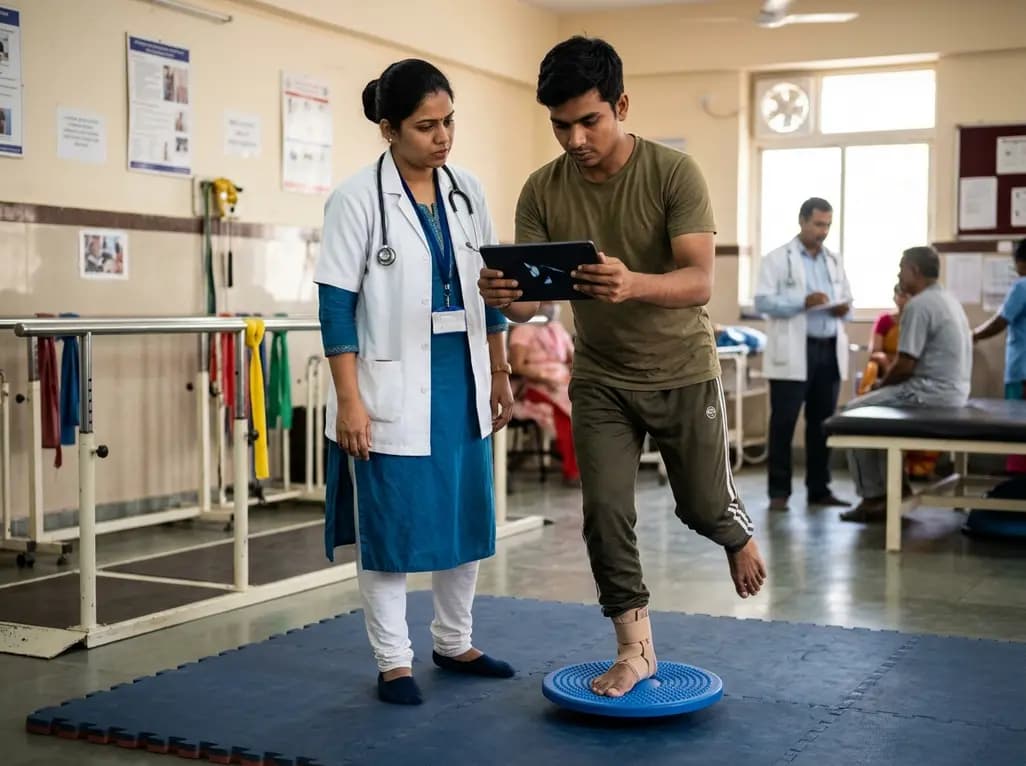
A randomized controlled trial demonstrates that an eight-week dual-task training intervention significantly improves static and dynamic postural control over standard balance exercises in individuals with chronic ankle instability, addressing critical neurocognitive deficits during athletic and daily activities.
Today

A retrospective cohort study of 7,716 ICU patients from the MIMIC-IV database demonstrates that Gradient Boosting Decision Trees significantly outperform traditional SOFA scores in predicting in-hospital mortality among patients with sepsis and diabetes, with SHAP analysis providing clinical interpretability.
Today
