

Loading, please wait...
Loading, please wait...

Clinicians have long recognized that autoimmune disorders of the neuromuscular junction exhibit dynamic epidemiological profiles across diverse populations. Historically, MuSK myasthenia gravis was predominantly considered a severe disorder affecting young female patients in their second through fourth decades of life. However, recent real-world data demonstrate an evolving epidemiological trajectory that mirrors patterns previously seen in acetylcholine receptor antibody-positive disease. Over the past two decades, rising life expectancy and enhanced diagnostic acumen have uncovered a progressive expansion of late-onset cases. Consequently, specialists now encounter a broader clinical spectrum of autoantibody-positive patients presenting at older ages. While changing patterns in classic acetylcholine receptor disease have received extensive research attention, muscle-specific kinase variants have historically lacked comprehensive long-term longitudinal evaluations. Therefore, investigating multi-decade demographic shifts offers essential insights into modern neuromuscular practice. Understanding these evolving characteristics ensures timely recognition and prevents misattributing symptoms to normal aging or neurodegenerative illnesses. In addition, recognizing updated epidemiological paradigms helps clinicians anticipate disease trajectories and optimize individualized management strategies. Moreover, evaluating these demographic trajectories allows healthcare teams to allocate targeted clinical resources more effectively.
In a landmark retrospective investigation spanning from 1980 through 2025, researchers followed 120 consecutive patients diagnosed with muscle-specific kinase disease. Notably, the study revealed a striking increase in the median age at symptom onset across the observation period. During the 1980s, the median onset age was 36 years, with an interquartile range of 23 to 45.75 years. In sharp contrast, the median age rose to 47 years between 2013 and 2025, demonstrating statistical significance. Furthermore, the proportion of individuals presenting at or after 50 years of age surged remarkably from 11.8% to 48.7%. This expanding older demographic included twelve distinct cases classified as very late-onset myasthenia gravis, occurring after age 65. Thus, almost half of modern diagnoses now arise in individuals aged 50 years and older. These findings clearly substantiate that late-onset presentations are no longer exceptional anomalies in muscle-specific kinase pathophysiology. Instead, late presentation represents an established, growing subset of the overall affected population. Consequently, clinicians must maintain a high index of suspicion when evaluating bulbar or generalized weakness in mature patients, regardless of previously accepted age thresholds.
Alongside rising onset age, the distribution of biological sex among affected individuals has shifted considerably over recent decades. Traditionally, female patients predominated heavily in muscle-specific kinase cohorts, particularly among young adult populations. However, long-term observational findings demonstrate a meaningful rise in male representation. In earlier decades, male patients accounted for only 23.5% of the studied cohort, whereas this proportion climbed to 35.9% in the modern era. Although women still constitute the majority of cases overall, the relative narrowing of the sex gap parallels trends established in late-onset acetylcholine receptor disease. This demographic transition likely reflects improved diagnostic recognition among elderly men, alongside broader immunosenescence factors. Historically, atypical presentations in older men were frequently misidentified or overlooked during initial neurological evaluations. Today, wider availability of sensitive cell-based and radioimmunoprecipitation assays facilitates earlier, more accurate identification. Therefore, diagnostic pathways must avoid outdated assumptions regarding typical patient sex and age. In fact, clinical suspicion should remain equally rigorous whenever older male patients exhibit fluctuating dysarthria, dysphagia, or axial weakness. Additionally, understanding these hormonal and immunological shifts can guide future investigations into late-life autoimmunity and tolerance breakdown.
Historically, muscle-specific kinase disease earned a formidable reputation for acute bulbar deterioration and severe myasthenic crisis. However, contemporary cohort analyses highlight an encouraging and dramatic reduction in peak disease severity over time. Maximum severity, classified according to the Myasthenia Gravis Foundation of America system, demonstrated consistent longitudinal improvement. Most notably, researchers observed a statistically significant reduction in life-threatening respiratory crises across successive eras. Importantly, this therapeutic milestone showed no significant divergence across distinct age-at-onset groups. Older patients, including those with very late onset, experienced similar severity reductions compared to younger counterparts. Several factors likely explain this positive clinical trend. First, widespread adoption of early, antibody-guided diagnosis prevents prolonged diagnostic delay. Second, modern intensive care protocols offer timely respiratory support and proactive monitoring. Furthermore, therapeutic paradigms have advanced substantially beyond conventional non-specific medications. The proactive utilization of plasma exchange, intravenous immunoglobulins, and targeted biological agents has revolutionized disease control. Consequently, early therapeutic intervention suppresses severe muscular decline before critical respiratory compromise develops, transforming long-term prognosis. Hence, patients diagnosed in recent years face significantly lower risks of intensive care admission than those diagnosed several decades ago.
These epidemiological observations carry profound clinical ramifications for daily practice in general neurology and geriatric medicine. Because nearly half of all newly diagnosed patients now develop symptoms after age 50, physicians must update their clinical frameworks. Bulbar weakness in elderly individuals frequently mimics acute ischemic stroke, amyotrophic lateral sclerosis, or oculopharyngeal muscular dystrophy. Consequently, failing to consider autoimmune neuromuscular transmission failure can lead to inappropriate interventions or devastating delays. Moreover, muscle-specific kinase pathology typically responds poorly to standard acetylcholinesterase inhibitors like pyridostigmine, often provoking paradoxical worsening or cholinergic intolerance. Instead, targeted immunosuppressive therapies and B-cell depletion strategies represent the primary pillars of successful intervention. Clinicians must also navigate polypharmacy and age-related organ dysfunction when prescribing immunosuppressive regimens for elderly patients. Therefore, multidisciplinary collaboration between neurologists, geriatric specialists, and intensive care physicians remains vital. By integrating timely antibody testing into initial geriatric diagnostic pathways, teams can initiate appropriate disease-modifying therapies promptly. Ultimately, these proactive measures ensure improved functional outcomes, reduced morbidity, and sustained quality of life across expanding elderly populations. Furthermore, ongoing prospective registries will help refine therapeutic algorithms tailored specifically to older individuals with complex medical backgrounds.
The median age of symptom onset has risen significantly from 36 years in the 1980s to 47 years recently. Additionally, patients presenting at or after age 50 increased to nearly half of all cases, while the proportion of male patients rose from 23.5% to 35.9% over four decades.
The remarkable decline in respiratory crises stems primarily from earlier antibody detection, heightened clinical awareness, and modern intensive care management. Furthermore, the proactive implementation of targeted immunosuppression, B-cell depletion therapies, and timely therapeutic plasma exchange effectively halts progressive muscular deterioration before severe respiratory compromise can develop.
Late-onset presentations frequently mimic common geriatric disorders, including motor neuron disease, ischemic stroke, cervical spondylotic myelopathy, and oculopharyngeal myopathy. Furthermore, atypical facial weakness, neck extensor dropped head syndrome, and absence of marked ocular fluctuations often misdirect clinicians, delaying accurate serological testing and appropriate immunosuppressive treatment.
Disclaimer: This content is for informational and educational purposes only... Refer to the latest local and national guidelines for clinical practice.
References

Read summarized clinical updates, watch expert medical content, and earn CME certifications right from your smartphone.
Open your smartphone camera to scan and install.





A long-term tertiary cohort study reveals significant demographic shifts in MuSK myasthenia gravis over four decades. Late-onset cases and male representation have surged, while disease severity and myasthenic crises have sharply declined, mirroring broader epidemiological trends in neuromuscular junction disorders.
Today

A retrospective CAHAL study comparing Amplatzer and Occlutech devices in 413 patients found no significant difference in moderate-to-large residual shunt rates at 6 months follow-up after percutaneous PFO closure, supporting clinical equivalence between both platforms.
Today

AIIMS researchers suggest yoga may alleviate gut dysbiosis in Polyendocrine Metabolic Ovarian Syndrome (PMOS) by modulating the gut-brain axis, lowering chronic inflammation, and enhancing parasympathetic tone to support metabolic and hormonal equilibrium.
Today
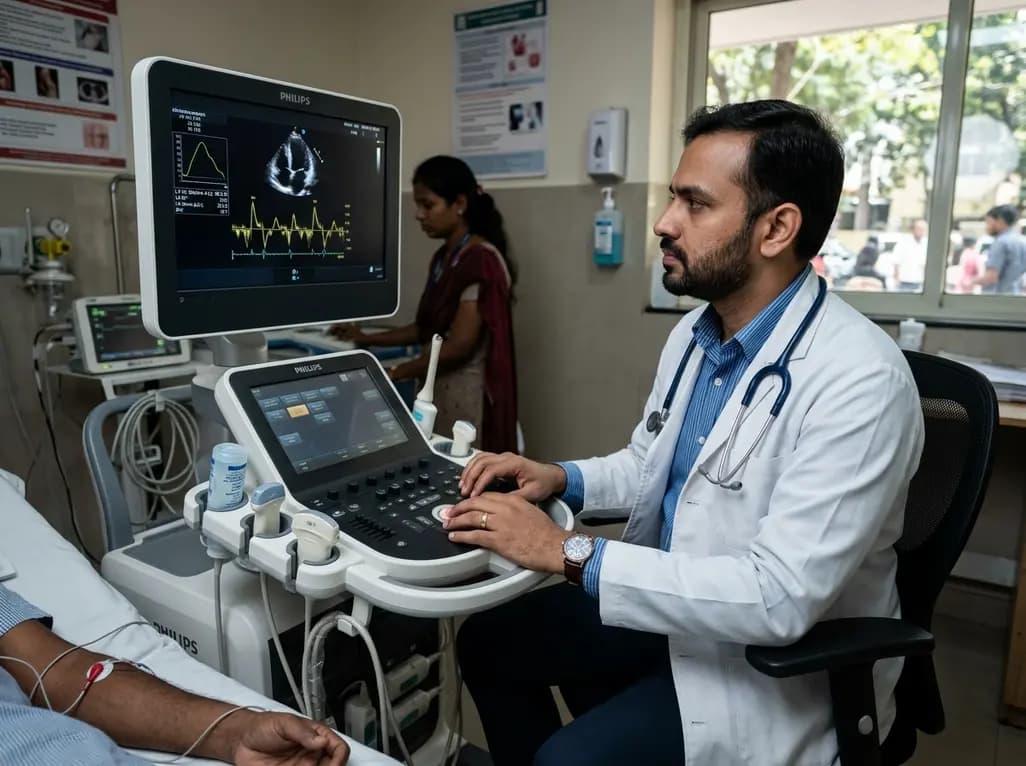
A structured practical guide to left atrial echocardiographic assessment covering biplane volumetry, phasic physiology, speckle-tracking strain, and hemodynamic filling pressure estimation for routine cardiovascular practice.
Today

Age-related spinal kyphosis is driven by vertebral fragility, disc degeneration, and paraspinal muscle dysfunction. Coexisting with locomotive syndrome and frailty, its management requires combined anti-osteoporotic therapy, spinal extensor rehabilitation, and comprehensive nutritional optimization.
Today

A longitudinal feasibility pilot study highlights that combining polygenic risk score disclosure with in-person lifestyle counseling significantly enhances genomic literacy in individuals at risk for type 2 diabetes, overcoming educational disparities and reinforcing patient motivation.
Today
