.webp&w=384&q=75)

Loading, please wait...
Loading, please wait...

Modern clinical practice increasingly relies on multimodal detection to optimize iNPH diagnosis and outcomes. Idiopathic normal pressure hydrocephalus (iNPH) remains a significant, yet treatable, cause of cognitive decline and gait instability in the elderly. Consequently, identifying accurate radiological and physiological biomarkers is essential for selecting patients who will benefit most from surgical intervention. A recent study highlights how anatomical markers of the corpus callosum, combined with cerebrospinal fluid (CSF) dynamics, serve as powerful predictors of postoperative recovery.
Clinicians traditionally use the Evans index to assess ventricular enlargement. However, specific measures like the corpus callosum angle (CCA) and corpus callosum splenial angle (CCSA) provide deeper diagnostic insights. Researchers found that a narrow CCA, specifically below 90 degrees, strongly correlates with higher resistance to CSF outflow (Rout). Therefore, these radiological correlates are not just structural signs; they reflect underlying hydrodynamic abnormalities. Additionally, patients with acute angles often demonstrate better neuropsychological improvement following ventriculoperitoneal shunt placement.
Moreover, the study integrated the Katzman test to measure Rout. This physiological assessment, when paired with MRI findings, creates a robust diagnostic framework. Specifically, high Rout values often predict a positive response to CSF diversion. Similarly, the splenial angle (CCSA) provides an alternative viewpoint of callosal morphology, helping to distinguish iNPH from other neurodegenerative conditions like Alzheimer's disease. Furthermore, these combined metrics help neurologists predict long-term cognitive and motor recovery with higher precision.
Integrating neuropsychological batteries with imaging and CSF studies ensures a holistic view of the patient. While gait improvement is often the most visible result of shunting, cognitive recovery is equally vital. By utilizing these radiological and physiological markers, medical teams can offer more accurate prognoses. Consequently, this comprehensive approach reduces unnecessary surgeries while maximizing therapeutic benefits for the right candidates.
The corpus callosum angle helps differentiate iNPH from general brain atrophy. An acute angle usually indicates the upward displacement of the corpus callosum due to ventricular expansion, which is a hallmark of shunt-responsive iNPH.
Resistance to CSF outflow (Rout) measures how effectively fluid leaves the brain's ventricular system. Higher resistance often suggests that a patient will experience significant clinical improvement after receiving a shunt.
Disclaimer: This content is for informational and educational purposes only. It does not constitute medical advice or a professional recommendation. Always consult a qualified healthcare provider for diagnosis and treatment. Refer to the latest local and national guidelines for clinical practice.
References

Read summarized clinical updates, watch expert medical content, and earn CME certifications right from your smartphone.
Open your smartphone camera to scan and install.





A study explores how corpus callosum morphology and CSF outflow resistance predict postoperative cognitive outcomes in patients with suspected iNPH....
5 months ago

Review how tailored exercise programs benefit frail older patients with heart failure. Explore pathophysiological mechanisms, individualized training prescriptions, and strategies to overcome adherence barriers in clinical practice.
Today

Leucine Rich Bio has introduced South Asia's first comprehensive vaginal microbiome test, BugSpeaks. By profiling microbial dysbiosis, pathogens, and antimicrobial resistance, this next-generation diagnostic platform provides clinicians with deeper insights into recurrent infections, fertility, and reproductive health.
Today
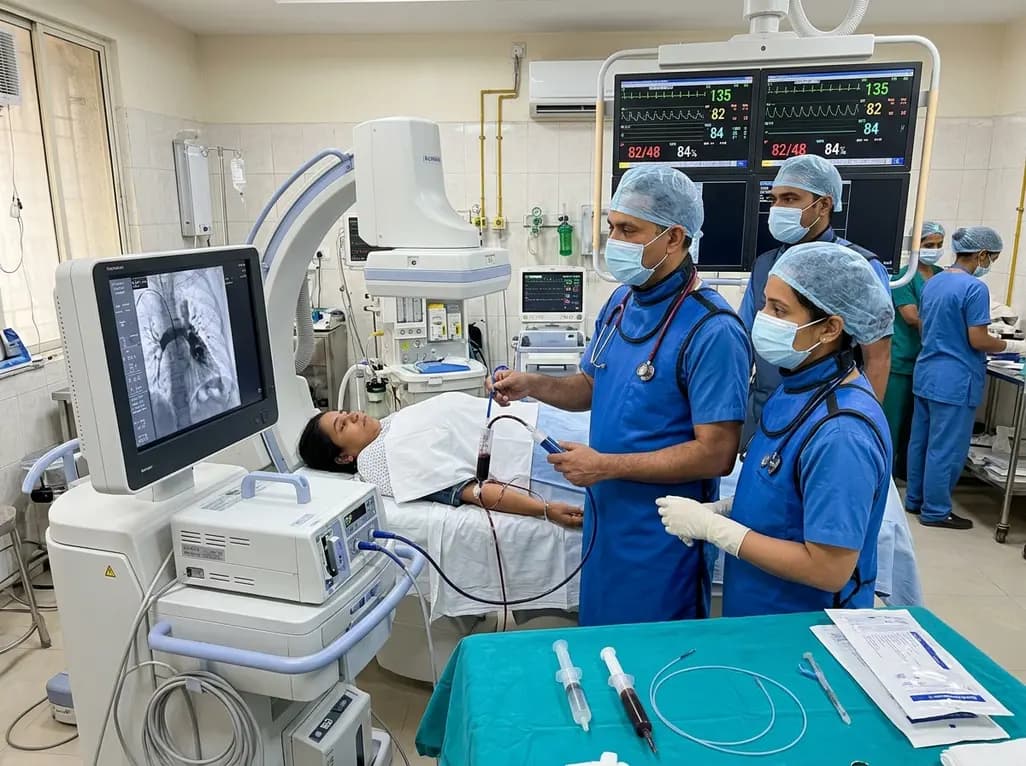
In high-risk pulmonary embolism complicated by severe anemia and active uterine bleeding, systemic thrombolysis is contraindicated. Large-bore aspiration thrombectomy provides rapid hemodynamic rescue without fibrinolysis, supported by inferior vena cava filter placement and multidisciplinary critical care.
Today

This comparative study evaluates posterior labral tears with and without glenohumeral instability, highlighting distinct demographic patterns, MRI underestimation in stable shoulders, and successful arthroscopic repair outcomes.
Today

A clinical study demonstrates that early intervention with tocilizumab, either as monotherapy or bridged with corticosteroids, achieves significant proptosis reduction and resolves active inflammation in treatment-naive thyroid eye disease.
Today
