.webp&w=384&q=75)

Loading, please wait...
Loading, please wait...

In the landscape of modern cardiology, managing severe aortic stenosis (AS) has evolved significantly with the advent of transcatheter aortic valve replacement (TAVR). However, traditional measures like ejection fraction often fail to capture the full extent of myocardial damage. Consequently, a recent study highlights how multichamber cardiac strain analysis provides a more granular view of heart health. This technique detects subclinical dysfunction across the left ventricle (LV), left atrium (LA), and right ventricle (RV), which frequently goes unrecognized by conventional classification systems.
The retrospective analysis of 234 TAVR patients revealed that nearly 29% suffered from multichamber impairment (MCI). Interestingly, LA dysfunction was the most frequent isolated finding, occurring in 88% of single-chamber cases. Furthermore, the researchers found that patients with MCI faced a drastically higher risk of all-cause mortality, with a hazard ratio of 2.21. Therefore, integrating multichamber cardiac strain data into staging systems significantly enhances their predictive accuracy compared to established models.
Moreover, while most patients saw modest improvements in LV global longitudinal strain post-procedure, the baseline extent of chamber damage remained a dominant predictor of survival. This suggests that the heart's damage may be more extensive than previously thought before the intervention even begins. Ultimately, these findings encourage clinicians to adopt strain echocardiography as a standard part of the pre-TAVR workup to better identify high-risk individuals.
MCI is defined as subclinical dysfunction occurring in two or more cardiac chambers, such as the left ventricle, left atrium, or right ventricle, identified through specific strain thresholds during echocardiography.
Strain imaging is more sensitive than ejection fraction because it can detect early myocardial deformation and \"hidden\" damage. Consequently, it identifies risk in patients who might otherwise appear to have normal heart function on traditional tests.
Disclaimer: This content is for informational and educational purposes only and does not constitute medical advice. It is not intended to be a substitute for professional medical advice, diagnosis, or treatment. Always seek the advice of your physician or other qualified health provider with any questions you may have regarding a medical condition. Refer to the latest local and national guidelines for clinical practice.
References
Meredith T et al. Strain characterization of multi-chamber cardiac dysfunction and associated prognosis in patients undergoing TAVR for severe AS. Echo Res Pract. 2026 May 06. doi: undefined. PMID: 42087265.
Tomaselli M et al. A novel staging system of cardiac damage in aortic stenosis based on multi-chamber myocardial deformation. Eur Heart J Cardiovasc Imaging. 2025.
Michelena HI et al. Multichamber Strain Characterization Is a Robust Prognosticator for Both Bicuspid and Tricuspid Aortic Stenosis. J Am Soc Echocardiogr. 2022.

Read summarized clinical updates, watch expert medical content, and earn CME certifications right from your smartphone.
Open your smartphone camera to scan and install.





Research indicates multichamber cardiac strain identifies subclinical dysfunction and predicts mortality in TAVR patients with severe aortic stenosis....
5 months ago
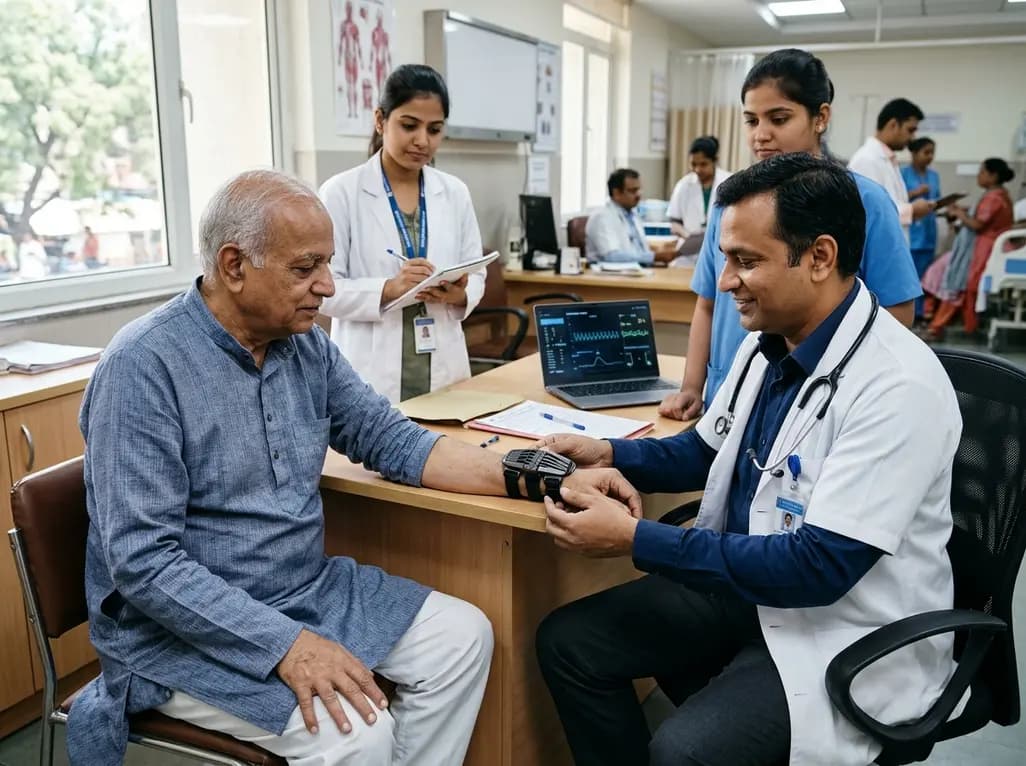
The TREM-AB open-label pilot study evaluated a wearable passive nonlinear vibration absorber for essential tremor. The Nonlinear Energy Sink bracelet reduced clinical Fahn-Tolosa-Marin tremor scores by 32.1% and electrophysiological tremor power by 49.2% with no adverse effects reported.
Today

A study in JAMIA Open shows lightweight open-source reasoning LLMs achieve up to 95% sensitivity and accelerate evidence synthesis screening by nearly twentyfold, presenting a cost-effective, scalable AI solution for biomedical research and systematic reviews.
Today
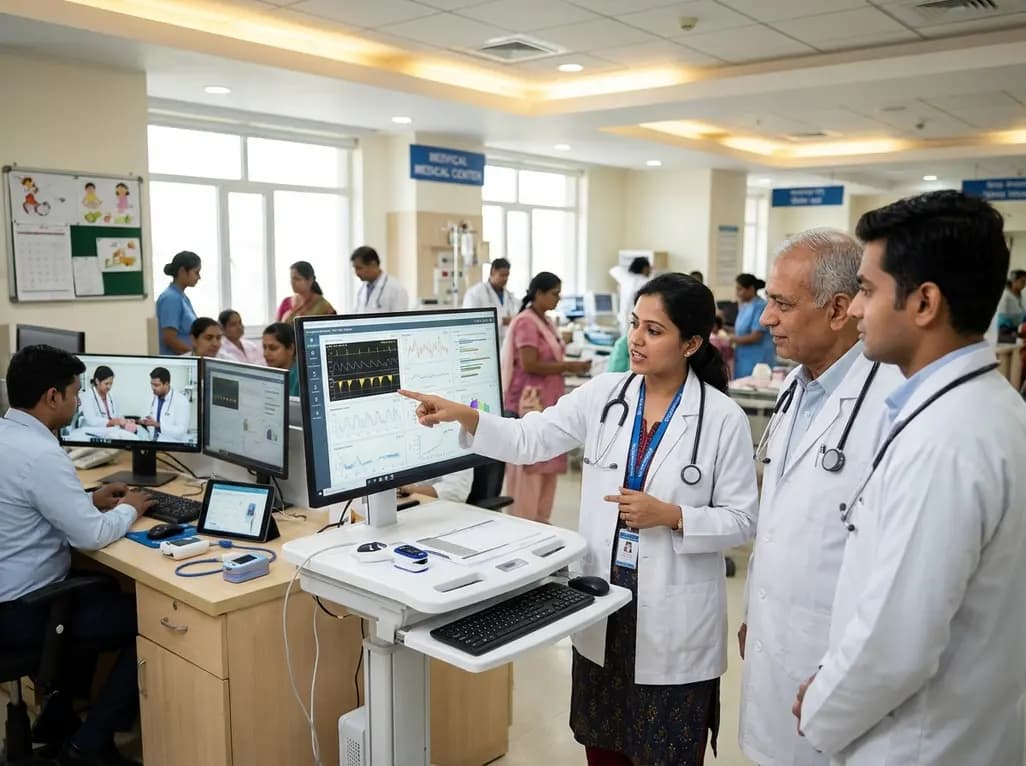
A landmark study details how an enterprise pediatric remote patient management model expanded from a single cardiology pilot to 16 diverse specialty programs by combining centralized digital operations with specialty clinical leadership.
Today
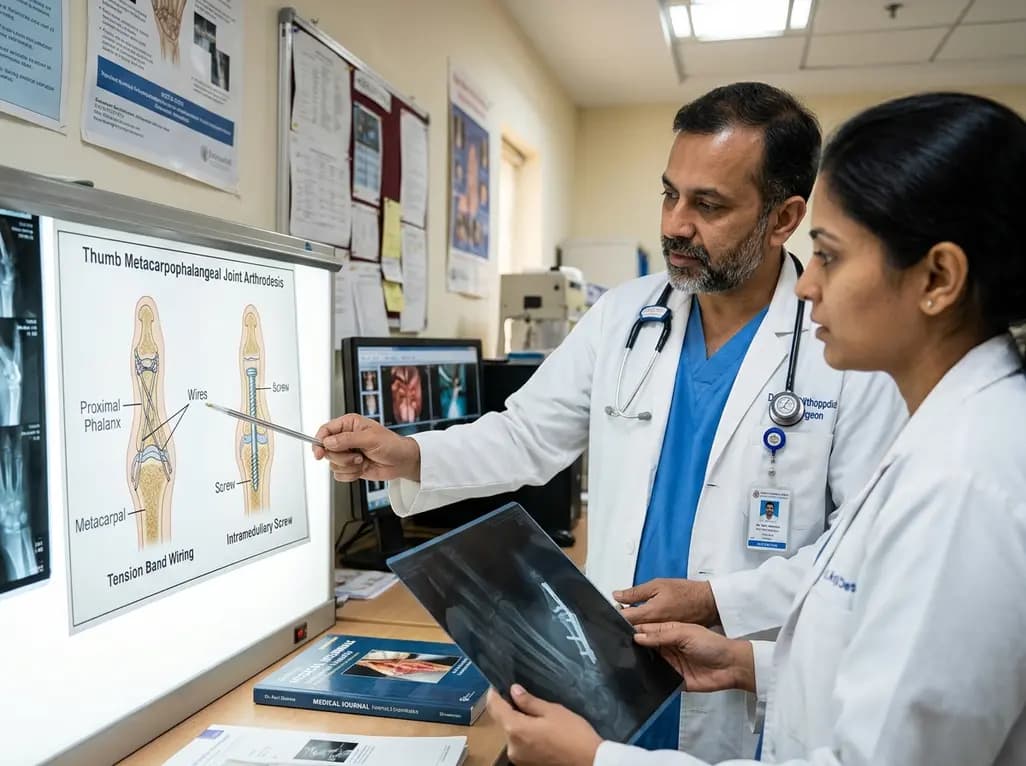
A comparative review of tension band wiring and intramedullary screw fixation in thumb metacarpophalangeal arthrodesis, evaluating union rates, hardware complications, and clinical outcomes.
Today
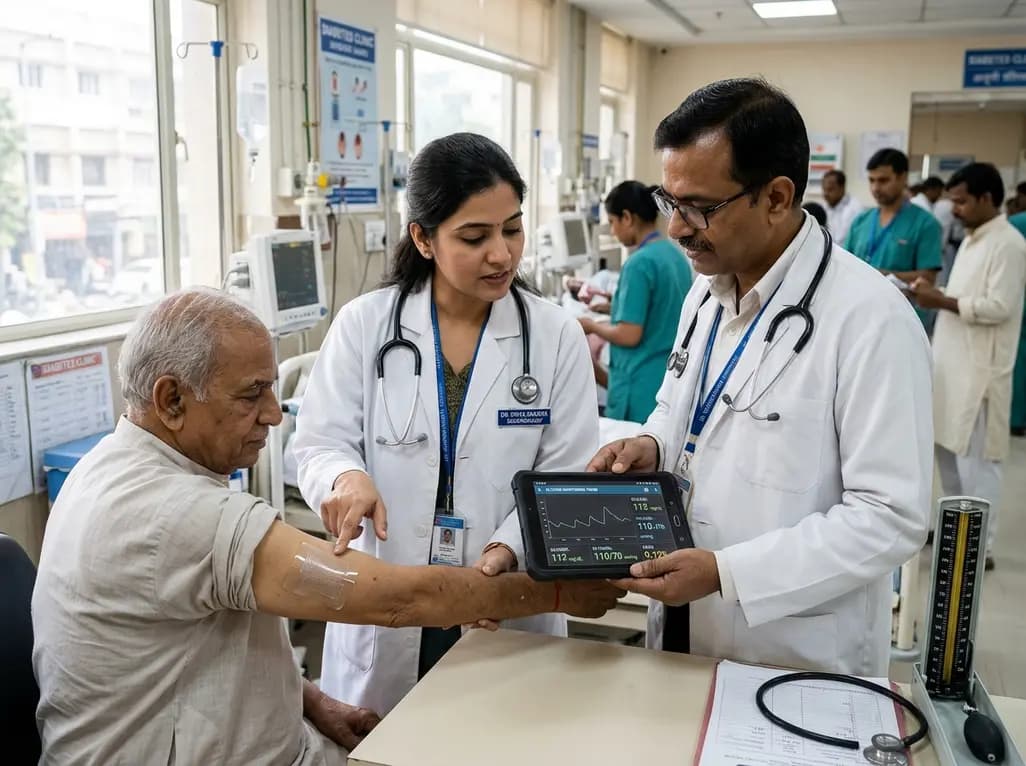
A breakthrough ultrathin multimodal sensor decouples physical hemodynamic monitoring from disposable electrochemical calibration, achieving long-term wearable glucose prediction with 81.36% accuracy and a 9.12% MARD. This offers a robust, drift-free solution for outpatient metabolic surveillance.
Today
