

Loading, please wait...
Loading, please wait...

Accurate evaluation of vocal fold vibration requires rigorous quantitative assessment across various diagnostic platforms. In laryngology, high-speed videoendoscopy provides remarkable insights into vocal fold kinematics during phonation. However, obtaining dependable objective measurements depends entirely on the precision of vocal fold boundary delineation. Clinicians and researchers frequently encounter significant hurdles when establishing reproducible ground truth. Consequently, advancing laryngeal spatial segmentation from subjective manual tracing toward standardized, multi-rater reliability remains essential for modern voice diagnostics and automated algorithmic development.
Manual boundary tracing currently represents the gold standard for training and validating automated clinical segmentation algorithms. However, manual tracing suffers from inherent subjectivity, visual fatigue, and notable variation among clinical evaluators. When single raters perform segmentation, personal bias inevitably skews boundary lines, distorting glottal measurements. Furthermore, subtle optical artifacts, varying illumination, and mucosal wave dynamics exacerbate discrepancies across phonatory cycles. Historically, investigators relied on single-rater datasets, which masked these critical inconsistencies and introduced substantial unrecognized error into algorithmic benchmarks. A comprehensive analysis confirmed that expert clinicians exhibit substantial baseline differences with a large effect size when outlining vocal fold edges independently. Therefore, relying on solitary human raters introduces unacceptably high uncertainty into vocal fold biomechanics. In addition, single-rater annotations fail to capture boundary ambiguities occurring during rapid vocal fold closure. As a result, automated diagnostic networks trained on unverified single-rater ground truth often learn human errors rather than genuine physiological margins. Establishing multi-rater protocols thus provides an indispensable safeguard, ensuring that computational models reflect true anatomical margins and deliver clinically actionable insights during laryngeal pathology assessments.
To resolve the limitations of solitary raters, researchers developed a systematic three-stage annotation framework. In the first stage, three trained experts complete independent segmentations of vocal fold margins without mutual consultation. Subsequently, an automated discrepancy analysis isolates regions displaying marked spatial disagreement among the reviewers. During the second stage, raters specifically review and reconcile these high-discrepancy boundary zones, refining their individual edge coordinates. Finally, the third stage convenes a collaborative consensus review to resolve persistent ambiguities and establish a definitive boundary map. Notably, this structured workflow substantially enhances both intra-rater reproducibility and inter-rater agreement across complex endoscopic frames. Linear mixed-effects modeling confirmed that the most significant gains in reliability emerge during the formal consensus stage. Furthermore, expanding evaluation from one rater to two raters yields the single largest reduction in annotation uncertainty. Adding a third rater provides continued refinements, producing robust sub-pixel resolution boundaries. Consequently, this iterative methodology replaces subjective guesswork with a mathematically validated standard. Clinical laryngologists can therefore rely on resultant kinematic waveforms with far greater diagnostic confidence when planning surgical interventions. Accordingly, adopting multi-expert workflows establishes an objective foundation for future automated laryngeal diagnostic platforms.
Evaluating segmentation quality in endoscopic videos historically depended on the Intersection over Union metric. However, Intersection over Union demonstrates severe sensitivity to total glottal area size, creating deceptive reliability estimates. For instance, when vocal folds adduct fully and the glottal aperture becomes exceedingly small, minute pixel discrepancies drastically depress the Intersection over Union score. Conversely, during wide vocal fold abduction, large absolute boundary errors remain concealed because the large denominator masks deviations. To overcome this fundamental limitation, investigators introduced a novel metric termed maximum edge variability. This refined measurement directly quantifies perpendicular boundary displacement along the vocal fold edge in physical spatial dimensions. Consequently, maximum edge variability delivers a stable, unbiased evaluation across every vibratory phase, regardless of glottal opening size. Furthermore, this metric provides granular sub-pixel precision that identifies localized mucosal wave irregularities. By decoupling boundary assessment from area magnitude, researchers gain genuine insight into edge consistency. In addition, voice clinicians can accurately correlate localized spatial errors with specific mucosal lesions. Therefore, maximum edge variability establishes a superior mathematical standard for validating laryngeal imaging analyses. Thus, adopting this metric provides reliable tracking across entire video sequences.
High-speed videoendoscopy captures thousands of frames per second, revealing mucosal wave dynamics that standard videostroboscopy cannot visualize. Consequently, clinicians rely on these recordings to diagnose complex phonatory disorders, vocal fold paresis, and subtle mucosal lesions. Nevertheless, extracting meaningful physiological data, such as glottal area waveforms, requires immaculate boundary tracking. If baseline spatial segmentation contains significant uncertainty, derived biomechanical parameters become clinically misleading. For example, slight edge misalignments distort left-right phase symmetry calculations and vocal fold contact duration indices. Furthermore, erroneous boundary identification compromises aerodynamic resistance estimates and acoustic modeling. By implementing a standardized multi-rater framework, clinical voice laboratories ensure that calculated kinematic variables reflect true tissue biomechanics. In addition, this rigorous framework allows voice specialists in India and globally to calibrate diagnostic software against incontrovertible ground truth. As a result, laryngologists can track post-operative recovery, evaluate speech therapy outcomes, and distinguish benign lesions from early invasive malignancy with heightened fidelity. Ultimately, robust boundary delineation bridges the gap between optical data and decisive clinical intervention, advancing evidence-based voice care. Moreover, standardized boundaries permit reliable longitudinal monitoring across diverse clinical cohorts.
The principles of this multi-rater protocol extend far beyond high-speed videoendoscopy alone. Indeed, modalities such as contact endoscopy, videostroboscopy, and Narrow Band Imaging require equally rigorous spatial delineation. In Narrow Band Imaging, for instance, distinguishing subtle microvascular changes and neoangiogenesis demands highly reproducible mucosal margin identification. In addition, artificial intelligence and deep neural networks increasingly automate laryngeal disease screening and pathology classification. However, machine learning models remain entirely dependent on the quality of their underlying training data. When engineering teams train neural architectures on single-rater datasets, models inadvertently perpetuate human subjectivity. Conversely, training algorithms on multi-rater, consensus-verified ground truth yields artificial intelligence tools that perform with clinical-grade accuracy. Furthermore, incorporating sub-pixel boundary uncertainty enables probabilistic algorithms to flag ambiguous frames for secondary physician review. Therefore, this framework establishes a vital quality assurance pipeline for future medical software certifications. Clinicians will ultimately benefit from automated tools that provide dependable diagnostic assistance without introducing hidden spatial distortions into routine patient care. Consequently, establishing rigorous ground truth serves as an essential stepping stone toward fully autonomous laryngeal diagnostics.
Single-rater manual segmentation introduces substantial subjectivity, personal bias, and visual fatigue into dataset generation. Independent clinical experts often exhibit significant baseline discrepancies when outlining delicate vocal fold margins. Consequently, establishing a multi-rater protocol with reconciliation and consensus stages dramatically reduces boundary uncertainty. This collaborative process ensures that training datasets for automated laryngological tools reflect genuine tissue anatomy rather than individual subjective errors, thereby securing high diagnostic reliability.
The conventional Intersection over Union metric displays high vulnerability to total glottal area magnitude. During complete vocal fold closure, minute spatial deviations severely penalize the score, whereas wide glottal openings mask substantial edge errors. In contrast, maximum edge variability evaluates true perpendicular boundary deviations along the vocal margins. Consequently, it provides consistent, unbiased reliability scores across all phonatory phases, enabling robust sub-pixel evaluation regardless of opening dimensions.
Yes, clinicians and imaging specialists can seamlessly adapt this multi-stage protocol to various optical diagnostic modalities. Beyond high-speed videoendoscopy, tools such as videostroboscopy, contact endoscopy, and Narrow Band Imaging benefit immensely from standardized boundary delineation. Because mucosal lesions, early dysplastic changes, and microvascular abnormalities require precise structural demarcation, this consensus-driven framework establishes reproducible ground truth, minimizing diagnostic ambiguity across diverse clinical laryngology applications.
Disclaimer: This content is for informational and educational purposes only... Refer to the latest local and national guidelines for clinical practice.
References
Ghasemzadeh H et al. From Subjectivity to Reliability: A Multi-Rater Framework for Ground-Truth Generation in Laryngeal Spatial Segmentation. J Voice. 2026 Nov 10. doi: undefined. PMID: 43009416.
Lohscheller J, Toy H, Rosanowski F, Eysholdt U, Döllinger M. Clinically evaluated procedure for the reconstruction of vocal fold vibrations from endoscopic digital high-speed videos. Med Image Anal. 2007;11(4):400-413. doi:10.1016/j.media.2007.02.001. PMID: 17398144.
Fehling MK, Grosch F, Schuster ME, Schick B, Lohscheller J. Fully automatic segmentation of glottis and vocal folds in endoscopic laryngeal high-speed videos using a deep Convolutional LSTM Network. PLoS One. 2020;15(2):e0227791. doi:10.1371/journal.pone.0227791. PMID: 32049971.
Yousef AM, Deliyski DD, Zacharias SRC, de Alarcon A, Orlikoff RF, Naghibolhosseini M. Spatial Segmentation for Laryngeal High-Speed Videoendoscopy in Connected Speech. J Voice. 2020;34(5):808.e17-808.e26. doi:10.1016/j.jvoice.2019.03.013. PMID: 31085025.

Read summarized clinical updates, watch expert medical content, and earn CME certifications right from your smartphone.
Open your smartphone camera to scan and install.





A landmark study establishes a multi-rater consensus framework for laryngeal spatial segmentation, demonstrating that multi-expert reconciliation and maximum edge variability drastically reduce ground-truth uncertainty and improve automated diagnostic reliability in laryngology.
Today

A cross-sectional study in female patients with fibromyalgia demonstrates significant cervical disability and its strong positive correlation with self-perceived voice handicap, emphasizing the necessity of multidisciplinary evaluation linking rheumatology, otolaryngology, and physical therapy.
Today
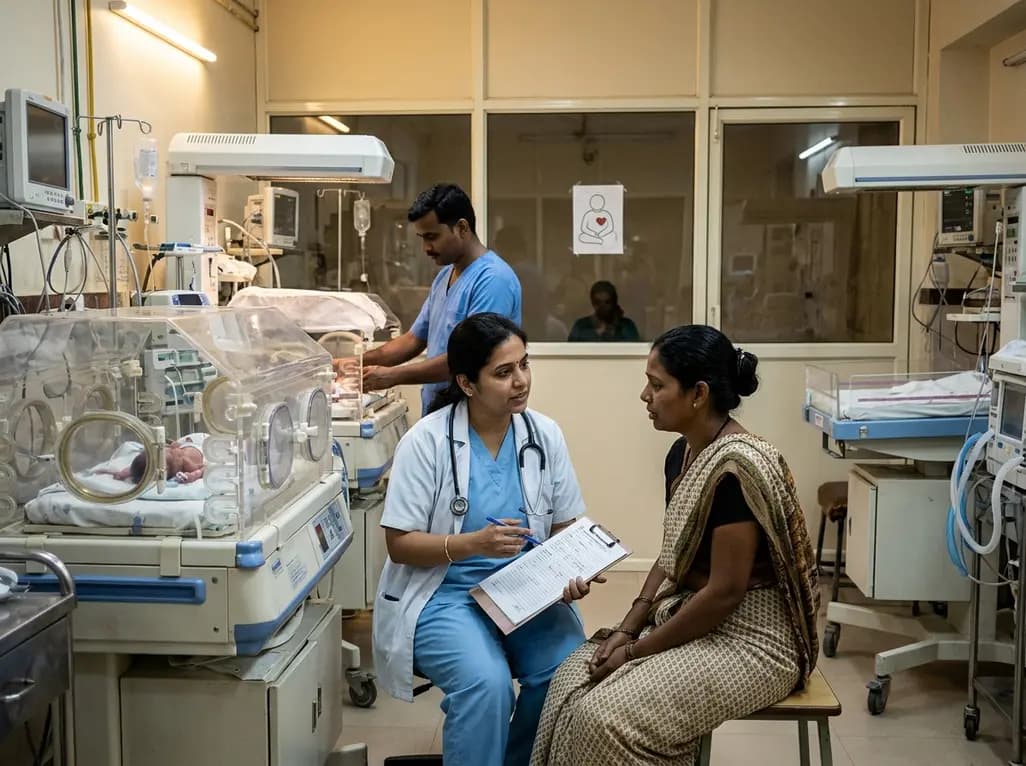
A new quality-improvement initiative reveals that universal maternal mental health screening in the NICU increased screening rates from 29.5% to 95.0%, with nearly 60% of screened mothers requiring psychosocial referrals, highlighting the urgent need for embedded mental health resources.
Today
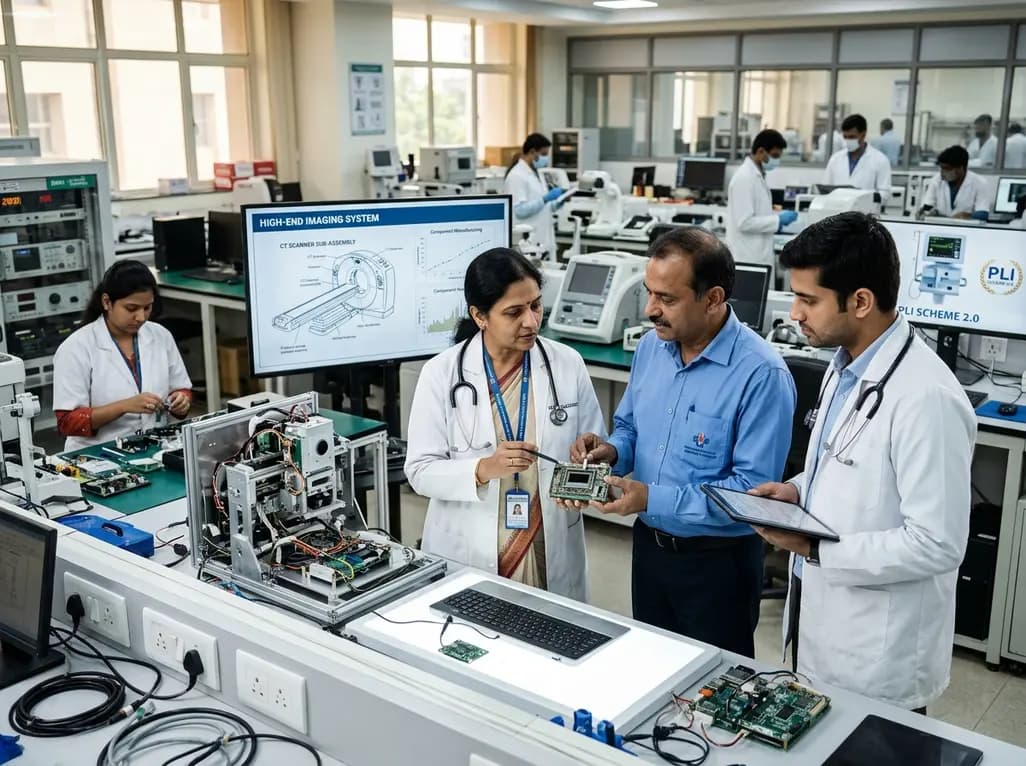
The Department of Pharmaceuticals has extended the medical devices PLI scheme to 2035-36 with a Rs 2,700 crore outlay. Featuring relaxed investment barriers and eliminated sales thresholds, the revised framework targets deep manufacturing, high-end diagnostics, critical MedTech components, and supply resilience.
Today
A metabolomic study reveals that aging delays glutathione synthesis and gamma-glutamylcysteine accumulation following muscle injury. Although precursor supplementation targets this enzymatic bottleneck, in vitro tests show no immediate effect on myogenesis, highlighting the complexity of muscle repair in older adults.
Today

A systematic review evaluates psychological interventions for smoking cessation in diabetes, showing short-term success but highlighting challenges in long-term abstinence.
Today
