.webp&w=384&q=75)

Loading, please wait...
Loading, please wait...
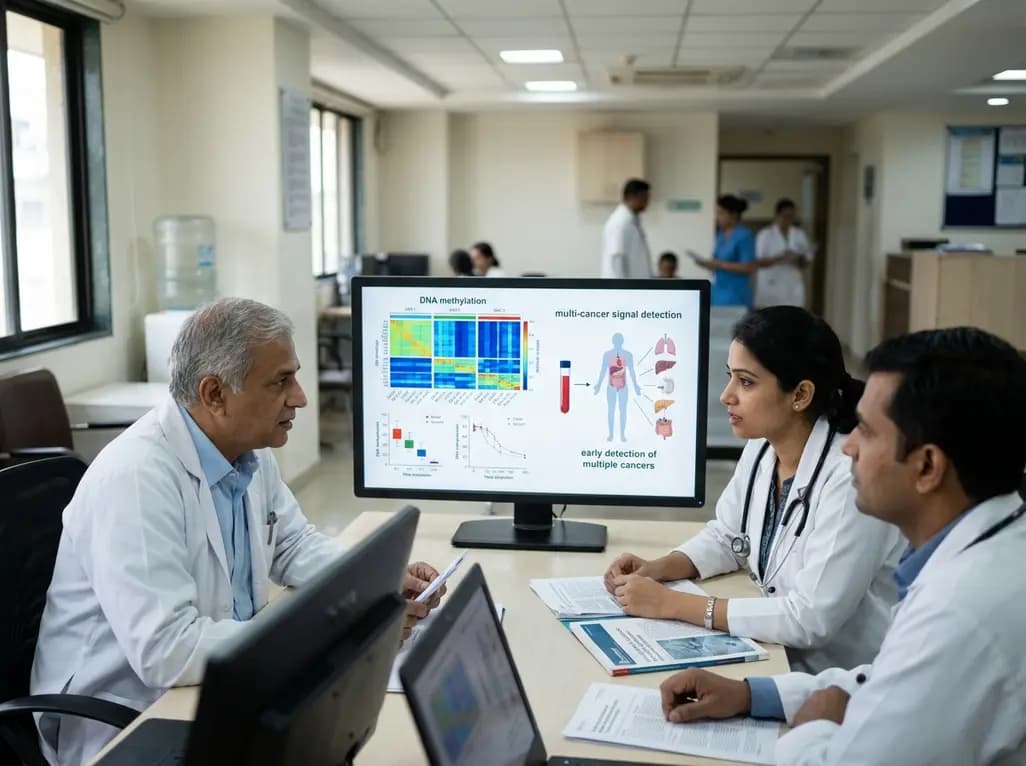
The clinical adoption of multi-cancer early detection has taken a substantial step forward following a pivotal regulatory update. Recently, United States Food and Drug Administration reviewers evaluated Grail's proprietary Galleri test ahead of an independent advisory committee meeting. Importantly, the regulatory staff raised no primary safety or analytical concerns regarding the novel diagnostic platform. This development generated considerable optimism among clinicians and researchers seeking better methods to identify malignant tumors.
The FDA briefing documents offered a thorough assessment of the Galleri platform. Specifically, agency reviewers confirmed that the test demonstrates high analytical reproducibility and robust laboratory accuracy across diverse sample sets. Furthermore, the agency identified no critical safety signals that would immediately impede the regulatory pathway toward premarket approval. Consequently, the review committee focused primarily on clinical utility rather than basic test mechanics. In addition, regulators noted that the test achieves a remarkable specificity rate exceeding ninety-nine percent. This exceptional level of precision helps minimize diagnostic confusion during routine clinical evaluations. Moreover, the review highlighted that Galleri reliably predicts the tissue of origin when it identifies an abnormal signal. Therefore, physicians can pursue targeted follow-up diagnostics without subjecting patients to unnecessary exploratory imaging. The agency staff emphasized that blood-based testing offers an accessible alternative to conventional diagnostic barriers. However, regulatory advisors must still determine how these analytical metrics translate into measurable patient survival benefits. As a result, the upcoming advisory committee meeting will examine whether the current performance data justifies broad commercial claims. This detailed evaluation reassures practitioners that the underlying molecular technology remains fundamentally sound and analytically dependable.
Liquid biopsy technology has progressed rapidly over the past decade. Specifically, the Galleri platform harnesses next-generation sequencing to evaluate methylation patterns in circulating cell-free deoxyribonucleic acid. Tumors shed distinct epigenetic footprints into the bloodstream long before physical masses become clinically noticeable. Furthermore, machine learning algorithms interpret these complex molecular patterns to differentiate malignant signals from benign biological noise. In fact, the assay can capture signals originating from more than fifty distinct types of malignancies. Many of these malignancies currently lack any formal population-based screening paradigms. For example, clinicians possess few proactive diagnostic tools for detecting lethal cancers such as pancreatic, ovarian, or esophageal neoplasms. Consequently, patients frequently present at advanced stages when curative therapeutic interventions become impossible. By identifying circulating tumor DNA during early cellular proliferation, multi-cancer early detection aims to shift cancer detection to earlier stages. Additionally, the test determines the anatomical origin of the malignant signal with impressive accuracy. This dual capability allows oncologists to streamline diagnostic workups effectively. Therefore, molecular methylation profiling represents a transformative departure from conventional single-organ screening paradigms. Modern oncology increasingly relies on such non-invasive innovations to intercept aggressive malignancies before metastatic dissemination occurs.
Despite encouraging analytical metrics, clinical trials have revealed nuanced challenges regarding overall efficacy. Most notably, data from the extensive NHS-Galleri trial in the United Kingdom produced mixed outcomes. The prospective trial demonstrated an increase in early stage cancer diagnoses across participants. However, it failed to demonstrate a statistically significant reduction in combined stage three and stage four cancer occurrences. Because of this finding, the FDA advisory committee must critically debate whether Galleri truly qualifies as an early detection tool. Furthermore, the overall sensitivity of the test across all tumor stages remains approximately thirty-five percent. Sensitivity drops even lower when evaluating stage one localized tumors compared to metastatic disease. Consequently, some public health experts caution against overestimating the clinical utility of liquid biopsies in asymptomatic populations. In addition, regulators require evidence proving that screen-detected tumors improve overall survival rather than merely introducing lead-time bias. Nonetheless, researchers observe that the test performs exceptionally well for highly aggressive tumor types that lack routine screening. Therefore, clinical consensus remains divided on the exact regulatory terminology appropriate for labeling the assay. Clinicians must weigh these statistical realities when interpreting blood screening results for asymptomatic individuals.
A major concern surrounding population-wide liquid biopsy screening involves the risk of false results. Fortunately, Galleri maintains a false positive rate well below one percent across published clinical investigations. However, even a minor false positive percentage can generate substantial clinical distress when applied to millions of asymptomatic individuals. False positive results often provoke intense patient anxiety and trigger expensive diagnostic cascades involving full-body imaging or invasive biopsies. Conversely, a negative test result carries significant risks if patients misinterpret it as definitive cancer clearance. For this reason, regulatory agencies and oncology societies emphasize that liquid biopsies cannot replace standard screening methods. Specifically, individuals must continue routine screenings including mammograms, colonoscopies, cervical cytology tests, and low-dose computed tomography scans. Furthermore, Galleri operates strictly as an adjunct diagnostic instrument designed to complement existing validated screening pathways. Medical professionals must actively counsel patients regarding the clinical boundaries of circulating tumor DNA testing. Thus, clear communication prevents individuals from abandoning proven screening methods that reliably reduce cancer mortality. In conclusion, integrating novel blood tests into regular care requires rigorous protocols to balance diagnostic benefits against avoidable procedural harms.
In countries like India, cancer detection faces unique epidemiological and infrastructural challenges. Specifically, the majority of oncology patients in India receive diagnoses during stage three or stage four disease. Limited access to routine screening facilities and high patient-to-oncologist ratios exacerbate late-stage cancer burdens across urban and rural centers. Consequently, non-invasive multi-cancer blood assays could eventually offer meaningful value in tertiary Indian healthcare centers. In addition, several domestic diagnostic laboratories already offer liquid biopsy panels for monitoring treatment response and detecting minimal residual disease. However, significant financial barriers currently restrict the widespread uptake of comprehensive multi-cancer screening tests in the private sector. Furthermore, Indian oncologists must establish evidence-based diagnostic pathways before incorporating these proprietary tests into routine preventive health checks. Because false positive findings necessitate expensive confirmatory imaging like positron emission tomography scans, unguided screening could strain patient finances. Therefore, clinicians must exercise judicious clinical judgment when recommending blood tests to asymptomatic individuals. Over time, as regulatory bodies clarify clinical indications and local validation studies emerge, blood-based screening could reshape preventive oncology in South Asia. Healthcare systems must nevertheless prioritize accessible basic screening while modern genomic technologies continue to mature.
Q1: What did the FDA staff reviewers conclude about the Galleri cancer test?
The FDA staff reviewers concluded that Grail demonstrated satisfactory analytical performance, study design, and primary safety outcomes for the Galleri test. Notably, the reviewers raised no major technical questions regarding the accuracy of its DNA methylation profiling or its ability to predict cancer signal origin. However, the agency requested that independent advisory committee members critically debate whether current clinical data proves the test effectively drives early cancer detection.
Q2: Can the Galleri blood test replace routine cancer screening methods?
No, the Galleri blood test cannot replace established cancer screening methods such as colonoscopies, mammography, low-dose computed tomography, or Pap smears. Instead, regulators and clinical guidelines position multi-cancer blood assays strictly as complementary screening tools. These blood assays aim to detect malignancies that currently lack standard population screening programs. Consequently, patients who undergo blood screening must still complete all age-appropriate, guideline-recommended cancer screenings to ensure optimal preventative health outcomes.
Q3: Why did Grail experience a setback during the UK trial earlier this year?
Grail experienced a clinical trial setback because the primary endpoint of the randomized NHS-Galleri trial was not achieved. Specifically, routine population screening with the blood assay failed to produce a statistically significant reduction in late-stage cancer diagnoses across participants over three years. Although the test successfully identified many stage one and two malignancies, regulators and epidemiologists questioned whether this finding translates into a meaningful reduction in disease mortality.
Disclaimer: This content is for informational and educational purposes only. It does not constitute medical advice or replace professional judgment. Refer to the latest local and national guidelines for clinical practice.
References

Read summarized clinical updates, watch expert medical content, and earn CME certifications right from your smartphone.
Open your smartphone camera to scan and install.





FDA staff reviewers have raised no major safety or analytical concerns regarding Grail's Galleri blood test ahead of an advisory panel meeting. This milestone advances liquid biopsy technologies designed to identify tumor methylation signals across dozens of malignancies before clinical symptoms emerge.
Today
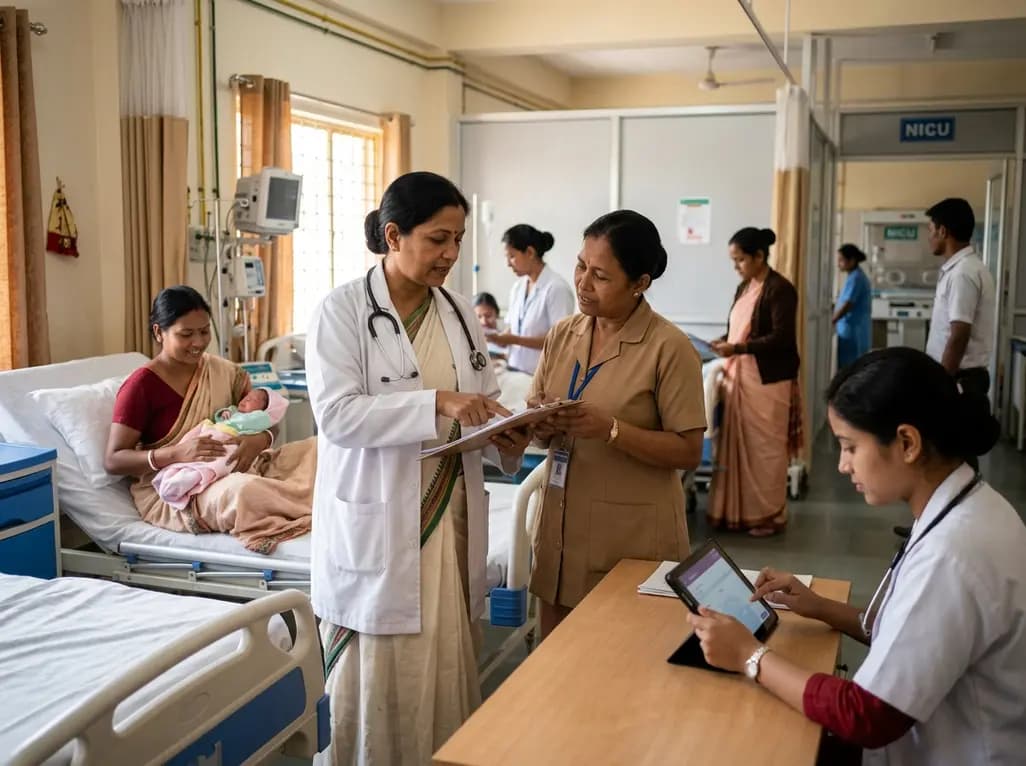
Meghalaya recorded a historic 55% reduction in maternal deaths, dropping from 244 to 107 over five years. Through the MOTHER app, dedicated transit homes, and expanded infrastructure like the 150-bed Tura Maternity Hospital with its first public NICU, the state demonstrates an effective public health model.
Today
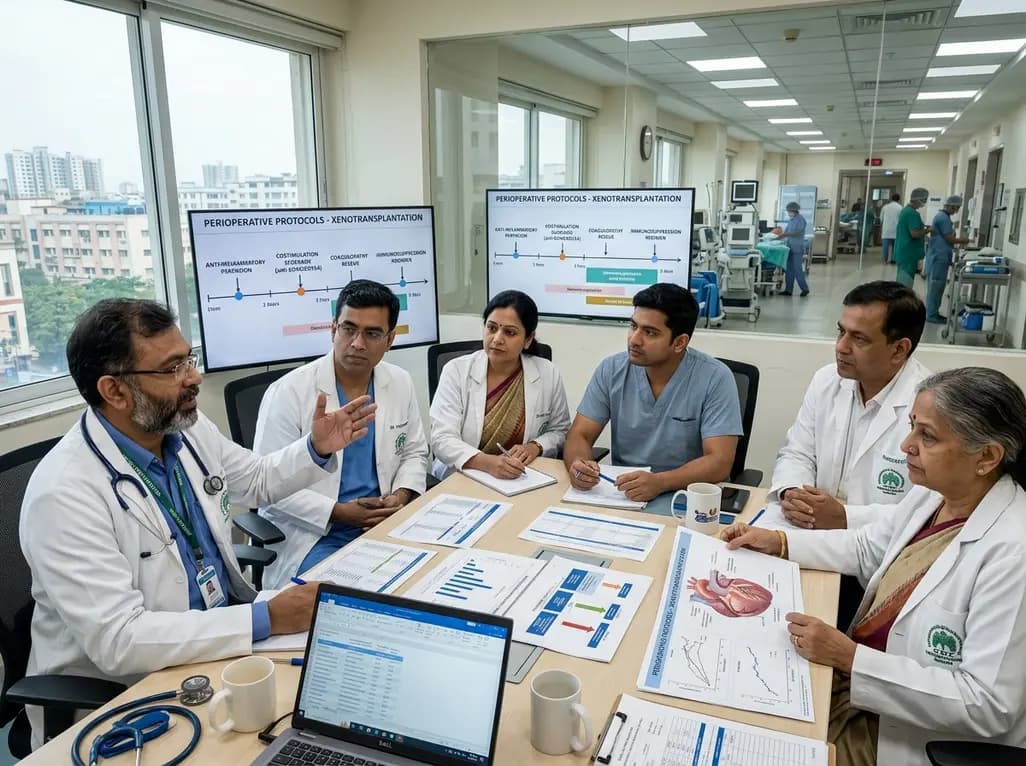
Explore modern perioperative management protocols for clinical xenotransplantation. Learn how costimulation blockade, anti-inflammatory perfusion, and coagulopathy rescue overcome interspecies hurdles.
Today
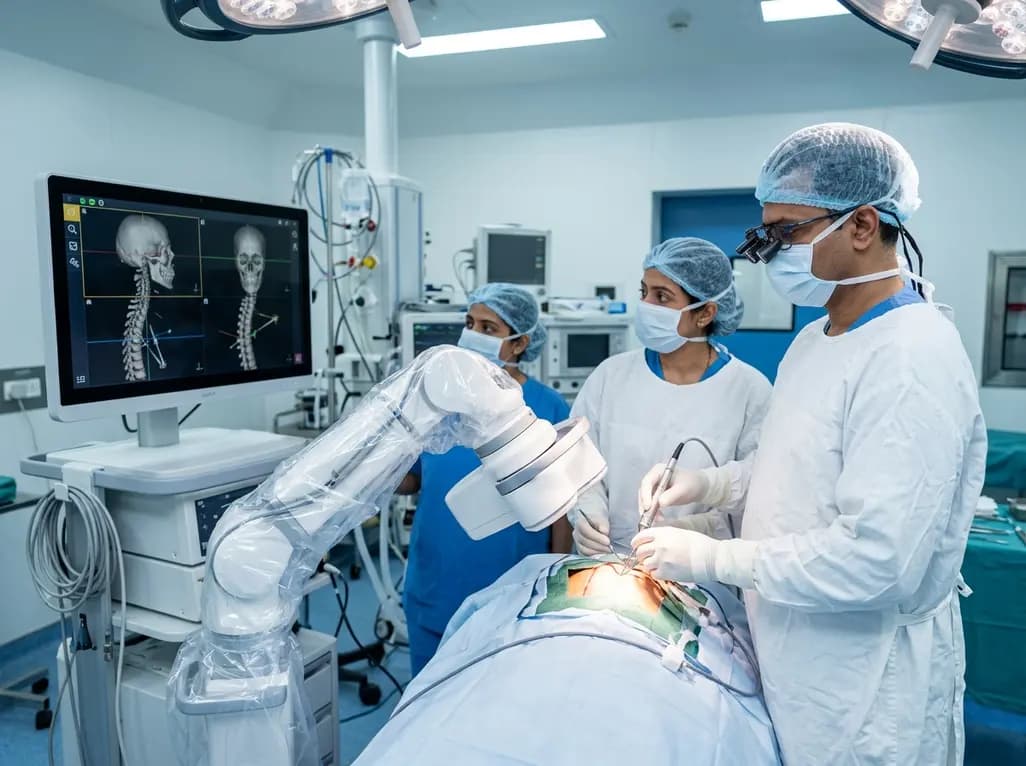
North India's first Centre of Excellence for Brain and Spine at Amrita Hospital Faridabad integrates Brainlab's Loop-X mobile robot. This landmark facility combines cone-beam computed tomography with surgical navigation to elevate precision, optimize operative workflows, and enhance specialized clinician training.
Today
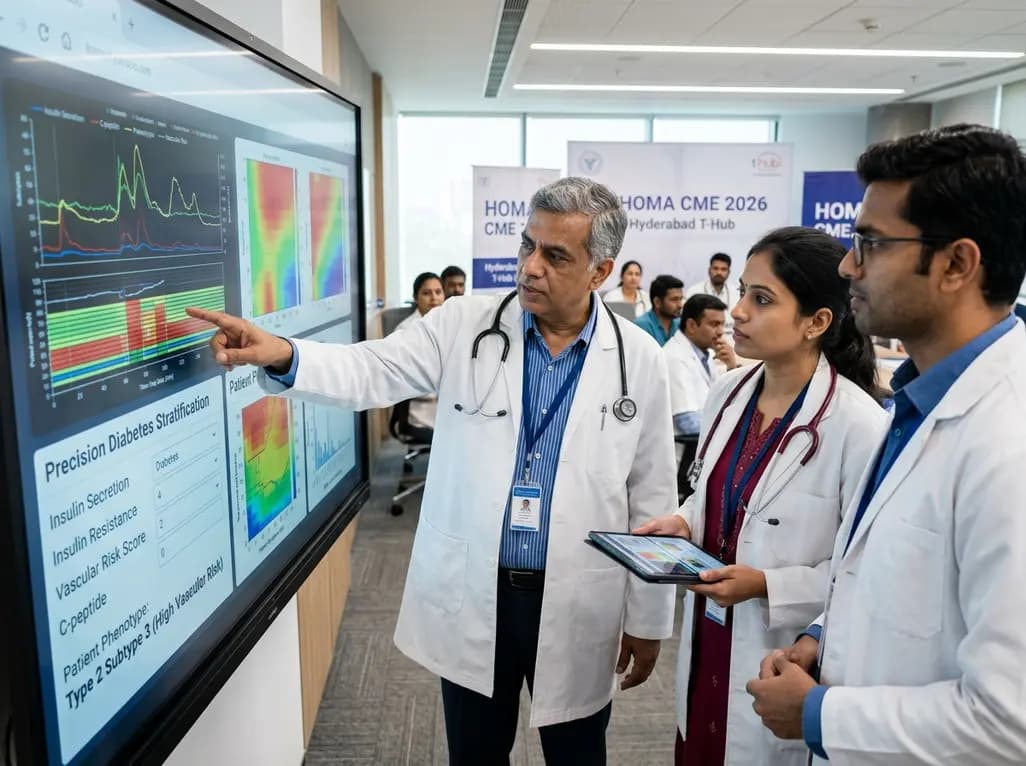
At Homa CME 2026 at Hyderabad's T-Hub, healthcare leaders emphasized moving beyond routine metrics through digital calculators and precision stratification. Discover why characterizing individual insulin secretion, resistance patterns, and vascular risks transforms chronic metabolic care in India.
Today
