.webp&w=384&q=75)

Loading, please wait...
Loading, please wait...

Rotator cuff tears represent a frequent source of shoulder impairment, pain, and disability in orthopedic populations. Although modern surgical techniques achieve anatomic repair, structural reattachment often fails to restore complete joint biomechanics. A major culprit driving poor postoperative outcomes is rotator cuff fatty infiltration. Following chronic mechanical tendon detachment, the supraspinatus muscle experiences sustained unloading, microvascular impairment, and progressive denervation. Consequently, healthy parenchymal myofibers undergo severe degenerative remodeling, which manifests as profound muscle wasting and ectopic lipid accumulation. Orthopedic specialists recognize that advanced fatty degeneration permanently reduces muscle elasticity, elevates structural stiffness, and impairs contractile efficiency. Furthermore, severe fatty degeneration correlates with dramatically elevated rates of recurrent tendon tearing after arthroscopic repair. While physical therapy and surgical stabilization optimize mechanical stability, existing therapeutic options cannot directly prevent or reverse fatty changes. In addition, persistent muscle degradation often leaves patients with chronic weakness despite intact tendon repairs. Therefore, understanding the intracellular cascades governing muscle steatosis is critical for establishing effective biological interventions. Recent scientific investigations into cellular niches provide promising avenues to preserve muscular architecture and improve clinical prognoses.
To uncover the cellular drivers of muscle degradation, researchers have examined specialized progenitor pools within skeletal tissue. Fibro/adipogenic progenitors, commonly designated as FAPs, reside within the interstitial space between healthy muscle fibers. During physiological muscle repair, these versatile mesenchymal cells activate transiently and release trophic cytokines that support myogenic satellite cells. However, sustained mechanical detachment after a tendon rupture triggers severe pathological reprogramming within the progenitor niche. Instead of supporting myofiber regeneration, interstitial FAPs proliferate rapidly and switch their lineage commitment toward adipogenesis and fibrosis. Consequently, these altered progenitors serve as the predominant biological origin of ectopic fat accumulation in degenerating rotator cuff muscles. The resulting mature adipocytes secrete inflammatory paracrine signals, disrupt contractile architecture, and promote extracellular matrix scarring. Moreover, the ongoing expansion of intramuscular fat directly accelerates disuse muscle atrophy and impairs regenerative muscle stem cell activity. Thus, developing therapeutic agents that selectively block FAP adipogenic conversion represents an essential clinical strategy. Targeting specific intracellular kinase pathways inside these progenitors could protect supraspinatus muscle quality before irreversible tissue degeneration occurs.
A significant breakthrough in muscle biology involves mammalian Sterile 20-like kinase 1, known as MST1. Historically, cellular biologists identified MST1 as a central kinase regulating apoptosis, organ development, and tissue homeostasis. Furthermore, emerging literature has implicated MST1 signaling in metabolic disorders, including non-alcoholic hepatic steatosis and cardiovascular stress. Nevertheless, its specific contribution to tendon-induced muscle degeneration remained unexplored until recent animal investigations. Using a validated murine rotator cuff tear model, researchers analyzed MST1 expression in retracted supraspinatus muscles. Notably, MST1 expression increased significantly following tendon transection, closely mirroring the timeline of progressive lipid accumulation. Quantitative assessments confirmed higher triglyceride concentrations and abundant lipid droplets in muscles with elevated MST1 levels. In addition, mechanistic evaluations in isolated muscle FAPs revealed intense MST1 upregulation during chemically induced adipogenic differentiation. When investigators knocked down MST1 in vitro, the progenitor cells exhibited marked reductions in intracellular lipid deposition and adipogenic enzyme expression. These cellular findings established that MST1 functions as an indispensable positive regulator of pathological FAP adipogenesis, highlighting a novel therapeutic target.
To decipher the precise molecular cascade downstream of MST1, investigators evaluated canonical WNT/β-catenin pathway dynamics. Canonical WNT signaling plays a vital role in skeletal biology by repressing adipocyte commitment and directing progenitor cells toward non-adipogenic fates. Interestingly, the molecular analyses demonstrated that silencing MST1 led to robust activation of WNT/β-catenin signaling in primary FAPs. This pathway activation resulted in nuclear accumulation of stabilized β-catenin and a subsequent downregulation of master adipogenic transcription factors. Specifically, MST1-deficient cells displayed substantial reductions in peroxisome proliferator-activated receptor gamma (PPARγ) and fatty acid-binding protein 4 (FABP4). To confirm this mechanistic relationship, researchers treated MST1-depleted progenitor cells with pharmacological inhibitors of WNT signaling. Consequently, WNT pathway blockade restored PPARγ expression and completely abolished the anti-adipogenic benefits of MST1 knockdown. This rescue experiment confirmed that MST1 normally suppresses protective WNT signaling to allow unrestricted adipogenic differentiation. Therefore, inhibiting MST1 preserves muscle tissue primarily by restoring endogenous WNT/β-catenin pathway activity within vulnerable progenitor cells, establishing a key regulatory axis in muscle preservation.
Following the successful in vitro experiments, researchers assessed the therapeutic potential of in vivo MST1 knockdown in mice. The team delivered local lentiviral shRNA injections directly into supraspinatus muscles immediately following surgical tendon transection. Histological analysis utilizing Oil Red O staining demonstrated that local MST1 suppression significantly attenuated muscular lipid deposition. Furthermore, treated muscles showed marked decreases in triglyceride content and suppressed expression of adipogenic biomarkers compared to untreated controls. In addition to mitigating fat accumulation, MST1 knockdown substantially alleviated structural muscle atrophy. Masson trichrome staining verified reduced interstitial fibrosis, while protein analyses revealed sustained expression of myogenic regulatory factors. These striking preclinical results indicate that targeted MST1 inhibition can halt the destructive trajectory of muscle steatosis. Consequently, local pharmacological MST1 inhibition represents an exciting therapeutic frontier to augment surgical rotator cuff repair. Future clinical studies should explore bioengineered delivery vectors, such as targeted nanoparticles or injectable hydrogels, for localized human application. Ultimately, combining biological anti-steatosis therapy with anatomical repair could transform functional rehabilitation outcomes for patients with rotator cuff pathology.
Muscular fatty infiltration in rotator cuff tears directly correlates with muscle stiffness, loss of contractile tissue, and poor functional recovery. As healthy myofibers atrophy, non-contractile adipose tissue replaces normal parenchyma. Consequently, patients experience persistent postoperative shoulder weakness and compromised joint stability. Furthermore, severe fatty degeneration substantially increases the rate of structural repair failure, making it one of the most critical prognostic factors in orthopedic shoulder surgery.
Fibro/adipogenic progenitors are resident mesenchymal stem cells that reside in skeletal muscle interstitium. Under physiological conditions, these cells support satellite cell renewal and tissue homeostasis. However, chronic tendon detachment and persistent unloading disrupt local cellular signaling. Consequently, these progenitors multiply and differentiate pathologically into mature adipocytes and collagen-producing fibroblasts. This aberrant cellular shift serves as the primary driver of both intramyocellular fat deposition and progressive muscle fibrosis in injured rotator cuffs.
MST1 kinase normally functions as an intracellular repressor of canonical WNT signaling in damaged skeletal muscle. When researchers inhibit or deplete MST1, cytosolic beta-catenin stabilizes, accumulates, and translocates into the nucleus. This nuclear translocation activates WNT-dependent transcriptional programs that actively suppress the master adipogenic regulators PPAR-gamma and FABP4. Consequently, fibro/adipogenic progenitors are prevented from differentiating into mature fat cells, which preserves parenchymal architecture and prevents severe muscle atrophy after tendon injury.
Disclaimer: This content is for informational and educational purposes only and does not constitute medical advice, diagnosis, or treatment. Healthcare professionals should use their independent clinical judgment when evaluating patient care options. Refer to the latest local and national guidelines for clinical practice.
References

Read summarized clinical updates, watch expert medical content, and earn CME certifications right from your smartphone.
Open your smartphone camera to scan and install.





Fatty infiltration after rotator cuff tears impairs shoulder repair outcomes. A new study reveals that targeting MST1 kinase suppresses fibro/adipogenic progenitor adipogenesis via WNT/β-catenin signaling, reducing muscle fat accumulation and mitigating muscle atrophy.
Today

Researchers developed a novel bezafibrate-L-proline cocrystal inclusion compound using ball milling, boosting saturation solubility by 3.9-fold and oral bioavailability twofold. This supramolecular strategy holds promising potential to enhance drug efficacy and consistency in atherogenic dyslipidemia management.
Today

A multiparametric MRI approach combining quantitative T2 shading, apparent diffusion coefficient (ADC) measurements, and morphological signs provides superior diagnostic accuracy over subjective evaluation to differentiate ovarian endometriomas from benign hemorrhagic cysts.
Yesterday
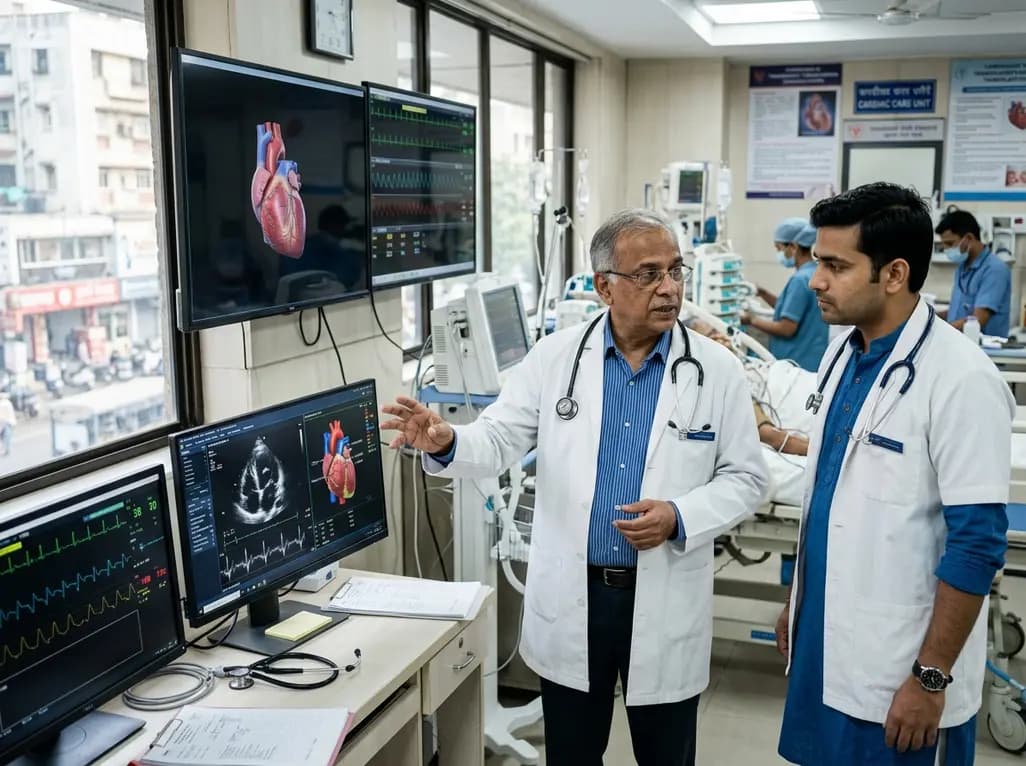
A landmark case report reveals a donor heart beating for a century in a 63-year-old recipient, challenging conventional age limits in cardiac transplantation and offering critical lessons on organ longevity, donor selection, and long-term graft survival.
Today

A randomized crossover study reveals that exercise-induced glycogen depletion combined with a low-carbohydrate diet significantly enhances peak fat oxidation without impairing skeletal muscle mitochondrial coupling control or efficiency in healthy trained men.
Today
