.webp&w=384&q=75)

Loading, please wait...
Loading, please wait...

Chronic thromboembolic pulmonary hypertension (CTEPH) is a severe, potentially curable form of pulmonary hypertension. Accurate MRI for CTEPH diagnosis is becoming increasingly important as clinicians seek radiation-free alternatives to traditional scans. A recent systematic review published in the Journal of Medical Imaging and Radiation Oncology evaluates how magnetic resonance imaging (MRI) performs in identifying thromboembolic material and perfusion defects. Researchers analyzed nine studies involving 563 participants to synthesize evidence on various MRI techniques.
The systematic review highlighted that MRI perfusion imaging is remarkably effective. Across the analyzed studies, MRI perfusion demonstrated a median sensitivity of 97% and a median specificity of 92.5%. Additionally, contrast-enhanced MR angiography (ce-MRA) showed high specificity at 98.1%, making it a robust tool for identifying vascular obstructions. While non-contrast MRA had lower accuracy when used alone, it provided significant value for assessing proximal vessels when combined with contrast-enhanced techniques. Consequently, the combination of these modalities offers a comprehensive view of both vascular morphology and cardiopulmonary function.
The primary advantage of using MRI is the lack of ionizing radiation. This feature is particularly beneficial for patients requiring longitudinal follow-up or those sensitive to radiation. However, the review also identified some methodological limitations. Most studies used non-consecutive patient selection and exhibited significant heterogeneity in MRI protocols. Therefore, while the diagnostic performance is encouraging, specialists still need larger, standardized prospective studies to fully integrate MRI into standard diagnostic pathways. In India, where access to specialized PH centers is growing, these findings support the potential for MRI to serve as a versatile diagnostic alternative.
MRI perfusion is highly sensitive, with a median sensitivity of 97% according to the latest systematic review. This makes it an excellent tool for identifying perfusion defects in the lungs without using radiation.
While non-contrast MRA has lower standalone accuracy (45% sensitivity), it is useful for assessing proximal vessels. It improves significantly when used in conjunction with contrast-enhanced MR angiography (ce-MRA).
MRI shows encouraging diagnostic performance that is comparable to standard tests. However, due to study heterogeneity, current guidelines often still prioritize V/Q scintigraphy or CTPA. MRI is currently a valuable adjunct, especially when radiation avoidance is a priority.
Disclaimer: This content is for informational and educational purposes only. It does not constitute professional medical advice, diagnosis, or treatment. Always seek the advice of your physician or other qualified healthcare provider with any questions you may have regarding a medical condition. Refer to the latest local and national guidelines for clinical practice.
References
1. Tai JYY et al. Diagnostic Performance of Magnetic Resonance Imaging in Chronic Thromboembolic Pulmonary Hypertension: A Systematic Review. J Med Imaging Radiat Oncol. 2026 Apr 12. doi: 10.1111/1754-9485.70101. PMID: 41968355.
2. Humbert M, et al. 2022 ESC/ERS Guidelines for the diagnosis and treatment of pulmonary hypertension. Eur Heart J. 2022;43(38):3618-3731.
3. Rajagopalan S, et al. Magnetic resonance imaging in pulmonary hypertension: An update. Indian J Radiol Imaging. 2021;31(1):145-154.

Read summarized clinical updates, watch expert medical content, and earn CME certifications right from your smartphone.
Open your smartphone camera to scan and install.





A systematic review evaluates MRI's high sensitivity and specificity in detecting chronic thromboembolic pulmonary hypertension and perfusion defects....
6 months ago

Co-administering antiseizure medications and DOACs frequently causes pharmacokinetic interactions, subtherapeutic drug levels, and thromboembolic failures. This review highlights enzyme induction risks, unpredictable outcomes with levetiracetam, and the vital role of therapeutic drug monitoring.
Today

Demanding exhaustive hormonal profiling can inadvertently discourage clinical studies involving females. Methodological standards must align with the specific scientific question to expand, not restrict, equitable evidence for women.
Today
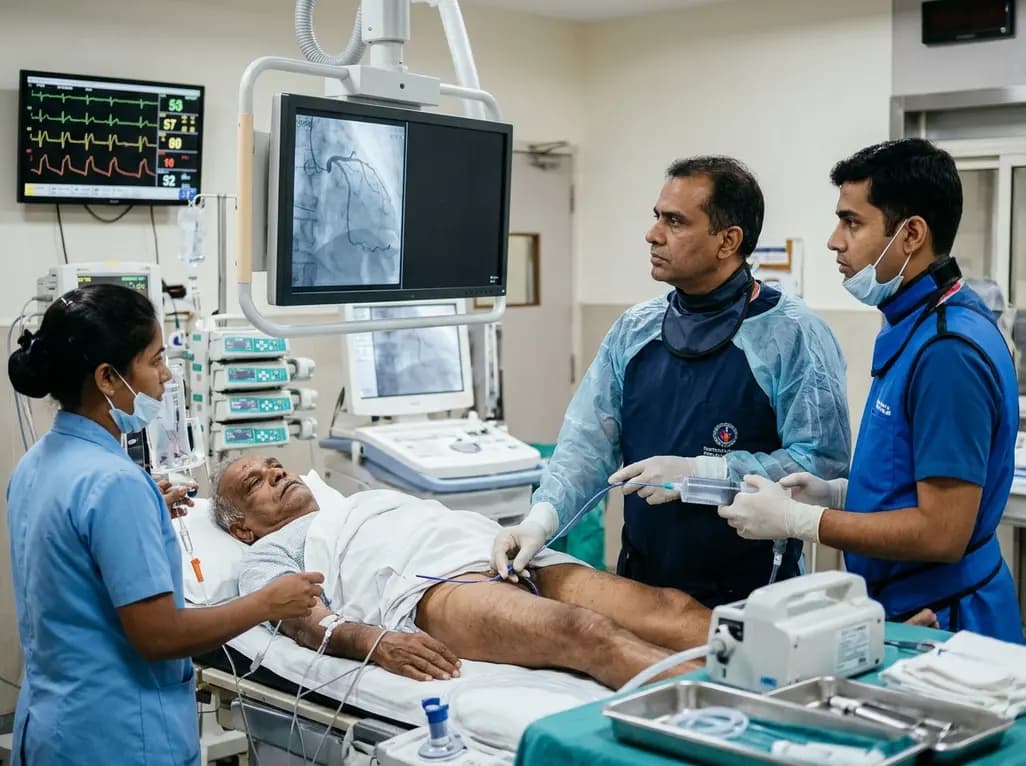
An elderly man with partially repaired Tetralogy of Fallot presented with STEMI caused by coronary embolism rather than atherosclerosis. Successful treatment with sustained mechanical aspiration thrombectomy underscores the vital need for high clinical vigilance in adult congenital heart disease.
Today

A comparative review of tension band wiring and intramedullary screw fixation in thumb metacarpophalangeal arthrodesis, evaluating union rates, hardware complications, and clinical outcomes.
Today

Following regulatory scrutiny from FSSAI regarding promotional representations and lean muscle preservation claims, Dr. Reddy's Laboratories and Nestlé Health Science are currently reviewing the branding and marketing strategy for their joint nutritional supplement Celevida GLP+.
Today
