.webp&w=384&q=75)

Loading, please wait...
Loading, please wait...

Modern neuro-oncology requires precise diagnostic tools for distinguishing aggressive brain tumors. Specifically, differentiating glioblastoma (GBM) from central nervous system diffuse large B-cell lymphoma (CNS-DLBCL) remains difficult due to overlapping imaging features. Consequently, researchers have introduced MRI deep learning to provide non-invasive diagnostic support in clinical settings.
In a comprehensive study at the Mayo Clinic, investigators utilized a three-stage temporal design to develop a classification model. They trained models using T1 post-contrast and T2-weighted MRI sequences from 292 patients. Furthermore, the team tested these algorithms on independent and prospective cohorts to ensure reliability. The results showed an impressive AUC of 0.84 for the ensemble approach. Significantly, the model maintained consistent performance across various age groups and both sexes. Moreover, nearly half of the analyzed MRIs originated from external institutions. This diversity proves the robustness of the system across different hardware and protocols. Therefore, clinicians can view this as a feasible step toward automated, non-invasive brain tumor classification.
Accurate differentiation is vital because GBM and CNS-DLBCL require drastically different treatment strategies. While GBM often necessitates maximal surgical resection, CNS-DLBCL typically responds better to chemotherapy and corticosteroids. By using advanced analytical approaches like cross-entropy loss minimization, the researchers optimized the model's prediction performance. Additionally, the stability of these predictions improved as the number of models in the ensemble increased. This evidence suggests that integrating AI into radiology workflows could reduce the need for invasive biopsies in ambiguous cases.
Both tumors frequently exhibit similar enhancement patterns and edema on standard MRI, which often leads to diagnostic uncertainty for radiologists.
The ensemble approach combines multiple models to reach a consensus. This method increased the stability and accuracy of the predictions during the Mayo Clinic study.
Disclaimer: This content is for informational and educational purposes only and does not constitute professional medical advice, diagnosis, or treatment. Always seek the advice of your physician or other qualified healthcare provider with any questions you may have regarding a medical condition. Refer to the latest local and national guidelines for clinical practice.
References
Moassefi M et al. MRI Deep Learning for Differentiating Glioblastoma, IDH-Wildtype from Central Nervous System Diffuse Large B-cell Lymphoma. Cancer Res Commun. 2026 May 04. doi: 10.1158/2767-9764.CRC-25-0710. PMID: 42081255.
Priya S et al. Radiomics-based differentiation between glioblastoma, cns lymphoma, and brain metastases: Comparing performance across mri sequences and machine learning models. Clin Neuroradiol. 2021.
McAvoy M et al. Deep Learning for Preoperative Differentiation of Glioblastoma and Primary Central Nervous System Lymphoma. Frontiers in Oncology. 2024.

Read summarized clinical updates, watch expert medical content, and earn CME certifications right from your smartphone.
Open your smartphone camera to scan and install.





New study shows MRI-based deep learning models can accurately differentiate glioblastoma from CNS-DLBCL, offering a robust non-invasive diagnostic tool....
5 months ago
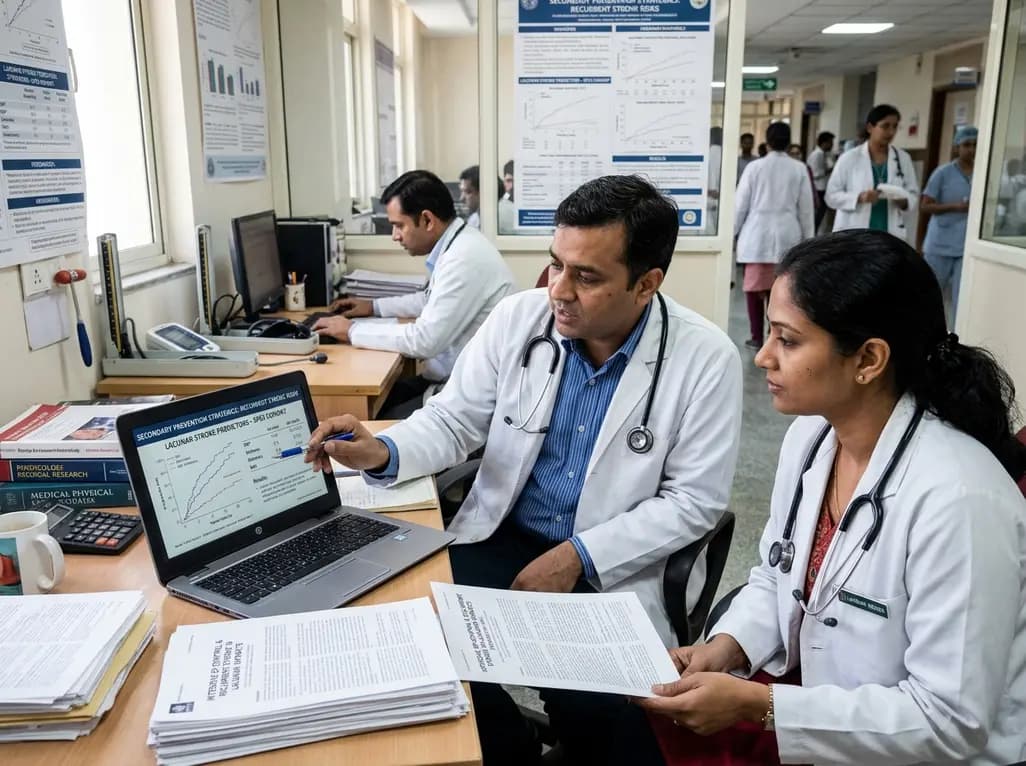
Explore vital recurrent stroke predictors in lacunar stroke patients managed with intensive blood pressure lowering. This analysis examines trial findings from SPS3 to uncover residual vascular risks, metabolic factors, and targeted secondary prevention strategies for high-risk neurological patients.
Today

Odisha has established India's first state-level clinical protocol specifically tailored for pregnant women with sickle cell disease. Developed with NHM and UNICEF, the framework provides structured antenatal screening, crisis mitigation, standardized referral pathways, and specialized interdisciplinary care.
Today

The Directorate General of Health Services directs Indian states to halt the hazardous reuse and reprocessing of single-use medical devices. Discover regulatory implications under the Drugs and Cosmetics Act, critical infection risks, legal liabilities, and operational changes required across clinical specialties.
Today

Mitochondria-targeted nanoparticles self-assembled from EGCG and L-glutamic acid effectively restore mitochondrial homeostasis, suppress synovial inflammation, and attenuate chondrocyte senescence in osteoarthritis, offering a promising disease-modifying nanotherapy.
Today

India is advancing preventive healthcare by integrating genomics, artificial intelligence, and quantum technologies. With the SANGAM programme sequencing one million Indian genomes, clinicians can unlock personalized therapies, detect cardiometabolic risks early, and curb the burden of diabetes and heart disease.
Today
