.webp&w=384&q=75)

Loading, please wait...
Loading, please wait...
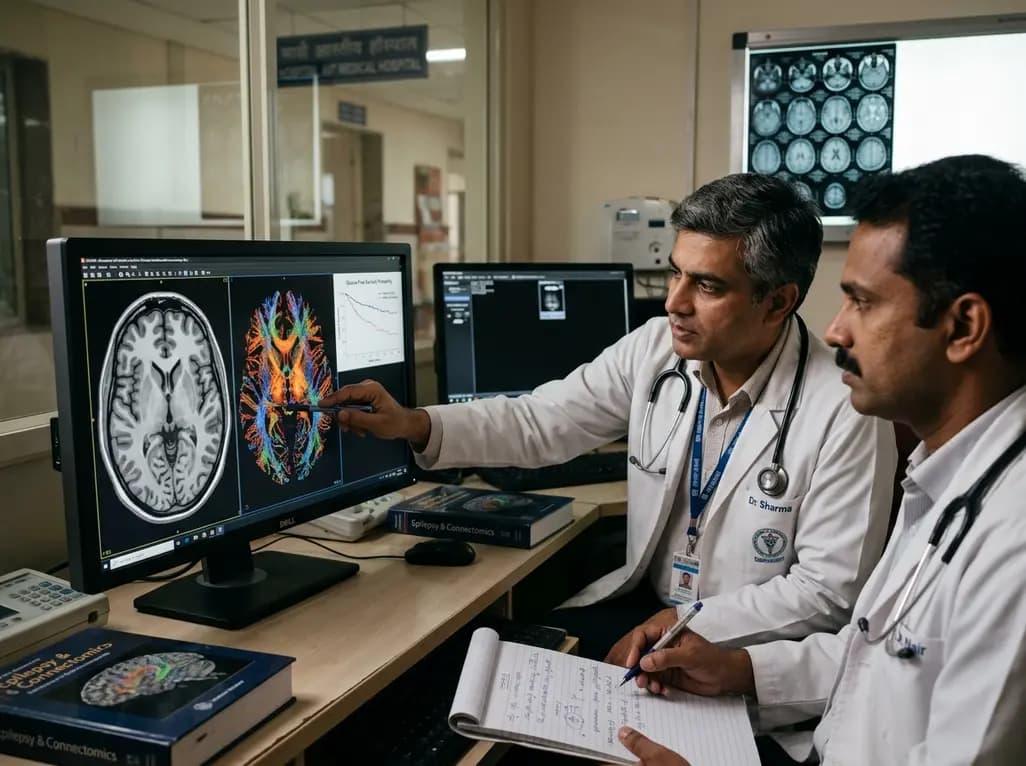
Temporal lobe epilepsy represents the most common form of drug-resistant focal epilepsy in adults. Surgical interventions, including resective surgery and laser thermal ablation, provide immediate therapeutic relief for many affected individuals. Consequently, a significant proportion of patients achieve complete seizure freedom during the initial postoperative year. However, longitudinal studies reveal a concerning trend where up to half of these individuals experience seizure recurrence over subsequent years. Traditional clinical predictors, such as lesion etiology or duration of epilepsy, often fail to reliably forecast long-term postsurgical trajectories. Clinicians face major challenges when counseling patients regarding long-term surgical prognosis. Advanced neuroimaging techniques reveal that MRI brain hub disruption may serve as a crucial determinant of long-term surgical efficacy. By analyzing connectome integrity prior to surgery, researchers aim to identify distinct biological signatures associated with late seizure relapse. Understanding these widespread structural and functional network abnormalities allows medical teams to move beyond localized epileptogenic zone assessments. Ultimately, incorporating holistic network dynamics into surgical evaluation promises to refine risk stratification and optimize therapeutic strategies for temporal lobe epilepsy.
To investigate the physiological roots of postsurgical relapse, a multicenter research team evaluated 175 patients with drug-resistant temporal lobe epilepsy. These individuals underwent resective or laser ablative surgery across six specialized centers and completed long-term follow-up averaging 5.4 years. Investigators gathered preoperative multimodal neuroimaging, including diffusion-weighted MRI and resting-state functional MRI, to construct individual connectomes. Additionally, researchers analyzed a control cohort of 362 healthy individuals to map normative brain network topology. Using the participation coefficient graph-theory metric, the team quantified patient-specific disruption within normative connector hubs. These connector hubs represent critical neural bridges that coordinate communication across distinct functional brain sub-networks. By comparing patient connectomes against healthy normative templates, investigators mapped subtle deviations in cross-network connectivity. They then integrated structural and functional metric measurements into machine learning models alongside clinical features, demographic variables, and gray and white matter volumes. This multimodal integration allowed researchers to test whether pre-existing network disruptions outside primary surgical targets correlate with late postoperative seizure recurrence.
Statistical analyses demonstrated that the combined multimodal machine learning approach delivered superior predictive capability compared to standalone clinical or unimodal models. Unimodal models relying solely on structural or functional data provided helpful insights, but combining both modalities yielded significantly higher accuracy. Models built exclusively on clinical variables performed far below the multimodal connectome framework. The multimodal model achieved a mean specificity of 80.0 percent alongside a negative predictive value averaging 63.9 percent during independent cohort validation. High specificity is clinically vital because it minimizes false positive predictions of recurrence, allowing clinicians to identify patients remaining at high risk without misclassifying those likely to achieve long-term freedom. Evaluating participation coefficients revealed that measuring normative hub integrity offers reliable predictive power across diverse clinical settings. Furthermore, researchers validated these computational models using conservative standards in external datasets. This validated reproducibility confirms that quantification of MRI brain hub disruption reflects true underlying pathophysiology rather than site-specific scanning artifacts. Consequently, network-level connectomics provides a robust foundation for refining postsurgical outcome predictions.
To interpret the underlying neurobiological mechanisms driving machine learning classifications, researchers employed Shapley Additive Explanation analyses. These explainable artificial intelligence techniques identified specific brain regions whose structural and functional alterations heavily influenced recurrence risk. Interestingly, participation coefficient disruptions within the bilateral hippocampi played a prominent predictive role. However, analyses also highlighted significant hub disruptions within extra-temporal networks, particularly the dorsal attention network. The dorsal attention network encompasses widespread cortical nodes responsible for top-down attentional control and visuospatial processing. Because conventional temporal lobe epilepsy surgery targets mesial structures like the hippocampus, extratemporal hubs remain surgically untouched. When normative connector hubs outside the planned resection area display severe pre-existing disruption, the broader neural network remains vulnerable to persistent hypersynchrony. Consequently, seizure activity can propagate along altered extratemporal pathways despite successful localized surgical intervention. These findings demonstrate that temporal lobe epilepsy is a distributed network disorder rather than a localized focal lesion. Recognizing extratemporal hub impairment helps explain why localized resections fail in certain patients despite complete surgical removal of the primary focus.
The clinical implications of network-level predictive modeling extend beyond theoretical connectomics into daily patient care. Importantly, study authors emphasize that high specificity models should not serve as tools for surgical exclusion. Denying potentially life-changing surgery based solely on algorithmic risk scores could inappropriately restrict beneficial interventions. Instead, network hub biomarkers offer valuable tools for postoperative risk stratification, long-term monitoring, and clinical counseling. When presurgical MRI analyses indicate substantial hub disruption in extratemporal networks, surgical teams can proactively discuss realistic expectations with patients. Neurologists can plan more cautious postoperative medication withdrawal regimens and establish closer clinical follow-up schedules. Furthermore, identifying unaddressed network disruptions opens novel avenues for adjunctive neuromodulatory therapies. Techniques like deep brain stimulation or responsive neurostimulation could target residual network nodes to mitigate long-term recurrence risks. Integrating connectomic risk profiling into multidisciplinary epilepsy conferences enhances decision-making accuracy. As neuroimaging pipelines become standardized, mapping network hub disruption will complement conventional EEG and structural MRI protocols. Adopting connectome-based biomarkers transforms surgical epilepsy management into a personalized, network-targeted discipline.
The participation coefficient is a graph-theory metric that quantifies how evenly a node distributes its connections across different functional brain sub-networks. Higher participation coefficients indicate that a brain hub acts as a central connector bridging distinct networks. When temporal lobe epilepsy disrupts these normative connector hubs, cross-network communication breaks down. Measuring reductions in participation coefficients allows clinicians to detect subtle, widespread circuit breakdown prior to surgical intervention.
Although temporal lobe epilepsy originates within temporal structures, recurrent seizure activity alters structural and functional connections across the entire brain over time. Extratemporal hubs, such as those within the dorsal attention network, integrate neural signaling between distant cortical areas. If these widespread hubs suffer severe presurgical disruption, removing the primary temporal focus does not fully restore network stability. Consequently, persistent extratemporal network dysfunction creates enduring pathways for late seizure recurrence.
No, high-risk prediction scores should never serve as a sole reason for surgical exclusion. Surgery remains the most effective intervention for drug-resistant temporal lobe epilepsy, providing substantial seizure reduction and improved quality of life even when complete seizure freedom is not sustained long-term. Instead, hub disruption scores enable tailored postoperative management. Clinicians can adjust anti-seizure drug tapering protocols, schedule closer clinical monitoring, and consider secondary neuromodulatory options when necessary.
Disclaimer: This content is for informational and educational purposes only and does not constitute medical advice, diagnosis, or treatment. Always seek the advice of a qualified healthcare provider with any questions regarding a medical condition. Refer to the latest local and national guidelines for clinical practice.
References
1. Karpychev V et al. Prediction of Long-Term Postsurgical Seizure Recurrence From MRI Brain Hub Disruption in Patients With Temporal Lobe Epilepsy. Neurology. 2026 Sep 08. doi: 10.1212/WNL.0000000000218416. PMID: 42585607.
2. Lamberink HJ et al. Individualised prediction model of seizure recurrence after start of antiepileptic drug withdrawal in seizure-free patients. Lancet Neurol. 2020;19(3):245-253.
3. Englot DJ et al. Global brain connectivity in mesial temporal lobe epilepsy in relation to surgical outcome. Epilepsia. 2015;56(11):1757-1767.

Read summarized clinical updates, watch expert medical content, and earn CME certifications right from your smartphone.
Open your smartphone camera to scan and install.





A multicenter study demonstrates that preoperative MRI brain hub disruption, evaluated through multimodal connectomics, accurately predicts long-term postsurgical seizure recurrence in temporal lobe epilepsy, aiding post-operative risk stratification.
last month

The JAKPPPOT feasibility trial evaluated oral upadacitinib in moderate-to-severe palmoplantar pustulosis. Meeting all feasibility goals with 95% adherence, upadacitinib demonstrated a substantial baseline-adjusted reduction in disease severity compared to historic placebo, supporting future randomised trials.
Today

Prenatal evaluation of fetal growth restriction requires an integrated diagnostic approach. While chromosomal microarray remains fundamental, exome sequencing offers significant diagnostic yield in isolated and syndromic cases, especially when ultrasound shows skeletal anomalies or normal placental function.
Today

Evaluating disagreement among Friedewald, Martin-Hopkins, and Sampson LDL-C equations reveals diagnostic uncertainty at statin cutoffs. An interpretable regime-aware calibration model rescues patient misclassifications without extra testing costs.
Today

A randomized controlled trial compared ultrasound-guided intra-articular injections of PRP, hydrolyzed type I collagen, and hyaluronic acid in knee osteoarthritis. All therapies demonstrated significant improvements in WOMAC and pain scores at six months, supporting hydrolyzed collagen as a viable biological option.
Today

A study reveals that salivary cortisone correlates more strongly with serum cortisol than salivary cortisol during dynamic adrenal testing, while salivary dexamethasone accurately confirms compliance. This provides a non-invasive, precise alternative to venipuncture for diagnosing adrenal disorders.
Today
