

Loading, please wait...
Loading, please wait...

Distal and myofibrillar myopathies represent a clinically heterogeneous group of rare genetic muscle conditions affecting distal limbs. Clinicians often find it challenging to track disease progression accurately. Conventional clinical motor scales frequently fail to detect subtle distal motor deficits. Consequently, standard outcome measures often show floor or ceiling effects in neurological practice. Furthermore, heterogeneous presentations complicate clinical trial endpoint selection and patient stratification. To address these longstanding hurdles, a multicenter study investigated an integrated multidimensional evaluation framework. By combining functional tests with sensitive digital tools, investigators established a granular methodology for assessing neuromuscular impairment.
Evaluating patients with distal and myofibrillar myopathies requires an understanding of diverse genetic etiologies and variable clinical presentations. Over a dozen distinct genes contribute to these disorders, including mutations affecting desmin, filamin C, myotilin, and titin. Because these genetic mutations cause overlapping histological findings, establishing genotype-phenotype correlations remains exceptionally difficult. In routine clinical settings, neurologists rely on physical examination and ordinal scoring systems to gauge muscle weakness. However, manual muscle testing lacks the precision necessary to detect early, progressive declines in isolated distal compartments. Additionally, distal weakness often emerges insidiously in adult patients. It affects fine hand coordination or causes subtle foot drop before gross motor tasks show impairment. Consequently, patients may preserve upright ambulation while experiencing severe functional loss in their hands or feet. Standard clinical examinations rarely capture these micro-level functional declines in a reproducible manner. Therefore, clinicians urgently need objective tools to document precise strength alterations. A standardized multidimensional assessment strategy offers a practical solution to this diagnostic complexity. By combining objective metrics, clinicians can better understand true disease progression.
Clinical investigators frequently utilize the 32-item Motor Function Measure, or MFM32, to evaluate gross motor performance in neuromuscular disorders. In this multicenter cohort of 51 genetically confirmed adult patients, the total MFM32 score accurately distinguished between ambulation categories. Consequently, patients who lost independent ambulation demonstrated significantly lower total scores compared to ambulatory individuals. This finding confirms that global functional scales retain utility for evaluating overall mobility and advanced disease stages. Nevertheless, the study revealed critical blind spots within standard scales. Specifically, the distal domain of the MFM32 exhibited a pronounced ceiling effect across ambulatory participants. Many individuals who suffered from clinically noticeable ankle weakness or intrinsic hand muscle wasting achieved maximum scores on distal tasks. Although these patients performed basic motor actions in clinic, they struggled with everyday activities requiring sustained power. Furthermore, patient-reported outcome measures highlighted notable discrepancies between formal functional scores and self-perceived disability. Patients reported substantial limitations in daily life despite achieving satisfactory ratings on standard motor rating scales. Therefore, relying exclusively on conventional ordinal scores introduces significant measurement error into neuromuscular evaluations.
To overcome the ceiling effects of conventional functional testing, researchers evaluated digital dynamometry using fixed MyoTools systems. This quantitative approach measures isometric muscle force in specific muscle groups with exceptional sensitivity and reproducibility. Remarkably, the digital dynamometry protocol detected significant distal muscle weakness in more than 80 percent of the study participants. Even patients who maintained normal functional scores on standard scales demonstrated measurable deficits during digital testing. Moreover, digital dynamometry selectively isolated forces in ankle dorsiflexion, plantarflexion, hand grip, and individual finger pinch. Handheld dynamometers frequently introduce examiner-dependent variability, whereas fixed digital devices eliminate operator bias entirely. Consequently, clinicians gained an accurate, objective appraisal of muscle strength across isolated compartments. For example, anterior compartment weakness presented with profound reductions in isometric ankle dorsiflexion force long before walking capacity declined. Similarly, digital assessment captured early hand grip and key pinch deterioration in patients with upper limb involvement. Because progressive distal wasting often precedes proximal deterioration, these sensitive digital metrics provide reliable early markers of pathological progression. As a result, digital dynamometry bridges a critical gap in neuromuscular clinical documentation.
Gait abnormalities represent one of the most debilitating manifestations of lower limb involvement in distal myopathies. In the multicenter study, researchers employed wearable Loadsol pressure-sensing insoles to analyze continuous plantar pressure dynamics during walking. Traditional observational gait assessments frequently overlook subtle alterations in temporal gait parameters and regional force distributions. In contrast, instrumented gait analysis quantified distinct biomechanical shifts during dynamic ambulation. Specifically, sensor data revealed pronounced alterations during both the heel strike and foot off phases of the gait cycle. The duration of the heel strike correlated strongly with isometric ankle dorsiflexion strength, showing a notable correlation coefficient. When the tibialis anterior muscle weakens, the foot makes abrupt contact with the ground rather than undergoing a smooth rollover. Patients subsequently experience premature forefoot loading or compensatory high-stepping steppage gait patterns. Furthermore, instrumented insoles captured reductions in propulsive push-off forces caused by silent gastrocnemius and soleus weakness. By monitoring real-time foot-ground interactions, clinicians can identify specific biomechanical compromises before overt falls occur. Thus, wearable gait analysis delivers objective digital biomarkers that closely mirror underlying muscular deficits.
One of the most consequential discoveries from this multicenter cohort emerged from data-driven hierarchical cluster analysis. Instead of relying solely on genetic classifications, researchers analyzed comprehensive functional and digital datasets to group patients objectively. This unsupervised mathematical clustering uncovered four distinct functional phenotypes that cut across traditional genetic boundaries. First, researchers identified a phenotype characterized by moderate-to-severe global motor impairment, encompassing widespread proximal and distal involvement. Second, a distinct cohort presented with marked anterior compartment predominance, displaying selective weakness in ankle dorsiflexors. Third, a third cluster demonstrated selective involvement of the posterior lower leg compartment, primarily affecting calf muscles and plantarflexion. Finally, the fourth cluster consisted of patients who maintained relatively preserved motor performance across upper and lower extremities. Interestingly, patients sharing identical genetic mutations frequently sorted into completely different functional clusters. Conversely, patients with different mutant genes often exhibited nearly identical motor phenotypes. Consequently, relying on genetic classifications alone provides an incomplete roadmap for prognostic counseling and functional assessment. Data-driven clustering offers a more accurate reflection of physiological impairment in clinical practice.
The integration of digital outcome measures holds transformative potential for neuromuscular clinical trials and everyday clinical practice. Historically, clinical trials investigating therapies for distal myopathies have faced frustrating setbacks due to insensitive endpoints. Traditional scales lack the sensitivity required to detect slight therapeutic benefits over short observation periods. Furthermore, patient heterogeneity frequently dilutes treatment signals when cohorts are grouped solely by genetic mutation. By adopting phenotype-based stratification, trial investigators can enrich study cohorts with patients who share identical patterns of biomechanical deficit. For instance, testing an ankle dorsiflexion intervention in a cohort with posterior compartment predominance inevitably yields misleading negative results. Stratifying patients into homogenous functional phenotypes ensures that clinical endpoints directly align with targeted muscle compartments. Moreover, sensitive digital tools like MyoTools and sensorized insoles capture microscopic improvements or preventions of decline. In multidisciplinary rehabilitation, clinicians can also leverage these digital findings to prescribe customized orthotics, such as tailored ankle-foot orthoses. Ultimately, combining functional scales with wearable digital technologies modernizes clinical neuromuscular practice and paves the way for successful therapeutic discovery.
Standard motor scales like the MFM32 assess gross motor function across broad body regions. Because they focus heavily on proximal movements and basic functional milestones, their distal domains suffer from ceiling effects. Consequently, these scales fail to detect early, isolated distal weakness in intrinsic hand muscles or ankle dorsiflexors.
Digital dynamometry provides objective, fixed isometric force measurements without examiner bias. Unlike manual muscle testing or observational scales, digital dynamometers detect subtle muscle strength declines in more than 80 percent of distal myopathy patients. This quantitative precision enables early detection of disease progression and provides sensitive endpoints for interventional clinical trials.
Hierarchical cluster analysis uncovered four distinct motor phenotypes independent of genetic mutation: moderate-to-severe global impairment, predominant anterior lower leg compartment involvement, selective posterior lower leg compartment weakness, and relatively preserved motor function. This phenotypic classification provides a practical clinical framework for personalizing rehabilitation strategies and selecting homogenous clinical trial cohorts.
Disclaimer: This content is for informational and educational purposes only and should not be considered medical advice. Always consult a qualified healthcare professional regarding any medical condition or treatment. Refer to the latest local and national guidelines for clinical practice.
References

Read summarized clinical updates, watch expert medical content, and earn CME certifications right from your smartphone.
Open your smartphone camera to scan and install.





A multicenter study reveals how integrating digital dynamometry and instrumented gait analysis overcomes ceiling effects in distal and myofibrillar myopathies, identifying four functional phenotypes for precision stratification.
Today

A Bayesian component network meta-analysis of 130 RCTs reveals that self-monitoring and gamification provide the clearest positive effects in mHealth physical activity interventions, while social comparison may have adverse psychological trade-offs.
Today

The GESS-AEEM consensus establishes a clear clinical implementation framework for testosterone therapy in postmenopausal women with hypoactive sexual desire disorder, focusing on transdermal dosing, precise laboratory monitoring, and safety communication.
Today
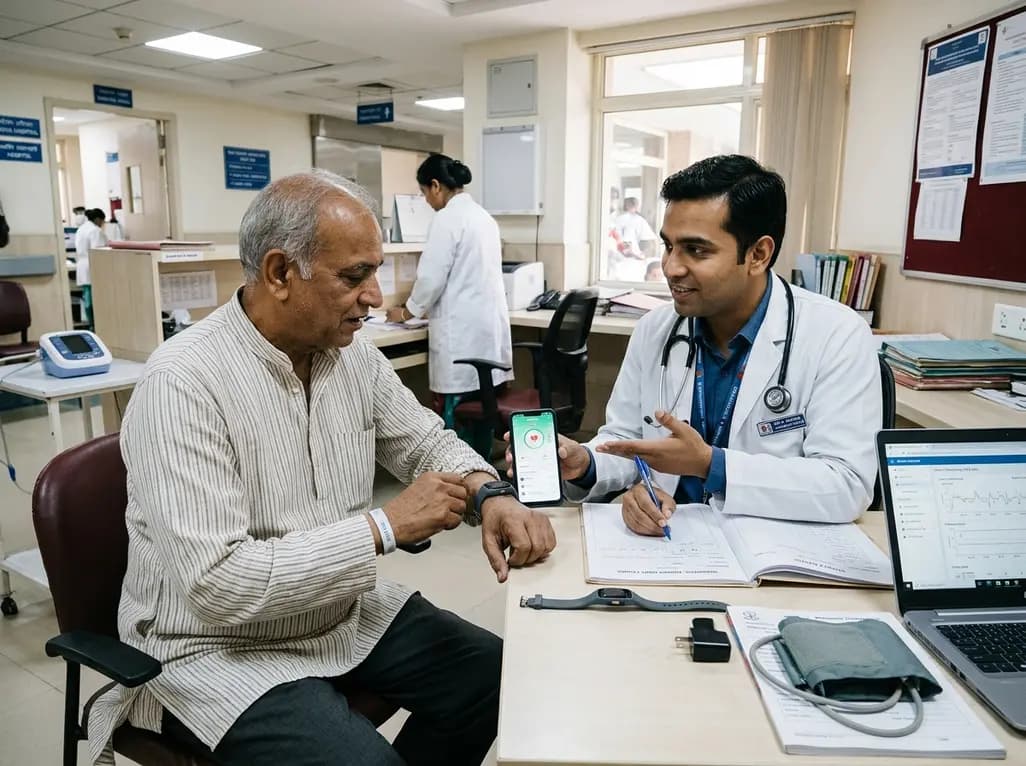
A multicenter observational study evaluated an 8-week digital health monitoring platform using wearable sensors in ambulatory heart failure. While participants achieved high daily wear-time of 11.7 hours and 80% completion, initial recruitment revealed significant technology-related onboarding barriers.
Today

A paired cadaveric study compared triple and quintuple percutaneous Achilles tendon lengthening. While quintuple hemisection showed numerically greater elongation, differences were not statistically significant.
Yesterday

A clinical decision-support framework using health checkup data from 231,683 adults predicts incident obesity with high discrimination (AUROC 0.918). The system integrates temporal survival analysis and risk-factor explanations to prioritize individualized preventive interventions.
Today
