.webp&w=384&q=75)

Loading, please wait...
Loading, please wait...

Diagnosis of periodontal disease in dogs traditionally relies on the simplified bisecting angle (SBA) technique. However, clinicians often face challenges in visualizing the alveolar bone margin accurately. The Modified Interproximal Technique (MIP) offers a novel solution for these diagnostic hurdles. Specifically, it addresses the difficulty of interpreting the distance between the cemento-enamel junction (CEJ) and the bone margin. By providing a clearer view, the MIP technique enhances the staging of periodontal defects, particularly in the maxillary fourth premolar (PM4).
In a recent experimental study, researchers compared the MIP technique against the standard SBA approach. They used dog cadavers to model incremental bone loss from 0% to 50%. Notably, the Modified Interproximal Technique demonstrated significantly higher accuracy and sensitivity. While both techniques showed a systematic underestimation of bone loss, the MIP view performed better overall. Furthermore, it proved exceptionally effective at detecting mild bony defects and early furcation involvement. These findings suggest that incorporating this view into a full-mouth survey can improve clinical outcomes.
Early detection of bone loss is vital for successful periodontal management. Since the SBA technique often masks subtle changes, the Modified Interproximal Technique provides a necessary diagnostic upgrade. Moreover, veterinary practitioners can now more reliably identify furcation exposure before it reaches advanced stages. Consequently, this allows for more precise treatment planning and better long-term prognosis for the PM4. Adding the MIP view to standard protocols represents a meaningful advancement in radiographic imaging.
The SBA technique uses a bisecting angle to project the tooth image onto the sensor. In contrast, the Modified Interproximal Technique uses a specific angle designed to minimize overlap. This allows for a clearer visualization of the interproximal bone margin and furcation areas.
Yes, the study found that the MIP technique is more sensitive than the SBA technique for identifying mild bone loss. Specifically, it accurately detects bone loss increments as small as 12.5%, which is often missed by traditional views.
Disclaimer: This content is for informational and educational purposes only. It does not constitute professional advice or a formal recommendation. Refer to the latest local and national guidelines for clinical practice.
References

Read summarized clinical updates, watch expert medical content, and earn CME certifications right from your smartphone.
Open your smartphone camera to scan and install.





A study shows the Modified Interproximal Technique (MIP) provides more accurate detection of mild periodontal bone loss and furcation defects in canine mode...
8 months ago

Explore vital recurrent stroke predictors in lacunar stroke patients managed with intensive blood pressure lowering. This analysis examines trial findings from SPS3 to uncover residual vascular risks, metabolic factors, and targeted secondary prevention strategies for high-risk neurological patients.
Today

A comprehensive scoping review synthesises evidence linking prenatal maternal mental health to long-term offspring neurodevelopment, evaluating neuroendocrine, inflammatory, and epigenetic pathways while highlighting clinical screening and future research priorities.
Today
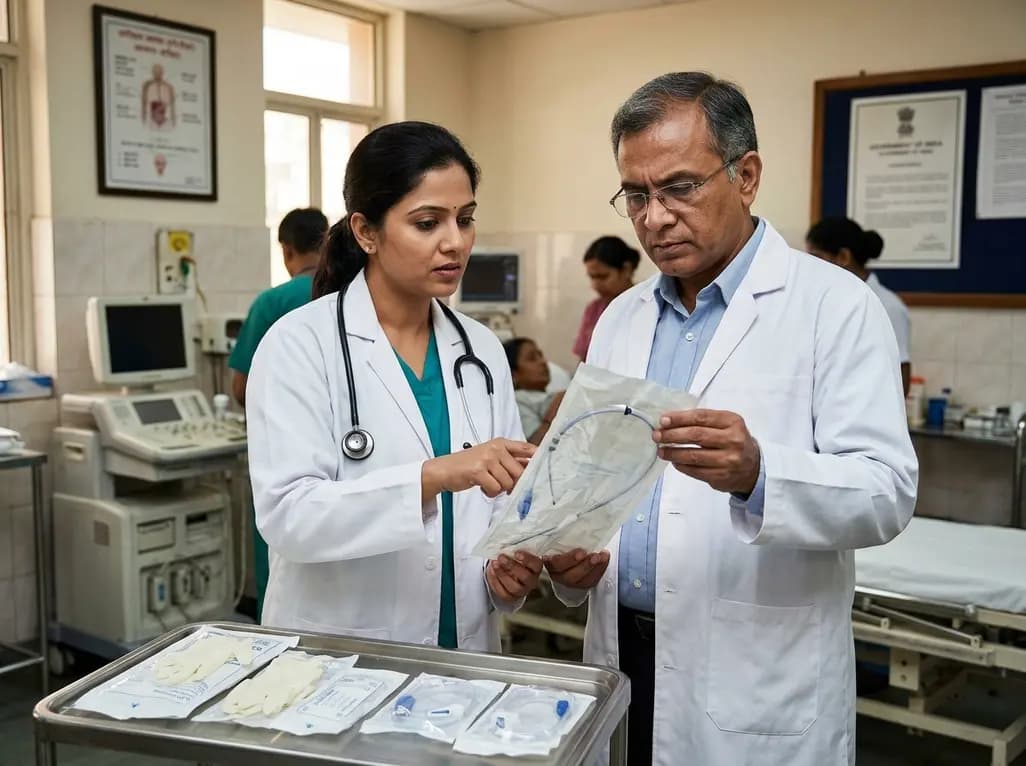
The Directorate General of Health Services directs Indian states to halt the hazardous reuse and reprocessing of single-use medical devices. Discover regulatory implications under the Drugs and Cosmetics Act, critical infection risks, legal liabilities, and operational changes required across clinical specialties.
Today
Mitochondria-targeted nanoparticles self-assembled from EGCG and L-glutamic acid effectively restore mitochondrial homeostasis, suppress synovial inflammation, and attenuate chondrocyte senescence in osteoarthritis, offering a promising disease-modifying nanotherapy.
Today

India is advancing preventive healthcare by integrating genomics, artificial intelligence, and quantum technologies. With the SANGAM programme sequencing one million Indian genomes, clinicians can unlock personalized therapies, detect cardiometabolic risks early, and curb the burden of diabetes and heart disease.
Today
