.webp&w=384&q=75)

Loading, please wait...
Loading, please wait...
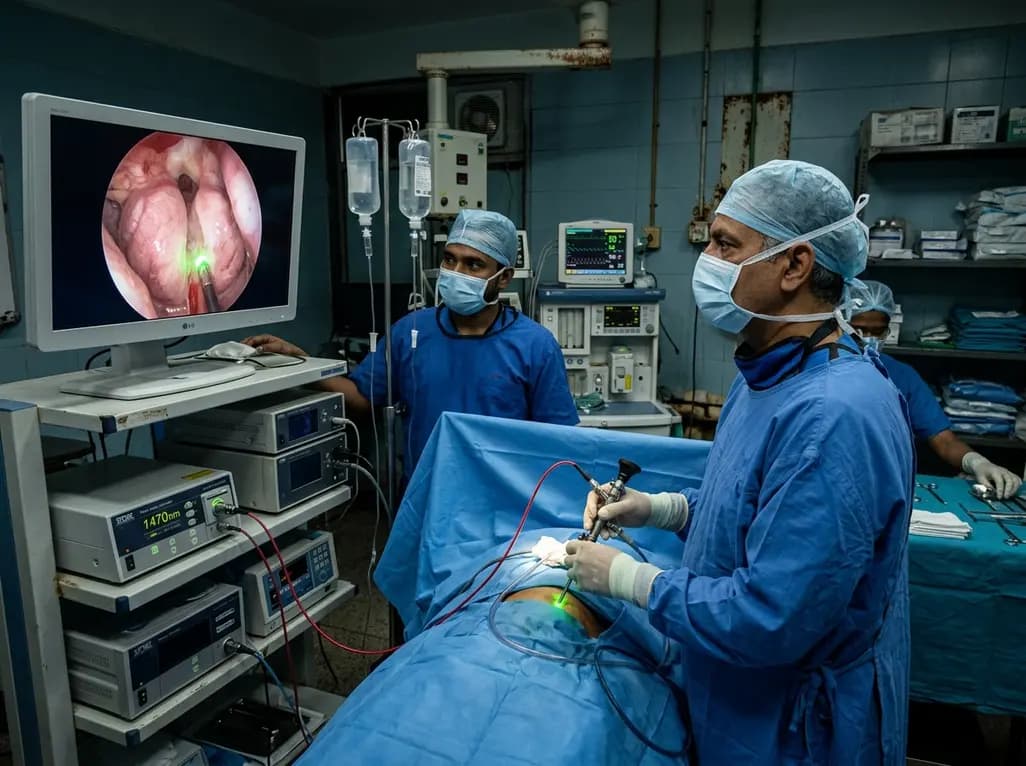
Benign prostatic hyperplasia remains one of the most common urological conditions affecting aging men across the globe. Urologists frequently encounter patients who present with severe lower urinary tract symptoms that resist medical therapy. Consequently, surgical intervention becomes necessary to relieve bladder outlet obstruction and preserve renal function. Over recent years, minimally invasive laser platforms have gained rapid popularity as alternatives to traditional transurethral resection. In this landscape, modified diode laser vaporesection provides a balanced operative approach that combines rapid tissue vaporization with precise resection mechanics.
Traditional enucleation procedures offer thorough adenoma removal, yet they demand advanced endoscopic skills and prolonged training. Therefore, many surgical teams actively seek techniques that deliver equal efficacy with shorter learning curves. A 1470 nm diode laser targets both hemoglobin and water absorption peaks simultaneously. As a result, this specific wavelength delivers exceptional hemostatic control alongside efficient tissue vaporization. Clinicians can carve clear surgical channels without causing extensive collateral thermal injury. Furthermore, this dual-action energy profile ensures rapid visual clarity throughout the intervention. Thus, diode laser technology presents a compelling modality for high-risk elderly men requiring prostate surgery.
The modified four-troughs technique provides a systematic framework designed to standardize transurethral tissue removal. In conventional laser vaporization, surgeons often struggle to gauge ablation depth across broad lateral surfaces. In contrast, the four-troughs method creates initial reference grooves that clearly delineate surgical boundaries. Urologists vaporize distinct longitudinal channels at the bladder neck and along the prostatic lobes. Consequently, these structural landmarks guide precise sequential resection down to the surgical capsule.
Moreover, this structured geometry prevents accidental capsular perforation and protects the external urethral sphincter from thermal injury. Surgeons first incise troughs at strategic radial positions, typically along the ventral and dorsal aspects of the adenoma. Subsequently, they resect intermediate prostatic tissue between these carved troughs using continuous diode energy. This dual approach facilitates faster tissue clearance compared to pure vaporization protocols. Additionally, the procedure maintains low irrigation pressure, which minimizes fluid absorption risks in elderly individuals. Because the approach relies on repeatable anatomical milestones, junior urological surgeons can master the technique far more quickly than complex anatomical enucleation.
Recent clinical evidence demonstrates clear perioperative advantages for the modified four-troughs diode approach over diode laser enucleation. In a retrospective clinical trial involving 103 elderly men, surgical teams compared both techniques directly. Specifically, fifty-five patients underwent modified four-troughs diode vaporesection, while forty-eight patients underwent diode laser enucleation. The demographic characteristics, including mean age and baseline prostate volume, remained well balanced between both cohorts.
Notably, the operative time was significantly shorter in the four-troughs group, averaging 109 minutes compared to 124 minutes in the enucleation arm. This fifteen-minute reduction reflects the streamlined procedural workflow and straightforward tissue vaporization steps. Furthermore, the four-troughs procedure demonstrated superior hemostatic stability during tissue removal. Patients undergoing the modified technique exhibited a mean hemoglobin drop of only 6.6 g/L, compared to 11.7 g/L among enucleation patients. Consequently, reduced blood loss translated into faster postoperative recovery and shorter hospital stays. Patients treated with the four-troughs technique stayed an average of 9.4 days, whereas the enucleation group required 11.5 days. Therefore, the modified approach substantially enhances operational efficiency within busy surgical departments.
Surgical innovation must always deliver robust, durable functional relief to justify changes in clinical practice. Fortunately, the study confirmed that the four-troughs technique achieves therapeutic results equal to standard enucleation. At baseline, all participating men suffered from marked lower urinary tract symptoms, reduced flow rates, and elevated urinary retention. Following surgical intervention, patients in both treatment arms experienced dramatic symptomatic improvements across all primary urological parameters.
In particular, the International Prostate Symptom Score dropped significantly during the medium-term follow-up period across both cohorts. Similarly, the quality of life scores demonstrated substantial gains, showing that patients regained satisfactory urinary independence. Objective urodynamic measures aligned perfectly with subjective patient feedback. Both surgical groups showed significant and comparable increases in maximum urinary flow rates. In addition, post-void residual urine volumes decreased sharply, indicating complete relief of mechanical bladder outlet obstruction. Statistical analyses confirmed no significant differences between the two groups regarding symptom relief or residual volumes. Thus, urologists can adopt the four-troughs diode method with total confidence that functional efficacy matches enucleation outcomes.
Patient safety remains paramount when selecting surgical therapies for elderly individuals with significant medical comorbidities. The comparative trial revealed an admirable safety profile for both diode laser techniques. Overall, only five patients among the 103 participants developed postoperative complications during the follow-up period. Specifically, two patients in the four-troughs group and three patients in the enucleation group experienced adverse events.
Importantly, all recorded complications were mild and resolved completely following routine symptomatic medical management. Neither group experienced severe capsular perforation, transurethral resection syndrome, or life-threatening hemorrhage requiring emergency intervention. Furthermore, the exceptional hemostatic sealing provided by the 1470 nm diode wavelength virtually eliminated secondary clot retention. Shorter bladder irrigation requirements and reduced catheterization times further contributed to comfortable postoperative convalescence. As a result, the four-troughs vaporesection proved exceptionally gentle on fragile vascular structures. In conclusion, this modified technique offers a reliable, low-risk surgical option that preserves patient safety while eliminating bladder outlet obstruction.
Modified diode laser vaporesection provides superior hemostatic control and faster operative completion compared to traditional enucleation methods. Because the 1470 nm laser wavelength targets both water and hemoglobin, it vaporizes tissue smoothly while instantly sealing surrounding blood vessels. Consequently, patients experience significantly lower hemoglobin drops, minimal postoperative hematuria, and shortened hospital stays. These operational advantages make it an ideal therapeutic choice for elderly patients with cardiovascular risk factors.
The four-troughs approach simplifies surgery by creating distinct anatomical landmarks prior to tissue resection. Surgeons carve four longitudinal reference channels that accurately outline the boundaries of the surgical capsule. In addition, this systematic partitioning allows predictable, controlled vaporesection without requiring difficult capsular dissection. Therefore, the technique flattens the steep learning curve associated with complete anatomical enucleation, allowing urologists to achieve reproducible outcomes with enhanced precision and reduced operative duration.
Yes, clinical trials confirm that this modified vaporesection method achieves functional outcomes equivalent to standard laser enucleation. Patients demonstrate substantial reductions in their International Prostate Symptom Scores alongside significant gains in overall quality of life. Furthermore, post-void residual urine volumes decrease markedly, while maximum urinary flow rates show robust, sustained increases during follow-up. Consequently, patients receive rapid and durable relief from bladder outlet obstruction without suffering higher recurrence or complication rates.
Disclaimer: This content is for informational and educational purposes only... Refer to the latest local and national guidelines for clinical practice.
References

Read summarized clinical updates, watch expert medical content, and earn CME certifications right from your smartphone.
Open your smartphone camera to scan and install.





A retrospective comparative study demonstrates that modified transurethral diode laser four-troughs vaporesection offers shorter operative times, less blood loss, and comparable functional outcomes compared to enucleation for benign prostatic hyperplasia.
last month

Explore vital recurrent stroke predictors in lacunar stroke patients managed with intensive blood pressure lowering. This analysis examines trial findings from SPS3 to uncover residual vascular risks, metabolic factors, and targeted secondary prevention strategies for high-risk neurological patients.
Today

A comprehensive scoping review synthesises evidence linking prenatal maternal mental health to long-term offspring neurodevelopment, evaluating neuroendocrine, inflammatory, and epigenetic pathways while highlighting clinical screening and future research priorities.
Today

The Directorate General of Health Services directs Indian states to halt the hazardous reuse and reprocessing of single-use medical devices. Discover regulatory implications under the Drugs and Cosmetics Act, critical infection risks, legal liabilities, and operational changes required across clinical specialties.
Today
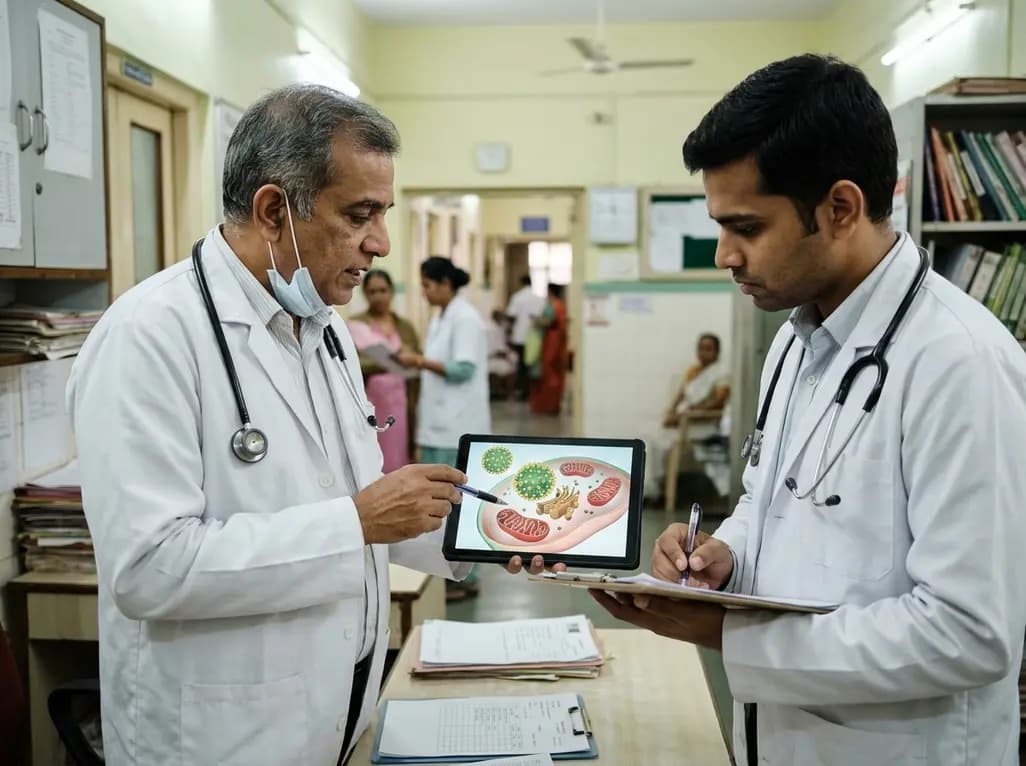
Mitochondria-targeted nanoparticles self-assembled from EGCG and L-glutamic acid effectively restore mitochondrial homeostasis, suppress synovial inflammation, and attenuate chondrocyte senescence in osteoarthritis, offering a promising disease-modifying nanotherapy.
Today

India is advancing preventive healthcare by integrating genomics, artificial intelligence, and quantum technologies. With the SANGAM programme sequencing one million Indian genomes, clinicians can unlock personalized therapies, detect cardiometabolic risks early, and curb the burden of diabetes and heart disease.
Today
