.webp&w=384&q=75)

Loading, please wait...
Loading, please wait...

The mitochondrial NADPH pool serves as a vital electron donor for various biosynthetic pathways within the cell. Recent research identifies Idp1 and Pos5 as primary contributors to this pool. These enzymes work in parallel to maintain the necessary redox state for Coenzyme Q (CoQ) synthesis. This lipid is a critical component of the electron transport chain. Therefore, disruptions in these enzymatic activities can significantly reduce CoQ levels and impair cellular respiration.
The study emphasizes that the mitochondrial NADPH pool and its redox state are critical for CoQ biosynthesis. When scientists deleted the idp1 gene in yeast models, they observed a significant shift in the NADP+/NADPH ratio toward an oxidized state. Furthermore, the simultaneous deletion of pos5 led to even lower CoQ levels. This suggests that both enzymes provide overlapping but essential support for mitochondrial health. Consequently, researchers now understand how these enzymes synergistically drive lipid synthesis.
While this study utilized yeast models, the findings provide insights into human mitochondrial disorders. In humans, the NADK2 enzyme acts as the functional homolog of Pos5. Similarly, mutations in human isocitrate dehydrogenase isoforms link to metabolic disturbances and certain cancers. Moreover, maintaining a robust mitochondrial NADPH pool is likely a conserved requirement for human CoQ10 production. Specifically, these insights help explain how metabolic pathways support antioxidant defense and energy production. In fact, this research paves the way for better understanding primary CoQ deficiency syndromes in clinical practice.
NADPH provides the reducing power necessary for biosynthetic reactions and antioxidant defenses. It helps neutralize reactive oxygen species and maintains the redox balance within the mitochondrial matrix.
A deficiency in Coenzyme Q10 can lead to mitochondrial diseases, including encephalomyopathy, ataxia, and renal failure. It impairs the electron transport chain, resulting in reduced ATP production and increased oxidative stress.
Disclaimer: This content is for informational and educational purposes only. It is not a substitute for professional medical advice, diagnosis, or treatment. Always seek the advice of your physician or other qualified health provider with any questions you may have regarding a medical condition. Refer to the latest local and national guidelines for clinical practice.
References
1. Nishihara S et al. Mitochondrial NADP+-isocitrate dehydrogenase Idp1 involves CoQ biosynthesis in parallel with NAD kinase Pos5. Biosci Biotechnol Biochem. 2026 Apr 23. doi: undefined. PMID: 42024429.
2. Zhang R, Zhang K. Mitochondrial NAD Kinase, a Key Player in NADP(H) Metabolism and its Implications in Health, Disease and Therapeutics. Redox Biol. 2023.
3. Al-Khallaf H. Isocitrate dehydrogenases in physiology and cancer: biochemical and molecular insight. Cell Biosci. 2017.
"
Read summarized clinical updates, watch expert medical content, and earn CME certifications right from your smartphone.
Open your smartphone camera to scan and install.





New research highlights the vital role of mitochondrial enzymes Idp1 and Pos5 in maintaining the NADPH pool required for Coenzyme Q biosynthesis....
6 months ago

Recent epidemiological data reveals a dramatic surge in summer heat mortality driven by human-induced climate warming. This analysis explores the pathophysiological impacts on cardiac and renal systems, diagnostic dilemmas in death certification, and essential emergency cooling protocols for acute clinical care.
Today
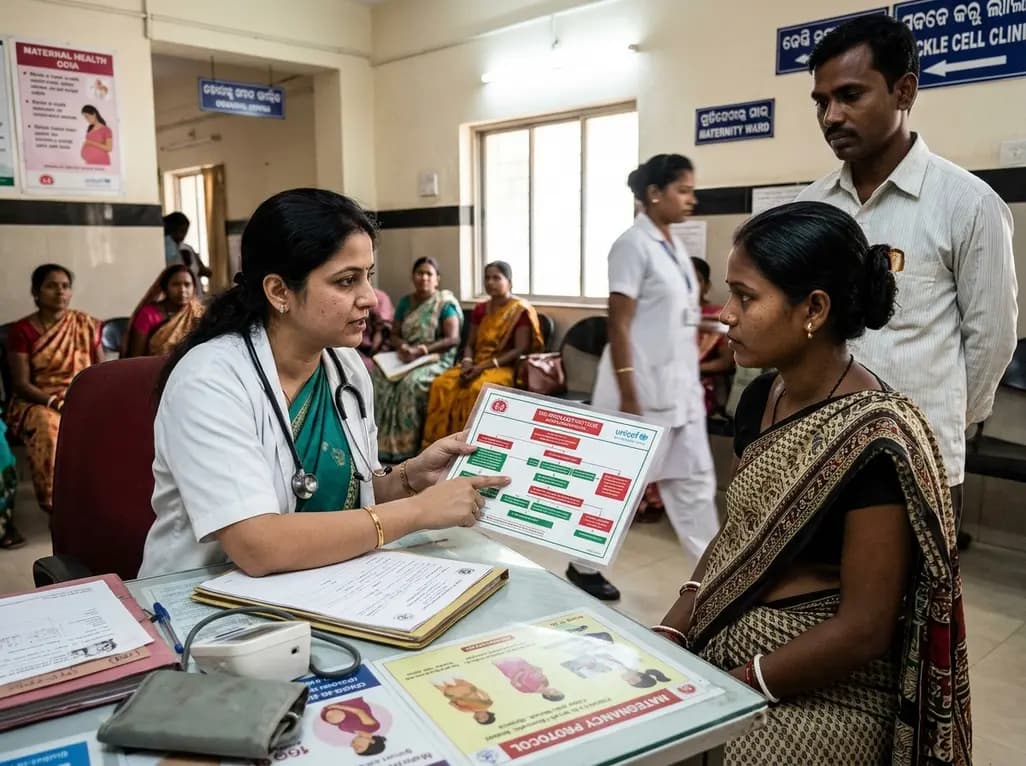
Odisha has established India's first state-level clinical protocol specifically tailored for pregnant women with sickle cell disease. Developed with NHM and UNICEF, the framework provides structured antenatal screening, crisis mitigation, standardized referral pathways, and specialized interdisciplinary care.
Today

India is advancing preventive healthcare by integrating genomics, artificial intelligence, and quantum technologies. With the SANGAM programme sequencing one million Indian genomes, clinicians can unlock personalized therapies, detect cardiometabolic risks early, and curb the burden of diabetes and heart disease.
Today

A randomized controlled trial demonstrates that an eight-week dual-task training intervention significantly improves static and dynamic postural control over standard balance exercises in individuals with chronic ankle instability, addressing critical neurocognitive deficits during athletic and daily activities.
Today

A retrospective cohort study of 7,716 ICU patients from the MIMIC-IV database demonstrates that Gradient Boosting Decision Trees significantly outperform traditional SOFA scores in predicting in-hospital mortality among patients with sepsis and diabetes, with SHAP analysis providing clinical interpretability.
Today
