.webp&w=384&q=75)

Loading, please wait...
Loading, please wait...

Midlife obesity and dementia share a profound biological connection through the deterioration of brain microvasculature. A groundbreaking study reveals that high-fat diet-induced obesity accelerates cellular senescence within the neurovascular unit. This accelerated aging process results in significant structural and functional deficits that impair cognitive performance. Consequently, understanding these mechanisms offers new pathways for therapeutic intervention in aging populations.
The researchers utilized advanced multimodal imaging and single-cell RNA sequencing to track vascular changes. Specifically, they identified a unique transcriptional program in endothelial cells and neurons associated with senescence. This program correlates with reduced microvascular density and a breakdown in the blood-brain barrier. Furthermore, the loss of neurovascular coupling integrity directly mirrors the cognitive decline observed in behavioral tests. Notably, these changes occur well before the traditional onset of late-life neurodegeneration.
The study provides a proof-of-concept for senolytic therapies in preserving cognitive function. By selectively clearing p16-positive senescent cells, the team partially restored blood-brain barrier integrity. Moreover, this clearance improved neurovascular coupling responses and significantly reduced neuroinflammation. These results suggest that targeting the biology of aging might mitigate the brain-related risks of metabolic disorders. Therefore, senolytic interventions could represent a future strategy to protect brain health in individuals with obesity.
Obesity triggers cellular senescence in the neurovascular unit, which leads to chronic inflammation and impaired blood flow regulation. This process damages the blood-brain barrier and reduces the density of essential microvessels.
Preclinical evidence suggests that clearing senescent cells can partially restore blood-brain barrier integrity and improve neurovascular coupling. However, more human clinical trials are necessary to confirm these effects in patients.
Disclaimer: This content is for informational and educational purposes only. It does not constitute medical advice or a professional relationship. Refer to the latest local and national guidelines for clinical practice.
References

Read summarized clinical updates, watch expert medical content, and earn CME certifications right from your smartphone.
Open your smartphone camera to scan and install.





New research shows midlife obesity triggers cellular senescence in the brain, causing vascular damage. Clearing these cells may restore blood-brain barrier ...
5 months ago

Explore vital recurrent stroke predictors in lacunar stroke patients managed with intensive blood pressure lowering. This analysis examines trial findings from SPS3 to uncover residual vascular risks, metabolic factors, and targeted secondary prevention strategies for high-risk neurological patients.
Today

Odisha has established India's first state-level clinical protocol specifically tailored for pregnant women with sickle cell disease. Developed with NHM and UNICEF, the framework provides structured antenatal screening, crisis mitigation, standardized referral pathways, and specialized interdisciplinary care.
Today

India is advancing preventive healthcare by integrating genomics, artificial intelligence, and quantum technologies. With the SANGAM programme sequencing one million Indian genomes, clinicians can unlock personalized therapies, detect cardiometabolic risks early, and curb the burden of diabetes and heart disease.
Today
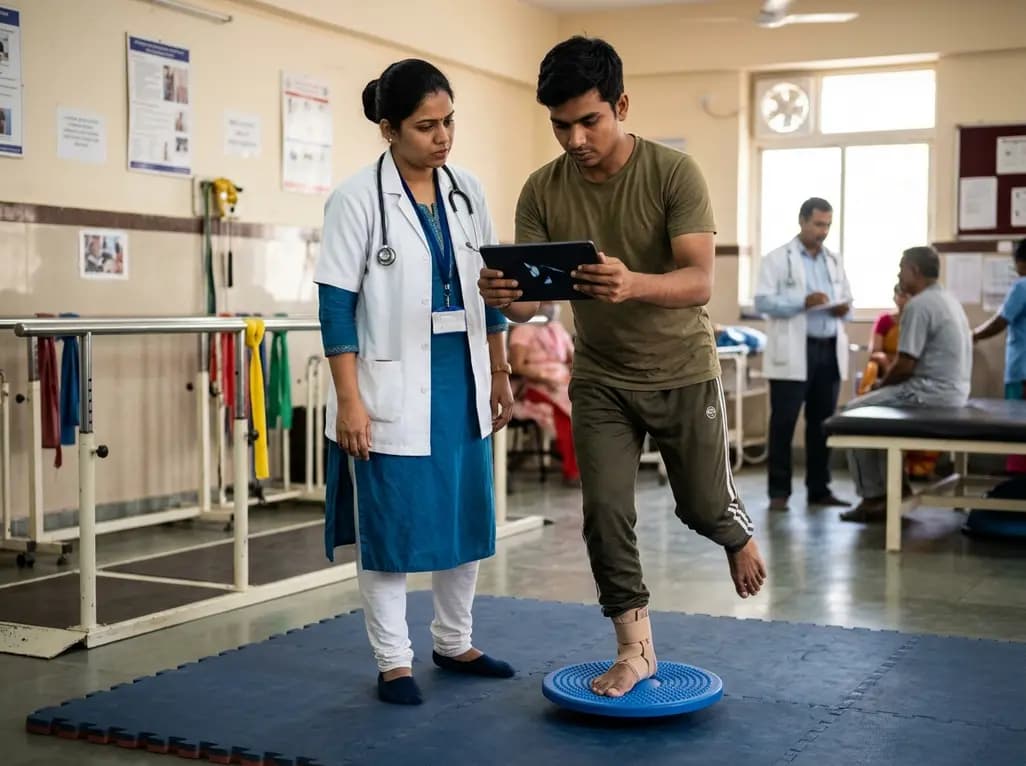
A randomized controlled trial demonstrates that an eight-week dual-task training intervention significantly improves static and dynamic postural control over standard balance exercises in individuals with chronic ankle instability, addressing critical neurocognitive deficits during athletic and daily activities.
Today

A retrospective cohort study of 7,716 ICU patients from the MIMIC-IV database demonstrates that Gradient Boosting Decision Trees significantly outperform traditional SOFA scores in predicting in-hospital mortality among patients with sepsis and diabetes, with SHAP analysis providing clinical interpretability.
Today
