.webp&w=384&q=75)

Loading, please wait...
Loading, please wait...

Environmental contaminants increasingly influence human pathophysiology, and recent toxicological research identifies microplastics in bottled water as a significant systemic health threat. Millions of individuals consume packaged drinking water daily under the assumption of absolute purity. However, progressive degradation of polymer packaging releases tiny synthetic particles directly into the fluid matrix. Emerging clinical and toxicological data now confirm that these synthetic particles penetrate biological barriers, circulate systemically, and trigger progressive organ dysfunction. Clinicians must understand the multi-organ toxicological profiles and cellular mechanisms associated with chronic plastic ingestion to properly counsel patients and identify environmental drivers of disease.
Recent systematic reviews demonstrate that microplastic contamination is widespread across commercial beverage containers. Manufacturing processes, mechanical cap friction, and thermal fluctuations accelerate the shedding of microscopic synthetic polymers into drinking fluids. Consequently, consumers ingest thousands of microscopic synthetic particles every year. Polystyrene, polyethylene, and polyethylene terephthalate represent the most commonly detected polymer types across consumer supplies. Because these particles measure less than five millimeters, and frequently fall into the nanometer range, they bypass basic gastrointestinal filtration mechanisms.
Furthermore, human biomonitoring studies now provide definitive evidence of tissue bioaccumulation across major physiological compartments. Investigators have identified synthetic particles circulating in human whole blood at measurable concentrations averaging over three particles per milliliter. In addition, analytical assays confirm substantial particle deposition in maternal placental tissues and male testicular samples. These findings illustrate that synthetic polymers do not simply transit through the digestive tract inertly. Instead, smaller particles traverse epithelial junctions, enter systemic circulation, and accumulate within vascularized parenchymal tissues over prolonged periods.
At the subcellular level, synthetic microparticles disrupt normal physiological homeostasis through multiple convergent pathways. Oxidative stress represents the primary initiator of cellular injury across experimental models. When synthetic particles interact with cellular membranes, they stimulate excessive production of reactive oxygen species. Consequently, intracellular antioxidant defenses become depleted, which leads to lipid peroxidation and structural membrane damage.
Moreover, internalised plastic particles trigger direct mitochondrial toxicity. By disrupting the mitochondrial membrane potential, synthetic polymers compromise cellular ATP synthesis and accelerate apoptotic signaling. In addition, particles induce significant inflammatory activation by stimulating pattern recognition receptors and promoting the release of pro-inflammatory cytokines such as interleukin-6 and tumor necrosis factor-alpha. Furthermore, chemical additives and plasticizers, including phthalates and bisphenols, leach from the polymer core. These chemical agents act as potent endocrine disruptors that alter receptor signaling and exacerbate metabolic dysregulation throughout the body.
Reproductive systems demonstrate heightened vulnerability to synthetic particle accumulation and chemical leaching. In female reproductive physiology, microplastic accumulation in placental tissues presents grave concerns regarding gestational health. Particles induce local vascular inflammation, impair nutrient exchange across the maternal-fetal interface, and trigger oxidative damage within trophoblast layers. Therefore, chronic exposure during pregnancy may contribute to adverse fetal developmental outcomes and placental insufficiency.
Similarly, male reproductive organs sustain substantial damage following particulate bioaccumulation. Testicular tissue analysis demonstrates that synthetic particles cross the blood-testis barrier to generate intense localized oxidative stress. Consequently, this persistent oxido-inflammatory state disrupts Leydig and Sertoli cell function, decreases circulating testosterone concentrations, and impairs spermatogenesis. Animal investigations consistently show reduced sperm motility, aberrant morphology, and elevated germ cell apoptosis following long-term exposure. Clinicians managing unexplained subfertility should therefore recognize environmental microplastic exposure as an emerging contributing factor to declining reproductive parameters.
The gastrointestinal tract and hepatobiliary system serve as the primary defensive line against ingested xenobiotics. Chronic ingestion of synthetic particles damages the intestinal mucosal barrier by degrading protective mucus layers and disrupting tight junction proteins. As a result, increased intestinal permeability permits endotoxin translocation, which initiates low-grade systemic inflammation and alters the gut microbiome.
Subsequently, portal circulation delivers these particulate loads directly to the liver. Hepatic accumulation triggers Kupffer cell activation and promotes hepatic steatosis, cellular ballooning, and progressive fibrosis. Furthermore, renal clearance mechanisms experience severe strain as kidneys attempt to filter circulating nanoplastic fragments. Particulate entrapment within glomeruli and tubular structures generates localized oxidative damage, which reduces glomerular filtration efficiency and accelerates tubulointerstitial injury over time.
Cardiovascular toxicity represents another critical consequence of systemic microplastic dissemination. Circulating plastic fragments interact directly with vascular endothelial cells, where they induce endothelial dysfunction, increase adhesion molecule expression, and promote platelet aggregation. Notably, clinical analyses have detected microplastics embedded directly within atheromatous plaques in patients undergoing vascular surgery. The presence of these synthetic particles correlates with heightened plaque instability and increased incidence of myocardial infarction and ischemic stroke.
In addition, persistent systemic inflammation and oxidative stress contribute to progressive arterial stiffness and secondary hypertension. Over time, the synergistic interaction between endothelial injury, metabolic disruption, and chronic inflammation accelerates atherogenesis. Primary care physicians and cardiologists must acknowledge that environmental microplastic exposure represents a non-traditional cardiovascular risk factor that compounds conventional lifestyle determinants.
Healthcare providers occupy a central role in guiding preventive strategies against environmental toxicant exposure. Medical practitioners should actively advise patients to minimize their reliance on single-use plastic water bottles. Instead, patients should utilize inert storage vessels, such as unlined stainless steel or borosilicate glass containers, for daily hydration needs.
Additionally, clinicians must educate individuals on the risks of heating plastic containers or leaving bottled beverages in direct sunlight, as elevated temperatures dramatically accelerate polymer degradation and chemical leaching. Emphasizing point-of-use domestic filtration systems, such as certified reverse osmosis and high-density carbon block filters, can effectively reduce microplastic ingestion. By integrating environmental health history into routine preventive consultations, physicians empower patients to make practical lifestyle modifications that lower their lifetime toxic burden.
Microplastics enter bottled water primarily through the physical degradation of plastic packaging materials during manufacturing, transportation, and consumer handling. The friction created by twisting bottle caps on and off sheds microscopic plastic fragments directly into the fluid. Additionally, exposure to sunlight, elevated temperatures, and prolonged storage induces polymer breakdown, causing polyethylene terephthalate and polyethylene particles to leach continuously into the drinking water before consumption.
Chronic ingestion of microplastics from bottled water leads to systemic bioaccumulation across vital organs, triggering cellular oxidative stress, mitochondrial dysfunction, and sustained inflammation. Published studies link these mechanisms to severe reproductive toxicity, reduced fertility, placental impairment, and endocrine disruption. Furthermore, absorbed particles contribute to gastrointestinal barrier breakdown, hepatic steatosis, renal tubular injury, and accelerated cardiovascular disease, including increased vulnerability to atherosclerotic plaque instability and stroke.
Yes, advanced point-of-use water filtration systems significantly reduce microplastic and nanoplastic contamination in domestic drinking water supplies. Certified reverse osmosis units and sub-micron carbon block filters successfully eliminate the vast majority of microscopic synthetic fragments by physical size exclusion. Utilizing high-efficiency home filtration alongside stainless steel or glass storage containers provides a reliable, clinically recommended method for patients seeking to decrease their daily dietary plastic exposure.
Disclaimer: This content is for informational and educational purposes only. It does not constitute medical advice and is not intended to substitute for professional medical judgement, diagnosis, or treatment. Seek the advice of a physician or other qualified health provider with any questions you may have regarding a medical condition. Refer to the latest local and national guidelines for clinical practice.
References

Read summarized clinical updates, watch expert medical content, and earn CME certifications right from your smartphone.
Open your smartphone camera to scan and install.





A systematic review reveals that microplastics in bottled water cause multi-organ toxicity via oxidative stress, inflammation, and mitochondrial dysfunction, impacting reproductive, hepatic, and vascular systems.
4 weeks back

With post-monsoon dengue surges threatening South Asian health systems, physicians must refine triage and management. This guide covers vital warning signs, plasma leakage detection, crystalloid titration, and vector containment strategies to prevent mortality during seasonal arboviral epidemics.
Today

Findings from Project Viva indicate that sustained postpartum weight retention, rather than excessive gestational weight gain alone, directly worsens women's mid-life cardiovascular health, degrading blood pressure and glycemic parameters decades after delivery.
Today
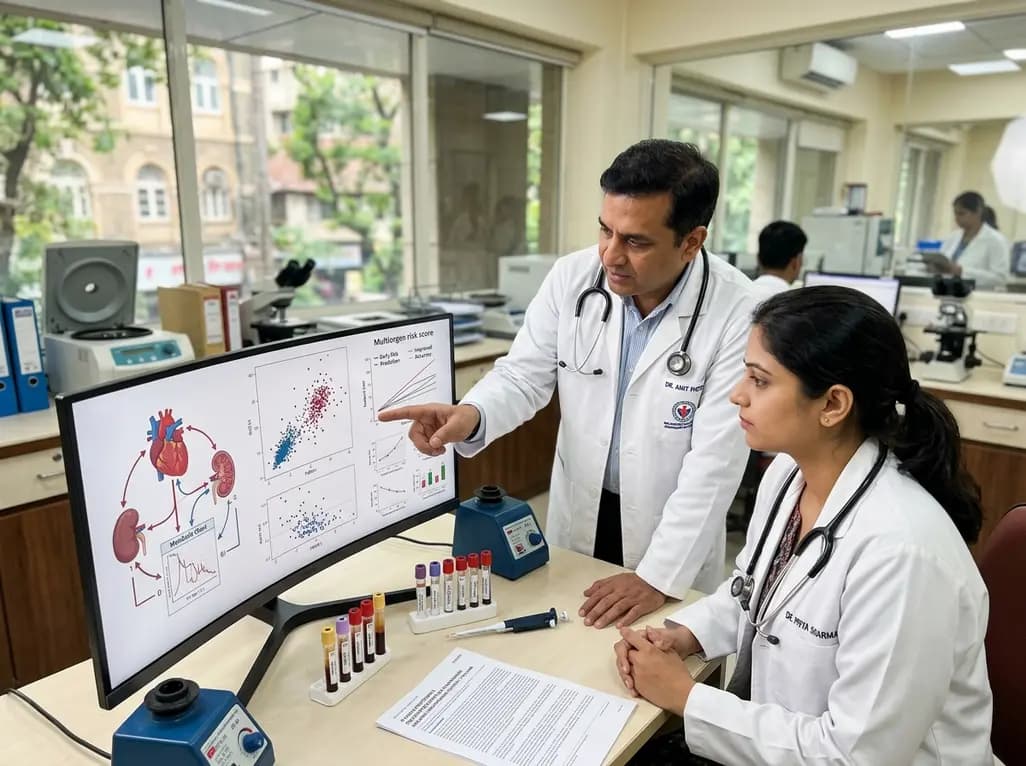
A large UK Biobank study reveals that plasma proteomic signatures capture preclinical organ damage and improve multiorgan risk prediction across early CKM syndrome stages 0 to 2 beyond traditional PREVENT clinical models.
Today

A retrospective CBCT study reveals that superior TMJ space asymmetry correlates moderately with occipital condyle-atlas-axis asymmetry in unilateral TMJ osteoarthritis, highlighting an imaging correlate between jaw biomechanics and upper cervical alignment rather than a standalone diagnostic marker.
Today

A Bayesian multilevel meta-analysis reveals that aerobic training combined with moderate carbohydrate restriction modestly lowers HbA1c in type 2 diabetes. However, sparse data and very low certainty leave incremental benefits over exercise or diet alone unproven, highlighting the need for individualized care.
Today
