.webp&w=384&q=75)

Loading, please wait...
Loading, please wait...

Neurologists and rehabilitation specialists traditionally view motor recovery as a process unfolding over days, weeks, or months. However, neuroscientists now recognize that rapid behavioral adaptations occur within seconds during practice and rest. A landmark multicenter study provides compelling insights into how micro-online and micro-offline dynamics drive motor skill acquisition. By evaluating healthy younger adults, older individuals, and patients with Parkinson disease, the authors dismantled long-held assumptions regarding micro-timescale learning. Furthermore, their rigorous statistical modeling clarifies whether brief rest intervals represent genuine memory consolidation or mere measurement phenomena. Understanding these rapid behavioral mechanisms allows clinicians to optimize physical therapy and motor rehabilitation protocols across neurological conditions.
Clinicians routinely evaluate how patients master repetitive movement sequences during therapy sessions. Historically, researchers categorized motor learning into online improvements during active execution and offline consolidation across hours or days. Recently, investigators identified similar dynamics operating on a micro-timescale across seconds. Specifically, micro-online learning denotes performance gains achieved during brief practice blocks. In contrast, micro-offline learning describes performance boosts that manifest across short inter-block rest periods. Previous investigations suggested that the brain consolidates motor memories during rest through rapid neural replay. Consequently, many therapists emphasized interleaved rest pauses to maximize offline gains.
However, a landmark multicenter investigation by Fricke and colleagues tracked 146 participants to reexamine these mechanisms. The authors showed that micro-online gains dominate early training. As practice continues, micro-offline gains become the primary driver of performance improvements. Therefore, neither component alone determines cumulative macro-learning success. Instead, both modalities interact dynamically to support motor mastery.
Earlier motor control literature repeatedly reported a strong negative correlation between micro-online and micro-offline gains. Many neuroscientists interpreted this inverse relationship as evidence for a biological trade-off between active execution and consolidation. Under this model, intense online effort allegedly triggered reactive inhibition that dissipated during rest intervals. Alternatively, researchers argued that neural systems competed for limited metabolic resources during rapid practice.
However, Fricke and colleagues conducted mathematical simulations alongside empirical linear mixed-effects modeling to scrutinize this premise. Their findings reveal that this apparent negative correlation represents a mathematical artifact rather than true biological competition. Because researchers derive both metrics from adjacent, shared data points, statistical coupling inevitably creates an artificial negative dependency. Furthermore, when accounting for baseline performance, the negative association diminished substantially. Thus, patients do not suffer a physiological penalty from strong micro-online execution. Overall, these findings urge neuroscientists to reconsider previous assumptions regarding micro-learning competition.
A central finding of the recent analysis centers on the stability of individual learning profiles. Interestingly, individual participants maintained stable preferences for either micro-online or micro-offline strategies across distinct training sessions. This persistence indicates that micro-learning tendencies function as stable, trait-like characteristics. Moreover, older adults exhibited fascinating adaptations in their micro-learning strategies compared to younger cohorts. Specifically, healthy older participants relied significantly more on micro-online learning during early training blocks. They also displayed more pronounced modality preferences than younger adults.
Nevertheless, total macro-learning remained remarkably comparable between older and younger cohorts. Therefore, advanced chronological age does not inherently diminish the capacity for motor skill acquisition. Instead, the aging central nervous system successfully deploys alternative operational strategies to achieve equivalent mastery. Consequently, geriatric rehabilitation protocols should recognize that older individuals acquire skills through unique behavioral profiles. Therapists can achieve superior outcomes by accommodating these natural learning styles.
Parkinson disease directly impairs basal ganglia circuitry, disrupting automated movement sequencing and striatal plasticity. When evaluating patients with Parkinson disease off dopaminergic medication, researchers observed distinct alterations in micro-timescale dynamics. Specifically, untreated patients demonstrated marked reductions in micro-online learning during active movement execution. Intriguingly, these same individuals exhibited enhanced micro-offline gains during short rest intervals. This pattern suggests a spontaneous compensatory reliance on rest periods when striatal execution mechanisms falter.
However, when patients took standard dopaminergic replacement therapy, this abnormal shift normalized. Levodopa and dopamine agonists restored micro-online performance toward healthy baseline patterns while tempering excessive offline reliance. Importantly, group-level differences between Parkinson patients and healthy controls remained modest relative to marked interindividual variability. Furthermore, no single micro-learning profile correlated with inferior total learning outcomes. Hence, compensatory offline gains allow individuals with Parkinson disease to achieve substantial overall skill acquisition. These observations reinforce the value of synchronizing physical rehabilitation sessions with optimal medication on-states.
The revelation that individuals possess stable, trait-like learning profiles provides practical implications for clinical neurorehabilitation across India. In tertiary neurorehabilitation centers, physiotherapists and occupational therapists often apply standardized practice schedules to all patients. However, treating motor learning as a uniform process overlooks critical individual neurocomputational differences. Because multiple micro-learning pathways yield equivalent overall mastery, clinicians need not force patients into a single rigid training model. Instead, therapists can tailor interval structures to harmonize with an individual's natural learning modality.
For instance, patients who rely heavily on micro-offline consolidation benefit substantially from structured, frequent micro-rests. Conversely, individuals who excel during active execution thrive with longer continuous exercise bouts before resting. Furthermore, in neurodegenerative conditions like Parkinson disease, coordinating therapy with dopaminergic medication timing optimizes motor execution. Ultimately, moving beyond one-size-fits-all therapy toward personalized interval prescription will maximize functional recovery and independence. Future prospective clinical trials must evaluate whether matching interval timing to individual micro-learning phenotypes accelerates recovery.
Micro-online learning represents the immediate performance gains achieved while a patient actively performs a motor sequence within a brief training block. Conversely, micro-offline learning denotes performance improvements that occur across short, seconds-long rest intervals between practice bouts. While micro-online gains dominate early skill acquisition, micro-offline gains drive later progress. Importantly, both modalities interact dynamically, and neither modality alone dictates overall long-term motor skill acquisition success in rehabilitation settings.
Patients with Parkinson disease off dopaminergic medication experience blunted micro-online learning due to striatal dysfunction during active execution. However, they exhibit enhanced micro-offline learning across brief rest periods, indicating a spontaneous compensatory mechanism. Dopaminergic replacement therapy effectively normalizes this imbalance, restoring active online gains to baseline levels. Clinicians should therefore synchronize rigorous physical therapy with medication on-states while providing structured inter-trial rest intervals to support functional neuroplasticity.
Historically, researchers observed an inverse correlation between online and offline micro-learning, interpreting it as physiological competition. However, recent rigorous linear mixed-effects modeling proved that this trade-off largely stems from mathematical coupling. Because researchers compute both values from adjacent, shared movement speed measurements, mathematical derivation artificially induces an inverse relationship. Clinicians can confidently understand that strong performance during execution does not biologically impair or trade off against consolidation during rest.
Disclaimer: This content is for informational and educational purposes only... Refer to the latest local and national guidelines for clinical practice.
References

Read summarized clinical updates, watch expert medical content, and earn CME certifications right from your smartphone.
Open your smartphone camera to scan and install.





A multicenter study reveals that micro-online and micro-offline learning reflect stable, trait-like motor strategies. While aging and Parkinson disease alter these short-timescale dynamics, total skill acquisition remains intact, highlighting key targets for personalized clinical neurorehabilitation.
Today
A cross-sectional surveillance study highlights the multisystem impact of occupational benzene exposure, including hematologic, hepatic, and cardiovascular abnormalities. The findings emphasize gender-specific vulnerability and the urgent need for stringent workplace health monitoring.
Today

A recent qualitative study evaluates institutional gaps across health, police, and justice sectors in supporting survivors of intimate partner violence. Healthcare providers must bridge procedural fragmentation with empathetic, trauma-informed care and cross-sector coordination to safeguard vulnerable patients.
Today

The Delhi High Court recently quashed an FSSAI order requiring beverage manufacturers to remove the term 'energy' from product labels without due process. This development brings renewed clinical focus to beverage terminology, consumer safety limits, cardiovascular strain, and youth dietary habits across India.
Today
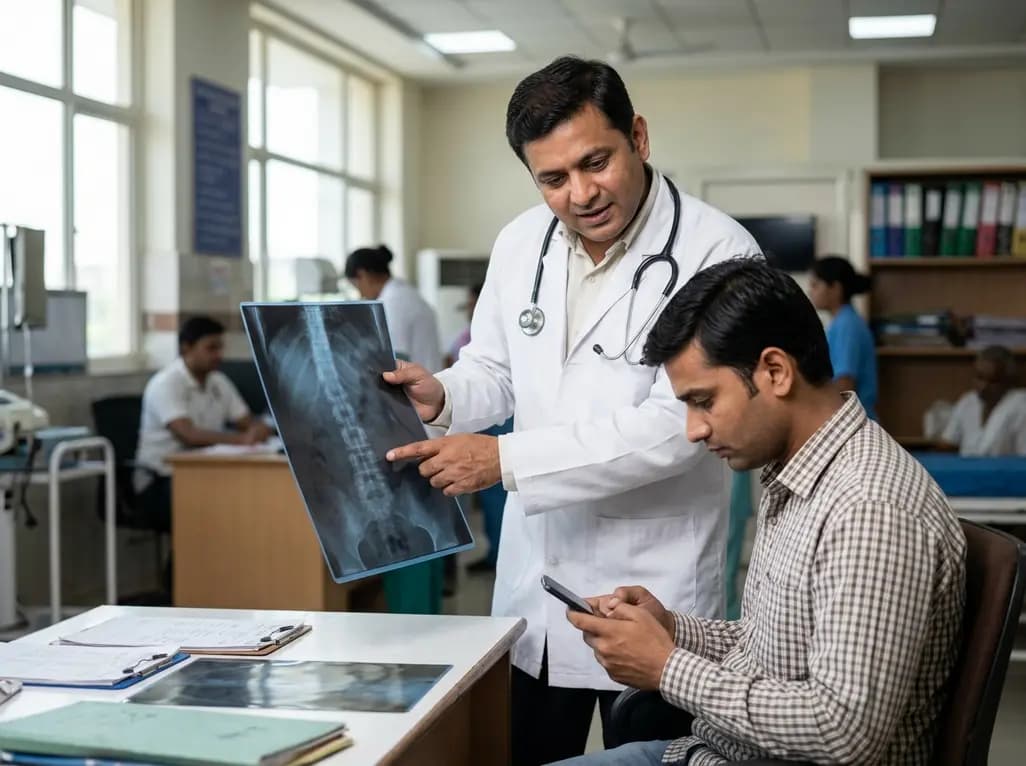
A cross-sectional study reveals a strong positive correlation between problematic internet use and kinesiophobia in adults aged 18-45 with non-specific low back pain, highlighting how digital overuse reinforces movement fear and complicates musculoskeletal recovery.
Today
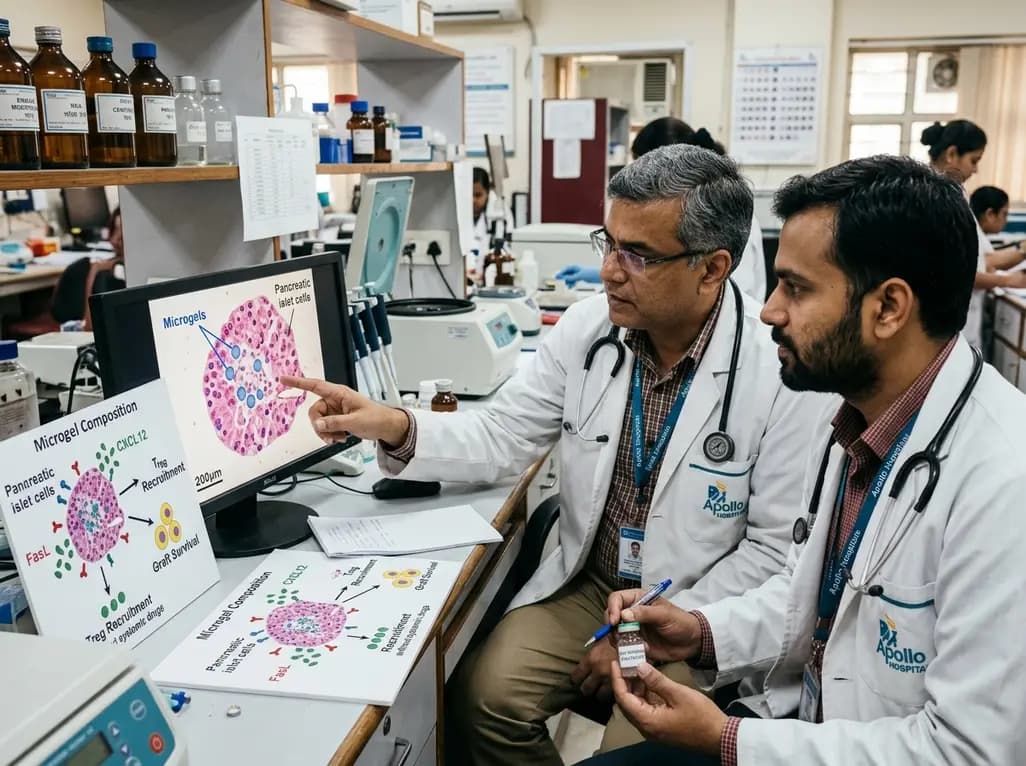
A novel microgel platform presenting FasL and protease-resistant CXCL12 enables sustained allogeneic islet survival and glycemic control without systemic immunosuppression, enhancing local Treg recruitment and graft revascularization.
Today
