.webp&w=384&q=75)

Loading, please wait...
Loading, please wait...

Recent advances in molecular neuro-oncology have transformed our comprehension of intracranial neoplasms. In particular, metabolic profiling of meningioma has emerged as a groundbreaking strategy to uncover subgroup-specific biological dependencies and refine patient outcome predictions. Historically, clinicians relied predominantly on histological grading frameworks established by the World Health Organization. However, substantial clinical heterogeneity persists within identical histological grades. Consequently, molecular classification systems based on DNA methylation, copy number alterations, and transcriptomics have emerged. While these genomic classifications categorize meningiomas into distinct biological subgroups, the downstream metabolic alterations driving aggressive tumor behavior have remained largely uncharacterized until recently.
To address this critical knowledge gap, researchers conducted comprehensive metabolomic investigations across diverse molecular cohorts. Untargeted metabolomic approaches successfully identified hundreds of biochemical entities, uncovering striking variations in cellular metabolism across individual tumor subsets. Furthermore, investigators integrated these biochemical findings with matched transcriptomic and proteomic data. This integrative multi-omics approach demonstrated that distinct molecular classes exploit discrete energy utilization programs. Consequently, these findings provide unprecedented clarity regarding the biological drivers of tumor aggressiveness and treatment resistance.
Global metabolomic analyses have cataloged over 560 unique biochemicals across meningioma specimens spanning all molecular subgroups and histological tiers. Importantly, these findings demonstrate that benign and aggressive tumors harbor drastically divergent metabolic phenotypes. Hypermetabolic meningiomas, for instance, display pronounced alterations in amino acid catabolism, lipid turnover, and nucleotide biosynthesis. In contrast, less aggressive tumors maintain biochemical features that closely resemble quiescent arachnoid cap cells. Therefore, metabolic alterations are not merely passive byproducts of cellular proliferation; instead, they represent fundamental drivers of tumor phenotype.
Additionally, pathway enrichment analyses reveal that specific subgroups upregulate distinct metabolic cascades to survive challenging microenvironmental conditions. For example, tumors classified under aggressive molecular subtypes exhibit significant shifts in one-carbon metabolism and the tricarboxylic acid cycle. Moreover, these tumors demonstrate substantial dependency on alternate fuel sources to sustain rapid biomass synthesis. Thus, mapping these subgroup-specific biochemical alterations provides a mechanistic explanation for the aggressive clinical behavior observed in specific genomic classes, bridging the gap between static genomic alterations and active cellular biochemistry.
Beyond clarifying fundamental biology, biochemical profiling delivers exceptionally robust prognostic utility. Through rigorous Cox proportional hazards regression and machine learning methodologies, investigators isolated a discrete 21-metabolite signature strongly linked to patient outcomes. Notably, this biochemical signature retained immense prognostic significance after multivariate adjustment for traditional risk factors, including histological grade, surgical extent of resection, and adjuvant radiation administration. Patients harboring adverse metabolic scores experienced significantly shortened progression-free survival intervals compared to those with indolent metabolic profiles.
Furthermore, targeted high-performance liquid chromatography-mass spectrometry validated the analytical reproducibility of these key prognostic metabolites across independent patient cohorts. Consequently, this outcome signature provides clinicians with an objective, biochemically grounded tool for risk stratification. In clinical settings where histopathological grading yields ambiguous prognostic information, metabolic biomarkers can resolve diagnostic uncertainty. Therefore, integrating metabolomic risk scores into routine neuropathology workflows could markedly improve postoperative monitoring protocols and identify high-risk individuals who require proactive therapeutic intervention.
Identifying metabolic dysregulation in meningiomas also unveils novel actionable vulnerabilities for medical therapy. Currently, effective systemic therapies for recurrent or unresectable meningiomas remain extremely limited, leaving clinicians with few salvage options. However, subgroup-specific metabolic profiling reveals that aggressive hypermetabolic tumors depend heavily on precise biochemical pathways for survival. For instance, specific carnitine derivatives and methyl donor intermediates, such as N6-trimethyllysine, demonstrate profound prognostic relevance specifically within hypermetabolic tumors, highlighting distinct dependencies on mitochondrial fatty acid oxidation and epigenetic methylation processes.
Consequently, pharmacologically targeting these rate-limiting metabolic enzymes offers an attractive therapeutic avenue. Disrupting nutrient uptake pathways or inhibiting critical metabolic enzymes could selectively starve aggressive meningioma cells while sparing adjacent normal brain parenchyma. Moreover, combining metabolic inhibitors with existing radiation or anti-angiogenic therapies may overcome common mechanisms of radioresistance. As a result, these findings establish a strong preclinical rationale for designing targeted clinical trials focused on metabolically defined meningioma patient subsets.
The translation of metabolomic profiling into routine neuro-oncology practice holds tremendous promise for precision patient management. Advanced intraoperative mass spectrometry and non-invasive magnetic resonance spectroscopy could soon enable real-time metabolic assessment directly in the operating theater or neuro-imaging suite. Specifically, surgeon-scientists could leverage rapid metabolic classification to verify clear tumor margins during complex skull base operations. Furthermore, non-invasive imaging biomarkers could track metabolic shifts during routine postoperative surveillance, detecting occult recurrence months before macroscopic tumor regrowth becomes visible on anatomical magnetic resonance imaging scans.
In addition, establishing standardized metabolomic platforms will enhance future multi-center clinical trials. By stratifying clinical trial participants according to validated biochemical signatures, oncologists can evaluate novel therapeutics within biologically uniform cohorts. Therefore, metabolomics bridges basic tumor biology and actionable neurosurgical oncology, offering a comprehensive paradigm for personalized therapeutic strategies tailored to the unique biochemical landscape of individual tumors.
Incorporating metabolic diagnostics into neurosurgical management significantly refines postoperative decision-making algorithms. Currently, surgical neuro-oncologists frequently face difficult dilemmas regarding the timing of adjuvant radiotherapy, particularly after subtotal resections of borderline lesions. Standard histology occasionally fails to predict aggressive recurrences in histologically benign specimens. However, applying metabolic risk profiling can immediately identify tumors with elevated biological malignancy, even when initial histological parameters appear reassuring.
Thus, neurosurgeons can personalize postoperative management plans with greater confidence. High-risk patients identified via metabolic signatures can undergo early adjuvant radiation therapy and closer radiographic monitoring intervals. Conversely, patients with favorable metabolic signatures might safely avoid aggressive adjuvant radiation, minimizing long-term neurocognitive and vascular toxicities. Ultimately, this precision framework optimizes oncological control while preserving patient quality of life across the entire continuum of meningioma care.
Metabolic profiling provides objective biochemical data that substantially refines patient risk stratification. By identifying unique subgroup-specific metabolic programs, this approach uncovers tumor aggressiveness independent of traditional histopathological grading, enabling neuro-oncologists to predict disease recurrence accurately and tailor postoperative surveillance and treatment plans accordingly.
The 21-metabolite signature identifies patient recurrence risk after adjusting for extent of resection, histological grade, and adjuvant radiotherapy. Validated by targeted mass spectrometry, this biochemical score reliably distinguishes aggressive tumors from indolent lesions, resolving clinical ambiguity in histologically borderline meningiomas.
Yes, metabolic profiling highlights critical subgroup-specific dependencies, such as altered amino acid utilization, one-carbon metabolism, and mitochondrial pathways. By identifying these metabolic bottlenecks, researchers can develop targeted small-molecule inhibitors that selectively disrupt essential tumor energy pathways, providing novel systemic treatment strategies for aggressive or recurrent meningiomas.
Disclaimer: This content is for informational and educational purposes only and does not constitute medical advice, diagnosis, or treatment. Healthcare professionals should rely on their independent clinical judgment and refer to the latest local and national guidelines for clinical practice.
References

Read summarized clinical updates, watch expert medical content, and earn CME certifications right from your smartphone.
Open your smartphone camera to scan and install.





Discover how comprehensive metabolic profiling of meningioma reveals subgroup-specific biological drivers and identifies a robust 21-metabolite prognostic signature capable of refining neuro-oncology risk stratification and guiding targeted therapies.
last month

With post-monsoon dengue surges threatening South Asian health systems, physicians must refine triage and management. This guide covers vital warning signs, plasma leakage detection, crystalloid titration, and vector containment strategies to prevent mortality during seasonal arboviral epidemics.
Today

Findings from Project Viva indicate that sustained postpartum weight retention, rather than excessive gestational weight gain alone, directly worsens women's mid-life cardiovascular health, degrading blood pressure and glycemic parameters decades after delivery.
Today
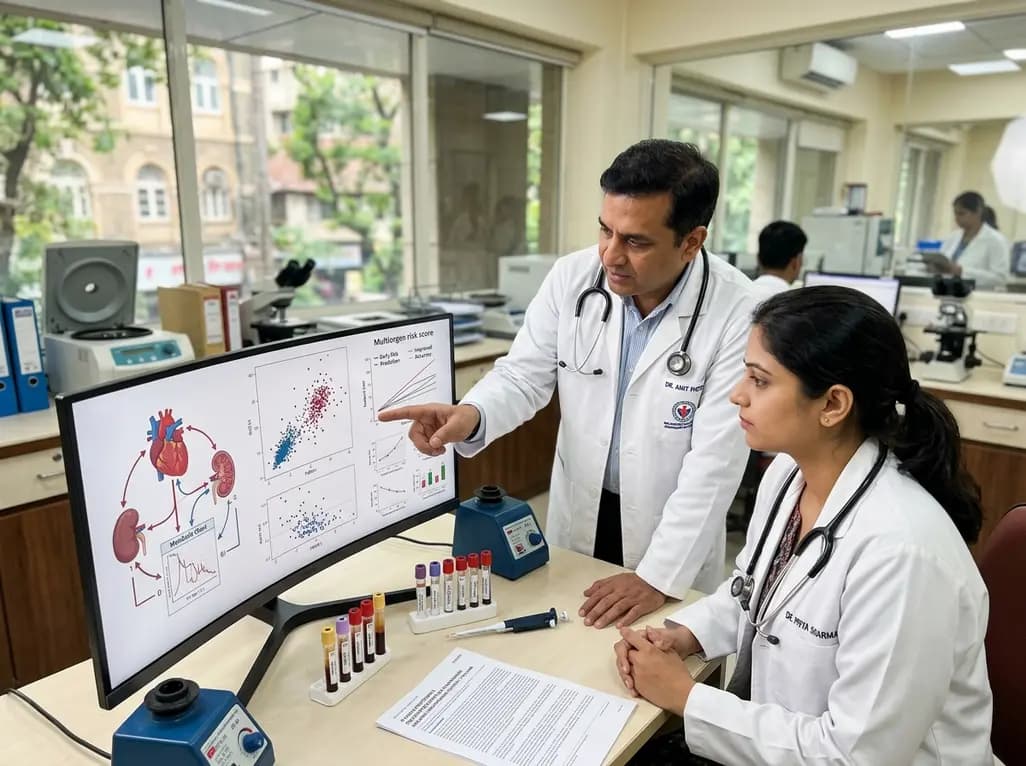
A large UK Biobank study reveals that plasma proteomic signatures capture preclinical organ damage and improve multiorgan risk prediction across early CKM syndrome stages 0 to 2 beyond traditional PREVENT clinical models.
Today

A retrospective CBCT study reveals that superior TMJ space asymmetry correlates moderately with occipital condyle-atlas-axis asymmetry in unilateral TMJ osteoarthritis, highlighting an imaging correlate between jaw biomechanics and upper cervical alignment rather than a standalone diagnostic marker.
Today

A Bayesian multilevel meta-analysis reveals that aerobic training combined with moderate carbohydrate restriction modestly lowers HbA1c in type 2 diabetes. However, sparse data and very low certainty leave incremental benefits over exercise or diet alone unproven, highlighting the need for individualized care.
Today
