

Loading, please wait...
Loading, please wait...
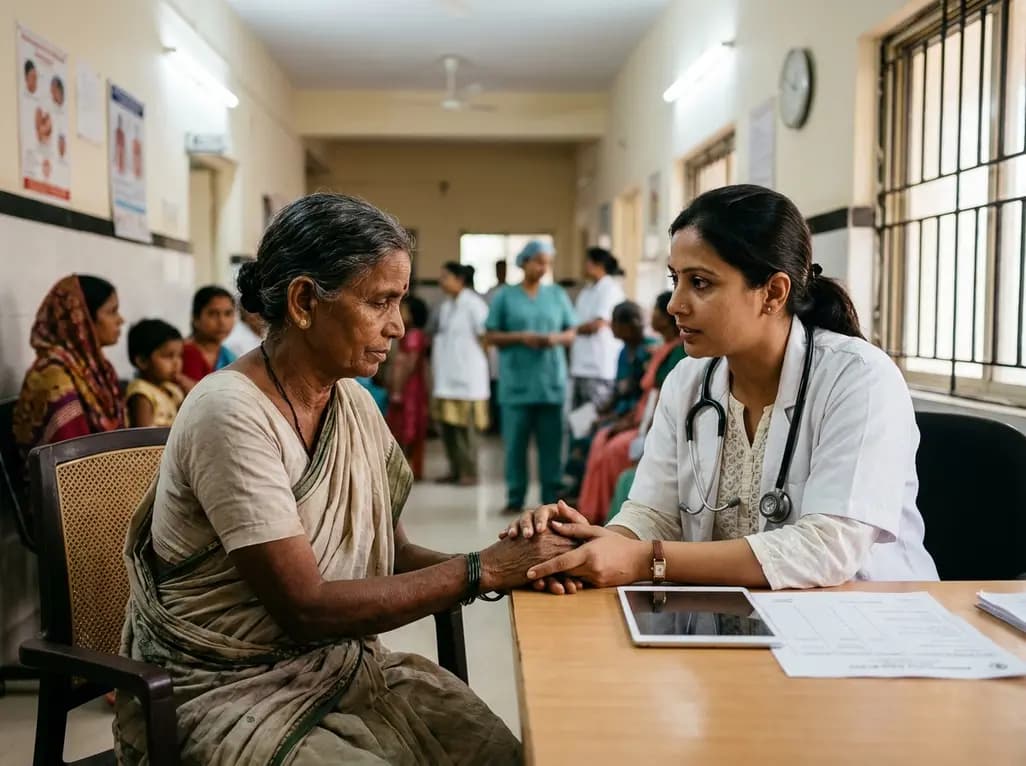
Forcibly displaced populations across the globe face immense psychosocial adversity, and women refugees and asylum seekers endure exceptionally severe burdens. Consequently, standardized mental health screening tools play an indispensable role in identifying psychiatric conditions early. Routine assessments for anxiety, depression, and post-traumatic stress disorder offer vital opportunities for therapeutic intervention. However, clinical implementation within real-world healthcare settings often encounters formidable structural and operational barriers. Addressing these clinical screening challenges requires systematic evaluation of provider workflows and patient experiences.
Displaced women frequently navigate severe pre-migration trauma, dangerous journeys, and stressful resettlement conditions. Therefore, these individuals carry disproportionate risks for major depressive disorder, generalized anxiety, and complex trauma syndromes. Clinicians widely deploy standard instruments to detect psychological distress during primary care visits. For example, clinicians routinely utilize the Patient Health Questionnaire, the Generalized Anxiety Disorder scale, and the Post-Traumatic Stress Disorder Checklist. Furthermore, these standardized instruments provide reliable scoring metrics in general patient populations.
Nevertheless, general clinical validation rarely guarantees smooth implementation among foreign-born populations. Refugee women frequently experience unique language barriers, traumatic memories, and distinct cultural expressions of suffering. Consequently, generic psychometric instruments may fail to capture somatic manifestations of mental distress without appropriate adaptations. Healthcare systems must therefore examine how these screening protocols function in everyday practice. Clinicians must actively adapt their diagnostic pathways to ensure equity, clinical precision, and respectful patient communication.
Moreover, structured screening protocols help clinicians avoid diagnostic overshadowing during routine physical health checkups. When medical teams prioritize culturally attuned mental health assessments, displaced women receive earlier therapeutic referrals.
A recent systematic review critically examined how medical teams implement validated screening instruments for adult female refugees in the United States. Specifically, the investigators explored four foundational implementation outcomes: adoption, appropriateness, acceptability, and fidelity. Implementation science defines adoption as the intention or initial decision to employ an evidence-based practice. Similarly, appropriateness assesses the perceived fit or relevance of an instrument for a specific clinical setting or target group. Acceptability reflects how palatable and agreeable the screening tool appears to both providers and recipients.
In addition, fidelity measures whether healthcare teams administer the screening instrument precisely as designed by its developers. The research team systematically screened ten comprehensive biomedical databases without any language or publication date restrictions. Consequently, the researchers identified 2,011 initial studies and rigorously deduplicated them down to 921 unique citations for formal review. Ultimately, thirty-seven studies met broad eligibility criteria, but only three studies specifically evaluated the primary population of interest. This striking scarcity highlights how rarely researchers investigate real-world clinical implementation among displaced female cohorts.
The systematic review exposed alarming empirical deficiencies regarding the operational adoption and execution of psychological screening. Although clinicians regularly discuss the necessity of psychological triage, formal adoption rates remain largely undocumented across resettlement programs. Furthermore, none of the retrieved studies comprehensively measured implementation fidelity among displaced women. When clinical teams omit fidelity assessments, healthcare administrators cannot determine whether staff administer questionnaires consistently or accurately. Consequently, medical organizations risk drawing erroneous conclusions about screening efficacy and patient well-being.
Moreover, inconsistent screening practices can inadvertently alienate vulnerable patients who already distrust institutional healthcare settings. Staff members frequently lack standardized training regarding trauma-informed questioning and interpreter coordination. Therefore, routine clinic workflows often alter validated scoring thresholds without appropriate psychiatric justification. Healthcare providers must recognize that unstandardized screening compromises diagnostic utility and patient safety. Establishing robust institutional frameworks and monitoring fidelity metrics will substantially strengthen psychological evaluations for vulnerable refugee women.
Additionally, clinical managers must institute clear audit mechanisms to support healthcare staff during busy outpatient shifts. Without consistent administrative backing, screening compliance drops dramatically over time.
The three studies that specifically addressed refugee women focused predominantly on qualitative perceptions of appropriateness and acceptability. Encouragingly, both patients and clinical teams reported favorable qualitative outcomes when programs incorporated culturally tailored approaches. Displaced women expressed appreciation for proactive inquiries into their emotional suffering when providers demonstrated genuine cultural humility. Furthermore, patients welcomed diagnostic screening when trusted medical staff clearly explained confidentiality safeguards and therapeutic benefits.
However, serious cultural hurdles frequently impede universal acceptability in refugee health clinics. Many displaced women originate from societies where mental illness carries profound social stigma and intense community ostracization. Consequently, direct psychiatric questioning can trigger acute distress, shame, or fear of administrative retaliation. Linguistic nuances also create significant friction, because direct translations often misinterpret nuanced idioms of distress. Therefore, healthcare systems must integrate qualified medical interpreters and cultural navigators into every screening encounter. When clinical teams actively contextualize standardized tools, they foster therapeutic rapport and enhance clinical compliance.
Similarly, involving female community leaders in screening design significantly reduces mistrust and normalizes routine mental health discussions among newly arrived families.
These systematic findings offer crucial clinical lessons for physicians, psychiatrists, and allied health professionals worldwide. Displaced women require accessible, trauma-informed care that acknowledges their multidimensional social, economic, and psychological vulnerabilities. Therefore, healthcare organizations cannot simply distribute translated questionnaires without substantial clinical and relational scaffolding. Clinicians must establish clear, predetermined referral pathways before implementing universal screening protocols. If clinicians detect severe psychological distress without offering immediate psychosocial support, screening creates ethical dilemmas and patient harm.
Furthermore, medical teams should incorporate multidisciplinary collaboration to support comprehensive mental healthcare delivery. Social workers, cross-cultural psychologists, community leaders, and primary care physicians must coordinate closely to provide holistic assistance. In addition, health systems must invest in continuous professional education regarding structural competence and transcultural psychiatry. By systematically tracking implementation outcomes, clinics can optimize resource allocation and eliminate disparities in refugee mental healthcare. Ultimately, compassionate, culturally responsive screening transforms routine medical encounters into powerful opportunities for healing.
Importantly, establishing culturally safe clinical environments encourages refugee women to seek timely psychiatric assistance before psychological symptoms escalate into severe crises.
Future mental health research must transition from descriptive prevalence studies to rigorous implementation trials. Researchers need to test standardized implementation frameworks such as the Consolidated Framework for Implementation Research within diverse resettlement contexts. Furthermore, investigative teams should consistently document how clinical clinics train non-specialist health workers to conduct initial emotional screenings. Task-shifting models have proven highly effective in global mental health, and similar strategies could expand screening capacity in resource-constrained refugee clinics.
In addition, longitudinal studies should examine patient retention and clinical outcomes following positive mental health screens. Researchers must evaluate whether culturally adapted screening instruments directly improve treatment engagement and long-term psychiatric recovery. Policymakers and funding agencies must also allocate dedicated resources to support community-based participatory research with displaced women. Ultimately, rigorous implementation research will bridge the gap between psychiatric evidence and compassionate, culturally responsive clinical practice for displaced women.
Consequently, establishing international research collaborations can standardize implementation benchmarks across various resettlement destinations worldwide.
Standard screening instruments often fail to capture culturally specific expressions of psychological distress and somatic symptoms. Furthermore, language translation barriers, intense social stigma surrounding mental illness, and past trauma can hinder accurate communication. Consequently, clinicians must adapt these tools culturally and linguistically while maintaining validated clinical diagnostic accuracy.
Implementation science primarily evaluates four essential outcomes: adoption, appropriateness, acceptability, and fidelity. Adoption examines the initial clinical uptake of screening tools, while appropriateness assesses practical relevance. Acceptability measures patient and provider satisfaction, and fidelity monitors whether staff administer tools consistently according to established protocols.
Clinicians can improve acceptability by engaging certified medical interpreters, ensuring strict confidentiality, and demonstrating authentic cultural humility. In addition, providers should explain the screening rationale clearly, normalize emotional challenges, and provide immediate, culturally sensitive referral options when patients screen positive for distress.
Disclaimer: This content is for informational and educational purposes only... Refer to the latest local and national guidelines for clinical practice.
References

Read summarized clinical updates, watch expert medical content, and earn CME certifications right from your smartphone.
Open your smartphone camera to scan and install.





A systematic review highlights critical implementation gaps in mental health screening tools for displaced women, emphasizing the urgent need for culturally responsive evaluation frameworks and fidelity monitoring.
Today

A Bayesian component network meta-analysis of 130 RCTs reveals that self-monitoring and gamification provide the clearest positive effects in mHealth physical activity interventions, while social comparison may have adverse psychological trade-offs.
Today

The GESS-AEEM consensus establishes a clear clinical implementation framework for testosterone therapy in postmenopausal women with hypoactive sexual desire disorder, focusing on transdermal dosing, precise laboratory monitoring, and safety communication.
Today

A multicenter observational study evaluated an 8-week digital health monitoring platform using wearable sensors in ambulatory heart failure. While participants achieved high daily wear-time of 11.7 hours and 80% completion, initial recruitment revealed significant technology-related onboarding barriers.
Today

A paired cadaveric study compared triple and quintuple percutaneous Achilles tendon lengthening. While quintuple hemisection showed numerically greater elongation, differences were not statistically significant.
Yesterday

A clinical decision-support framework using health checkup data from 231,683 adults predicts incident obesity with high discrimination (AUROC 0.918). The system integrates temporal survival analysis and risk-factor explanations to prioritize individualized preventive interventions.
Today
