

Loading, please wait...
Loading, please wait...

Emerging genomic evidence highlights an intricate relationship between psychological health and reproductive function. Clinicians frequently encounter female patients experiencing both mood disturbances and menstrual irregularities during routine medical consultations. Historically, medical practitioners viewed these co-occurring symptoms as secondary consequences of lifestyle factors or psychological stress. However, a comprehensive two-sample Mendelian randomization study now provides concrete evidence of bidirectional genetic causality connecting psychiatric conditions with debilitating menstrual cycle disturbances.
The groundbreaking investigation evaluated summary-level genome-wide association study data from expansive international cohorts. Researchers examined genetic liabilities for schizophrenia, bipolar disorder, major depressive disorder, and anxiety and stress-related disorders alongside specific gynecological outcomes. Consequently, the statistical models demonstrated that major depressive disorder and anxiety disorders significantly elevate the risk of irregular menses. Furthermore, genetic liability to anxiety and stress-related disorders markedly heightened the likelihood of excessive menstruation and severe dysmenorrhea. In contrast, researchers observed no robust causal contribution from schizophrenia or bipolar disorder toward cycle disruption, suggesting that specific affective pathways govern this biological vulnerability. Therefore, chronic emotional tension directly compromises reproductive cyclicity through genetically mediated pathways rather than mere behavioral confounding.
Crucially, the study established that pelvic pain pathways exert reciprocal effects on brain neurochemistry. Reverse-direction analyses confirmed that genetic predisposition to dysmenorrhea substantially increases the risk of developing major depressive disorder and anxiety-related disorders. Painful uterine contractions release copious pro-inflammatory mediators into systemic circulation, progressively sensitizing central neural networks. Consequently, repetitive monthly nociceptive insults appear to drive lasting psychological morbidity. Therefore, primary care physicians must recognize that chronic dysmenorrhea acts as an upstream trigger for debilitating mood episodes. When adolescents present with persistent pelvic agony, clinicians should simultaneously assess affective stability to prevent long-term psychiatric morbidity. This bidirectional loop creates an escalating clinical cycle that standard monotherapies frequently fail to disrupt.
Understanding the biological mechanisms linking mental health with reproductive physiology requires close examination of neuroendocrine architecture. Psychological stress triggers robust activation of the hypothalamic-pituitary-adrenal axis, prompting sustained release of corticotropin-releasing hormone and systemic cortisol. Consequently, elevated cortisol levels disrupt the pulsatile discharge of gonadotropin-releasing hormone from the arcuate nucleus. This central disruption subsequently alters downstream luteinizing hormone and follicle-stimulating hormone secretion, leading to anovulation, oligomenorrhea, and luteal phase deficiency. Simultaneously, peripheral fluctuations in estradiol and progesterone modulate central serotonergic and gamma-aminobutyric acid neurotransmission. When ovarian steroid production becomes irregular, neurochemical balance falters, exacerbating depressive symptoms and heightened stress sensitivity. Thus, neuroendocrine crosstalk perpetuates ongoing physiological instability across both organ systems.
In Indian outpatient settings, cultural stigma frequently impedes open discussions regarding both psychiatric distress and gynecological abnormalities. Young women often normalize debilitating menstrual pain or excessive bleeding, delaying timely clinical intervention. Similarly, patients rarely disclose underlying anxiety or depressive symptoms during routine gynecological visits. Because this genetic evidence confirms mutual causality, practitioners across internal medicine, obstetrics, and psychiatry must dismantle clinical silos. Routine gynecological screening in India should systematically incorporate validated mood assessment scales, including the Patient Health Questionnaire-9. Conversely, psychiatrists treating women of reproductive age must routinely record detailed menstrual histories. Identifying early menstrual irregularities can alert clinicians to occult mood disturbances, enabling coordinated, multifaceted therapy before severe functional impairment occurs.
Effectively managing these interconnected conditions necessitates a coordinated therapeutic approach combining medical, psychiatric, and lifestyle interventions. First-line treatments for dysmenorrhea, including targeted nonsteroidal anti-inflammatory drugs and low-dose oral contraceptives, provide profound symptomatic relief by suppressing prostaglandin production and stabilizing hormonal surges. Concurrently, cognitive behavioral therapy and selective serotonin reuptake inhibitors effectively modulate central pain processing and alleviate affective distress. Clinicians should also encourage evidence-based lifestyle modifications, such as regular physical activity, balanced nutritional intake, and restorative sleep hygiene, which mitigate systemic inflammation. Furthermore, family medicine physicians in community healthcare centers can orchestrate combined management plans, ensuring seamless referrals between gynecologists and mental health professionals. By treating somatic and affective components simultaneously, clinicians achieve superior therapeutic outcomes and restore patient well-being.
Depression and anxiety stimulate the hypothalamic-pituitary-adrenal axis, prompting excess cortisol secretion. Consequently, chronic cortisol elevation suppresses hypothalamic gonadotropin-releasing hormone pulsatility. This neuroendocrine disruption impedes normal pituitary gonadotropin release, impairing follicular development, altering circulating estrogen and progesterone concentrations, and ultimately producing anovulatory cycles or delayed menstrual bleeding.
Yes, alleviating severe dysmenorrhea significantly reduces systemic inflammatory cytokines and interrupts persistent nociceptive input to the central nervous system. By eliminating monthly pain episodes, medical interventions improve physical comfort, sleep quality, and daily functioning, thereby alleviating secondary psychological distress and reducing long-term vulnerability to major depressive episodes.
Physicians should deploy the Patient Health Questionnaire-9 and the Generalized Anxiety Disorder-7 questionnaire during gynecological evaluations to detect occult psychological distress. Conversely, mental health practitioners should administer structured menstrual cycle tracking diaries and visual analog pain scales to quantify menstrual irregularities and dysmenorrhea in reproductive-aged female patients.
Disclaimer: This content is for informational and educational purposes only. It does not constitute formal medical advice, diagnosis, or treatment. Healthcare professionals must exercise independent clinical judgment when interpreting research and establishing individual patient care regimens. Refer to the latest local and national guidelines for clinical practice.
References
Dong F et al. Evaluation of the two-way associations between mental disorders and menstrual irregularities: A Mendelian randomization study from both directions. J Affect Disord. 2025 Jul 01. doi: 10.1016/j.jad.2025.03.128. PMID: 40132666.
Zheng H et al. A Mendelian randomization study of the associations between depression, anxiety and clinical conditions including thyroid nodules, flatulence, and irregular menstruation. Medicine (Baltimore). 2024;103(34):e39345.
Yang X et al. Deciphering the genetic interplay between depression and dysmenorrhea: a Mendelian randomization study. Brief Bioinform. 2024;25(6):bbae573.
Blecker M et al. Menstrual cycle-related changes in HPA axis reactivity to acute psychosocial and physiological stressors: A systematic review and meta-analysis of longitudinal studies. Psychoneuroendocrinology. 2023;156:106346.

Read summarized clinical updates, watch expert medical content, and earn CME certifications right from your smartphone.
Open your smartphone camera to scan and install.





A landmark Mendelian randomization study uncovers bidirectional causal relationships between mood disorders and menstrual irregularities, underscoring the critical need for integrated psychiatric and gynecological care.
Today

A randomized crossover trial evaluated fifth-year medical students interacting with an AI standardized patient versus a human standardized patient. The study revealed key differences in Mini-CEX scores, active engagement, and interview dynamics.
Today
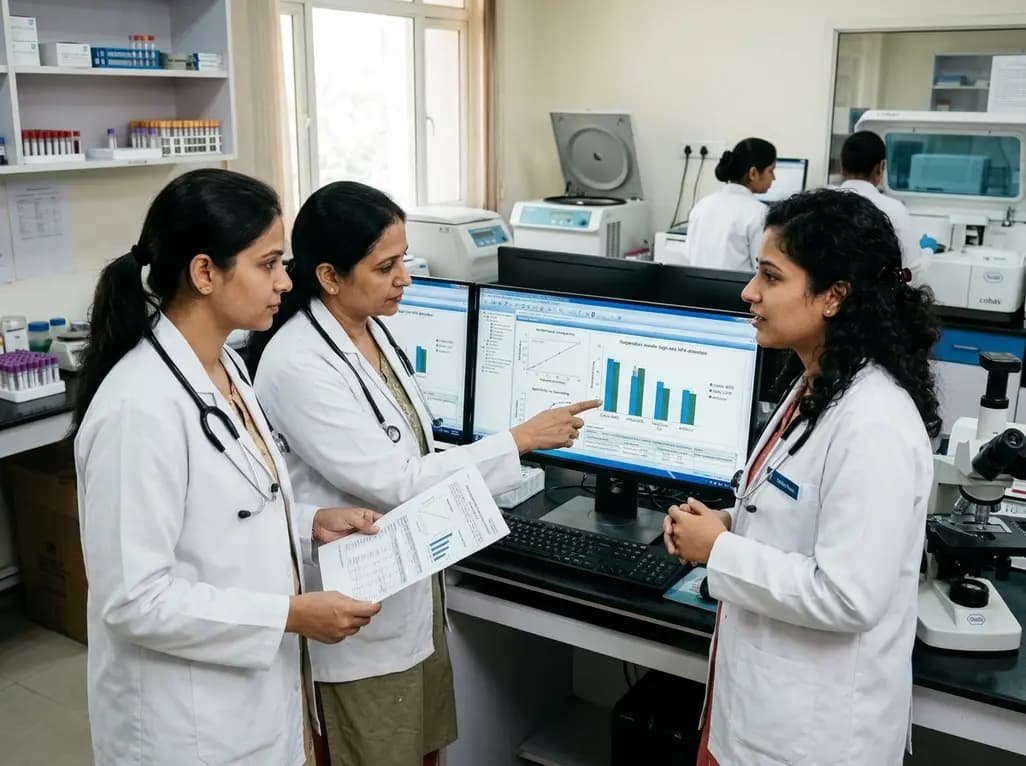
A comparative evaluation of INNO-LiPA, Cobas 4800, and Amplicor highlights significant assay-dependent variation in high-risk HPV detection, emphasizing the clinical distinction between analytical sensitivity and screening specificity.
Today

A Canadian nutrition study reveals that higher diet costs predict lower dietary energy density and higher fruit intake, but also increase sodium and processed meat consumption.
Today

Idiopathic spinal cord herniation is a rare pathology presenting with progressive thoracic myelopathy. Early MRI identification and meticulous microsurgical reduction with dual bolstered dural defect repair prevent irreversible neurological deterioration.
Today

A novel smartphone-assisted biosensor utilizing molecularly imprinted polymers and catalytic nanozymes offers antibody-free, enzyme-free urinary microalbumin testing, enabling rapid, low-cost point-of-care screening for early chronic kidney disease.
Today
