.webp&w=384&q=75)

Loading, please wait...
Loading, please wait...

College life represents a critical developmental transition accompanied by heightened psychological vulnerability. Understanding dynamic pathways of mental health help-seeking among female undergraduate students is essential for healthcare providers. Emerging qualitative evidence illustrates that young women rarely pursue professional psychological care in a straight line. Instead, they navigate an intricate, multi-tiered journey that begins well before they schedule an appointment with a clinician. Primary care practitioners, psychiatrists, and campus health professionals must recognize these behavioral patterns to intervene earlier and improve clinical outcomes.
Recent grounded theory research explores how young adult women navigate psychological distress during their university education. The study investigated self-identified female students aged 18 to 30 years within a public university setting using in-depth semi-structured interviews. Researchers analyzed the data through constant comparative methodology to capture genuine lived experiences. Consequently, the researchers established the diverse pathways of mental health support sources theory. This model challenges traditional assumptions of linear clinical referral pathways. In reality, young women alternate continuously between personal coping mechanisms, social networks, and structured campus programs.
Furthermore, university students experience multifaceted stressors including academic competition, financial constraints, and interpersonal role shifts. In India and across global academic centers, young women frequently balance academic pressures with societal expectations. Therefore, their willingness to seek mental health assistance depends heavily on personal appraisal, perceived stigma, and convenience. Primary care clinicians often represent the first clinical contact point when students present with somatic symptoms such as fatigue or insomnia. However, healthcare professionals may miss underlying distress if they do not comprehend how these young women conceptualize mental wellness. By understanding these non-linear patterns, physicians can engage vulnerable young women with greater empathy and diagnostic precision.
The grounded theory framework reveals that self-reliance and autonomous self-help form the primary starting point for most students. When psychological distress first surfaces, female undergraduates instinctively attempt to regain emotional equilibrium independently. For example, students actively seek digital wellness applications, mindfulness exercises, personal journaling, and fitness regimens. Additionally, many individuals turn to psychoeducational podcasts and anonymous online forums to normalize their distressing emotions. This preference stems partly from a strong desire for personal agency and autonomy. Students often believe they should manage their personal burdens without placing demands on external resources.
Moreover, perceived self-reliance acts as an emotional defense mechanism against vulnerability. Many young women worry that asking for assistance signifies weakness or emotional inadequacy. Consequently, they prolong self-management even when clinical symptoms intensify. In clinical practice, physicians must respect this yearning for autonomy while simultaneously educating patients on its limitations. When consulting with young women who exhibit signs of chronic anxiety or depressive syndromes, clinicians should validate their self-care efforts. Clinicians can then introduce guided therapy as an empowering tool rather than an admission of defeat. Thus, integrating professional advice with self-management optimizes patient trust.
When internal self-help strategies prove insufficient, female college students naturally turn to nonprofessional support networks. These informal networks include close roommates, trusted friends, romantic partners, and supportive family members. Students prioritize these connections because they offer immediate empathy, emotional safety, and relational validation. Furthermore, peer conversations allow young women to test whether their psychological experiences fall within normal limits. In numerous cases, speaking openly with peers reduces distress and clarifies confusing emotional states.
However, nonprofessional support systems have clear clinical boundaries and limitations. Friends and family members frequently lack training in psychological crisis management. Sometimes, well-meaning peers offer contradictory advice or unintentionally invalidate real psychiatric symptoms. In cultural contexts such as India, family conversations regarding mental health may carry persistent cultural taboos or generational misunderstandings. Therefore, while informal networks provide comfort, they may delay timely escalation to formal medical care. Healthcare providers must proactively ask patients about their social support structures during clinical evaluations. Clinicians can assess whether peer networks are providing positive scaffolding or inadvertently reinforcing avoidance behaviors. As a result, recognizing these informal dynamics helps doctors guide patients toward balanced support systems.
Between informal peer circles and formal psychiatric clinics lies a vital bridge: semi-formal integrated support. This tier encompasses academic advisors, university residence mentors, campus chaplaincy, and student-led peer support groups. Female undergraduates often view these intermediaries as approachable resources who possess authority without clinical intimidation. For instance, when academic distress threatens emotional stability, an empathetic professor or academic counselor can offer practical accommodations. These adjustments often stabilize emotional crises before severe psychological decompensation occurs.
Additionally, peer-led support groups provide mutual understanding and shared community experiences. Young women appreciate these semi-formal environments because they eliminate formal intake paperwork and clinical diagnostic labels. Consequently, integrated campus systems foster psychological safety and promote self-reflection. In modern university health systems, primary care physicians must actively collaborate with these campus resources. When general practitioners and student affairs personnel maintain open communication channels, students transition smoothly across support tiers. Therefore, academic institutions should invest in gatekeeper training for all campus staff. Educating advisors to identify subtle warning signs of depression ensures that struggling students receive timely navigational assistance before crises spiral.
Despite experiencing severe distress, female undergraduates utilize professional psychological support least frequently. Several systemic and psychological barriers explain this persistent treatment gap. First, clinical stigma remains a powerful deterrent across both Western and non-Western societies. Students fear social gossip, academic prejudice, and parental disappointment if they enter a psychiatric facility. Second, institutional barriers, including long waiting lists, limited operating hours, and bureaucratic intake procedures, discourage students from initiating care. Consequently, many young women abandon their search for formal care at the first administrative hurdle.
Furthermore, financial costs and confidentiality concerns present formidable obstacles for university students. Many young women lack private insurance and fear that university medical records might compromise their future employment prospects. To dismantle these barriers, healthcare providers must redesign youth mental health delivery models. Primary care clinics should offer walk-in mental health assessments, confidential telehealth consultations, and flexible after-hours appointments. Moreover, general practitioners should routinely screen young adult women during routine health visits using standardized tools like the PHQ-9. By embedding psychiatric screening into regular medical practice, clinicians normalize mental healthcare and protect vulnerable young adults from preventable suffering.
Female college students frequently prioritize self-reliance because they wish to preserve personal autonomy and avoid burdening others. Additionally, internal stigma and fears of being perceived as emotionally vulnerable prompt them to rely on independent coping tools, such as digital wellness apps and journaling. While autonomy fosters resilience, prolonged self-reliance can inadvertently delay timely clinical intervention when moderate or severe psychological conditions emerge.
Primary care physicians can facilitate help-seeking by universally screening young adult female patients during general consultations for somatic symptoms like chronic headache, fatigue, or insomnia. Furthermore, doctors should normalize discussions regarding psychological distress, maintain strict patient confidentiality, and provide clear educational materials. By creating a nonjudgmental clinical environment, physicians reassure patients, dismantle lingering social stigma, and ensure timely referrals to psychiatric specialists.
Students underutilize formal psychiatric services largely due to systemic obstacles, including lengthy waiting lists, rigid scheduling, and confusing administrative intake processes. Moreover, pervasive worries regarding privacy, cultural stigma, and potential academic repercussions create substantial psychological friction. Consequently, students frequently prefer informal peer support and integrated campus resources, seeking professional clinical intervention only when their distress reaches an acute crisis point.
Disclaimer: This content is for informational and educational purposes only... Refer to the latest local and national guidelines for clinical practice.
References

Read summarized clinical updates, watch expert medical content, and earn CME certifications right from your smartphone.
Open your smartphone camera to scan and install.





A grounded theory study outlines how female college students navigate mental health help-seeking through self-reliance, informal networks, and semi-formal campus support before accessing professional care, highlighting implications for early clinical intervention and accessible healthcare design.
Today
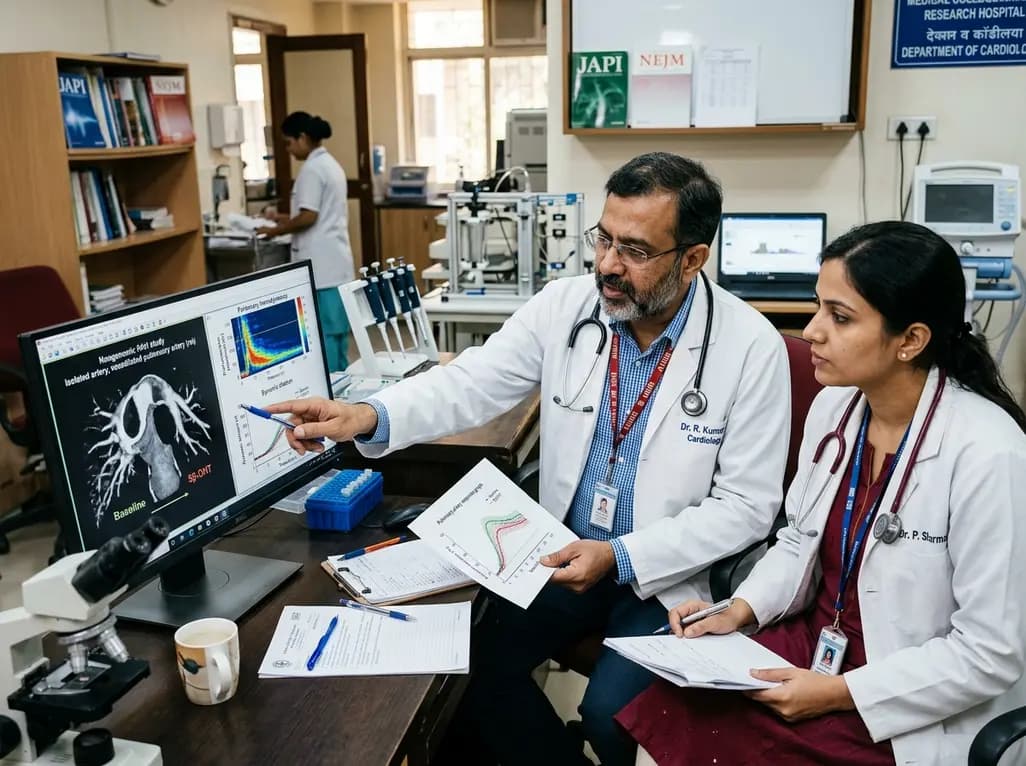
Preclinical findings demonstrate that 5β-dihydrotestosterone induces rapid, nongenomic pulmonary artery vasodilation in male and female rats with greater potency than testosterone. Because it lacks androgenic activity, this metabolite represents a promising lead for pulmonary arterial hypertension therapeutics.
Today

A 34-year-old postpartum woman suffered a pheochromocytoma crisis resulting in cardiac arrest and respiratory failure. Intensivists successfully deployed veno-arteriovenous ECMO to stabilize refractory arrhythmias and differential hypoxemia, bridging her safely to complete tumor resection and full clinical recovery.
Today

India's health ministry has been tasked with investigating coronary stent safety following international regulatory recalls. Explore the clinical implications of stent failure, required post-market surveillance protocols, and actionable vigilance strategies for cardiologists and healthcare facilities across India.
Today
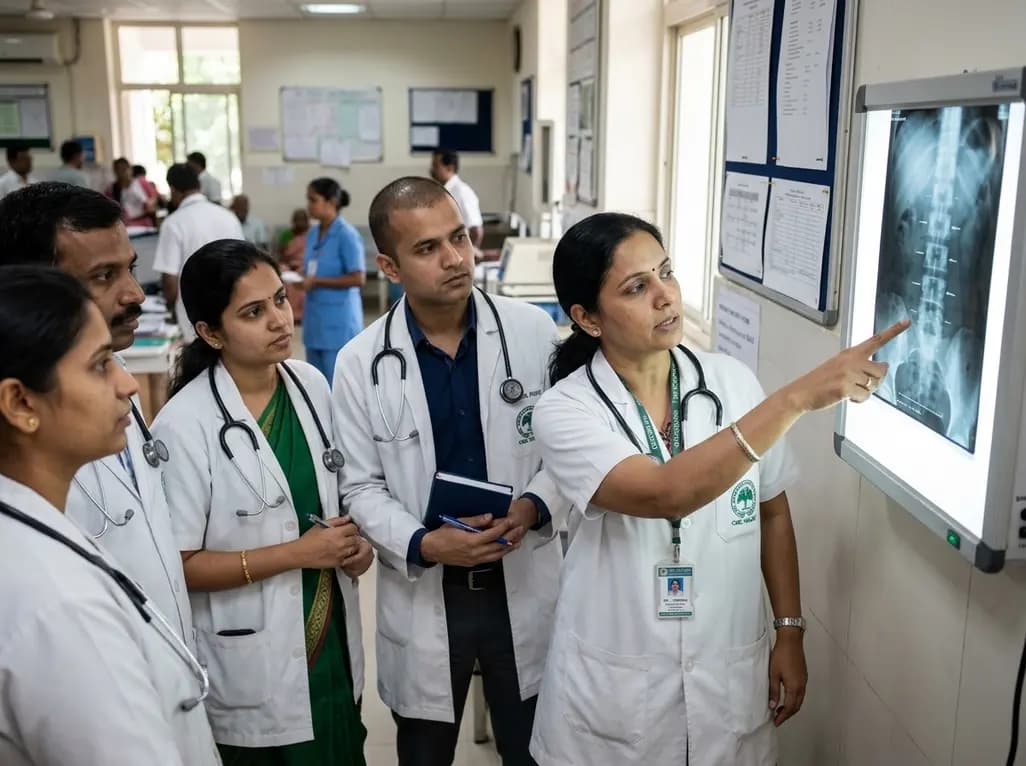
A comprehensive umbrella review of 22 meta-analyses and 286,584 adults reveals that calcium supplementation modestly increases bone mineral density and reduces vertebral fractures, but does not decrease hip or wrist fracture risks.
Today

Calcimimetic therapy for primary hyperparathyroidism can induce profound tumor fibrosis, necrosis, and reduced vascularity. These changes alter ultrasound and 4D-CT imaging and cause dense recurrent laryngeal nerve adhesions, requiring heightened surgical vigilance during definitive parathyroidectomy.
Today
