.webp&w=384&q=75)

Loading, please wait...
Loading, please wait...
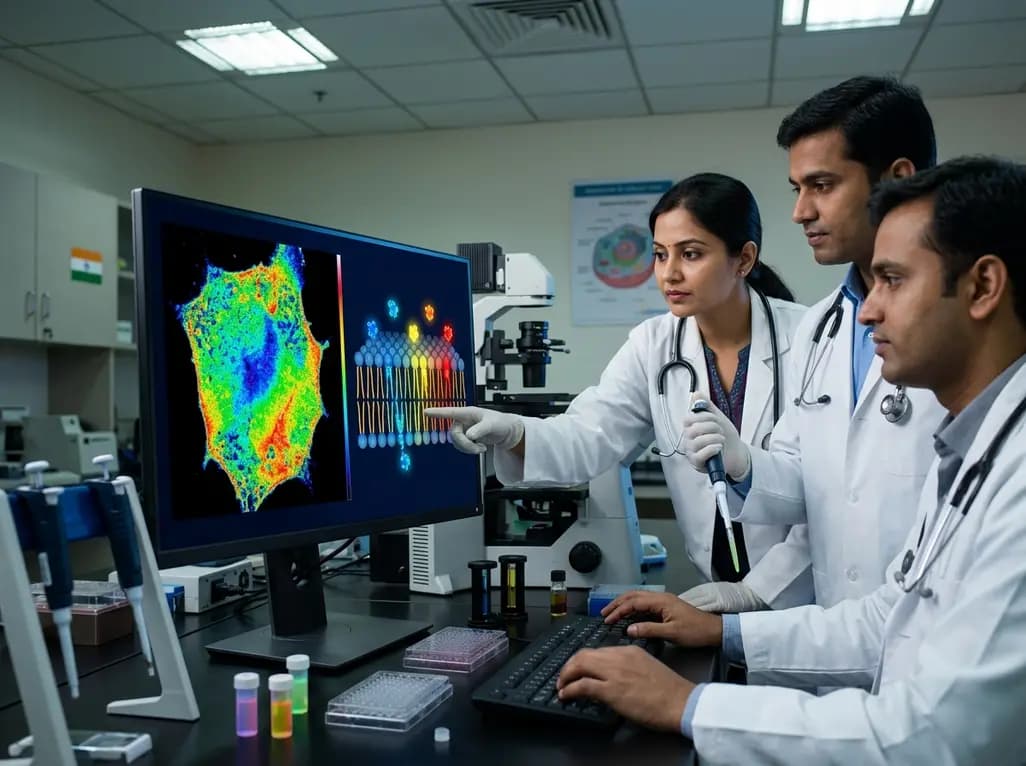
Membrane biophysics plays a pivotal role in maintaining the functional integrity of transmembrane proteins. These proteins are sensitive to the molecular order and lipid composition of the surrounding bilayer. When lipid levels fluctuate during disease states, they can significantly alter pathophysiology. To study these complex environments, researchers utilize membrane biophysics fluorophores that provide real-time data on structural organization. Traditionally, scientists believed different environment-sensitive probes provided equivalent information. However, recent evidence suggests that these dyes actually localize at distinct depths within the membrane, offering a more nuanced view of the lipid environment.
Various probes are designed to detect specific biophysical parameters. For instance, microviscosity-sensitive probes such as TMA-DPH characterize fluidity and motional freedom. In contrast, polarity-sensitive dyes like Laurdan or PY3174 report on water penetration, which is often referred to as hydration. Furthermore, voltage-sensitive fluorophores such as di-8-ANEPPS help quantify the nonrandom alignment of molecular dipoles. Because these properties are intrinsically linked to the arrangement of membrane constituents, choosing the right probe is essential for accurate data collection. Specifically, using multiple membrane biophysics fluorophores allows scientists to visualize the structural organization of membranes at varying depths simultaneously.
Recent experimental studies using cyclodextrin-based complexes to manipulate membrane sterol levels have revealed surprising results. While previous assumptions suggested that all biophysical parameters would change in parallel, researchers found incongruent changes across different fluorophores. Comparative molecular dynamics (MD) simulations confirmed that these discrepancies arise from the distinct membrane localization of each dye. Therefore, a comprehensive investigation of bilayer structures must include a strategic combination of dyes rather than relying on a single marker. This approach provides a clearer understanding of how depth-dependent structural changes influence disease pathogenesis and therapeutic responses.
Environment-sensitive fluorophores are specialized fluorescent molecules that change their emission properties (such as intensity, wavelength, or lifetime) based on the physical properties of their immediate surroundings, such as polarity, viscosity, or electrical potential.
Membrane depth localization is crucial because biological membranes are not uniform. Different probes reside at different levels (e.g., the surface vs. the hydrophobic core), meaning they report on the biophysical state of specific layers within the bilayer.
Alterations in lipid composition, such as cholesterol levels, can change the fluidity and dipole potential of the membrane. These changes can disrupt the function of transmembrane receptors and ion channels, contributing to the development of metabolic, cardiovascular, and neurological disorders.
Disclaimer: This content is for informational and educational purposes only. It is not intended as medical advice or to replace the professional judgment of a healthcare provider. Refer to the latest local and national guidelines for clinical practice.
References
Zakany F et al. The Many Layers of Membrane Biophysics: Environment-Sensitive Fluorophores Report on Structural Organization of Biological Membranes at Various Depths. Anal Chem. 2026 Jun 08. doi: 10.1021/acs.analchem.5c07236. PMID: 42253123.
Klymchenko AS. Solvatochromic and Fluorogenic Dyes as Modern Tools for Fluorescence Microscopy. Acc Chem Res. 2017;50(2):366-375.
Sezgin E et al. Adaptive lipid packing and protein recruitment at the polarities of epithelial cells. FEBS Lett. 2015;589(12):1339-1346.
"
Read summarized clinical updates, watch expert medical content, and earn CME certifications right from your smartphone.
Open your smartphone camera to scan and install.





This article discusses the use of environment-sensitive fluorophores to map the structural organization and biophysical properties of biological membranes....
4 months ago

As monsoon seasons elevate arboviral disease threats, Tamil Nadu has initiated an ICMR-monitored evaluation of the tetravalent dengue vaccine in Tenkasi district. Clinicians emphasize clinical monitoring, public prevention, and high-quality early pediatric care to reduce disease morbidity across endemic regions.
Today

A comparative cohort study evaluates vNOTES vs TLH hysterectomy for benign conditions, demonstrating shorter operative duration, faster return to daily activities, and equivalent female sexual function scores without increased dyspareunia.
Today

Review how tailored exercise programs benefit frail older patients with heart failure. Explore pathophysiological mechanisms, individualized training prescriptions, and strategies to overcome adherence barriers in clinical practice.
Today

This comparative study evaluates posterior labral tears with and without glenohumeral instability, highlighting distinct demographic patterns, MRI underestimation in stable shoulders, and successful arthroscopic repair outcomes.
Today

A clinical study demonstrates that early intervention with tocilizumab, either as monotherapy or bridged with corticosteroids, achieves significant proptosis reduction and resolves active inflammation in treatment-naive thyroid eye disease.
Today
