.webp&w=384&q=75)

Loading, please wait...
Loading, please wait...
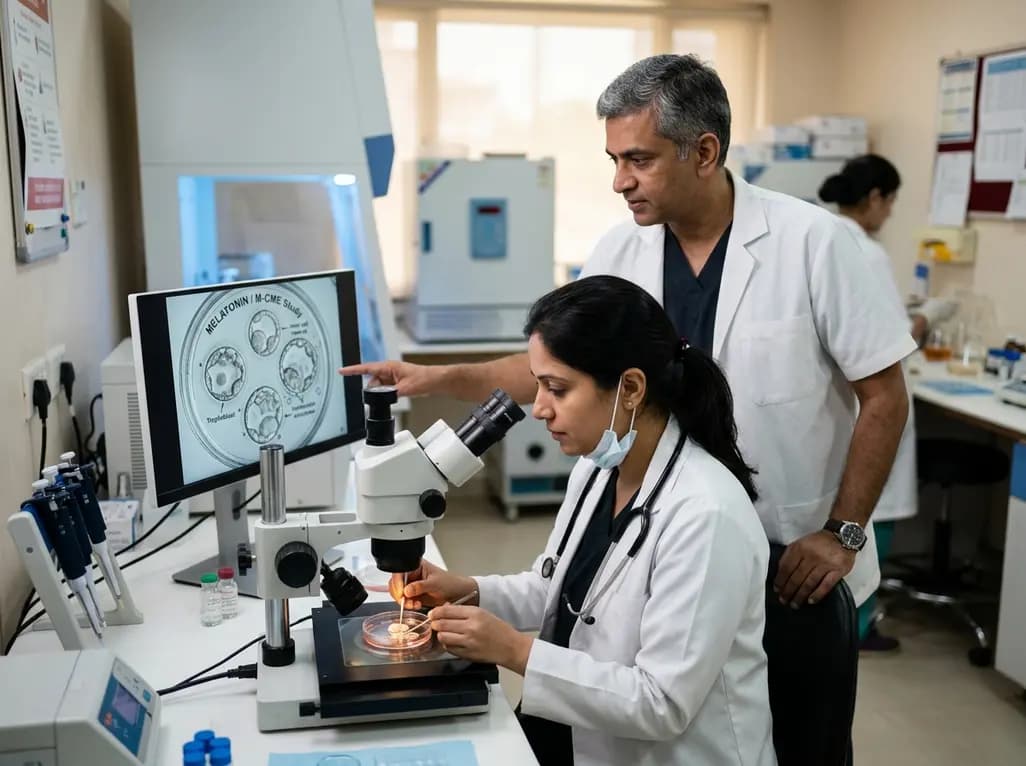
Assisted reproductive technology continues to evolve rapidly, yet suboptimal embryo implantation rates remain a significant clinical hurdle. Emerging molecular evidence demonstrates that the pineal indolamine hormone melatonin acts far beyond its traditional chronobiological pathways. Recent experimental findings emphasize the beneficial role of melatonin in embryo development, shedding new light on cellular trafficking and blastocyst viability during preimplantation stages.
Melatonin functions as a powerful pleiotropic regulator in mammalian reproductive systems. In physiological settings, ovarian follicular fluid contains high concentrations of melatonin, which protect developing gametes against oxidative stress. Furthermore, endogenous melatonin facilitates cellular metabolic balance, prevents premature apoptosis, and regulates essential meiotic progression. When reproductive biologists translate these physiological actions into laboratory protocols, adding melatonin to culture media markedly improves gamete quality. Previous studies confirmed that melatonin optimizes oocyte maturation and early cleavage kinetics across mammalian species. Moreover, research confirms that melatonin supports chromosomal integrity and safeguards mitochondrial membrane potential. Consequently, preimplantation embryos cultured with physiological concentrations of melatonin exhibit superior cleavage velocity, higher cell numbers, and lower fragmentation rates. These combined physiological benefits underline why melatonin in embryo development represents a major therapeutic focus in modern embryology laboratories.
Clathrin-mediated endocytosis serves as a fundamental vesicular transport mechanism responsible for internalizing signaling receptors, nutrients, and extracellular macromolecules. During early embryogenesis, blastomeres undergo rapid morphological remodeling that requires coordinated turnover of plasma membrane components. Previous investigations demonstrated that melatonin promotes human oocyte maturation and developmental competence by stimulating clathrin-mediated endocytosis. Specifically, melatonin enhances the expression of vital endocytic proteins, including clathrin heavy chains and adapter protein complexes. This upregulation diminishes membrane rigidity and accelerates the clearance of inhibitory signal transducers such as cyclic adenosine monophosphate. As a result, embryonic cells maintain dynamic membrane plasticity during sequential cleavage events. Additionally, intact endocytic trafficking facilitates adequate nutrient uptake from the external medium, which sustains cellular energy generation. Therefore, the stimulation of clathrin-dependent vesicle internalization represents an essential mechanistic link through which melatonin regulates early embryonic fitness.
To confirm whether the endocytic benefits of melatonin translate directly to mammalian blastocyst formation, researchers examined in vitro cultured mouse zygotes. Investigators evaluated developmental outcomes after treating mouse embryos with optimal melatonin concentrations, specifically ten to the power of negative nine molar. Simultaneously, the study utilized dynasore, a well-established pharmacological inhibitor that selectively blocks dynamin-dependent endocytosis. The experimental findings revealed that melatonin supplementation significantly increased the blastocyst formation rate compared to standard untreated controls. Furthermore, mouse blastocysts cultured with melatonin demonstrated significantly elevated implantation potential during subsequent transfers. In sharp contrast, zygotes exposed to dynasore exhibited stunted cleavage rates, severely compromised blastocyst hatching, and markedly reduced implantation success. These rigorous experimental results confirm that intact dynamin-dependent endocytosis is indispensable for normal preimplantation progression and blastocyst competence.
The most compelling outcome of the murine study emerged from the co-administration experiments involving both dynasore and melatonin. When researchers co-treated dynasore-inhibited embryos with melatonin, the indolamine successfully counteracted the detrimental blockade of endocytic trafficking. Consequently, melatonin restored blastocyst development and significantly rescued implantation potential in dynasore-exposed cohorts. This remarkable recovery indicates that melatonin activates compensatory molecular cascades that restore membrane trafficking pathways. Moreover, melatonin upregulates structural coat proteins, which bypasses partial chemical inhibition of dynamin. As a result, blastomeres re-establish critical signaling networks necessary for inner cell mass differentiation and trophectoderm functional integrity. Therefore, the capacity of melatonin to reverse chemical endocytic impairment demonstrates that clathrin-mediated endocytosis represents a primary functional pathway mediating melatonin's embryotropic actions.
These laboratory discoveries offer highly relevant insights for reproductive endocrinologists and clinical embryologists managing challenging in vitro fertilization cycles. Currently, assisted reproductive technology laboratories struggle with environmental stressors, such as fluctuating ambient oxygen tension, light exposure, and sub-optimal culture media composition. Such stressors often impair cellular endocytosis and induce free radical accumulation in cultured blastomeres. By incorporating physiological doses of melatonin into human embryo culture systems, reproductive specialists may preserve vesicular dynamics and enhance blastocyst quality. Furthermore, improving blastocyst competence directly correlates with higher clinical pregnancy rates and decreased early embryonic loss. Because mouse and human reproductive systems share conserved endocytic mechanisms, melatonin supplementation represents an accessible, cost-effective strategy to optimize in vitro culture conditions. Consequently, future human clinical trials should systematically examine melatonin supplementation across diverse patient cohorts, particularly those presenting with repeated implantation failure or advanced maternal age.
Melatonin acts as a versatile reproductive regulator that scavenges reactive oxygen species and stimulates clathrin-mediated endocytosis. By reducing membrane rigidity and promoting efficient nutrient internalization, melatonin preserves mitochondrial function, accelerates mitotic cleavage rates, and prevents blastomere apoptosis. Consequently, cultured embryos develop into morphologically superior blastocysts with enhanced implantation capacity and improved viability during assisted reproductive treatments.
Clathrin-mediated endocytosis regulates membrane protein turnover, nutrient uptake, and signal receptor internalization throughout preimplantation embryogenesis. If endocytosis is blocked, blastomeres cannot adequately respond to external survival signals, leading to developmental arrest. Intact endocytic pathways ensure that embryos maintain membrane plasticity, differentiate normal embryonic lineages, and successfully interact with the receptive endometrium during implantation.
Although experimental and preclinical murine models show outstanding results, media supplementation protocols require formal clinical validation before universal routine implementation. Standardized dosing guidelines and prospective human clinical trials must verify long-term efficacy and safety. Nonetheless, existing evidence suggests that melatonin is a promising non-toxic adjunct for optimizing human in vitro culture media in clinical laboratories.
Disclaimer: This content is for informational and educational purposes only. It is not intended to be a substitute for professional medical advice, diagnosis, or treatment. Always seek the advice of your physician or other qualified health provider with any questions you may have regarding a medical condition. Refer to the latest local and national guidelines for clinical practice.
References

Read summarized clinical updates, watch expert medical content, and earn CME certifications right from your smartphone.
Open your smartphone camera to scan and install.





Recent research reveals that melatonin promotes preimplantation embryo development and enhances implantation potential via clathrin-mediated endocytosis. This article explores the mechanistic insights and translational implications for optimizing assisted reproductive technology culture protocols.
last month

With post-monsoon dengue surges threatening South Asian health systems, physicians must refine triage and management. This guide covers vital warning signs, plasma leakage detection, crystalloid titration, and vector containment strategies to prevent mortality during seasonal arboviral epidemics.
Today

Findings from Project Viva indicate that sustained postpartum weight retention, rather than excessive gestational weight gain alone, directly worsens women's mid-life cardiovascular health, degrading blood pressure and glycemic parameters decades after delivery.
Today

A large UK Biobank study reveals that plasma proteomic signatures capture preclinical organ damage and improve multiorgan risk prediction across early CKM syndrome stages 0 to 2 beyond traditional PREVENT clinical models.
Today

A retrospective CBCT study reveals that superior TMJ space asymmetry correlates moderately with occipital condyle-atlas-axis asymmetry in unilateral TMJ osteoarthritis, highlighting an imaging correlate between jaw biomechanics and upper cervical alignment rather than a standalone diagnostic marker.
Today

A Bayesian multilevel meta-analysis reveals that aerobic training combined with moderate carbohydrate restriction modestly lowers HbA1c in type 2 diabetes. However, sparse data and very low certainty leave incremental benefits over exercise or diet alone unproven, highlighting the need for individualized care.
Today
