.webp&w=384&q=75)

Loading, please wait...
Loading, please wait...

Social media platforms increasingly dictate how the public discovers medical facts and wellness recommendations. In particular, the viral consumption of melanoma videos on TikTok illustrates a significant shift toward visual micro-learning for dermatologic conditions. Patients frequently turn to short clips to learn about suspicious moles, sun protection, and skin cancer risks. However, the accuracy of digital health material varies drastically across digital channels. A recent cross-sectional analysis investigated how content creators present malignant melanoma on video-sharing applications. The investigators found that physician-created, educational, and longer videos achieved higher information quality and better audience engagement. Nevertheless, overall standardized quality scores remained low, and comprehensive treatment guidance was frequently absent across the dataset.
Evaluating health-related audiovisual media requires structured instruments to assess scientific reliability and therapeutic accuracy. Researchers evaluated popular clips using the validated DISCERN instrument, which measures the credibility and clarity of medical choices. Most evaluated videos scored poorly on the DISCERN scale, indicating widespread superficiality and omission of vital clinical nuance. Many creators prioritized dramatic visual hooks over balanced scientific explanations. Consequently, basic biological facts appeared without adequate context regarding disease prognosis, histological subtypes, or diagnostic staging. Furthermore, non-expert creators frequently blurred the line between cosmetic skincare recommendations and oncologic prevention strategies. This lack of rigorous validation exposes viewers to confusing or misleading guidance during their health decision journeys. In contrast, videos structured with clear educational intent demonstrated markedly superior scores compared to purely entertainment-focused posts. Educational formats systematically emphasized recognizable warning signs, such as lesion asymmetry and irregular borders. In addition, high-scoring content frequently encouraged viewers to seek formal dermatologic evaluations rather than attempting dangerous self-diagnosis. Therefore, structuring digital posts with an explicit instructional framework directly improves educational quality and patient comprehension across social platforms.
Content originators heavily influence the factual reliability and tone of medical messaging on social media platforms. The cross-sectional analysis revealed distinct differences between physician-generated media and posts uploaded by lay influencers or commercial entities. Board-certified dermatologists and licensed practitioners consistently produced higher-quality content that adhered closely to clinical evidence and published guidelines. Moreover, physician creators routinely highlighted the fundamental ABCDE criteria to help viewers identify atypical cutaneous lesions accurately. Conversely, commercial accounts and general lifestyle influencers frequently emphasized sensational personal narratives or promoted unverified cosmetic remedies. These commercial posts often lacked critical discussions on histopathologic confirmation, professional dermoscopy, or formal biopsies. Interestingly, audiences engaged enthusiastically with qualified medical professionals who communicated directly and transparently. Viewers actively shared and liked physician-led clips that explained complex oncologic concepts in accessible, empathetic terms. However, medical professionals represent only a fraction of active creators in the broader digital dermatology space. To counterbalance commercial noise, dermatologists must expand their digital presence and deliver evidence-based messaging directly to users seeking reliable health guidance online.
Although many videos successfully discussed primary sun protection and self-examination routines, they demonstrated major deficiencies regarding melanoma therapeutics. The study highlighted that detailed treatment guidance was overwhelmingly absent from popular clips across the platform. Creators rarely discussed surgical excision margins, lymph node biopsies, or sentinel node staging protocols during their presentations. Furthermore, advanced therapeutic options, such as targeted BRAF inhibitors and immune checkpoint inhibitors, were virtually nonexistent in mainstream discussions. This profound omission leaves patients with an incomplete perspective on modern skin cancer management and multidisciplinary oncology care. When creators addressed management, they often oversimplified interventions or conflated minor cosmetic mole removal with rigorous surgical oncology protocols. Consequently, patients who rely solely on social media may underestimate the complexity and severity of malignant disease trajectories. Healthcare providers must proactively address these therapeutic knowledge gaps in both clinical consultations and online public messaging. Clinicians should specifically create digital assets that explain the entire continuum of care, from initial dermatoscopic evaluation to systemic therapies for advanced metastatic stages.
Digital platform algorithms inevitably prioritize high viewer interaction, watch time, and rapid algorithmic sharing over scientific validity. In many digital health domains, high view counts often correlate negatively with clinical accuracy, as sensationalism drives viral engagement. Interestingly, this cross-sectional study observed that longer, educational melanoma videos successfully captured robust audience engagement without compromising informational integrity. When physicians provided clear, detailed explanations in extended clips, viewers responded positively through elevated likes, comments, and shares. This notable finding challenges the conventional assumption that social media audiences only consume superficial, ten-second clips. In-depth content allows creators to explain the subtle distinctions between benign nevi and malignant lesions thoroughly. Moreover, extended formats provide adequate time to discuss diverse clinical presentations, including subungual melanoma and lesions on skin of color. Healthcare professionals can leverage these algorithmic engagement patterns by producing structured, multi-part educational video series. By replacing superficial soundbites with substantive clinical content, clinicians can cultivate an informed and discerning digital public while expanding their educational reach.
Dermatologists and oncologists possess a unique opportunity to lead digital health literacy initiatives and counter pervasive online misinformation. Clinicians should adopt modern multimedia techniques to communicate essential preventive behaviors, including photoprotection, regular self-skin examinations, and professional dermatoscopy. In addition, medical societies should encourage formal digital communication training for dermatology residents and practicing physicians. Healthcare providers can create concise video vignettes that explain how to differentiate common benign keratoses from dangerous melanoma lesions. Furthermore, doctors should actively address public anxieties regarding skin biopsies and oncologic staging through empathetic, evidence-based storytelling. When designing educational materials, clinicians must incorporate diverse skin phototypes to ensure accurate representation across all patient demographics. By establishing credible digital channels, medical professionals can bridge the communication divide between clinic visits and daily online media consumption. In addition, collaborative campaigns between medical organizations and patient advocacy groups can amplify verified medical knowledge. Ultimately, proactive physician engagement on social video networks elevates the standard of public health information, empowers patients, and accelerates early detection for life-threatening skin cancers.
The DISCERN instrument is a standardized questionnaire designed to evaluate the quality and reliability of health information. It systematically assesses treatment choices, scientific evidence, factual clarity, and the presentation of potential clinical risks and benefits. In social media research, DISCERN helps investigators quantify whether educational videos provide balanced, trustworthy, and actionable medical guidance for patient decision-making and disease management.
Educational melanoma clips generate higher engagement because users actively seek actionable knowledge regarding suspicious skin lesions and skin cancer prevention. When verified physicians present well-structured, clear explanations, viewers perceive the material as credible and valuable. This established trust encourages users to comment, bookmark, and share videos with family members, thereby boosting algorithmic distribution and meaningful audience interaction across video-sharing networks.
Most online skin cancer videos fail to describe surgical excision margins, sentinel lymph node biopsies, and formal oncologic staging pathways. Furthermore, advanced therapeutic innovations—such as targeted molecular therapies and immune checkpoint immunotherapy—are rarely discussed in viral clips. This significant omission leaves viewers uninformed about modern systemic treatments, follow-up monitoring, and multidisciplinary oncology management strategies required for advanced disease stages.
Disclaimer: This content is for informational and educational purposes only and does not constitute medical advice, diagnosis, or treatment. Always seek the advice of your physician or other qualified health provider with any questions you may have regarding a medical condition. Refer to the latest local and national guidelines for clinical practice.
References

Read summarized clinical updates, watch expert medical content, and earn CME certifications right from your smartphone.
Open your smartphone camera to scan and install.





A cross-sectional study evaluates popular melanoma videos on TikTok, revealing that physician-led and longer content enhances educational quality and viewer engagement, despite persistent treatment gaps.
last month

The CARE study protocol introduces a multilingual, RAG-powered conversational interface designed by IIT Bombay to support tobacco cessation in India. Evaluating feasibility and behavioral outcomes across three cessation centers, this digital health initiative aims to enhance quitting support for diverse users.
Today
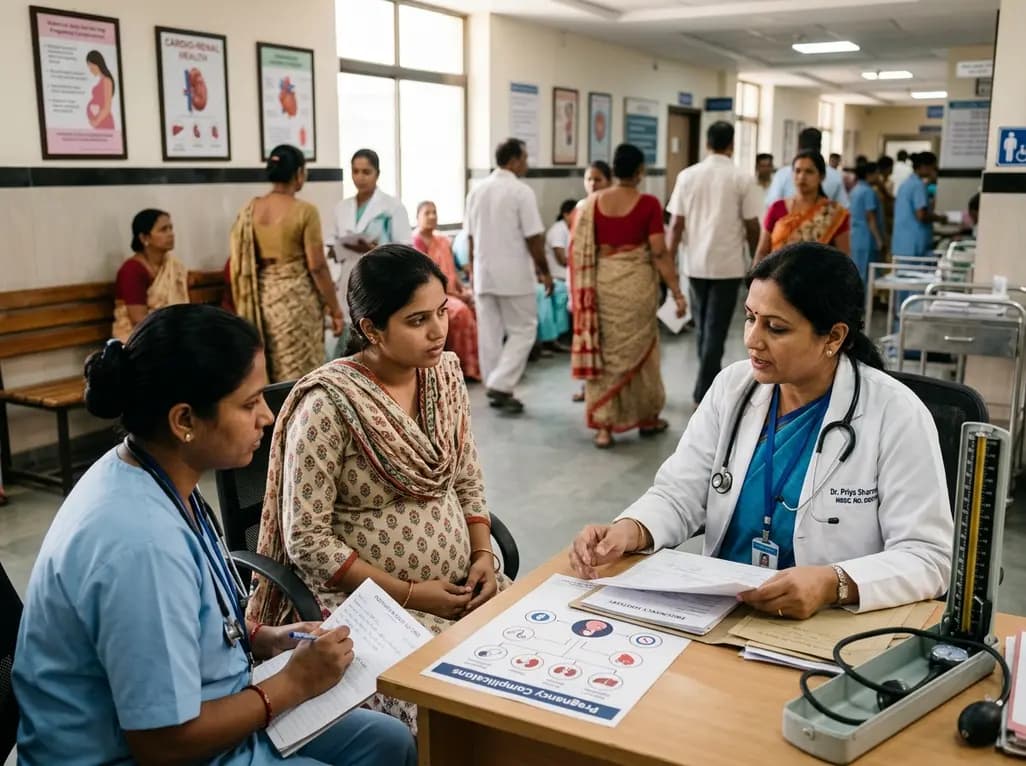
A large UK cohort study of 1.4 million women shows that pregnancy complications, including gestational diabetes, hypertension, and preterm birth, substantially raise long-term risks for hypertension, chronic kidney disease, type 2 diabetes, and cardiovascular events, highlighting early postpartum intervention needs.
Today
A cross-sectional study reveals that hypertension knowledge, illness perceptions, depression, and substance use significantly predict self-care behaviors. Addressing mental health and cognitive beliefs in primary care is crucial for optimal blood pressure control and cardiovascular disease prevention.
Today

This clinical overview examines recent advancements in lumbar disc herniation surgery, comparing microscopic and full-endoscopic discectomy while highlighting biportal techniques and emerging motion-preserving innovations for spine specialists.
Today

Small interfering RNA (siRNA) therapeutics harness RNA interference to degrade disease-causing messenger RNA. By delivering hepatocyte-targeted, durable gene silencing, agents targeting PCSK9, LPA, and angiotensinogen offer potent cardiovascular risk reduction with infrequent, biannual dosing schedules.
Today
