.webp&w=384&q=75)

Loading, please wait...
Loading, please wait...

Medicine supply shortages represent a growing concern as geopolitical instability continues in the Middle East. While Britain currently maintains adequate stocks, trade groups warn that the situation remains precarious. Consequently, healthcare providers must monitor supply chain developments closely. Shipments are still flowing, but the underlying economic pressure on manufacturers is mounting rapidly.
Furthermore, soaring freight costs are squeezing the margins of generic drugmakers. These companies often operate on thin profit margins, especially for low-cost medicines. Therefore, persistent shipping disruptions could force manufacturers to cease production. If these costs remain high, we might see significant price rises or supply failures soon. Mark Samuels of Medicines UK noted that stockpiles provide only a temporary buffer. Consequently, the industry is one step away from a major crisis.
Additionally, biosimilar medicines face unique risks because they require complex manufacturing processes. Unlike standard oral drugs, these treatments have longer lead times. Hence, any disruption in international shipping routes impacts them more severely. Many generic drugs cost less than one pound per month. Thus, even small transport cost increases can make them loss-making for suppliers. This economic reality threatens the availability of essential treatments for cancer and other critical conditions.
Q1: Why are generic medicines more at risk than patented ones?
Generic medicines have much lower profit margins. As a result, they cannot easily absorb high freight costs compared to expensive patented drugs.
Q2: How does the conflict affect biosimilar treatments?
Biosimilars involve complex manufacturing and longer lead times. Consequently, shipping reroutes and delays impact their availability more than simple oral medications.
Q3: What could happen if freight costs do not stabilize?
Healthcare systems might face a mixture of significant price increases and total supply failures for certain essential drugs.
Disclaimer: This content is for informational and educational purposes only. It does not constitute medical advice or replace professional judgment. Refer to the latest local and national guidelines for clinical practice.
References

Read summarized clinical updates, watch expert medical content, and earn CME certifications right from your smartphone.
Open your smartphone camera to scan and install.





Rising freight costs from the Middle East conflict threaten generic drug supplies. Medicines UK warns of potential shortages and price hikes for the NHS....
7 months ago
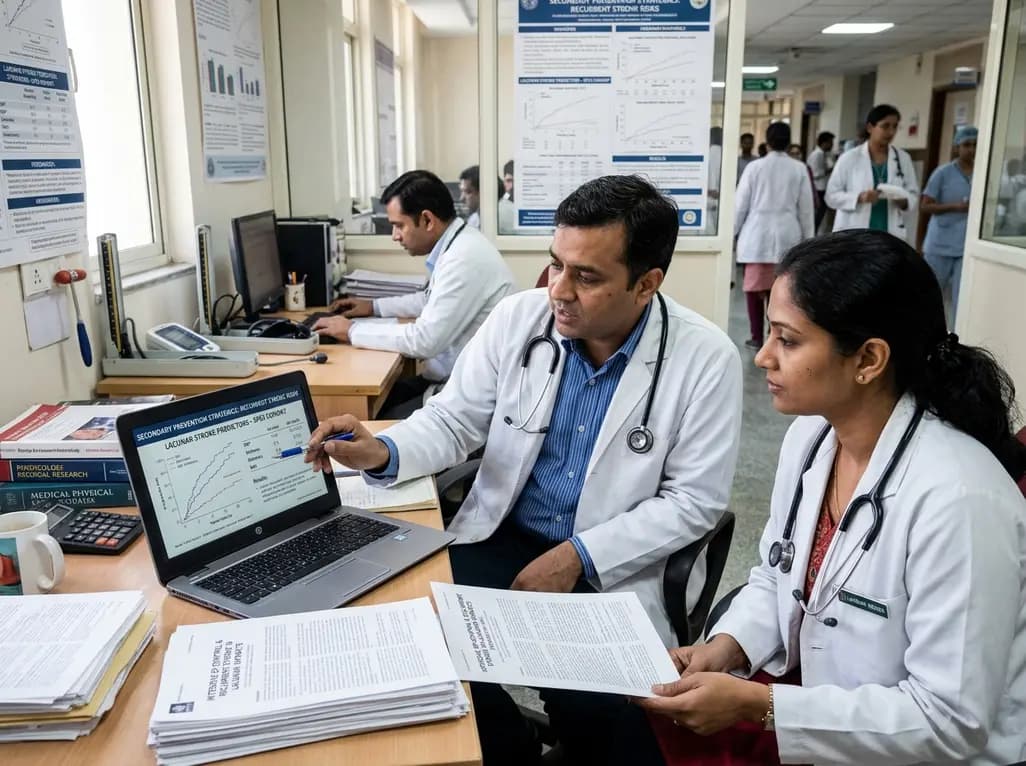
Explore vital recurrent stroke predictors in lacunar stroke patients managed with intensive blood pressure lowering. This analysis examines trial findings from SPS3 to uncover residual vascular risks, metabolic factors, and targeted secondary prevention strategies for high-risk neurological patients.
Today

A comprehensive scoping review synthesises evidence linking prenatal maternal mental health to long-term offspring neurodevelopment, evaluating neuroendocrine, inflammatory, and epigenetic pathways while highlighting clinical screening and future research priorities.
Today

The Directorate General of Health Services directs Indian states to halt the hazardous reuse and reprocessing of single-use medical devices. Discover regulatory implications under the Drugs and Cosmetics Act, critical infection risks, legal liabilities, and operational changes required across clinical specialties.
Today
Mitochondria-targeted nanoparticles self-assembled from EGCG and L-glutamic acid effectively restore mitochondrial homeostasis, suppress synovial inflammation, and attenuate chondrocyte senescence in osteoarthritis, offering a promising disease-modifying nanotherapy.
Today

India is advancing preventive healthcare by integrating genomics, artificial intelligence, and quantum technologies. With the SANGAM programme sequencing one million Indian genomes, clinicians can unlock personalized therapies, detect cardiometabolic risks early, and curb the burden of diabetes and heart disease.
Today
