.webp&w=384&q=75)

Loading, please wait...
Loading, please wait...
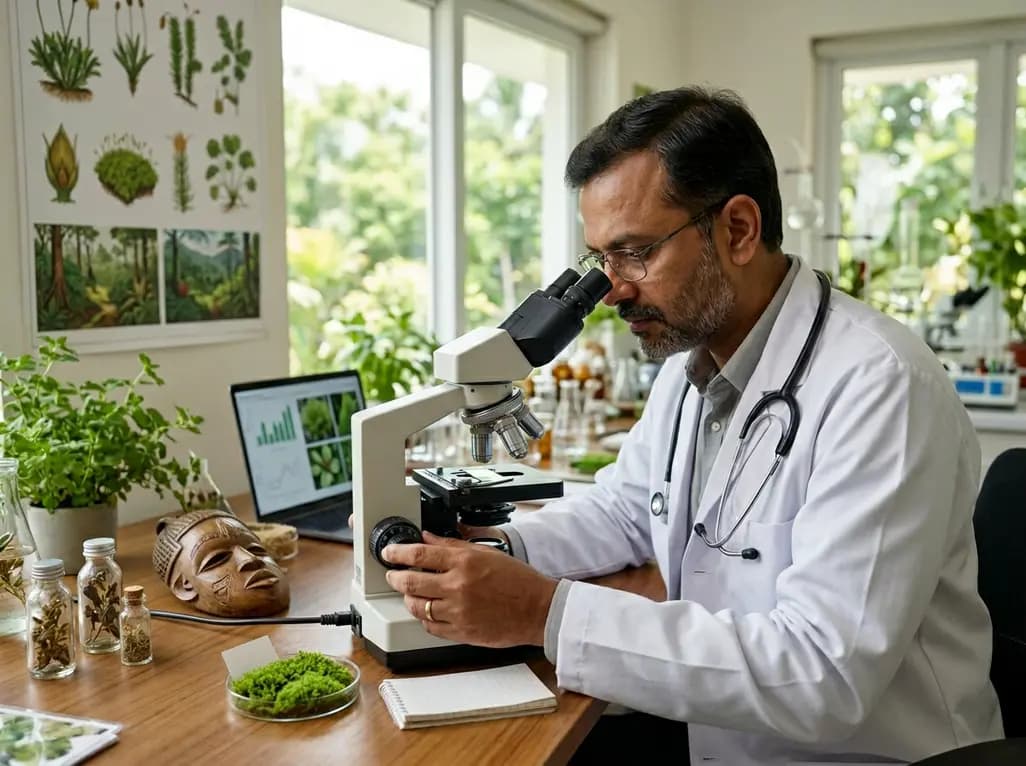
Research into the medicinal uses of bryophytes in the Benin Republic has recently revealed the significant ethnobotanical value of these overlooked plants. Although they are ecologically vital, bryophytes remain understudied in Africa. This pioneering study provides the first comprehensive assessment of traditional knowledge, usage patterns, and conservation needs within the region. Consequently, the findings offer a crucial baseline for sustainable management and pharmaceutical research.
Specifically, the researchers conducted semi-structured interviews with 637 participants from fifteen sociolinguistic groups. These groups span humid, sub-humid, and semi-arid zones. Moreover, the study utilized participatory ranking to evaluate the depth of local knowledge. Thus, the team identified sixteen different species. Interestingly, twelve of these species have documented traditional applications. Furthermore, knowledge levels vary significantly based on age, ethnicity, and occupation. Elders and traditional healers typically hold the most extensive information regarding these plants. Therefore, preserving this oral history is essential for future generations.
Medicinal applications remain the most predominant use for these species. In addition, Philonotis africana emerged as the most culturally important taxon. Consequently, many communities rely on it for various health benefits. However, species diversity and utilization patterns decline as one moves from humid to semi-arid regions. This trend aligns perfectly with the ecological apparency hypothesis. Because these plants are more visible in wetter climates, people use them more frequently there. Furthermore, local vernacular names often reflect the specific habitats where these mosses grow.
Unfortunately, several factors threaten these valuable resources. Specifically, agricultural expansion and deforestation are destroying humid microhabitats. Therefore, the study proposes several conservation measures. These include the establishment of protected areas and the reduction of forest clearing. Additionally, researchers emphasize the need for further clinical studies on Philonotis africana. Such research could validate its environmental and medicinal benefits. Finally, sustainable management practices must integrate traditional knowledge with modern conservation strategies to ensure the survival of these species.
Communities primarily use bryophytes for treating various ailments, with Philonotis africana being the most prominent species for traditional healing practices involving fever and skin conditions.
Knowledge and species diversity are higher in humid zones compared to semi-arid areas, as these plants are more abundant and visible in wetter environments.
Disclaimer: This content is for informational and educational purposes only. It is not intended to be a substitute for professional medical advice, diagnosis, or treatment. Always seek the advice of your physician or other qualified health provider with any questions you may have regarding a medical condition. Refer to the latest local and national guidelines for clinical practice.
References

Read summarized clinical updates, watch expert medical content, and earn CME certifications right from your smartphone.
Open your smartphone camera to scan and install.





A new ethnobotanical study in Benin reveals the untapped medicinal potential of bryophytes. Highlighting Philonotis africana, researchers document traditional uses across climatic zones, while identifying deforestation as a key threat to these ecologically and socioeconomically important species.
4 months ago

Novel diimide and hydrazone scaffolds, particularly compound #C4, synergistically reactivate latent HIV-1 when combined with JQ1 or PKC activators. Demonstrating donor-matched proviral transcription ex vivo and non-canonical signaling, these findings advance shock and kill strategies toward reservoir eradication.
Today

A cross-sectional study reveals that maternal RSV vaccination coverage reached only 43.7% in Argentina, with maternal vaccine knowledge being the sole independent predictor of uptake. Clinicians play a crucial role in eliminating informational and structural barriers to optimize infant health.
Today

Review how tailored exercise programs benefit frail older patients with heart failure. Explore pathophysiological mechanisms, individualized training prescriptions, and strategies to overcome adherence barriers in clinical practice.
Yesterday

This comparative study evaluates posterior labral tears with and without glenohumeral instability, highlighting distinct demographic patterns, MRI underestimation in stable shoulders, and successful arthroscopic repair outcomes.
Yesterday

A clinical study demonstrates that early intervention with tocilizumab, either as monotherapy or bridged with corticosteroids, achieves significant proptosis reduction and resolves active inflammation in treatment-naive thyroid eye disease.
Yesterday
