

Loading, please wait...
Loading, please wait...

Emergency departments represent high-stress clinical environments where rapid decisions directly influence patient survival. Within these unpredictable units, medication administration poses substantial challenges to healthcare providers. A recent multicenter investigation examined how high acuity and clinical workloads influence clinical outcomes. Crucially, the researchers evaluated the systemic relationship between clinical workload, professional ethics, and voluntary medication error reporting among emergency nurses. While complex workflows naturally heighten clinical vulnerability, ethical awareness plays an essential protective role in patient safety. Consequently, healthcare leaders must evaluate these interconnected dynamics to build robust clinical governance models. When clinicians confront unpredictable clinical burdens, systematic error tracking becomes essential for preventing adverse drug events. Therefore, evaluating human factors alongside ethical culture provides a transformative framework for institutional safety.
Emergency departments operate under relentless operational pressures, characterized by rapid patient turnover and severe time limitations. Under these conditions, nurses routinely manage volatile patient conditions alongside multifaceted treatment protocols. The study revealed that care complexity exhibits a statistically significant positive association with error frequency. Specifically, heightened task fragmentation and chaotic emergency environments directly amplify the probability of medication discrepancies. Furthermore, severe patient acuity requires frequent interruptions and rapid cognitive shifts. These frequent interruptions compromise clinical focus during critical medication preparation and administration phases. In addition, when emergency nurses juggle multiple critically ill patients simultaneously, mechanical safeguards can easily break down. Therefore, organizational leaders must acknowledge that errors do not simply stem from personal negligence. Instead, elevated care complexity constitutes a systemic threat that strains human performance capacity. Consequently, healthcare organizations must implement structural interventions to reduce unmanageable cognitive burdens. By streamlining clinical handovers and standardizing drug administration checklists, hospitals can effectively mitigate these operational vulnerabilities. Ultimately, resolving systemic complexity forms the indispensable initial defense in shielding vulnerable emergency patients.
Although operational complexity directly fuels the occurrence of mistakes, it does not directly determine whether clinicians report them. Instead, the study demonstrated that moral sensitivity serves as an indispensable mediating bridge between workplace pressure and transparent disclosure. Moral sensitivity represents a clinician's ability to recognize ethical issues, understand their clinical repercussions, and assume personal accountability. Interestingly, the direct statistical pathway between care complexity and incident reporting remained non-significant. However, the indirect statistical pathway operating through moral sensitivity proved highly significant. Consequently, nurses who cultivate robust ethical awareness demonstrate a far higher likelihood of disclosing unintended oversights. Furthermore, moral sensitivity empowers bedside clinicians to prioritize patient welfare over institutional retribution or personal vulnerability. When nurses possess this ethical clarity, they perceive incident documentation as a constructive learning opportunity rather than a punitive admission. In contrast, low moral sensitivity often allows workplace chaos to normalize silence. Therefore, hospital leaders must invest in ethical development alongside technical competencies. By actively nurturing moral sensitivity through reflective clinical debriefs, healthcare organizations can transform latent errors into transparent learning cycles. As a result, ethical commitment reinforces clinical transparency across acute departments.
Robust medication error reporting remains the cornerstone of modern clinical governance and institutional risk reduction. Without transparent incident reporting, healthcare organizations cannot identify systemic vulnerabilities or implement targeted preventive remedies. However, significant structural and psychological barriers frequently impede honest incident logging. For instance, fear of punitive disciplinary actions, loss of professional standing, and peer condemnation often enforce clinical silence. Furthermore, prolonged operational fatigue discourages busy clinicians from completing tedious incident documentation workflows. Nevertheless, the recent findings emphasize that moral sensitivity successfully counterbalances these formidable disincentives. Ethical clinicians actively push through administrative burdens because they recognize that unreported errors inevitably recur. Additionally, establishing a truly non-punitive reporting culture amplifies this ethical impulse. When hospital administrators replace blame with collaborative root-cause analyses, staff members report errors with greater confidence. Moreover, digital incident reporting platforms that permit rapid, anonymous, or blame-free submissions significantly streamline the reporting process. Thus, combining moral empowerment with practical reporting tools creates an environment where patient safety always takes precedence over defensive concealment. In this manner, healthcare facilities turn acute mistakes into lasting institutional protections.
The investigation highlighted fascinating moderation effects driven by nursing employment arrangements and cumulative clinical experience. Notably, contractual nurses demonstrated a significantly higher propensity to report medication incidents compared to their permanent peers. At first glance, this observation may seem counterintuitive given the inherent job insecurity of temporary contracts. However, contractual staff often adhere rigorously to formal standard operating procedures to safeguard their professional standing. Furthermore, contractual nurses may possess greater vigilance regarding protocol compliance because they navigate unfamiliar clinical settings. Conversely, permanent staff members sometimes succumb to unit-level cultural norms that downplay minor medication discrepancies. Additionally, the study established that clinical experience strongly moderates error occurrence and reporting patterns. Junior clinicians face steep learning curves, making them particularly vulnerable to high care complexity. In contrast, seasoned emergency nurses leverage extensive clinical acumen to navigate chaotic resuscitations safely. Nevertheless, without continuous ethical engagement, experienced staff can develop dangerous complacency regarding routine protocols. Therefore, clinical administrators must design targeted onboarding and safety supervision tailored to contract status and experience levels. By addressing these demographic variations, hospital leadership can foster uniform safety across multidisciplinary teams.
These empirical findings carry direct relevance for emergency departments and intensive care units across India. Indian tertiary healthcare facilities routinely confront intense patient overcrowding, severe nurse-to-patient staffing imbalances, and exceptionally high clinical complexity. Under such acute constraints, National Accreditation Board for Hospitals & Healthcare Providers standards mandate stringent medication safety practices. However, relying solely on policy mandates without addressing clinical workload or ethical support rarely succeeds. Therefore, Indian healthcare leaders must pursue a dual-track strategy combining workflow re-engineering with active moral empowerment. First, hospitals should optimize nurse-to-patient staffing ratios in emergency triage and resuscitation zones to curb excessive care complexity. Second, clinical departments must establish protected medication preparation zones to reduce dangerous interruptions. Additionally, emergency departments should integrate scenario-based ethical training into continuing nursing education programs. These educational modules should emphasize open disclosure, patient advocacy, and constructive incident debriefing. Moreover, departmental leadership must actively eliminate punitive reprisals against staff who report unintentional slips. Consequently, emergency departments can build resilient safety climates that protect both clinical staff and vulnerable patients. Ultimately, combining human-centered engineering with ethical empowerment safeguards clinical excellence across acute healthcare settings.
Care complexity substantially elevates medication error rates by increasing task fragmentation, clinical interruptions, and patient acuity within dynamic emergency settings. When clinicians manage multiple unstable patients simultaneously, cognitive overload impairs attention during drug calculations, preparation, and administration. Furthermore, rapid turnover and frequent emergency admissions exacerbate operational stress. Consequently, systemic workload strain overwhelms individual vigilance. As a result, minor cognitive oversights turn into serious medication errors unless robust structural safeguards protect bedside providers.
Moral sensitivity enables healthcare professionals to recognize ethical obligations, foresee potential patient harms, and prioritize accountability over personal anxiety. While fear of punitive discipline encourages defensive silence, morally sensitive clinicians view transparent reporting as an indispensable ethical duty. Moreover, they understand that systematic disclosure exposes organizational vulnerabilities, ultimately safeguarding future patients. Consequently, heightened ethical awareness transforms clinical error reporting from a feared disciplinary threat into an essential mechanism for collective learning.
Hospitals must replace punitive disciplinary cultures with open, just-culture frameworks that emphasize systemic analysis over personal blame. Healthcare administrators should introduce intuitive, anonymous digital incident reporting software to reduce administrative burdens during demanding shifts. Additionally, departmental leaders must conduct regular, collaborative root-cause debriefings that acknowledge transparent reporting as a clinical virtue. Furthermore, leadership should share documented safety improvements resulting from incident disclosures, clearly reassuring frontline staff that reporting drives tangible clinical progress.
Disclaimer: This content is for informational and educational purposes only. It is not intended to be a substitute for professional medical advice, diagnosis, or treatment. Always seek the advice of your physician or other qualified health provider with any questions you may have regarding a medical condition. Never disregard professional medical advice or delay in seeking it because of something you have read here. Refer to the latest local and national guidelines for clinical practice.
References

Read summarized clinical updates, watch expert medical content, and earn CME certifications right from your smartphone.
Open your smartphone camera to scan and install.





A multicenter cross-sectional study reveals that care complexity fuels medication errors in emergency departments, while moral sensitivity drives voluntary error reporting. Discover why workflow restructuring and ethical empowerment are crucial for emergency clinician safety cultures.
Today

Central chronotropic incompetence is an underrecognized sequela of rhombencephalitis causing exertional dyspnea despite normal resting cardiac function. Cardiopulmonary exercise testing unmasks this heart-brain uncoupling, guiding rate-responsive pacing and targeted rehabilitation.
Today

A landmark study reveals that lipid-rich malignant ascites alters the T-cell metabolic transcriptome, causing cholesterol efflux and impaired fatty acid oxidation. This suppresses TCR signalling and blocks BiTE immunotherapy, while lipid depletion restores antitumour cytotoxicity in ovarian cancer.
Today

A registry study of 4,989 patients evaluates transvenous lead extraction for right-sided cardiac devices. Despite longer dwell times and older leads, right-sided extractions achieve high procedural success and comparable safety to left-sided approaches.
Today
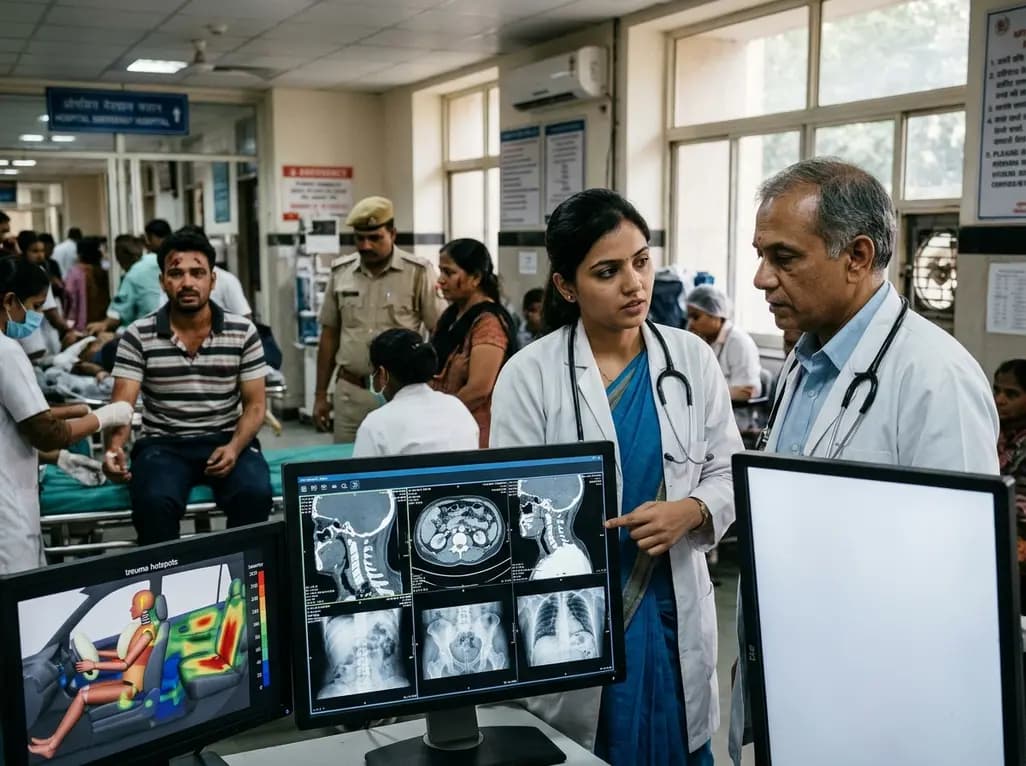
Recent crash analyses demonstrate significant variations in traffic injury severity across vehicle seating positions. Electric vehicle passengers face disproportionately higher trauma risks than drivers, particularly during airbag deployments, demanding adapted emergency assessment and clinical vigilance.
Today

Understand the causal role of Lipoprotein(a) in cardiovascular disease, why international guidelines recommend once-in-a-lifetime molar testing, and the clinical implications of recent phase 3 RNA outcome trials.
Today
