.webp&w=384&q=75)

Loading, please wait...
Loading, please wait...
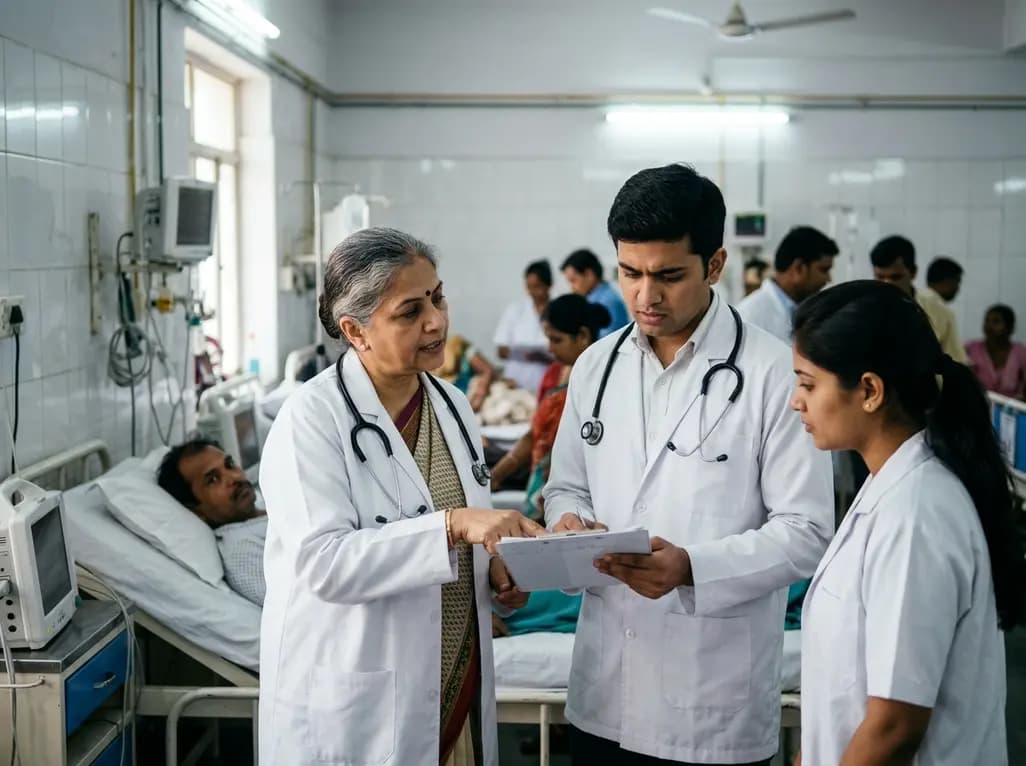
The transition from a medical student to a resident-physician is one of the most demanding phases in a doctor's professional journey. Achieving medical residency preparedness is essential for ensuring that new interns can provide safe and effective care from day one. Recently, a significant national study conducted by Santen and colleagues explored how well medical schools are preparing their graduates for this shift. This research specifically focused on the postgraduate year 1 (PGY-1) stage, where residents are assessed on various clinical and professional milestones. Consequently, the findings provide a stark look at the prevalence of graduates who are rated as not yet having completed basic entry-level competencies. For Indian medical students and graduates looking toward international training, these insights are particularly valuable. Understanding the benchmarks used in systems like the Accreditation Council for Graduate Medical Education (ACGME) can help applicants better prepare for the rigors of global residency programs. Moreover, the study sheds light on the systemic challenges that influence why certain graduates may struggle more than others during their initial months of training.
To evaluate the progress of trainees, residency programs in the United States utilize the ACGME Milestones 2.0 Assessment System. This framework allows program directors to track the developmental trajectory of residents across various subcompetencies, such as patient care and medical knowledge. Importantly, for an incoming intern, the expectation is to have achieved at least Level 1 competency. If a resident is rated as "not yet completed Level 1," it indicates a significant lack of medical residency preparedness and highlights a gap in their undergraduate medical training. Therefore, these ratings serve as an early warning system for programs to provide additional support and supervision. The Milestones are not merely bureaucratic hurdles; they represent the essential skills and behaviors required for supervised clinical practice. Furthermore, these assessments are reported semi-annually, providing a longitudinal view of how quickly a resident adapts to their new environment. By analyzing these data points on a national scale, educators can identify which medical school curricula are most effective at producing "residency-ready" graduates and where systemic improvements are most urgently needed.
The research by Santen and colleagues highlights notable differences in readiness based on the type of medical school from which a graduate originates. The study compared graduates from US MD-granting schools, US DO-granting schools, and International Medical Graduates (IMGs), including those from Caribbean schools. Interestingly, the data revealed that Caribbean and other IMGs were significantly more likely to be rated as not yet completing Level 1 milestones at midyear compared to their US MD counterparts. For instance, in Family Medicine, 27% of Caribbean IMGs were rated as underprepared at midyear, while only 18% of US MD graduates faced similar ratings. This disparity suggests that different educational environments may offer varying levels of clinical exposure and hands-on training. Additionally, it raises questions about the "readiness gap" that IMGs must bridge when entering a new healthcare system. However, it is also important to consider that these ratings may reflect the challenges of acclimating to a different clinical culture rather than a lack of foundational knowledge alone. These findings underscore the importance of targeted orientation programs for graduates from diverse backgrounds.
The prevalence of readiness issues is not uniform across all medical specialties. Medical residency preparedness varies significantly whether a resident enters Internal Medicine, Surgery, Pediatrics, or Family Medicine. According to the study results, Family Medicine residents exhibited some of the highest rates of "not yet completed Level 1" status at the midyear mark. Specifically, significant differences were found when comparing US MD graduates to Caribbean and other IMGs across all four primary specialties analyzed. In Surgery and Internal Medicine, the gap between US graduates and IMGs remained a point of concern for program directors. Furthermore, the complexity of the specialty itself may dictate how quickly a resident reaches initial competency levels. For example, surgical residents must master both clinical judgment and technical skills, which can lead to different assessment trajectories than those in purely cognitive specialties. Consequently, these specialty-specific trends indicate that some fields may require more robust introductory "boot camps" to ensure all interns reach the necessary baseline for safe practice. Identifying these patterns allows for the creation of tailored educational interventions that address the specific needs of each discipline.
Identifying that an intern is not yet ready is only the first step; the more critical task is addressing the root causes of these readiness gaps. Many factors contribute to a lack of medical residency preparedness, ranging from limited clinical rotations during the final year of medical school to a lack of structured feedback. Transitioning from the role of a student observer to a primary provider involves a steep learning curve that requires emotional and professional support. Moreover, the study found that while many residents who were underprepared at midyear eventually caught up by the end of the year, a small percentage remained behind. This suggests that while residency programs are generally effective at remediation, some graduates require more intensive longitudinal coaching. Additionally, medical schools can play a proactive role by implementing residency preparation courses (RPCs) that simulate the demands of the intern year. By focusing on high-stakes tasks like hand-off communication, urgent patient management, and time management, schools can significantly boost the confidence and competence of their graduates. Ultimately, a collaborative effort between undergraduate and graduate medical education is needed to bridge the current divide.
To improve the overall landscape of medical residency preparedness, medical educators are looking toward more integrated training models. This involves strengthening the final year of medical school to ensure students are not just "matching" into residency but are truly ready to function as interns. Specifically, programs that emphasize competency-based medical education (CBME) are showing promise in identifying and supporting struggling learners earlier. In India, where the National Medical Commission (NMC) has introduced a CBME-based curriculum, these findings resonate deeply. The goal is to move away from purely exam-oriented learning toward a system that prioritizes observable clinical skills. Furthermore, residency programs can benefit from standardized onboarding processes that account for the diverse educational backgrounds of their interns. Providing early, low-stakes assessments can help residents identify their own weaknesses without the fear of negative formal evaluations. As the healthcare landscape becomes more complex, the need for physicians who are ready on day one becomes even more vital. By utilizing national data to inform policy and curriculum changes, the medical community can ensure a smoother and safer transition for the next generation of doctors.
Preparedness ensures that interns possess the fundamental skills to manage acute clinical situations and perform safe hand-offs. When a resident lacks basic Level 1 competencies, the risk of medical errors increases, potentially compromising patient care. Programs use these milestone assessments to identify which residents require closer supervision. Consequently, ensuring readiness on day one is a vital safeguard that protects patients while allowing new doctors to learn within a supportive framework.
Research indicates that graduates from different medical school systems, such as US MD, DO, and Caribbean schools, often face different clinical exposure levels. IMGs may encounter additional challenges, such as navigating a new healthcare system or different cultural expectations in clinical communication. While foundational medical knowledge is often comparable, the hands-on clinical experience gained during medical school can significantly impact how quickly an intern achieves the initial Level 1 residency milestones.
Effective strategies include the implementation of intensive residency preparation courses or "boot camps" during the final weeks of medical school. These courses focus on practical skills like time management, EMR usage, and urgent patient care. Additionally, residency programs can offer longitudinal coaching and personalized learning plans for residents identified as underprepared. Providing a structured environment with frequent, constructive feedback helps bridge the gap between being a student and a practicing physician.
Disclaimer: This content is for informational and educational purposes only and does not constitute medical or professional advice. Always seek the advice of your physician or other qualified health provider with any questions you may have regarding a medical condition or professional training requirements. Refer to the latest local and national guidelines for clinical practice.
References
Santen SA et al. Not yet ready for internship: national study exploring readiness for postgraduate training in multiple specialties by types of medical school. Acad Med. 2026 Jul 09. doi: undefined. PMID: 42426562.
Accreditation Council for Graduate Medical Education. The Milestones Guidebook. ACGME; 2020.
Lomis KD, et al. The transition from undergraduate to graduate medical education: a continuum of professional development. AMA Journal of Ethics. 2021;23(12):E943-E950.
National Resident Matching Program. Results and Data: 2025 Main Residency Match. NRMP; 2025.

Read summarized clinical updates, watch expert medical content, and earn CME certifications right from your smartphone.
Open your smartphone camera to scan and install.





A comprehensive national study reveals significant disparities in medical residency preparedness among interns. The research highlights how factors like medical school type and specialty choice influence early residency performance, providing critical insights for medical educators and graduating students.
3 months ago

Novel diimide and hydrazone scaffolds, particularly compound #C4, synergistically reactivate latent HIV-1 when combined with JQ1 or PKC activators. Demonstrating donor-matched proviral transcription ex vivo and non-canonical signaling, these findings advance shock and kill strategies toward reservoir eradication.
Today

A cross-sectional study reveals that maternal RSV vaccination coverage reached only 43.7% in Argentina, with maternal vaccine knowledge being the sole independent predictor of uptake. Clinicians play a crucial role in eliminating informational and structural barriers to optimize infant health.
Today

Review how tailored exercise programs benefit frail older patients with heart failure. Explore pathophysiological mechanisms, individualized training prescriptions, and strategies to overcome adherence barriers in clinical practice.
Yesterday

This comparative study evaluates posterior labral tears with and without glenohumeral instability, highlighting distinct demographic patterns, MRI underestimation in stable shoulders, and successful arthroscopic repair outcomes.
Yesterday

A clinical study demonstrates that early intervention with tocilizumab, either as monotherapy or bridged with corticosteroids, achieves significant proptosis reduction and resolves active inflammation in treatment-naive thyroid eye disease.
Today
