.webp&w=384&q=75)

Loading, please wait...
Loading, please wait...
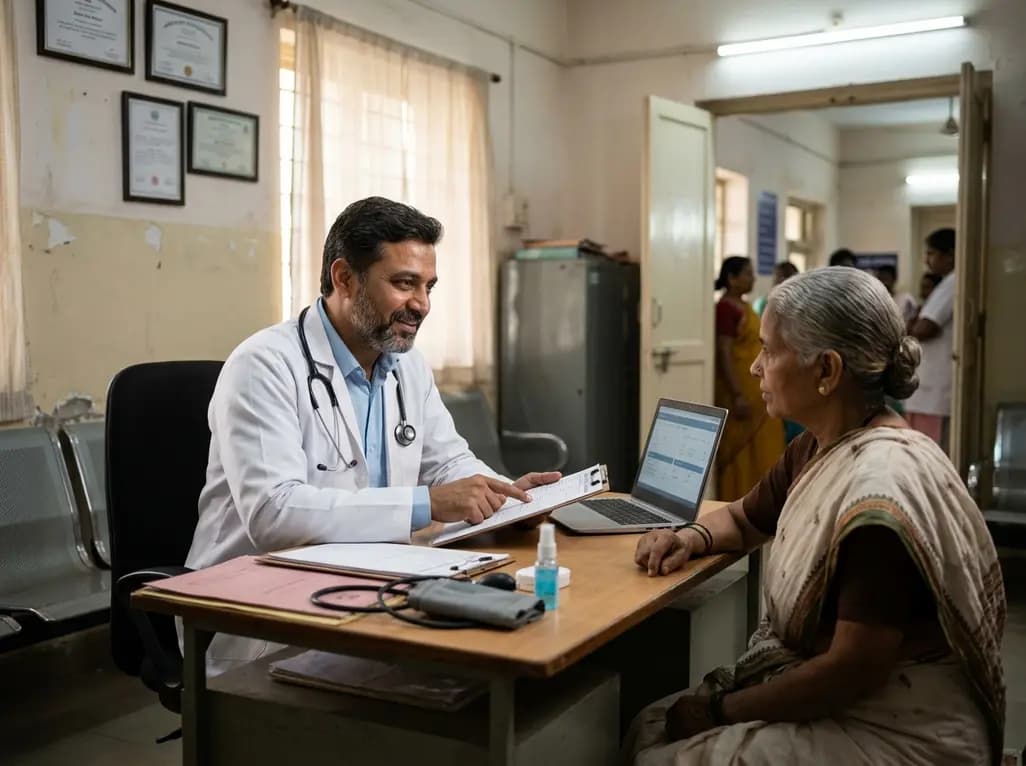
Medical professionals across India are raising critical alarms regarding the quality of training provided to future doctors. Recently, the Madhya Pradesh Progressive Medical Teachers Association (PMTA) expressed deep concerns about the sharp decline in medical education standards across the country. Consequently, they are urging immediate government intervention to prevent a serious crisis in public healthcare. This urgent call for action comes right before Doctors' Day, highlighting the severity of the situation. Therefore, systemic changes are absolutely necessary to ensure patient safety. Furthermore, many experts believe that rapid college expansion without proper planning is the primary driver of this dilution. Educators are now asking the government to prioritize quality over quantity.
The rapid establishment of new healthcare training facilities has sparked intense debate among senior educators. In Madhya Pradesh, the PMTA highlights that the unplanned expansion of medical colleges occurs without establishing essential infrastructure. Specifically, many of these new institutions lack adequate laboratories, proper faculty, and sufficient clinical workloads. As a result, students do not receive the comprehensive educational experience they require. Consequently, this deficit directly impacts their readiness to handle complex clinical cases. Additionally, teaching hospitals must maintain a steady patient flow to facilitate practical learning. Without a robust clinical workload, trainees cannot observe diverse pathologies or refine their diagnostic abilities. Therefore, creating colleges on paper without verified clinical resources threatens the foundation of medical training. Senior teachers emphasize that building physical structures represents only the first step in a complex process. Furthermore, institutions must recruit qualified, full-time professors who can guide students through challenging clinical environments. Ultimately, without these dedicated mentors, the quality of instruction will continue to deteriorate across the region.
The decline in medical education standards is not merely a theoretical concern but a documented reality in several institutions. For instance, the PMTA cited the Sheopur government medical college as a prominent case study. Students there reportedly filed complaints revealing that only one of 180 scheduled practical classes actually took place last year. Consequently, these trainees were left without any essential hands-on experience in basic clinical procedures. This lack of practice directly compromises their future performance as independent clinicians. Furthermore, laboratory training remains the cornerstone of modern medical training. If students cannot perform basic dissections, they miss critical conceptual milestones. Therefore, the lack of scheduled practical classes represents a severe breach of educational trust. Additionally, the lack of real-world exposure leaves students ill-prepared for emergency situations where quick decisions are necessary. Educators warn that producing poorly trained doctors creates a direct hazard to public safety. Ultimately, the state must ensure that every enrolled student receives the full curriculum of practical training without compromise.
Beyond local institutional failures, medical teachers have raised serious concerns about the National Medical Commission (NMC) accreditation processes. Specifically, the PMTA alleges that inspection dates are frequently leaked to colleges in advance. Consequently, these institutions can temporarily arrange "ghost faculty" and "paper patients" to deceive inspectors and secure official recognition. This manipulation allows non-compliant colleges to operate under a false pretense of quality. Furthermore, the association criticized the widespread vacancies within the NMC’s autonomous boards. Currently, most leadership posts remain completely unfilled, and many active members serve only on a part-time basis. This lack of dedicated oversight severely weakens the regulatory body's ability to monitor institutions effectively. Additionally, part-time members cannot devote the necessary time to conduct rigorous, unannounced audits. Therefore, the accreditation system requires a complete overhaul to restore public trust. If the regulatory body fails to enforce strict compliance, sub-standard colleges will continue to proliferate unchecked. Thus, reform at the national level is crucial to safeguard the future of healthcare and protect patient lives.
To resolve these pressing issues, the PMTA has proposed several key demands to the government. First, they request an independent, high-level physical, academic, and biometric audit of all newly opened medical colleges. This audit would verify the actual presence of faculty and assess the true clinical workload of each facility. Furthermore, teachers demand strict punitive actions and legal prosecution against corrupt officials who facilitate fraudulent recognitions. Historically, a lack of accountability has allowed dishonest practices to continue without consequence. Additionally, the association advocates for a resource-based approval policy. Under this policy, the government would bar permissions for new colleges unless adequate facilities are demonstrably available. Specifically, colleges must prove they possess proper buildings, fully equipped laboratories, functional teaching hospitals, and sufficient patient loads before admitting students. Therefore, this approach ensures that educational institutions cannot operate without meeting basic standards. By implementing these measures, the state can begin to rebuild its compromised clinical training infrastructure. Consequently, the quality of healthcare delivery will improve as well-trained doctors enter the workforce.
Addressing the systemic decline in training quality requires a collaborative effort between state governments and national regulators. Currently, the pressure to increase the number of medical seats has overshadowed the need for academic excellence. However, expanding access to medical education should not come at the expense of patient safety and clinical competence. Therefore, the government must establish a transparent monitoring framework that operates independently of political influence. For example, implementing daily biometric attendance for both faculty and students could significantly reduce the occurrence of ghost teachers. Furthermore, regular feedback from student cohorts can provide early warning signs of inadequate teaching or missing classes. Additionally, clinical examinations must be standardized across all institutions to ensure a uniform level of competency. Consequently, this standardization would prevent colleges with poor facilities from graduating unqualified practitioners. Thus, quality control must become the core focus of the National Medical Commission. Ultimately, protecting the integrity of the medical profession is vital for maintaining public trust in the healthcare system.
Q1: Why are medical teachers concerned about the rapid expansion of medical colleges?
Medical teachers are highly concerned because rapid and unplanned college expansion often occurs without establishing necessary infrastructure, qualified faculty, or adequate clinical workloads. Consequently, this trend produces poorly trained doctors who lack essential practical skills. This situation directly compromises the safety of patients and risks public health. Therefore, educators argue that quality must be prioritized over the mere quantity of medical seats.
Q2: What irregularities did the PMTA highlight regarding the National Medical Commission's accreditation?
The PMTA highlighted major flaws in the accreditation process, alleging that inspection dates are routinely leaked in advance. Consequently, non-compliant institutions can temporarily present ghost faculty and paper patients to secure official recognition. Additionally, they criticized widespread vacancies and part-time members within the commission's autonomous boards. This weak oversight allows sub-standard institutions to continue operating without proper quality control.
Q3: What specific solutions do medical educators propose to restore training standards?
Educators demand independent physical, academic, and biometric audits of all newly opened medical colleges to verify actual resources. Furthermore, they seek strict legal prosecution against corrupt officials who facilitate fraudulent approvals. Additionally, they advocate for a strict resource-based approval policy. This policy would bar permission for new colleges unless they demonstrably possess adequate buildings, laboratories, hospitals, and sufficient patient loads.
Disclaimer: This content is for informational and educational purposes only. It does not constitute medical advice or replace professional judgment. Refer to the latest local and national guidelines for clinical practice.
References

Read summarized clinical updates, watch expert medical content, and earn CME certifications right from your smartphone.
Open your smartphone camera to scan and install.





Medical educators in Madhya Pradesh urge immediate government intervention to address the rapid decline in training standards, citing severe gaps in college infrastructure, faculty shortages, and flaws in the National Medical Commission's accreditation process that compromise the quality of healthcare delivery.
3 months ago

Novel diimide and hydrazone scaffolds, particularly compound #C4, synergistically reactivate latent HIV-1 when combined with JQ1 or PKC activators. Demonstrating donor-matched proviral transcription ex vivo and non-canonical signaling, these findings advance shock and kill strategies toward reservoir eradication.
Today

A cross-sectional study reveals that maternal RSV vaccination coverage reached only 43.7% in Argentina, with maternal vaccine knowledge being the sole independent predictor of uptake. Clinicians play a crucial role in eliminating informational and structural barriers to optimize infant health.
Today

Review how tailored exercise programs benefit frail older patients with heart failure. Explore pathophysiological mechanisms, individualized training prescriptions, and strategies to overcome adherence barriers in clinical practice.
Yesterday

This comparative study evaluates posterior labral tears with and without glenohumeral instability, highlighting distinct demographic patterns, MRI underestimation in stable shoulders, and successful arthroscopic repair outcomes.
Yesterday

A clinical study demonstrates that early intervention with tocilizumab, either as monotherapy or bridged with corticosteroids, achieves significant proptosis reduction and resolves active inflammation in treatment-naive thyroid eye disease.
Yesterday
