.webp&w=384&q=75)

Loading, please wait...
Loading, please wait...
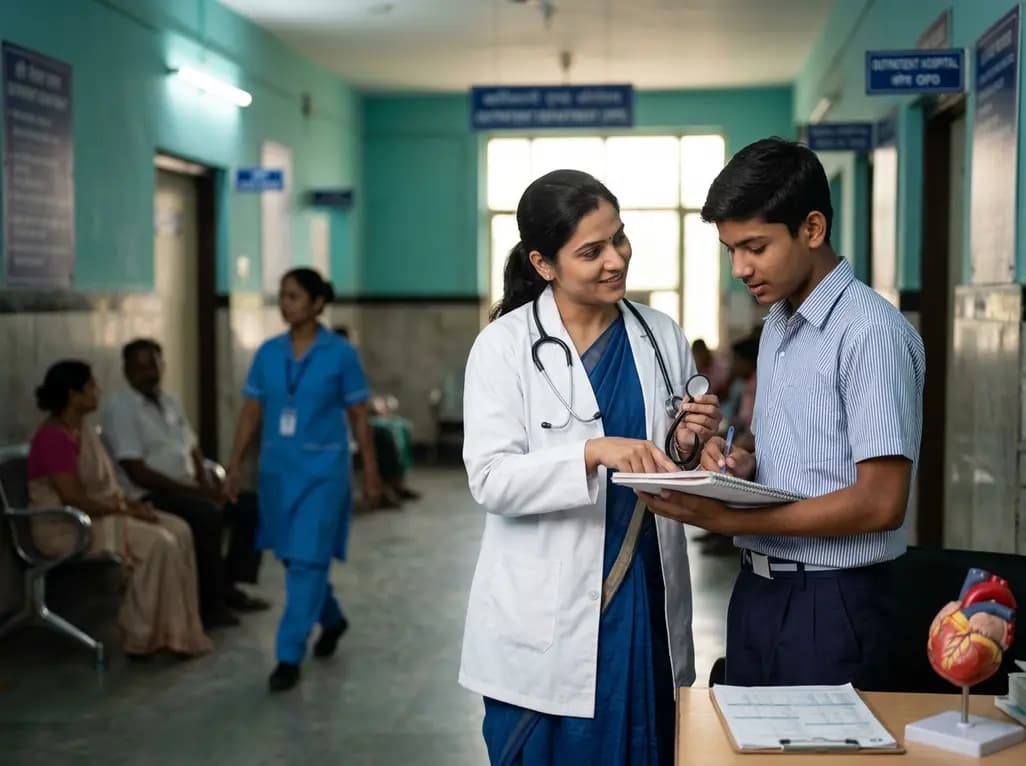
Medical education pathway programs are increasingly recognized as essential strategies for addressing the representation gap within the physician workforce. Students from low-income and underrepresented backgrounds frequently encounter systemic hurdles that prevent them from entering the medical field. These barriers include a lack of early clinical exposure and insufficient professional guidance. To address these challenges, medical students at the Warren Alpert Medical School of Brown University launched the Clinical Mentorship Program (CMP). This initiative provided high school students in Woonsocket, Rhode Island, with a year-long curriculum combining science instruction with hospital-based shadowing. Consequently, the study evaluating this program highlights the transformative potential of structured community-based interventions. By focusing on medical education pathway programs, institutions can effectively bridge the gap between aspiring students and the resources they need to succeed in medicine. Furthermore, this model emphasizes the importance of leveraging local expertise to create sustainable pathways for future healthcare providers. Building a diverse medical pipeline starts with early intervention and meaningful professional support.
The architecture of the Clinical Mentorship Program was designed to offer a holistic educational experience for its participants. Specifically, the intervention combined monthly after-school instruction with structured clinical exposure. Medical students led sessions on basic science content, such as cardiopulmonary anatomy and physiology, providing a rigorous academic foundation. Meanwhile, resident physicians facilitated hospital-based shadowing experiences and guided discussions. This tiered mentorship model ensured that high school students received support from mentors at various stages of their medical training. Consequently, the program fostered a supportive environment where students felt comfortable asking questions about the medical profession. Moreover, the integration of clinical skills training helped demystify the daily tasks performed by physicians. By utilizing this multi-layered approach, medical education pathway programs can offer a more comprehensive understanding of the healthcare landscape than traditional classroom settings alone. Additionally, these programs encourage students to view themselves as part of the medical community early in their educational journey, which is vital for long-term retention.
The evaluation of the Clinical Mentorship Program utilized a mixed-methods pre-post design to measure student outcomes. Significantly, participants demonstrated substantial gains in their medical knowledge, particularly regarding anatomy and physiological processes. Beyond academic metrics, the program also influenced the students' clinical self-efficacy. For instance, students reported feeling more comfortable interacting with physicians and navigating hospital environments. This increase in comfort is a critical factor for students who previously lacked access to professional medical networks. Furthermore, the participants showed an increased awareness of other academic enrichment opportunities within their local community. Therefore, medical education pathway programs act as significant catalysts for broader educational engagement. Additionally, the qualitative findings indicated that students developed a clearer understanding of the various roles physicians play within the healthcare system. Overall, these results suggest that early intervention can successfully prepare students for the rigors of medical education while building their confidence in clinical settings, thereby making the profession feel more accessible and attainable.
One of the most impactful components of the Clinical Mentorship Program was the structured hospital-based shadowing. Experiential learning allows students to move beyond textbooks and witness the realities of patient care firsthand. During these sessions, students observed physician-patient interactions and the collaborative nature of hospital teams. Consequently, they gained a more realistic perspective on the challenges and rewards associated with a career in medicine. Many participants noted that these experiences were pivotal in solidifying their desire to attend college and pursue medical training. Moreover, the guided discussions with resident physicians provided a space for students to process their observations and link them to their academic lessons. This reflective practice is essential for developing the critical thinking skills required in clinical practice. Therefore, medical education pathway programs that prioritize immersive experiences are often more effective at sustaining student interest. Furthermore, shadowing helps students from underserved backgrounds build the social capital necessary to navigate competitive career paths successfully, ensuring they are not left behind due to a lack of connections.
Despite the positive outcomes of the CMP, the study also highlighted persistent structural barriers that continue to affect underrepresented students. These barriers include financial constraints and a lack of proximity to medical institutions. However, the program demonstrated that community-based initiatives could mitigate some of these challenges by providing direct access to mentors and clinical sites. Mentorship plays a vital role in helping students overcome the sense of isolation often felt by those from marginalized backgrounds. Specifically, the relationship between the high school students and their medical student mentors provided a relatable pathway to success. Furthermore, the program’s focus on Woonsocket, Rhode Island, ensured that it reached a population that truly needed these resources. Consequently, medical education pathway programs must be strategically located and accessible to be effective. By addressing the specific needs of the local community, these programs can create a more inclusive medical pipeline. Overall, while mentorship cannot eliminate all structural disadvantages, it provides students with the tools and networks to navigate them more effectively throughout their careers.
The Clinical Mentorship Program at Brown University serves as a feasible entry point for other institutions looking to diversify their student bodies. By leveraging local resources and infrastructure, the program remained sustainable without requiring excessive funding. Specifically, the use of medical students and residents as mentors allowed the program to scale effectively while providing valuable teaching experience for the mentors themselves. This reciprocal benefit is a key strength of many medical education pathway programs. Additionally, the mixed-methods evaluation provided a robust framework for assessing the program's impact. Other medical schools in India and globally can adapt this model to suit their unique socioeconomic contexts. For example, local hospitals and community centers can collaborate to provide shadowing opportunities for students in rural or underserved areas. Therefore, the CMP demonstrates that community-based programs are not only effective but also replicable across different healthcare systems. By prioritizing these initiatives, the global medical community can ensure that talent is identified and nurtured, regardless of a student's background or financial status.
These programs significantly boost educational motivation by making a medical career feel attainable for underrepresented students. By providing early clinical exposure and science instruction, pathway initiatives bridge the gap between a student's interest and the reality of medical training. Consequently, participants often show a greater desire to attend college and pursue advanced degrees. Moreover, interacting with mentors helps students visualize themselves in professional roles, which reinforces their long-term career aspirations and commitment to the healthcare field.
Clinical shadowing is a cornerstone of effective mentorship because it offers students firsthand insight into the healthcare environment. During shadowing, students observe professional interactions, medical procedures, and the complexities of patient care. This experiential learning helps demystify the physician's role and allows students to ask practical questions to their mentors. Therefore, it solidifies career interest while providing students with the social capital and confidence needed to navigate the medical field's professional landscape and demanding educational requirements.
Yes, community-based models are highly feasible because they leverage existing local infrastructure and personnel. By utilizing medical students and residents as mentors, institutions can create impactful programs without requiring significant external funding. Furthermore, these initiatives foster stronger ties between medical schools and their local communities. This model is easily replicable and can be adapted to various geographic regions, making it a sustainable strategy for improving diversity and equity within the global medical pipeline and workforce development plans.
Disclaimer: This content is for informational and educational purposes only. It does not constitute medical advice or a specific endorsement of any program. Healthcare systems and educational policies vary by region. Refer to the latest local and national guidelines for clinical practice.
References
Hunt VM et al. The Clinical Mentorship Program: a mixed-methods evaluation of a community-based medical education pathway program for high school students. BMC Med Educ. 2026 Jul 04. doi: 10.1186/s12909-026-09852-x. PMID: 42401988.
"
Read summarized clinical updates, watch expert medical content, and earn CME certifications right from your smartphone.
Open your smartphone camera to scan and install.





A study on Brown University's Clinical Mentorship Program shows that medical education pathway programs significantly improve medical knowledge and college motivation among underrepresented high school students by providing early clinical exposure and resident-led mentorship.
3 months ago

Discover the crucial role of glymphatic dysfunction in stroke, where perivascular clearance failure and neuroinflammation exacerbate cerebral edema and post-stroke brain injury.
Today

A prenatal case highlights severe glutaric acidemia type II presenting as bilateral hyperechoic cystic kidneys at 18 weeks. Whole-exome sequencing revealed a novel homozygous ETFDH frameshift variant, demonstrating the power of rapid genetic testing in fetal renal anomalies.
Today

Review how tailored exercise programs benefit frail older patients with heart failure. Explore pathophysiological mechanisms, individualized training prescriptions, and strategies to overcome adherence barriers in clinical practice.
Yesterday

This comparative study evaluates posterior labral tears with and without glenohumeral instability, highlighting distinct demographic patterns, MRI underestimation in stable shoulders, and successful arthroscopic repair outcomes.
Yesterday

A clinical study demonstrates that early intervention with tocilizumab, either as monotherapy or bridged with corticosteroids, achieves significant proptosis reduction and resolves active inflammation in treatment-naive thyroid eye disease.
Yesterday
