.webp&w=384&q=75)

Loading, please wait...
Loading, please wait...
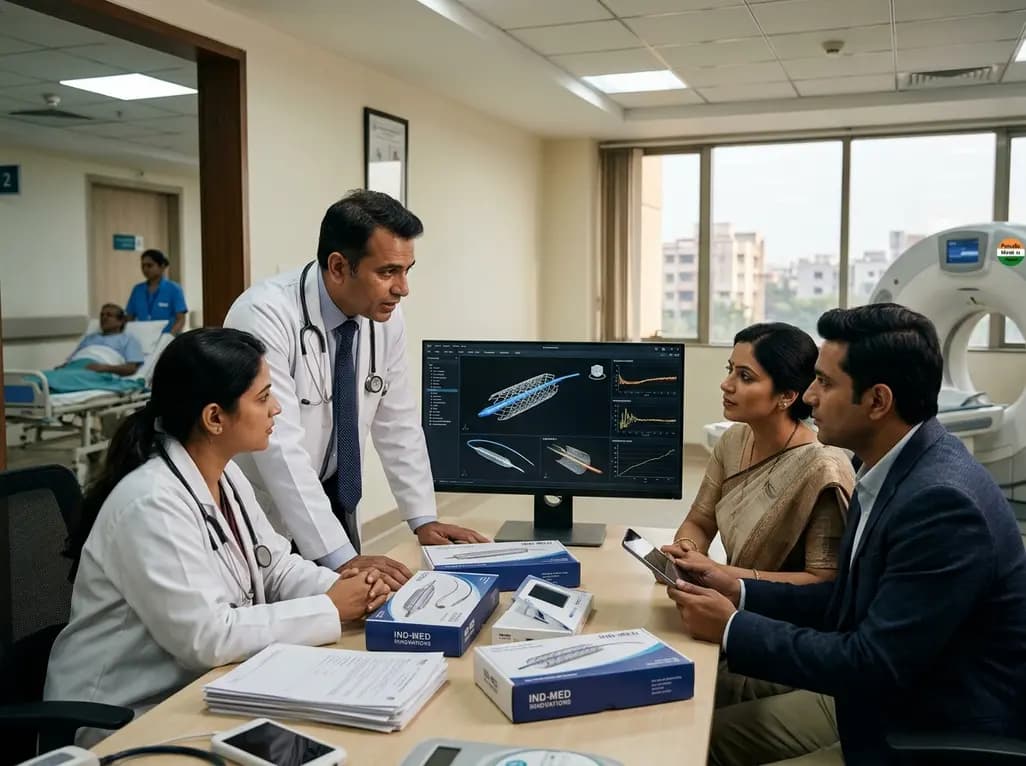
The Indian healthcare ecosystem is undergoing a profound structural transformation today. Historically, global investors directed capital primarily into pharmaceutical manufacturing and tertiary hospital chains. However, medical devices investment has now emerged as the next lucrative frontier for private equity funds. India currently imports roughly 70 percent of its medical devices, leaving substantial room for domestic expansion. Rising patient volumes, expanding health insurance penetration, and strong government support are driving this unprecedented institutional interest. Consequently, institutional investors are seeking to scale fragmented domestic enterprises into resilient manufacturing powerhouses. This capital influx promises to redefine medical technology accessibility across Indian clinical practice.
Private equity sponsors recognize strong structural tailwinds in India's medtech landscape. In recent years, hospital valuations have reached historically elevated multiples. Furthermore, years of intense deal-making have diminished the availability of mature hospital assets. Therefore, investors must look deeper into alternative healthcare sectors to generate superior returns. Medical technology offers a fragmented landscape ripe for strategic consolidation. Investors can acquire multiple specialized manufacturers and assemble integrated national supply platforms.
In addition, medical devices investment unlocks a powerful operational lever: domestic import substitution. As local demand for surgical and diagnostic tools accelerates, homegrown manufacturers can replace high-cost foreign supplies. Consequently, scalable enterprises gain substantial domestic market share while concurrently lowering healthcare delivery costs. Moreover, building aggregated platforms allows private equity sponsors to realize significant valuation premiums upon exit. Global funds like Temasek and KKR are already executing this playbook across diverse healthcare verticals. Specifically, platform creation mirrors the successful consolidation seen previously in domestic generic pharmaceuticals. Indian companies now have a viable pathway to evolve into global technology contenders. Ultimately, this investment momentum provides Indian medtech firms with the financial stability needed to modernize manufacturing operations.
Government policy serves as a powerful catalyst for this ongoing investment wave. For decades, Indian healthcare facilities relied heavily on overseas suppliers for vital therapeutic and diagnostic equipment. In response, the Union Cabinet introduced the National Medical Device Policy 2023 to foster domestic self-reliance. This comprehensive framework focuses on streamlining regulatory pathways, upgrading testing infrastructure, and promoting research collaborations. In addition, the central government launched targeted Production Linked Incentive schemes with multi-crore outlays. These fiscal incentives actively support domestic production in complex segments like radiology, radiotherapy, and implantable hardware.
Consequently, domestic production has gained tangible momentum across specialized industrial clusters in several states. Furthermore, the Central Drugs Standard Control Organisation has steadily modernized device classification and licensing transparency. Therefore, institutional investors now enjoy greater regulatory predictability when evaluating potential targets. Policy clarity reassures global capital that India is genuinely committed to nurturing medical manufacturing. Moreover, these supportive measures encourage hospital procurement teams to trust indigenously manufactured medical supplies. Clinicians across tertiary care facilities increasingly gain access to reliable domestic equipment that meets stringent quality benchmarks. As a result, reliance on unstable international supply chains decreases steadily. Thus, policy initiatives and private capital are aligning to accelerate domestic capacity expansion.
Deal velocity is accelerating rapidly across routine consumables, in-vitro diagnostics, and orthopaedic implants. Recent strategic transactions demonstrate this robust corporate activity. For instance, medical device manufacturer Romsons secured a major investment from global investor Temasek. Shortly thereafter, market reports highlighted intense bidding between established players to acquire majority stakes in BL Lifesciences. Similarly, global investment giants like Warburg Pincus, Everstone, and KKR continue backing platforms like Meril, Integris, and Healthium. These large transactions illustrate how investors combine complementary product portfolios under unified corporate umbrellas.
However, consolidating fragmented companies presents distinct operational hurdles. Platform operators must integrate diverse manufacturing facilities, disparate sales teams, and divergent clinical protocols. In addition, companies must maintain rigorous regulatory compliance across every newly acquired manufacturing site. Scaled businesses can negotiate superior procurement agreements and invest heavily in post-market clinical surveillance. Consequently, surgeons and hospital administrators benefit from streamlined procurement and dependable distributor relationships. Nevertheless, sponsors must manage integration risks carefully to ensure that merged entities maintain product reliability and clinical safety. Furthermore, consolidated platforms possess greater leverage to expand export operations across emerging Asian and African healthcare markets. Therefore, strategic consolidation enhances domestic capabilities while unlocking lucrative international distribution channels for Indian medical devices.
Despite surging transaction values, sector leaders emphasize an essential distinction between financial engineering and genuine industrial progress. Rajiv Nath, Forum Coordinator of the Association of Indian Medical Device Industry, has raised important questions regarding capital allocation. He cautions that financial investments must do more than simply transfer company ownership between holding entities. Instead, genuine sector transformation requires allocating capital directly into advanced manufacturing plants, precise tooling, and specialized testing facilities. Currently, domestic manufacturing demonstrates significant prowess in low-tech consumables and standard disposables.
However, the domestic production of high-end capital equipment, such as advanced magnetic resonance imaging or linear accelerators, remains relatively thin. Therefore, private equity capital must actively fund advanced engineering and workforce upskilling. In addition, domestic manufacturers must elevate internal research and development spending, which historically trailed global competitors. Without sustained capital expenditure in tooling and clinical trials, domestic manufacturers cannot easily substitute intricate imported technologies. Consequently, investors and enterprise leaders must commit to long-term industrial building rather than rapid financial exits. Moreover, medical institutions require robust warranties, continuous maintenance support, and uninterrupted component supply. Thus, deploying funds toward engineering infrastructure directly protects patient care and ensures durable clinical outcomes. Only then can private capital truly build self-sustaining manufacturing resilience across India.
As large investment platforms expand, industry advocates emphasize the vital role of micro, small, and medium enterprises. Currently, private equity capital naturally flows toward mature, scaled corporations that offer straightforward financial diligence and predictable exits. In contrast, smaller and mid-sized device innovators frequently struggle to secure institutional capital. These smaller enterprises often pioneer ingenious, cost-effective technologies tailored specifically for rural and semi-urban clinical settings. Therefore, policymakers must ensure that aggressive consolidation does not inadvertently squeeze smaller domestic manufacturers out of public tenders.
Industry experts advocate for strict, uniform enforcement of quality standards across all imported and indigenously produced medical devices. In addition, public procurement guidelines must provide equitable participation room for innovative local manufacturers. Predatory pricing by global conglomerates or unfair tender conditions could severely compromise domestic industrial diversity. Consequently, maintaining a fair, transparent marketplace protects indigenous innovation and ensures that healthcare providers enjoy diverse sourcing options. Furthermore, healthcare practitioners benefit when diverse suppliers compete on quality and cost. Such balanced competition prevents monopolistic pricing and fosters sustainable healthcare delivery across public and private hospitals alike. Ultimately, a balanced commercial ecosystem allows both large consolidated platforms and agile smaller enterprises to thrive collaboratively.
Q1: Why is private equity targeting medical devices in India?
Private equity firms are targeting Indian medical devices because the sector offers immense growth potential, fragmented assets for consolidation, and strong policy backing. Currently, India imports approximately 70 percent of its medical devices, presenting an attractive opportunity for domestic import substitution. Furthermore, elevated valuations and asset scarcity in the hospital sector have pushed institutional investors toward medical technology platforms to generate reliable, long-term financial returns.
Q2: How does consolidation benefit clinicians and healthcare facilities?
Consolidation creates well-capitalized platforms capable of investing in robust research, superior manufacturing facilities, and strict quality control protocols. For healthcare practitioners and hospital administrators, this shift ensures reliable supply chains, consistent clinical grade equipment, and streamlined procurement across multiple product categories. Furthermore, consolidated medtech companies provide enhanced technical assistance, comprehensive warranty support, and structured clinician training programs, ultimately elevating the overall standard of patient care.
Q3: What hurdles remain for domestic manufacturing of high-end devices?
Although domestic production has expanded significantly in consumables, orthopaedics, and diagnostics, manufacturing high-end capital equipment remains challenging. Complex imaging systems and advanced radiotherapy equipment require specialized precision tooling, sophisticated testing infrastructure, and highly skilled engineering talent. Additionally, Indian firms historically invested less in research and development compared to global leaders. Overcoming these barriers requires dedicated capital expenditure, supportive government incentives, and strict regulatory alignment with international standards.
Disclaimer: This content is for informational and educational purposes only. It does not constitute medical advice or replace professional judgment. Refer to the latest local and national guidelines for clinical practice.
References

Read summarized clinical updates, watch expert medical content, and earn CME certifications right from your smartphone.
Open your smartphone camera to scan and install.





Private equity investors are targeting India's medical devices sector, accelerating industry consolidation and domestic manufacturing. Discover how recent multi-million-dollar transactions, policy reforms, and import substitution strategies are creating scalable healthcare platforms and reshaping clinical access.
Today

A retrospective study shows that symptom-monitored loading with lorazepam, chlordiazepoxide, or gabapentin significantly reduces hospital length of stay compared to CIWA-Ar-only therapy in severe alcohol withdrawal, providing a safer, more proactive management strategy.
Today
A retrospective cohort study of 5,481 children aged 3–6 years evaluated whether surgical sperm retrieval for ICSI affects offspring cognitive and physical growth compared with ejaculated sperm and IVF. Results demonstrate comparable IQ scores and growth parameters, providing reassuring safety evidence for clinical practice.
Today
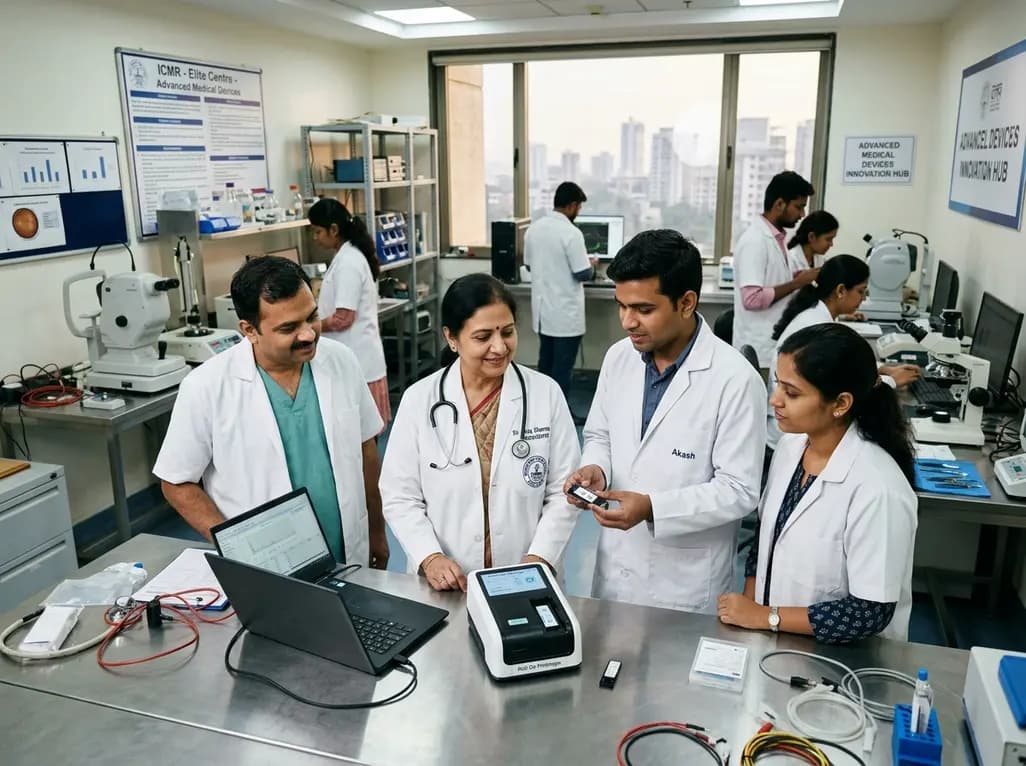
The Indian Council of Medical Research has funded seven top academic hubs to build indigenous healthcare technologies. Targeting point-of-care diagnostics, biomaterials, and ophthalmology, these multidisciplinary centres aim to tackle unmet clinical needs and make medical care affordable across India.
Today

Diagnostic data shows that nearly one in four spine investigations now involve patients younger than 40 years. This comprehensive overview explores the drivers behind this demographic trend, evaluates ergonomic hazards, clarifies red-flag signs, and highlights clinical indications for judicious diagnostic imaging.
Today

A multicenter cross-sectional study of 1,315 adults with type 1 diabetes reveals that the GMI/HbA1c ratio does not independently predict microvascular complications. Clinicians should prioritize sustained time in range and blood pressure management over glycation discordance metrics.
Today
