

Loading, please wait...
Loading, please wait...
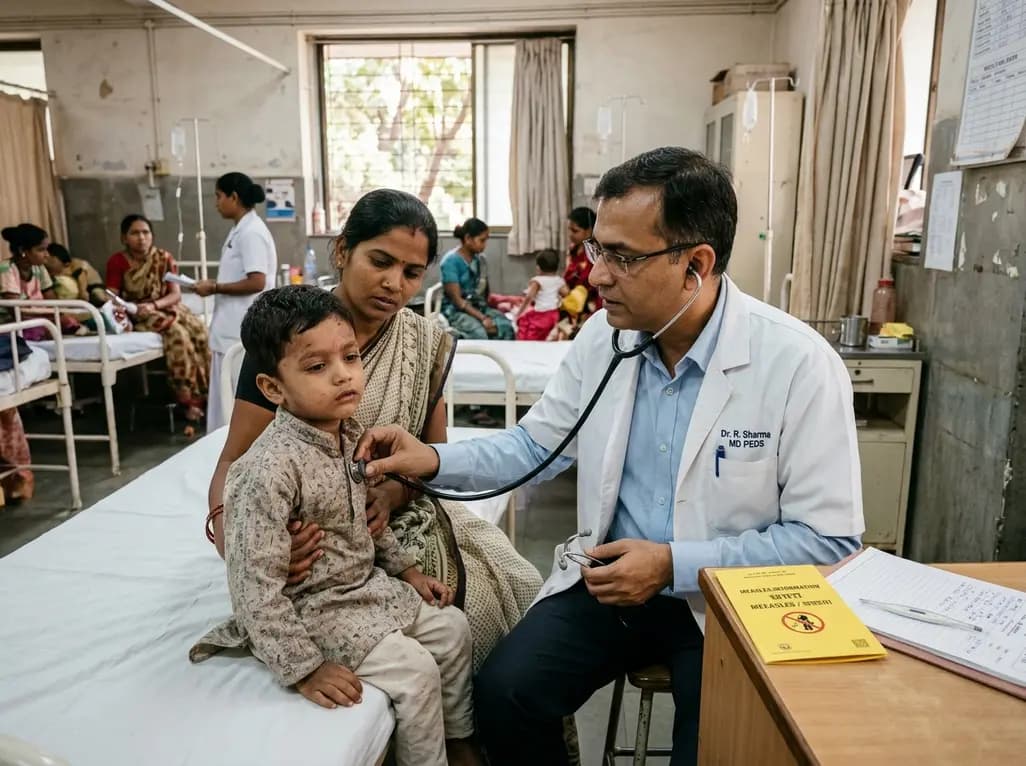
A distressing global measles resurgence has culminated in significant domestic and international health concerns, highlighted by the US CDC confirming six measles-related deaths in 2026. This stark mortality metric doubles the total fatalities documented during the previous year. Consequently, this alarming trend underscores persistent vulnerabilities in baseline community protection. Although declared eliminated from the United States in 2000, the pathogen continuously exploits widening gaps in immunization coverage. For medical practitioners globally, including primary care doctors and pediatricians in India, these surveillance figures provide an essential wake-up call. The infection spreads with unmatched efficiency, demanding rigorous clinical evaluation and heightened suspicion.
The contemporary measles resurgence primarily stems from accumulating cohorts of unvaccinated or undervaccinated individuals. Because the measles virus possesses a basic reproduction number (R0) exceeding twelve to eighteen, community immunity requires a sustained vaccination threshold of at least ninety-five percent. However, vaccine hesitancy and localized administrative backlogs have eroded critical herd protection. Consequently, imported cases rapidly seed widespread community transmission. Global population movement accelerates viral dissemination across geographic borders. Therefore, travel-related exposures frequently bypass preliminary clinical scrutiny.
Furthermore, federal surveillance systems rely heavily on verified mortality data provided by national statistics registries. This meticulous reporting frequently reveals that the vast majority of fatal presentations occur among unimmunized patients. In addition, urban clustering and enclosed educational facilities amplify secondary transmission dynamics. Clinicians must recognize that even minor declines in routine childhood vaccine uptake create fertile ground for explosive viral propagation. Thus, maintaining persistent epidemiological awareness remains essential for containment.
Early clinical diagnosis remains challenging because prodromal presentations closely resemble standard viral respiratory infections. Patients typically manifest high-grade fevers alongside the classic triad of cough, coryza, and conjunctivitis. However, pathognomonic Koplik spots often disappear rapidly before medical presentation. Consequently, clinicians must actively examine the buccal mucosa during early evaluation. Approximately three to five days following fever onset, a maculopapular exanthem erupts cephalocaudally, beginning at the hairline and spreading downwards.
Moreover, clinicians must remain alert to atypical measles presentations, particularly in immunocompromised hosts or partially immunized patients. In such vulnerable populations, the characteristic rash may appear attenuated, faint, or completely absent. Instead, these patients present with severe constitutional toxicity or rapid respiratory decompensation. Therefore, practitioners should never dismiss measles purely due to an unusual dermatological pattern. In addition, heightened diagnostic vigilance ensures swift isolation before widespread nosocomial dissemination ensues.
Although many patients experience an uneventful recovery, measles can inflict catastrophic systemic destruction. Pneumonia represents the single most common cause of measles-related mortality in young children. Specifically, the infection induces severe primary giant-cell pneumonitis or facilitates devastating secondary bacterial superinfections. Pathogens such as Streptococcus pneumoniae and Staphylococcus aureus frequently invade the damaged respiratory epithelium. Consequently, clinicians must promptly evaluate any sudden worsening of dyspnea, tachypnea, or oxygen desaturation.
Furthermore, neurological sequelae impose substantial long-term morbidity and acute fatality. Acute disseminated encephalomyelitis manifests during convalescence as an autoimmune demyelinating process. In contrast, measles inclusion body encephalitis strikes immunocompromised hosts within several months, leading to fatal progressive deterioration. Most tragically, subacute sclerosing panencephalitis (SSPE) develops seven to ten years later due to persistent defective viral replication. Therefore, preventing initial viral acquisition remains the only viable strategy against these neurological catastrophes.
Rapid diagnostic verification ensures timely public health interventions and strict containment. Clinicians should collect both a throat or nasopharyngeal swab for real-time reverse transcription-polymerase chain reaction (RT-PCR) and serum for measles-specific IgM antibodies. Notably, viral detection via RT-PCR offers optimal diagnostic sensitivity when samples are gathered within the first three days of rash onset. Meanwhile, serological testing may yield false negatives if drawn before adequate IgM titers develop. Therefore, repeating serological tests several days later remains advisable when suspicion persists.
Simultaneously, immediate infection control measures must protect outpatient waiting rooms and clinical staff. Suspected patients require immediate masking and triage into negative-pressure airborne isolation facilities whenever feasible. If specialized isolation rooms are unavailable, clinicians should place the patient in a dedicated consultation room and vacate it for at least two hours following departure. Furthermore, healthcare staff must verify personal immunity and employ fit-tested N95 respirators. Consequently, meticulous clinic protocols prevent disastrous healthcare-associated exposure events.
Definitive clinical management relies on supportive care, nutritional rehabilitation, and prompt identification of secondary complications. The World Health Organization strongly advises administering therapeutic vitamin A to all diagnosed pediatric patients. Specifically, high-dose oral vitamin A administered over two consecutive days significantly reduces measles mortality and prevents ocular xerophthalmia. In addition, clinicians must prescribe appropriate empiric antibiotics whenever clinical signs suggest secondary bacterial otitis media or pneumonia.
Ultimately, high-coverage vaccination represents the singular cornerstone of global measles eradication. The two-dose measles, mumps, and rubella (MMR) or measles-rubella (MR) immunization schedule delivers ninety-seven percent protective efficacy. In India, the Universal Immunization Programme provides MR doses at nine to twelve months and sixteen to twenty-four months. Furthermore, the Indian Academy of Pediatrics emphasizes adherence to scheduled booster doses. Therefore, physicians must routinely audit pediatric immunization cards and implement proactive catch-up immunization whenever missed opportunities arise.
Q1: What makes the measles virus exceptionally transmissible in clinical environments?
Measles is an airborne pathogen that suspends in microscopic respiratory droplets for up to two hours after an infected individual exits an examination room. Because the basic reproduction number ranges between twelve and eighteen, nearly ninety percent of non-immune close contacts contract the disease following minimal exposure, necessitating immediate airborne precautions.
Q2: Why is therapeutic vitamin A universally indicated for acute measles management?
Acute measles infection causes precipitous depletion of systemic vitamin A reserves, which critically impairs mucosal barrier integrity and suppresses cell-mediated immunity. Administering two consecutive age-appropriate oral doses of vitamin A restores epithelial defenses, reduces ocular morbidity, and decreases overall mortality by up to fifty percent in children.
Q3: What post-exposure prophylaxis measures are available for susceptible individuals?
Susceptible individuals exposed to measles can receive the MMR vaccine within seventy-two hours of exposure to provide protective active immunity. Alternatively, high-risk individuals—such as pregnant women, infants under six months, and severely immunocompromised patients—should receive intramuscular or intravenous immunoglobulin within six days of exposure.
Disclaimer: This content is for informational and educational purposes only. It does not constitute medical advice or replace professional judgment. Refer to the latest local and national guidelines for clinical practice.
References

Read summarized clinical updates, watch expert medical content, and earn CME certifications right from your smartphone.
Open your smartphone camera to scan and install.





Recent data from the US CDC highlights six measles-related fatalities in 2026, doubling the previous year's mortality figure. This critical development underscores the vulnerability of unimmunized cohorts and reminds healthcare providers worldwide to reinforce surveillance, early triage, and timely vaccination.
Today

A new study demonstrates how explainable AI guides transparent fall risk prediction models in older adults. By pairing random survival forests and SHAP with Cox regression, researchers achieved superior accuracy and eliminated unneeded variables, enhancing clinical decision-making and patient safety.
Today

Ascertainment bias in cancer case-control studies inflates odds ratios and penetrance estimates when cases are drawn from high-risk clinics. A landmark modeling study demonstrates substantial bias ranging up to 23.72, highlighting the critical need for ascertainment adjustment in genetic risk counseling.
Today

Researchers demonstrate that central induction of synthetic torpor in non-hibernating rats provides striking cardioprotection, reducing myocardial infarct size by ~40% during ischaemia-reperfusion injury through endogenous survival signaling, independent of hypothermia.
Today
A prospective study evaluates DeepSeek for knee osteoarthritis outcomes. While the model excels at baseline diagnosis and clinical scoring, its six-month prognostic predictions fall short of clinicians and simple persistence models, demonstrating high run-to-run variability.
Today

A novel fluorine-functionalized near-infrared copper fluorescent probe selectively illuminates lung tissue, revealing critical links between hyperglycemia, ER stress, and pulmonary malignancy for improved early diagnosis.
Today
