.webp&w=384&q=75)

Loading, please wait...
Loading, please wait...
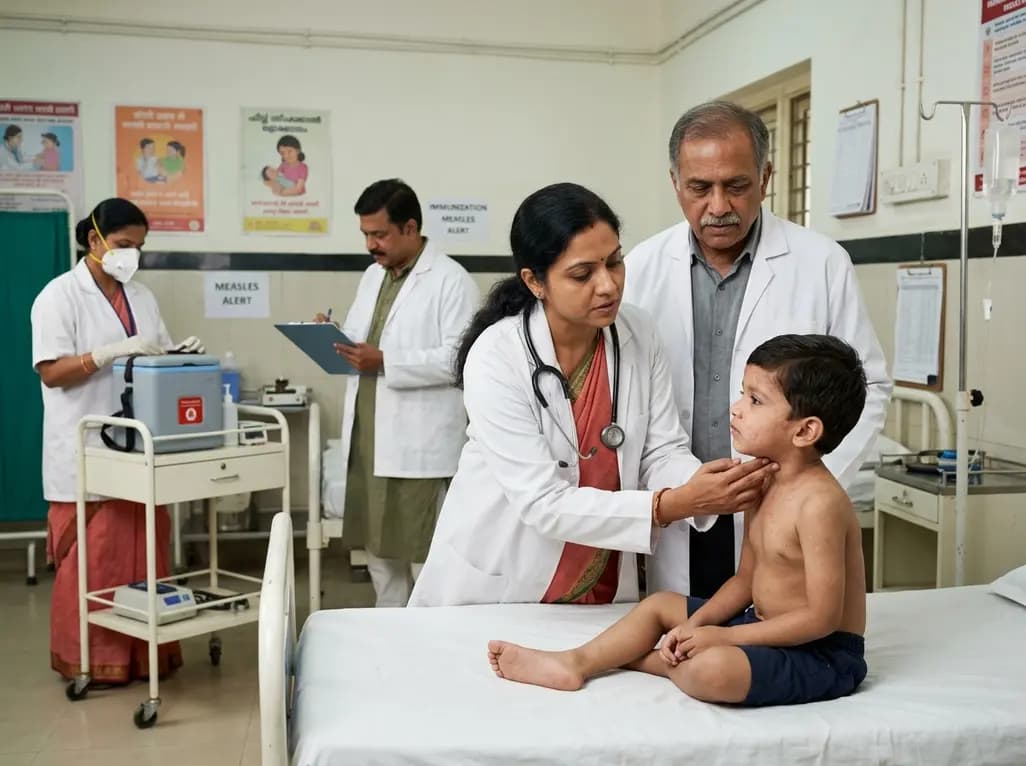
The sudden expansion of a major measles outbreak highlights the persistent vulnerabilities in population immunity worldwide. Public health agencies recently recorded over 1,200 confirmed infections in Pennsylvania, signaling an alarming resurgence across vulnerable communities. Measles remains one of the most transmissible viral pathogens known to modern medicine. Consequently, physicians must maintain elevated diagnostic vigilance whenever patients present with febrile exanthematous symptoms. Unvaccinated individuals face significant risks of severe systemic complications and prolonged hospitalization. Therefore, understanding outbreak epidemiology helps clinicians intervene rapidly, prevent nosocomial transmission, and promote community vaccine coverage.
Epidemiologists observe that declining childhood immunization rates inevitably trigger widespread viral transmission across under-vaccinated clusters. The Pennsylvania Department of Health documented 1,222 confirmed measles cases, reflecting a rapid increase of 86 cases within a single week. Furthermore, state records confirm 225 hospitalizations and five fatalities during this single event. Across the broader United States, cumulative cases reached 4,080 by early October. Meanwhile, federal health authorities have deployed specialized epidemiologic support teams to help state officials track chains of exposure. Historically, the United States achieved measles elimination status in the year 2000. However, persistent pockets of vaccine hesitancy undermine herd immunity thresholds that require 95 percent coverage. When coverage slips below this critical barrier, the virus spreads rapidly through schools, households, and community centers. In addition, global travel accelerates pathogen introduction into susceptible demographic groups. Pediatric populations and immunocompromised individuals suffer the highest burden during these community surges. Clinicians must recognize that local outbreaks reflect systemic gaps in routine healthcare delivery. Therefore, medical providers play a decisive frontline role in identifying clusters and countering dangerous vaccine misinformation.
The measles virus belongs to the genus Morbillivirus within the Paramyxoviridae family. This single-stranded enveloped RNA pathogen exhibits an exceptionally high basic reproduction number ranging between 12 and 18. Consequently, an infected individual can transmit the virus to nine out of ten non-immune contacts. Transmission occurs primarily through airborne respiratory droplets and microscopic aerosol nuclei generated during coughing or sneezing. Furthermore, these virulent infectious particles remain suspended in ambient air for up to two hours after the patient leaves. Direct contact with contaminated surfaces or infected nasal secretions also spreads the pathogen effectively. In healthcare settings, viral aerosolization presents an acute hazard in unventilated triage areas and pediatric waiting rooms. Therefore, hospital administrators must establish strict infection control protocols to intercept suspected cases before facility entry. Immediate placement in an airborne infection isolation room prevents catastrophic secondary spread to fragile inpatients. Moreover, healthcare facilities must enforce fit-tested N95 respirator use for all medical staff evaluating rash-associated fevers. Routine surface disinfection and enhanced air exchange filtration also reduce residual environmental viral load. Thus, aggressive airborne precautions represent the cornerstone of institutional containment strategies during acute outbreak periods.
Clinicians divide the clinical course of measles into distinct incubation, prodromal, and eruptive phases. The incubation period typically spans ten to fourteen days from initial viral exposure to symptom onset. Initially, patients present with an aggressive prodrome characterized by high fever, malaise, cough, coryza, and conjunctivitis. Photophobia often accompanies ocular inflammation and provides an early clinical clue. In addition, physicians should inspect the oral cavity for Koplik spots, which represent pathognomonic mucosal enanthems. These distinct lesions resemble tiny grains of white sand surrounded by erythematous halos on the buccal mucosa. Subsequently, a maculopapular erythematous rash begins along the hairline and behind the ears on the third or fourth day. The rash spreads centrifugally downward over the face, trunk, and extremities, eventually involving the palms and soles. However, atypical presentations frequently emerge in immunocompromised individuals who may fail to develop classic skin eruptions. For laboratory confirmation, clinicians should collect throat swabs for reverse transcription-polymerase chain reaction testing during the acute phase. Additionally, serum measles IgM assays provide reliable serologic verification several days after rash onset. Timely diagnostic confirmation prevents misdiagnosis of this severe systemic infection as harmless viral exanthems.
Measles is far more than a transient childhood exanthem because it generates severe multi-organ complications. State health data from the recent surge revealed a hospitalization rate approaching twenty percent among infected patients. Respiratory complications represent the leading cause of measles-related mortality across all age demographics. Specifically, severe giant cell pneumonitis and secondary bacterial bronchopneumonia frequently require intensive respiratory support. In addition, gastrointestinal involvement causes intractable diarrhea, profound dehydration, and severe nutritional compromise in young children. Neurological sequelae represent another devastating complication of acute infection. Acute post-infectious encephalomyelitis occurs in approximately one in every one thousand cases, often leaving permanent motor and cognitive deficits. Furthermore, subacute sclerosing panencephalitis is a fatal, progressive neurodegenerative disorder that manifests several years after initial recovery. Pregnant patients also face grave risks, including spontaneous abortion, maternal death, and premature labor. Notably, the measles virus causes profound immune amnesia by eliminating preexisting memory B and T lymphocytes. This secondary immunodeficiency leaves patients susceptible to other opportunistic pathogens for several months after viral clearance. Consequently, clinicians must monitor recovering patients closely for delayed bacterial superinfections and persistent respiratory decline.
The live-attenuated measles, mumps, and rubella vaccine remains the most effective tool for preventing community outbreaks. A single standard dose provides approximately 93 percent protection, while two properly timed doses confer 97 percent lifelong immunity. Pediatric schedules recommend administering the first dose between 12 and 15 months and the second between four and six years. However, public health guidelines support accelerated vaccination schedules during sustained local transmission events. Infants aged six through eleven months in outbreak zones should receive an early MMR dose to establish prompt humoral protection. Nevertheless, these infants must still complete the routine two-dose series after turning one year old. In addition, unvaccinated contacts require post-exposure prophylaxis with the MMR vaccine within seventy-two hours of exposure. Alternatively, high-risk individuals, including pregnant women and severely immunocompromised contacts, should receive intramuscular immune globulin within six days. Clinicians should also support therapeutic management with oral vitamin A supplementation to reduce mortality and prevent ocular keratomalacia. Ultimately, achieving robust community-wide vaccination coverage protects vulnerable infants who cannot yet undergo vaccination. Physicians must champion timely immunization to eradicate these recurring, fully preventable public health crises.
Q1: What are the pathognomonic early signs of measles infection?
Clinicians recognize measles primarily through its classic prodromal triad of cough, coryza, and conjunctivitis accompanied by high fever. In addition, patients frequently display Koplik spots on the buccal mucosa opposite the lower molars. These tiny, bluish-white ulcerations appear two days before the characteristic rash erupts. Consequently, identifying these mucosal lesions enables early viral isolation and prevents dangerous nosocomial exposure before widespread cutaneous lesions emerge.
Q2: How should healthcare facilities manage suspected measles exposures?
Healthcare teams must place any patient with suspected measles into airborne infection isolation immediately. Furthermore, staff should ensure negative air pressure in designated examination rooms. Because the virus remains airborne for up to two hours, medical personnel must wear fit-tested N95 respirators before entering. Additionally, providers should verify the vaccination status of all direct contacts. Susceptible individuals require post-exposure prophylaxis with MMR vaccine within seventy-two hours or immunoglobulin within six days.
Q3: Why does measles cause profound, long-lasting immune suppression?
The measles virus specifically attacks memory lymphocytes and follicular dendritic cells expressing CD150 surface receptors. Consequently, this targeted destruction causes profound immune amnesia, which eliminates previously acquired immunological memory against other pathogens. Patients therefore face heightened vulnerability to secondary bacterial and opportunistic viral infections for many months following clinical recovery. In addition, measles suppresses delayed-type hypersensitivity responses. This profound immunosuppressive state accounts for most secondary pneumonia deaths following initial infection.
Disclaimer: This content is for informational and educational purposes only. It does not constitute medical advice or replace professional judgment. Refer to the latest local and national guidelines for clinical practice.
References

Read summarized clinical updates, watch expert medical content, and earn CME certifications right from your smartphone.
Open your smartphone camera to scan and install.





Health authorities report a sharp rise in measles infections, hospitalizations, and preventable deaths driven by falling immunization coverage. Clinicians must recognize early prodromal symptoms, prevent airborne healthcare transmission, evaluate complications, and reinforce two-dose MMR vaccination schedules.
Today

Recent research challenges the traditional view of menopause as a slow transition, demonstrating an abrupt physiological cliff across metabolic, renal, and bone markers. Understanding these rapid multi-organ shifts allows clinicians to optimize early screening, lifestyle guidance, and personalized hormone therapy.
Today

A comparative analysis of labor induction with vaginal misoprostol in individuals with and without severe obesity, highlighting pharmacokinetic differences, labor duration, dosing, and intrapartum safety.
Today

ATP-citrate lyase (ACLY) bridges energy metabolism and epigenetic regulation by generating acetyl-CoA. This review explores ACLY biology, its disease relevance across cardiometabolic disorders and oncology, and current clinical developments surrounding ACLY inhibitors like bempedoic acid.
Today

A comprehensive umbrella review of 22 meta-analyses and 286,584 adults reveals that calcium supplementation modestly increases bone mineral density and reduces vertebral fractures, but does not decrease hip or wrist fracture risks.
Today

A multimodal AI model integrating ultrasound deep learning, CT perivascular adipose tissue radiomics, and clinical risk factors accurately predicts central lymph node metastasis in papillary thyroid carcinoma, providing clinicians with a non-invasive tool to optimize pre-operative surgical decisions.
Today
