

Loading, please wait...
Loading, please wait...
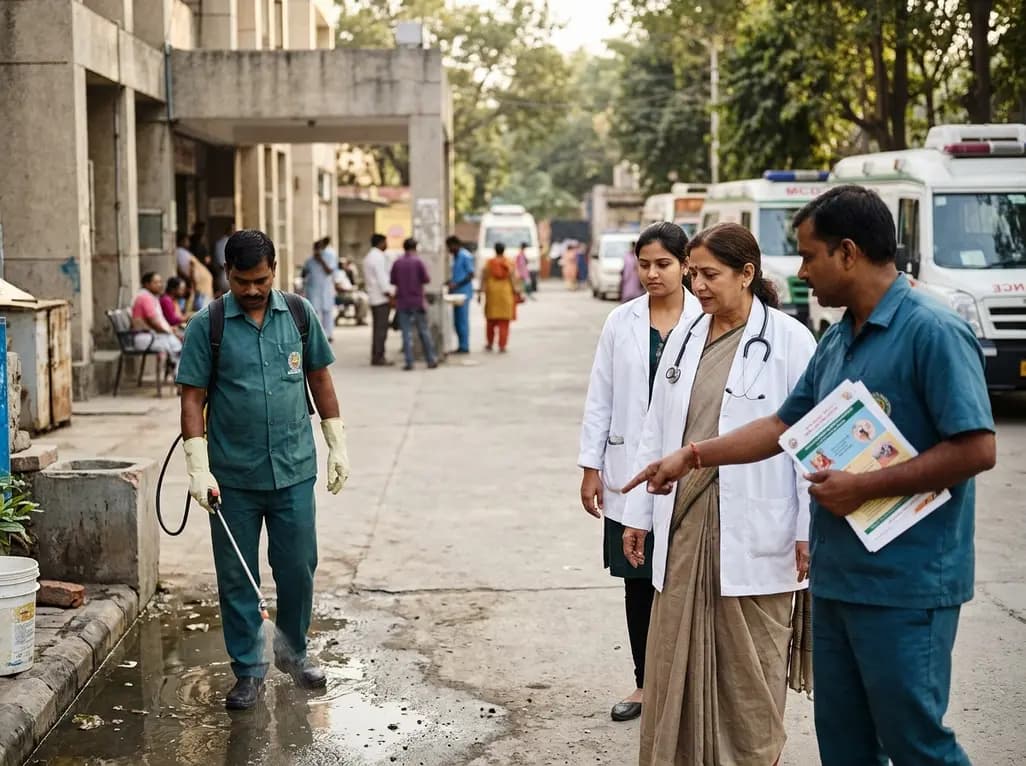
The Municipal Corporation of Delhi recently approved a major recruitment drive to fill 1,066 vacant public health positions. This decisive administrative intervention directly strengthens MCD mosquito control measures against seasonal surges of dengue and malaria. In addition, civic authorities cleared a 923.6-crore rupee mechanical road-sweeping initiative. Consequently, these combined public health actions mitigate vector-borne transmissions and urban dust hazards.
Vacancies in civic public health cadres severely weaken vector surveillance across urban neighborhoods. Currently, the municipal public health department faces 1,066 vacancies across critical operational tiers. Specifically, the civic body requires 14 anti-malaria officers, 105 malaria inspectors, 398 assistant malaria inspectors, and 549 multi-tasking staff members. Frontline personnel conduct door-to-door inspections, locate hidden domestic breeding containers, and apply chemical larvicides.
Furthermore, field teams execute chemical fogging in high-risk localities and lead targeted community education campaigns. Without sufficient field personnel, unmonitored water bodies quickly become thriving breeding foci for disease vectors. Consequently, delayed larval suppression leads directly to explosive transmission spikes in densely populated residential colonies.
Standing committee leadership emphasized that routine surveillance and larval testing form the foundational bedrock of outbreak containment. Therefore, filling these posts through contractual appointments eliminates administrative delays during peak viral transmission months. Moreover, expanding supervisory cadres like anti-malaria officers improves on-ground accountability. Experienced inspectors verify chemical spray concentrations, evaluate larvicide efficacy, and audit high-risk commercial zones. Ultimately, closing these workforce gaps restores rapid community response teams, protecting susceptible populations from vector-borne morbidity. Thus, enhanced staffing drives measurable disease control.
Effective vector management requires continuous entomological intelligence and systematic environmental source reduction. Through reinforced manpower, MCD mosquito control programs can actively monitor house indices and container indices across vulnerable urban wards. In addition, multi-tasking staff systematically inspect desert coolers, overhead plastic storage tanks, and discarded automobile tires in domestic properties.
Furthermore, field inspectors apply insect growth regulators and organophosphates such as temephos directly into stagnant, non-potable water bodies. These timely chemical interventions prevent immature mosquito larvae from developing into biting adult vectors. Similarly, targeted space spraying with pyrethrum formulations helps reduce active adult mosquito densities during disease outbreaks.
However, mechanical source elimination remains the most sustainable long-term intervention for urban municipalities. Civic inspectors actively educate householders on draining stagnant water accumulations weekly to break the vector reproductive cycle. Additionally, civic authorities now impose punitive challans against repeated mosquito-breeding violations on commercial and residential premises.
As a result, regular field inspections detect unnoticed larval habitats before secondary transmission events occur. Consequently, rigorous on-ground surveillance directly flattens seasonal epidemic curves, significantly lowering acute patient volumes in regional clinics. Furthermore, uninterrupted surveillance during post-monsoon transitions suppresses cryptic breeding sites in rooftop construction materials and elevator shafts.
Municipal vector control directly shapes the clinical case burden presenting to primary care and emergency departments. When municipal field operations falter, clinicians routinely observe rapid surges in acute febrile illnesses across urban centers. Specifically, patients present with high fevers, retro-orbital pain, severe arthralgias, and marked thrombocytopenia characteristic of acute dengue infection.
In addition, delayed intervention escalates the risk of severe complications, including dengue hemorrhagic fever and dengue shock syndrome. Children and elderly patients remain especially vulnerable to severe plasma leakage, requiring strict hematocrit monitoring and judicious fluid resuscitation. Therefore, primary care physicians must identify warning signs early while avoiding unnecessary, irrational platelet transfusions in stable patients.
Furthermore, physicians must notify confirmed or suspected cases through official integrated disease surveillance portals immediately. Early clinical reporting enables municipal malaria inspectors to deploy targeted anti-larval spraying and perimeter fogging around patient residences rapidly. Similarly, medical teams should educate visiting families on draining domestic water containers and applying mosquito repellents consistently.
Ultimately, seamless collaboration between hospital clinicians and civic health authorities significantly curbs secondary transmission chains. Consequently, robust clinical vigilance paired with municipal vector suppression prevents healthcare facility overcrowding and improves community prognosis. Thus, coordinated clinical surveillance protects public safety.
Alongside vector control, the civic body approved a 923.6-crore rupee project deploying 70 mechanical road-sweeping machines over ten years. This initiative directly tackles particulate air pollution generated by road dust and dense vehicular traffic. In urban environments, airborne dust contains respirable particulate matter, toxic heavy metals, and silica particles.
Manual street sweeping frequently resuspends fine particles into ambient air, triggering acute exacerbations among vulnerable pulmonary patients. In contrast, mechanical sweeping machines use specialized vacuum systems and water misting to capture road silt efficiently. The project utilizes smaller electric sweepers for residential corridors and dual-fuel CNG machines for expansive arterial roads.
Furthermore, reducing inhalable particulate matter significantly lowers clinic presentations for chronic obstructive pulmonary disease and bronchial asthma. Particulate matter impairs alveolar macrophage function, increasing host susceptibility to secondary bacterial pneumonia and viral respiratory infections. Moreover, systematic road sweeping removes roadside micro-debris and plastic containers that trap stagnant rainwater during monsoon spells.
Consequently, cleaner thoroughfares eliminate hidden mosquito breeding grounds along curbsides while dramatically improving ambient air quality. Thus, integrated municipal sanitation delivers measurable cross-cutting benefits for both infectious disease control and urban respiratory health. Additionally, constructing rainwater harvesting systems across municipal parks prevents localized waterlogging while replenishing depleting groundwater reserves sustainably.
Q1: Why is field-level entomological surveillance critical for dengue and malaria prevention?
Field surveillance enables early detection of high vector density and breeding foci in domestic containers, desert coolers, and construction zones. Consequently, trained public health inspectors can implement targeted larvicidal treatment and focal fogging before transmission accelerates. This proactive containment disrupts the mosquito reproductive cycle, directly reduces adult female mosquito density, and prevents localized transmission spikes, ultimately easing the clinical burden on municipal hospitals during seasonal disease surges.
Q2: How do mechanical road sweepers contribute to urban respiratory and environmental health?
Mechanical road sweepers actively collect fine road dust, silt, and heavy vehicular particulate matter such as PM10 and PM2.5. Furthermore, traditional manual sweeping resuspends respirable particles into the ambient air, exacerbating asthma, chronic obstructive pulmonary disease, and acute allergic bronchitis. Therefore, utilizing advanced motorized sweeping machines significantly decreases particulate resuspension. This dual intervention curtails ambient particulate pollution while eliminating micro-pools of stagnant road run-off where opportunistic vectors breed.
Q3: What role should medical practitioners play when urban civic bodies report vector surges?
Clinicians must maintain high diagnostic suspicion for acute febrile illnesses and adhere to national triage guidelines. In addition, prompt notification of confirmed or suspected dengue and malaria cases to local municipal authorities is legally vital. This mandatory reporting enables civic health workers to map geographic disease clusters swiftly and initiate perimeter fogging. Moreover, physicians should counsel ambulatory patients regarding hydration, warning signs of severe plasma leakage, and domestic source reduction methods.
Disclaimer: This content is for informational and educational purposes only. It does not constitute medical advice or replace professional judgment. Refer to the latest local and national guidelines for clinical practice.
References

Read summarized clinical updates, watch expert medical content, and earn CME certifications right from your smartphone.
Open your smartphone camera to scan and install.





Delhi civic authorities have cleared 1,066 contractual public health posts and a Rs 923.6-crore road-sweeping initiative to tackle vector-borne illnesses and air pollution. Learn how enhanced entomological surveillance, anti-larval drives, and dust control bolster community preventive medicine and clinical outcomes.
Today
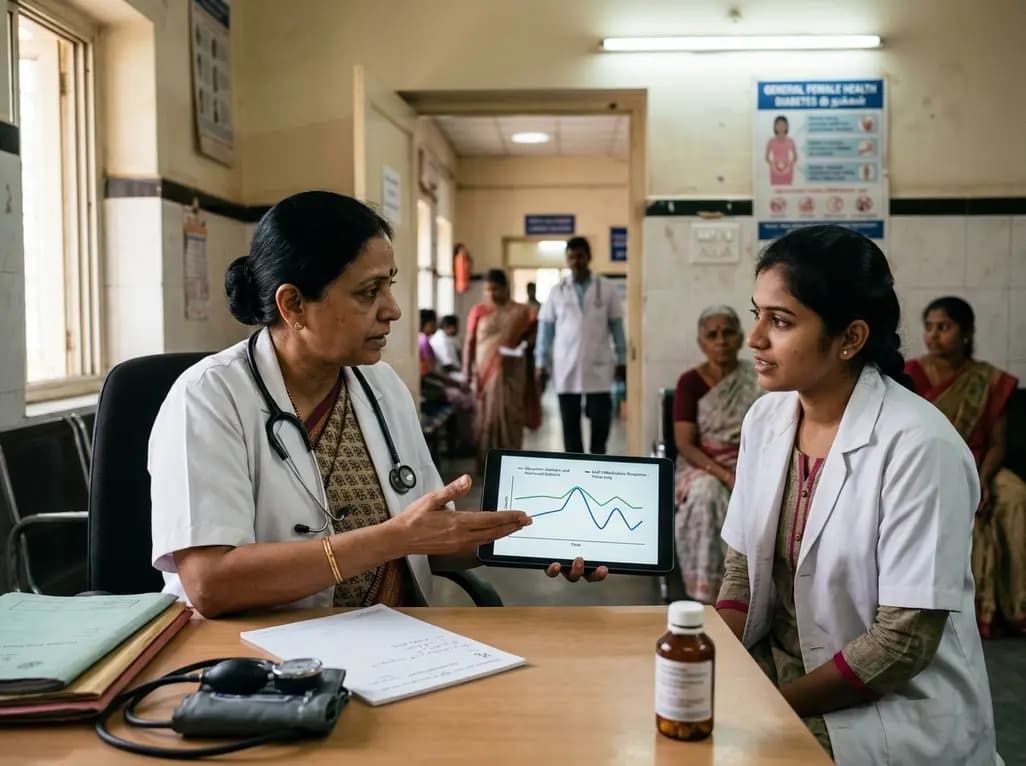
Medical experts caution that GLP-1 receptor agonists offer metabolic support rather than a curative answer for polyendocrine metabolic ovarian syndrome. Clinicians must evaluate glycemic markers, reproductive plans, and lifestyle interventions while discouraging unsupervised medication use among female patients.
Today

A retrospective CAHAL study comparing Amplatzer and Occlutech devices in 413 patients found no significant difference in moderate-to-large residual shunt rates at 6 months follow-up after percutaneous PFO closure, supporting clinical equivalence between both platforms.
Today
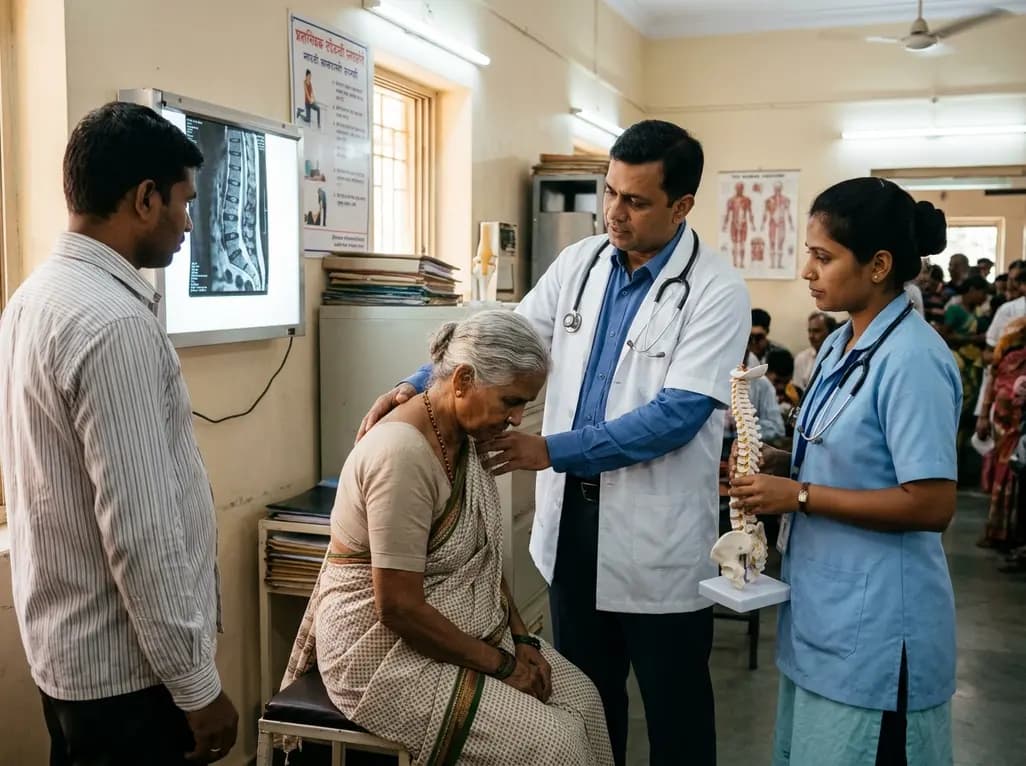
Age-related spinal kyphosis is driven by vertebral fragility, disc degeneration, and paraspinal muscle dysfunction. Coexisting with locomotive syndrome and frailty, its management requires combined anti-osteoporotic therapy, spinal extensor rehabilitation, and comprehensive nutritional optimization.
Today

A longitudinal feasibility pilot study highlights that combining polygenic risk score disclosure with in-person lifestyle counseling significantly enhances genomic literacy in individuals at risk for type 2 diabetes, overcoming educational disparities and reinforcing patient motivation.
Today
